
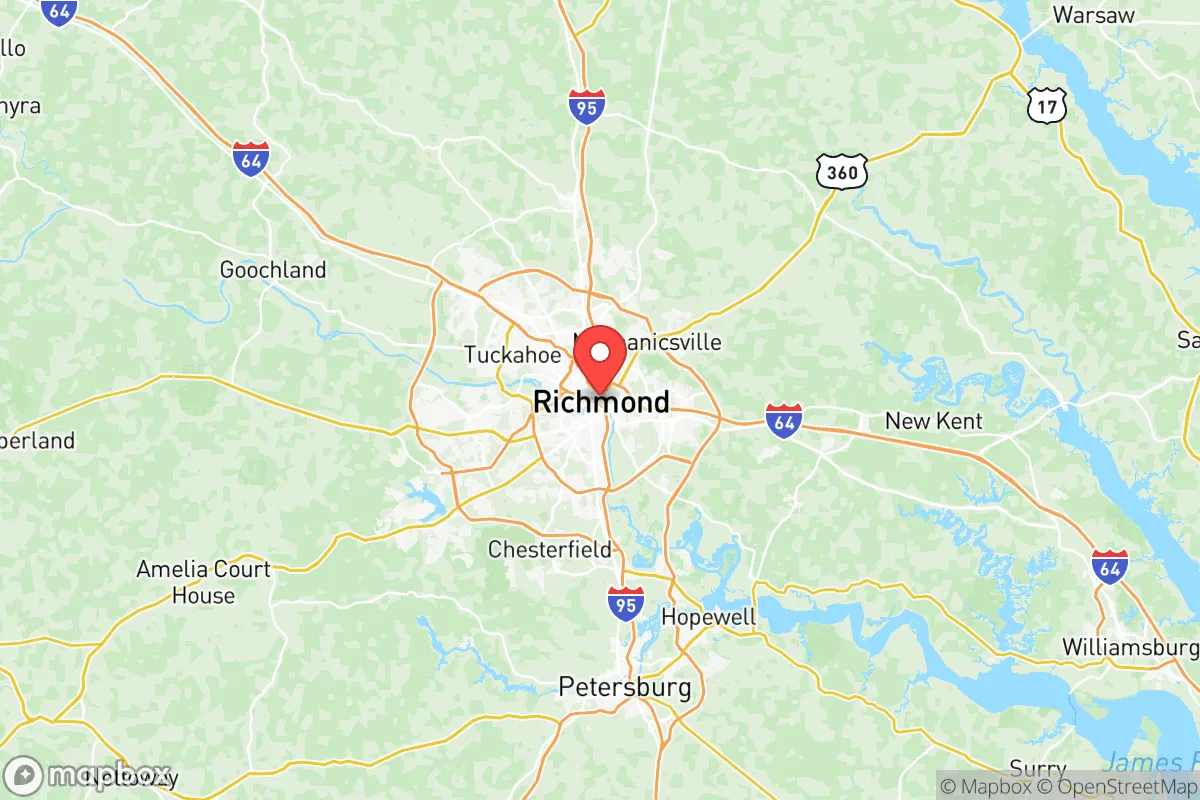
Photo by Nathaniel Villaire on Unsplash
Quality of Life in Richmond City County
A livable area that tracks near national norms for affordability, walkability, and neighborhood health.
What does Quality of Life tell us?
Quality of Life measures an area by evaluating factors like cost of living, nearby amenities, country club access, airport proximity, socioeconomic signals and neighborhood character. For large states, this is a general average — quality of life can vary dramatically between metro areas, suburbs, and rural communities within the same state.
What does this tell us?
Quality of Life measures an area by evaluating factors like cost of living, nearby amenities, country club access, airport proximity, socioeconomic signals and neighborhood character. For large states, this is a general average — quality of life can vary dramatically between metro areas, suburbs, and rural communities within the same state.
Cost of Living
14% above national average
67%
The Real Cost of Living in Richmond City County for 2026
| Tier | Individual | Family (4) |
|---|---|---|
| Survival | $21k | $39k |
| Comfortable | $64k | $94k |
| Luxury | $113k+ | $175k+ |
| Elite (Top 5%) | $169k+ | $262k+ |
Quality-of-Life Analysis
Richmond City County, Virginia, is a consolidated independent city that functions as its own county-equivalent, offering a uniquely dense urban experience rather than a spectrum of towns and rural areas. The entire 62.5 square miles of the county is the City of Richmond itself, drawing residents who prioritize walkable neighborhoods, historic architecture, and direct access to a state capital's job market and cultural amenities. Unlike a traditional county with distinct population centers and rural pockets, Richmond City presents a gradient of lifestyle options defined by neighborhood character, housing stock, and proximity to downtown, rather than by separate municipalities.
Largest town(s) & population centers
As a single incorporated city, Richmond City's "population centers" are its distinct neighborhoods. The downtown core, including the Central Business District and Shockoe Slip, is the hub for government, finance, and law, with a dense concentration of high-rise apartments and condos. Daily life here is fast-paced, with a walk score of 90+ and easy access to the Virginia Capitol, the Canal Walk, and dozens of restaurants. The Fan District, a historic area of Victorian row houses and tree-lined streets near Virginia Commonwealth University (VCU), is a major population center for students, professors, and young professionals, offering a lively mix of coffee shops, bars, and local boutiques. Church Hill, one of the city's oldest neighborhoods, provides a quieter, more residential feel with stunning views of the James River and a growing food scene centered on 25th Street. These neighborhoods collectively house the majority of the county's 226,000 residents and define its urban character.
Smaller towns & rural pockets
Because Richmond City is a fully urbanized independent city, it contains no smaller towns or rural pockets in the traditional sense. The county's boundaries are contiguous with the city limits, meaning there are no unincorporated villages or farmland within its jurisdiction. The closest approximations to "smaller communities" are the city's more suburban-style neighborhoods, such as Westover Hills and Stratford Hills in the Southside, which feature single-family homes on larger lots and a quieter, more family-oriented pace. The Northside neighborhoods, including Battery Park and Bellevue, offer a similar feel with early 20th-century bungalows and a strong sense of local community, but they remain fully within the city's urban fabric. For a truly rural or small-town experience, residents must cross into the surrounding counties of Henrico, Chesterfield, or Hanover.
Cost & lifestyle range
The cost of living across Richmond City is relatively uniform compared to a multi-town county, but neighborhood-level variation is significant. The overall cost of living index is 114 (14% above the national average), with a median home value of $328,100 and median rent of $1,314. At the higher end, neighborhoods like Windsor Farms and West End feature historic estates and riverfront properties with median home values exceeding $600,000, attracting affluent professionals and families. At the more affordable end, areas like Manchester and Blackwell in the Southside offer median home values around $200,000–$250,000, drawing first-time buyers and artists seeking lower entry costs. The average commute of 22 minutes is notably short for a capital city, reflecting the compact urban layout and the fact that many residents live within a few miles of their jobs. Lifestyle choices range from high-density apartment living in the downtown core to single-family homes with yards in the Southside and Northside, but all options share the same city services, school system, and tax base.
Richmond City County is best suited for individuals and families who value urban density, historic character, and walkability over suburban sprawl or rural quiet. Professionals working in government, healthcare (VCU Health), or education (VCU) thrive here due to the short commute and concentrated job market. Empty nesters and young professionals are drawn to the Fan and Church Hill for their architectural charm and social scene, while families often prefer the quieter, more spacious neighborhoods of Westover Hills or Bellevue. Those seeking a true small-town or rural lifestyle should look to the surrounding counties, as Richmond City offers a consistently urban experience from its downtown core to its residential edges.

Crime in Richmond City County
Generally safer than 61% of comparable U.S. locations.
Violent CrimeViolent Crime Analysis
Property CrimeProperty Crime Analysis
Crime Analysis
Richmond City County, Virginia, reports a violent crime rate of 206.6 per 100,000 residents and a property crime rate of 1,364.1 per 100,000, placing it in a challenging safety category compared to both state and national averages. While these figures indicate a serious crime problem, the lived experience varies dramatically depending on the specific neighborhood, with some areas experiencing significantly higher incident densities than others. The county’s progressive judicial philosophy, particularly in the Richmond City General District Court and the Richmond Commonwealth’s Attorney’s office, has been a point of contention, as critics argue that lenient sentencing and diversion programs for repeat offenders have contributed to a revolving-door justice system that undermines public safety.
Crime in context
Richmond City’s violent crime rate of 206.6 per 100,000 is roughly 1.6 times the national average and significantly higher than the Virginia state average of approximately 200 per 100,000. The property crime rate of 1,364.1 per 100,000 is about 1.2 times the national average and well above the state average of roughly 1,100 per 100,000. These numbers place Richmond among the more dangerous cities in Virginia, comparable to Norfolk and Portsmouth, but notably safer than Petersburg, which has a violent crime rate exceeding 400 per 100,000. The disparity is stark when compared to safer suburban jurisdictions like Henrico County (violent crime ~150 per 100,000) and Chesterfield County (violent crime ~120 per 100,000), which benefit from more conservative prosecutorial policies and larger police budgets. The progressive policies of Richmond’s elected officials, including the use of pre-trial release programs and reduced incarceration for non-violent offenders, have been linked by local law enforcement to an increase in property crime recidivism, as offenders cycle through the system with minimal consequences.
What residents experience
For residents, the most tangible impact of Richmond’s crime problem is the high rate of property crime, particularly vehicle break-ins, theft from porches, and residential burglaries. Neighborhoods like The Fan and Museum District, while popular for their historic charm, report frequent car break-ins and package thefts, with property crime rates in these areas often exceeding 2,000 per 100,000. In contrast, Church Hill and Jackson Ward have seen violent crime spikes in recent years, with shootings and robberies concentrated along major corridors like Broad Street and Nine Mile Road. The Southside neighborhoods, including Manchester and Blackwell, experience a mix of both violent and property crime, with gang-related activity contributing to a higher incidence of aggravated assaults. Residents in safer enclaves like Westover Hills and Windsor Farms report fewer incidents, though property crime remains a concern even there. The Richmond Police Department’s response times vary widely, with calls in high-crime areas often taking 15-20 minutes, compared to under 10 minutes in wealthier, lower-crime neighborhoods.
Neighborhood-level variation
The safety landscape in Richmond City County is not uniform, and neighborhood-level data reveals sharp contrasts. The Northside neighborhoods, including Highland Park and Barton Heights, have violent crime rates that can exceed 300 per 100,000, driven by drug-related violence and a lack of economic opportunity. Meanwhile, the West End, including the Near West End and Libbie Mill, enjoys violent crime rates below 100 per 100,000, thanks to higher property values, better street lighting, and more active neighborhood watch programs. The Downtown and Shockoe Bottom areas see a concentration of property crime, particularly auto theft and larceny, due to high foot traffic and tourist activity. Residents considering a move to Richmond should prioritize specific neighborhoods over the county-wide statistics, as the difference between a safe block and a dangerous one can be just a few streets. The progressive policies of the Richmond Commonwealth’s Attorney, including a focus on restorative justice and reduced prosecution of low-level offenses, have been criticized for emboldening property criminals, who know that even if caught, they are unlikely to face jail time. This has led to a growing sense of frustration among residents, particularly in areas like the Fan and Museum District, where property crime is a daily nuisance but violent crime remains relatively rare.
* Values derived from national, state, county, city and local statistics and may differ in a specific area. Last updated: 2026-05-29T05:06:34.000Z
Narrative content on this page is AI-generated and may contain mistakes. Verify any details that matter before acting on them.
ReloMaps may earn a commission from affiliate links at no extra cost to you.

