
Photo by Nathaniel Villaire on Unsplash
Political ClimatePolitical Climate in Richmond City County
Showing state-level results — no local-only data available.
Local Political AnalysisPolitical Analysis of Richmond City County
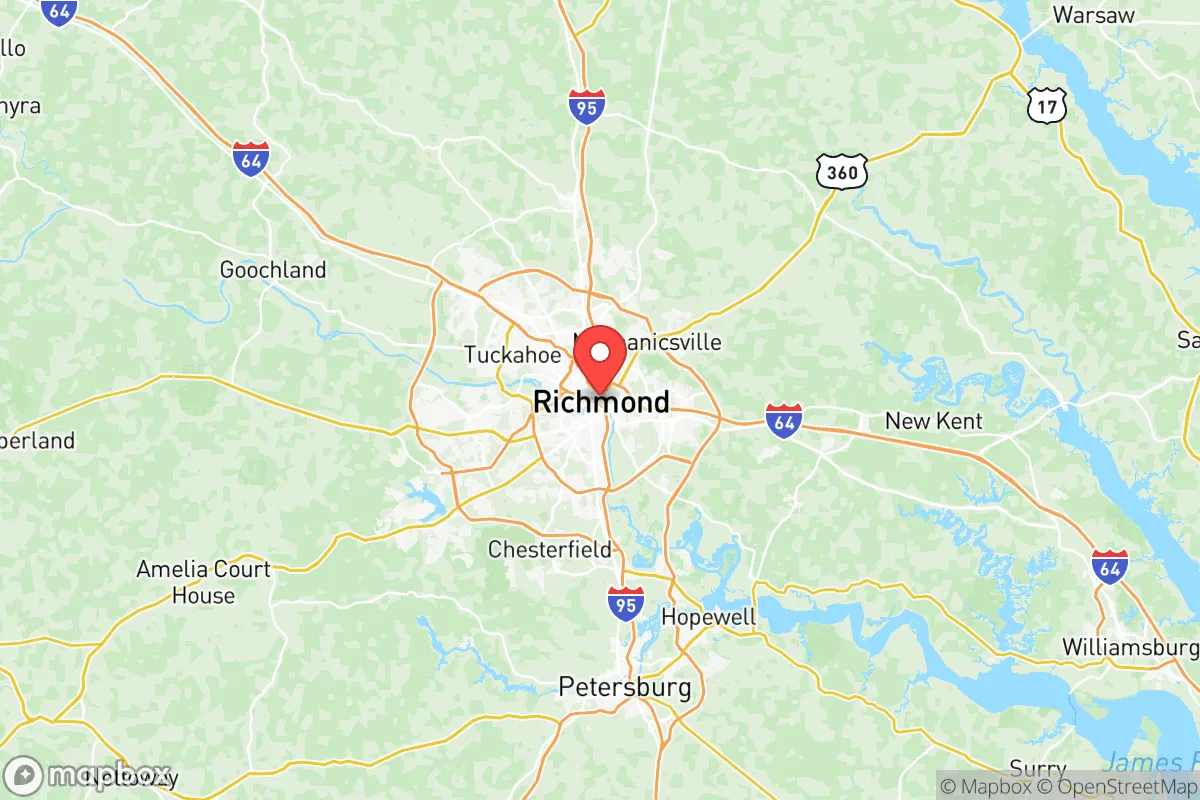
Richmond City County is about as blue as it gets in Virginia, with a Cook PVI of D+17, meaning Democrats consistently win by double digits here. That’s a far cry from the state’s overall D+4 rating, and it’s been trending this way for decades. If you’re looking at the political landscape, you’re seeing a place where progressive policies have taken root, and frankly, that’s something to keep an eye on if you value personal freedoms and limited government.
How it compares
Virginia as a whole is a purple state that’s shifted left in recent years, but Richmond City is in a league of its own. The D+17 PVI means the county is 13 points more Democratic than the state average. For context, while the state legislature has some balance, Richmond City’s local government is overwhelmingly controlled by progressive Democrats. The city council and school board have pushed policies like defunding police initiatives and sanctuary city ordinances, which are a far cry from the more moderate approach you’d see in surrounding counties like Chesterfield or Henrico. Even within the city, there’s variation—the Fan District and Church Hill lean heavily blue, while areas like South Richmond near the Manchester line have some swing precincts that occasionally vote more moderate, but they’re getting swallowed up by the urban shift.
What this means for residents
For someone who values personal autonomy and low taxes, living here means dealing with a government that’s increasingly comfortable with overreach. The city has raised property taxes multiple times in the last five years to fund social programs, and there’s a growing push for rent control and stricter business regulations. If you’re a gun owner, you’ve seen local ordinances that go beyond state law, like restrictions on carrying in public parks. The school system has also embraced critical race theory and gender ideology curricula, which has led to a quiet exodus of families to private schools or neighboring counties. Crime is another concern—Richmond’s homicide rate has spiked since 2020, and the city’s response has been to redirect police funding to social workers, which hasn’t exactly made the streets safer. It’s a pattern of progressive experimentation that feels disconnected from the day-to-day reality of residents.
On the cultural side, Richmond City is a hub for activism and protest, which can be exhausting if you just want to live your life without politics intruding. The city’s Confederate monument removals and renaming of schools have been divisive, and there’s a palpable sense that traditional values are being sidelined. If you’re looking for a place where your vote actually matters for conservative candidates, this isn’t it—the last Republican to win the city was in 2009. The trajectory is clear: more taxes, more regulations, and a government that sees itself as a social engineer rather than a protector of rights. For now, the best bet is to keep an eye on the state level for any pushback, but locally, it’s a one-party show that’s unlikely to change anytime soon.

State Political ClimatePolitical Climate in Virginia
State Political AnalysisPolitical Environment in the State
Virginia has shifted from a reliably purple swing state to a solidly Democratic-leaning one, with a Cook PVI of D+4, driven almost entirely by explosive growth in the Washington, D.C. suburbs. Over the past 20 years, the state has moved leftward in every presidential election since 2008, and while Republicans still hold the Governor’s mansion (Glenn Youngkin won in 2021), the state legislature and statewide offices have trended blue. The dominant coalition is a mix of affluent, educated suburbanites in Northern Virginia and a growing progressive base in the Richmond and Hampton Roads areas, while rural and exurban counties have become increasingly Republican strongholds. For a conservative considering relocation, the key question is whether the state’s trajectory is reversible or if the blue wave has become a permanent tide.
Urban vs. rural divide
The political map of Virginia is a tale of two states. The entire northern crescent—from Arlington and Alexandria through Fairfax County and Loudoun County—votes overwhelmingly Democratic, often by margins of 60-70%. These counties alone produce enough votes to swing statewide elections. The Richmond metro area, including Henrico County and the city of Richmond itself, has also shifted left, with Henrico flipping from red to blue in the 2010s. Meanwhile, the rural south and southwest—places like Roanoke, Lynchburg, and the Shenandoah Valley—remain deeply conservative. The divide is stark: in 2024, Loudoun County voted +25 D, while Lee County in the far southwest voted +70 R. The exurbs, like Spotsylvania County and Stafford County, are battlegrounds that have trended redder as urban refugees flee Northern Virginia’s costs and policies, but they haven’t yet flipped the statewide math.
Policy environment
Virginia’s policy environment is a mixed bag for conservatives. The state has a relatively low income tax rate (top bracket 5.75%) and no state-level property tax on vehicles, which is a plus. However, the regulatory posture has become increasingly progressive under Democratic control. In 2020, the General Assembly passed the Virginia Clean Economy Act, mandating a 100% carbon-free electricity grid by 2050, which has driven up energy costs. Education policy is a flashpoint: Governor Youngkin’s 2022 executive orders on parental rights and transgender student policies were a win for conservatives, but the state’s Department of Education remains under progressive influence, and school boards in Northern Virginia have adopted controversial curricula. Election laws are relatively secure—Virginia requires photo ID and has no same-day registration—but the state expanded no-excuse absentee voting in 2020, which remains in place. Healthcare is dominated by the expansion of Medicaid under the 2018 Medicaid expansion, which added 400,000 enrollees but also increased state spending. For a conservative, the policy environment feels like a tug-of-war: Youngkin’s vetoes have blocked some progressive bills, but the legislature’s Democratic majority keeps pushing on gun control, abortion access, and environmental mandates.
Trajectory & freedom
Virginia is becoming less free by conservative metrics, particularly on gun rights and parental autonomy. In 2020, the Democratic legislature passed a suite of gun control measures: universal background checks, a red flag law (the Extreme Risk Protective Order Act), a one-handgun-per-month limit, and a ban on assault weapons for those under 21. These laws were a direct response to the 2019 Virginia Beach shooting, but they represent a significant expansion of government overreach for gun owners. On the freedom front, the state also repealed its right-to-work law in 2021 for public-sector unions, though private-sector right-to-work remains intact. On the positive side, Youngkin’s 2022 executive order on parental rights affirmed that parents have a fundamental right to direct their children’s education and medical decisions, and he successfully pushed for the removal of critical race theory-inspired materials from some schools. However, the state’s sanctuary city policies remain a concern: while Virginia has no statewide sanctuary law, localities like Fairfax County and Arlington have adopted policies limiting cooperation with ICE, which frustrates conservatives who prioritize immigration enforcement. Property rights are generally strong, but the state’s zoning reform push in 2023—allowing accessory dwelling units and higher density in single-family neighborhoods—has been framed as a housing solution but also as a threat to suburban character.
Civil unrest & political movements
Virginia has been a national flashpoint for political movements. The 2017 Unite the Right rally in Charlottesville put the state on the map for violent left-right clashes, and the aftermath saw a surge in progressive activism and the removal of Confederate monuments. In 2020, the Richmond protests over George Floyd’s death turned into weeks of unrest, with the Robert E. Lee statue becoming a focal point. On the right, the Virginia Citizens Defense League (VCDL) has been a powerful force, organizing massive pro-gun rallies at the state capitol in 2020 that drew tens of thousands of armed protesters. The election integrity debate has been quieter in Virginia than in other states, but there were concerns about the 2020 election’s handling of mail-in ballots, leading to the 2021 law requiring photo ID for absentee voting. Immigration politics are heated in Northern Virginia, where the sanctuary policies of Fairfax and Arlington have drawn criticism from conservatives, while the state’s Dreamer population (DACA recipients) is protected by state law. A new resident in Northern Virginia will notice the political activism is constant—yard signs, protests, and school board meetings are battlegrounds—while in rural areas, the politics are quieter but deeply entrenched.
Projection
Over the next 5-10 years, Virginia is likely to continue its leftward drift, but the pace may slow. The demographic shift is the key driver: Northern Virginia’s population is growing faster than the rest of the state, and it’s becoming more diverse and more liberal. However, there are countercurrents. The exurban counties—Spotsylvania, Stafford, Culpeper—are growing as people flee the high costs and progressive policies of the inner suburbs, and these areas are voting more Republican. The 2024 election showed that Virginia is still competitive at the presidential level (Biden won by 10 points in 2020, but the margin narrowed to 5 in 2024), suggesting a ceiling on Democratic gains. The Youngkin effect also matters: if Republicans can hold the Governor’s mansion in 2025 and flip the state Senate, they could slow the progressive agenda. But the long-term trend is demographic, and unless the in-migration pattern changes—more conservatives moving in from blue states—Virginia will likely settle into a D+6 or D+8 lean by 2030. For a conservative moving in now, expect to live in a state where your vote matters in statewide races but where local control in the suburbs is increasingly contested.
For a new resident, the bottom line is that Virginia offers a mix of opportunity and risk. The economy is strong, the schools are good (if ideologically contested), and the natural beauty is unmatched. But the political climate is a constant battle. If you’re moving to the Shenandoah Valley or southwest Virginia, you’ll find a conservative haven. If you’re moving to Northern Virginia, you’ll be in a blue bubble where your values will be challenged daily. The key is to choose your locality wisely—Loudoun County is not Roanoke—and to stay engaged in local politics, because that’s where the real fights over freedom and governance are happening. Virginia is not Texas or Florida, but it’s also not California—yet. The next decade will determine which direction it goes.
* Values derived from national, state, county, city and local statistics and may differ in a specific area. Last updated: 2026-05-29T05:06:34.000Z
Narrative content on this page is AI-generated and may contain mistakes. Verify any details that matter before acting on them.
ReloMaps may earn a commission from affiliate links at no extra cost to you.

