Photo: Wikipedia
Quality of Life in Wake Forest, NC
A high quality of life with strong walkability, manageable living costs, healthy neighborhood signals, and solid amenity access.
What does Quality of Life tell us?
Quality of Life blends cost of living, nearby amenities, socioeconomic signals, and neighborhood character. City-level scores represent the whole municipality; individual neighborhoods can differ.
What does this tell us?
Quality of Life blends cost of living, nearby amenities, socioeconomic signals, and neighborhood character. City-level scores represent the whole municipality; individual neighborhoods can differ.
Cost of Living
37% above national average
The Real Cost of Living in Wake Forest, NC for 2026
| Tier | Individual | Family (4) |
|---|---|---|
| Survival | $23k | $44k |
| Comfortable | $85k | $124k |
| Luxury | $161k+ | $250k+ |
| Elite (Top 5%) | $190k+ | $294k+ |
97%
The Area Signal
A metric tracking the socioeconomic signals of the area.
Hobbies
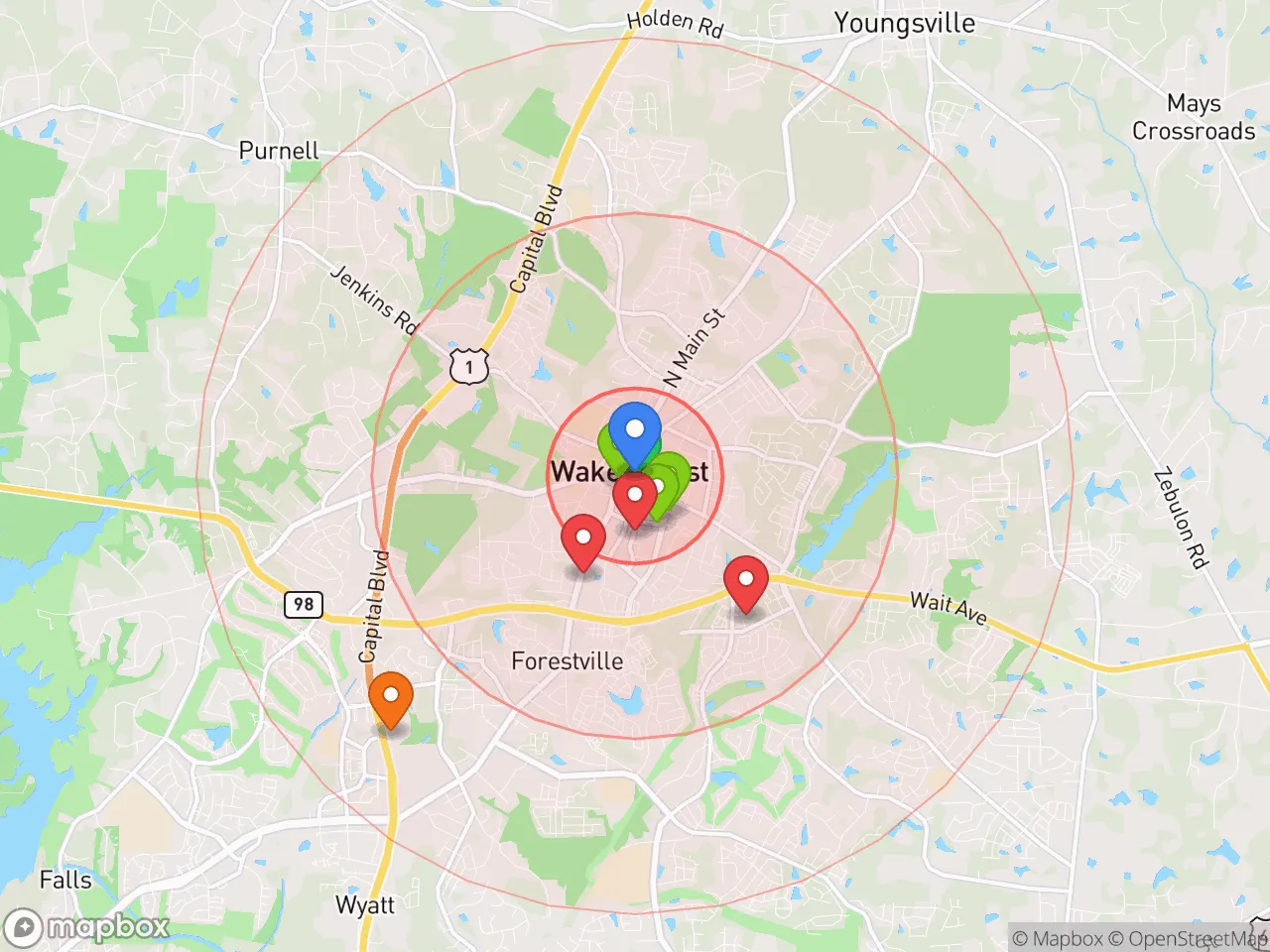
Explore the areaGroceries
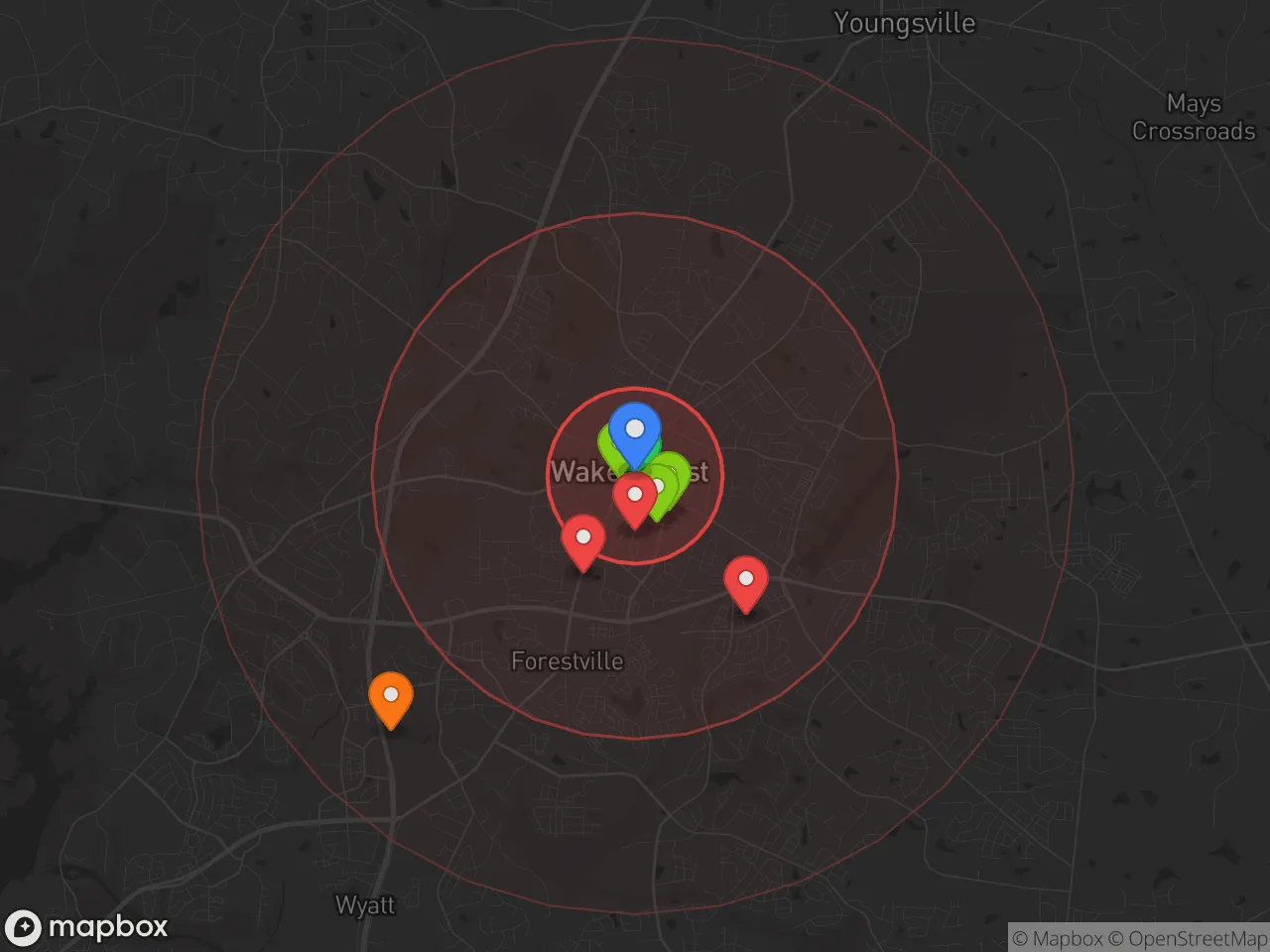
0 within 10 miles
Gas
0 within 10 miles
Hospital
0 within 20 miles
Airport
RDU — Raleigh–Durham International
Post Office
Critical Amenities
Quality-of-Life Analysis
Wake Forest, North Carolina, is an affluent, fast-growing town of roughly 50,000 residents that attracts families, professionals, and retirees seeking a suburban lifestyle with strong schools and a small-town feel, all within commuting distance of Raleigh. The town’s population has surged by over 30% since 2020, driven largely by relocations from higher-cost states such as New York, New Jersey, and California. With a median household income near $100,000 and a highly educated workforce, Wake Forest skews toward upper-middle-class households, though its cost of living has risen sharply in recent years.
How housing costs and affordability compare to Raleigh and the Triangle
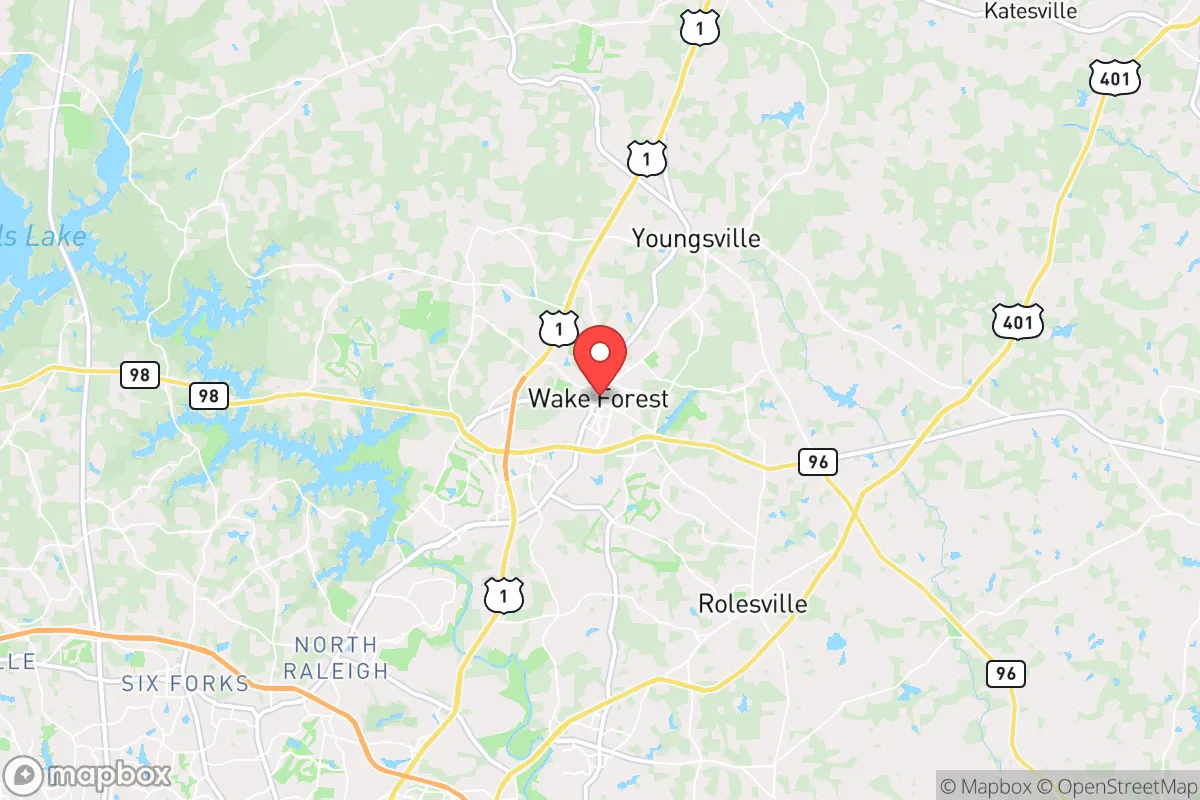
Wake Forest’s overall cost of living index stands at 137 — 37% above the national average — placing it among the pricier suburbs in the Triangle region. The median home value is $435,000, roughly 15% higher than the Raleigh metro median of $378,000, and significantly above the North Carolina state median of $295,000. For renters, the median monthly rent of $1,458 is about $150 higher than the Raleigh average, though still below rents in Cary ($1,600+) or Chapel Hill ($1,700+). Property taxes in Wake County are moderate at roughly 0.85% of assessed value, but the absence of a state income tax on retirement income makes the area attractive for older buyers. Compared to nearby Rolesville or Youngsville, Wake Forest commands a premium for its more established downtown and direct access to US-1 and Capital Boulevard, though buyers can find slightly lower prices in the newer subdivisions east of town.
What daily life is like for families: schools, parks, and local amenities
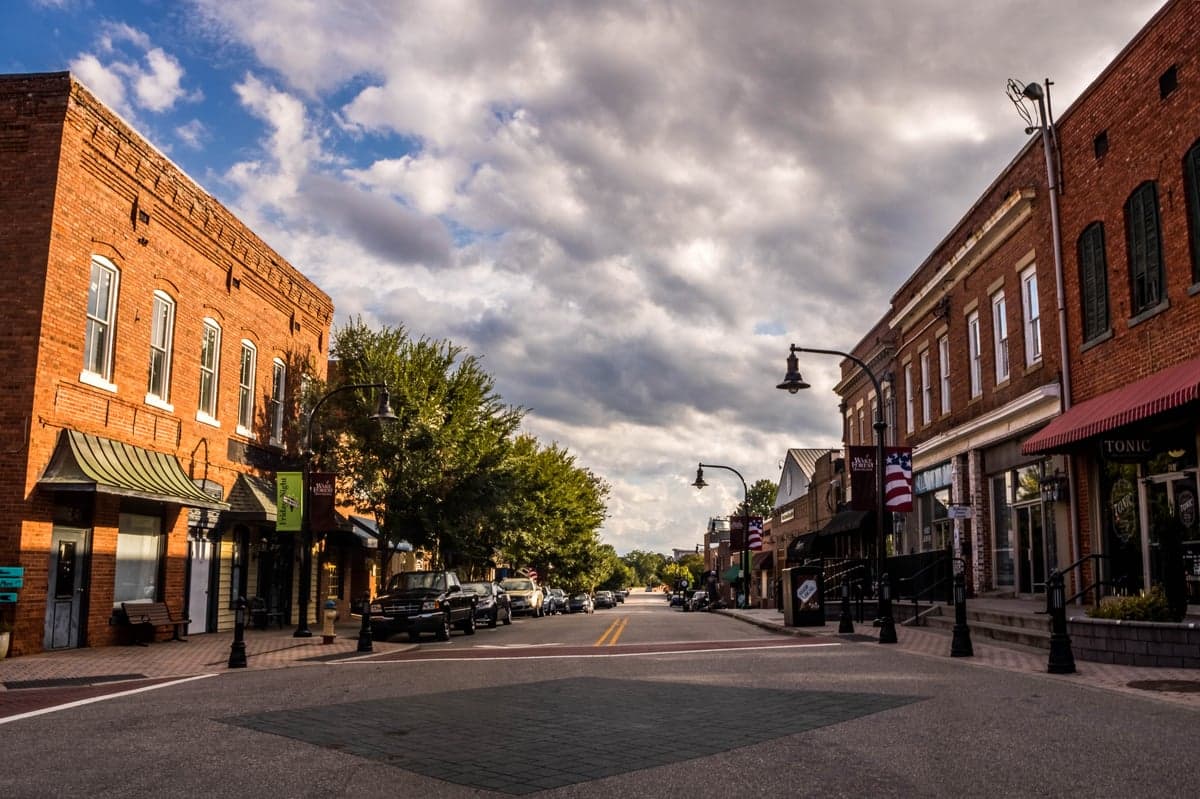
Wake Forest’s daily rhythm centers on its historic downtown, which features a weekly farmers market, independent restaurants like Over the Falls, and seasonal events such as the Four on the Fourth road race. The town is served by Wake County Public Schools, with top-rated elementary schools like Wake Forest Elementary and Heritage Elementary feeding into Heritage High School, which boasts a 94% graduation rate and strong Advanced Placement offerings. For recreation, the 157-acre Flaherty Park offers sports fields, a community center, and a disc golf course, while the nearby Falls Lake State Recreation Area provides boating, fishing, and hiking within a 10-minute drive. Commuters benefit from the Wake Forest-Raleigh Express bus service, which runs to downtown Raleigh in about 40 minutes, though most residents rely on cars for errands along Capital Boulevard. The town lacks a major hospital — the nearest emergency room is at WakeMed North in Raleigh, 15 minutes south — but urgent care clinics are plentiful. Retail options are expanding, with the new Wake Forest Crossing shopping center adding a Publix, Target, and multiple chain restaurants since 2023.
Who thrives in Wake Forest and who might look elsewhere
Wake Forest is best suited for families with school-age children who prioritize strong public schools and a safe, walkable downtown, as well as remote workers who can afford the housing premium and want quick access to Raleigh’s job market. The town’s low violent crime rate — roughly 1.2 incidents per 1,000 residents, well below the national average — and its active neighborhood associations create a secure environment for raising kids. However, young singles and renters on a tight budget may find the $1,458 median rent and limited nightlife options frustrating, while retirees seeking a slower pace might prefer nearby Rolesville or Franklinton for lower home prices. Commuters who work in Durham or Research Triangle Park should note that the drive can exceed 45 minutes during peak hours via I-540, making Wake Forest more practical for those employed in north Raleigh or downtown Raleigh. Overall, the town delivers a high quality of life for those who can absorb its costs and value suburban amenities over urban density.

Crime in Wake Forest, NC
Lower crime rates than 75% of comparable U.S. locations.
Violent CrimeViolent Crime Analysis
Property CrimeProperty Crime Analysis
Crime Analysis
Wake Forest, North Carolina, reports a violent crime rate of 85.2 incidents per 100,000 residents and a property crime rate of 1,012.3 per 100,000, according to the most recent data. While these figures place the town well below national averages for violent offenses, the property crime rate is a more significant concern. However, as a growing suburb within the Raleigh-Durham-Chapel Hill metropolitan area, Wake Forest is subject to the broader criminal justice policies of Wake County, where progressive district attorneys and judges have implemented reforms that critics argue prioritize offender rehabilitation over public safety. This ideological shift in the justice system, while well-intentioned, can result in more criminals remaining on the street, reducing deterrence and negatively impacting victims and community safety.
Crime in context
Wake Forest’s violent crime rate of 85.2 per 100,000 is roughly one-third the national average of approximately 380 per 100,000, making it a statistically safe town for violent offenses like homicide, assault, and robbery. Property crime, however, runs at 1,012.3 per 100,000—slightly below the national average of about 1,950 per 100,000 but still a tangible risk for residents. Compared to the state of North Carolina, which averages around 350 violent crimes and 2,200 property crimes per 100,000, Wake Forest performs favorably. Yet these numbers must be weighed against the reality that Wake County’s justice system has adopted progressive policies—such as cash bail reform and reduced prosecution of certain thefts—that can embolden repeat offenders and erode the sense of security that low raw numbers might otherwise suggest.
What residents experience
In daily life, Wake Forest residents most commonly encounter property crimes like vehicle break-ins, package theft, and occasional residential burglaries, particularly in neighborhoods near major corridors like Capital Boulevard (US-1) and the Wake Forest Crossing shopping center. Violent incidents are rare but not unheard of; when they occur, they often stem from domestic disputes or isolated altercations rather than random attacks. The town’s police department maintains a visible presence, but the broader metro area’s progressive judicial environment means that even when arrests are made, offenders may face lenient sentencing or diversion programs. For families and retirees, this creates a paradox: the streets feel safe day-to-day, but the underlying legal framework can leave residents feeling that the system is not fully on their side when crime does happen.
Neighborhood-level variation is notable. Established subdivisions like Heritage and Holding Village report very low crime, thanks to active homeowners’ associations and private security patrols. In contrast, areas closer to the downtown core or along rental-heavy corridors like South Main Street see higher rates of property crime and occasional disorder. Prospective residents should research specific street-level data and consider that Wake Forest’s safety profile is heavily influenced by its proximity to Raleigh—a city where progressive criminal justice policies have been linked to rising recidivism. Choosing a home in a well-monitored, lower-density part of town can mitigate some of these risks, but the county-wide judicial philosophy remains a factor that cannot be ignored.
* Values derived from national, state, county, city and local statistics and may differ in a specific area. Last updated: 2026-04-21T16:44:59.000Z
Narrative content on this page is AI-generated and may contain mistakes. Verify any details that matter before acting on them.
ReloMaps may earn a commission from affiliate links at no extra cost to you.

