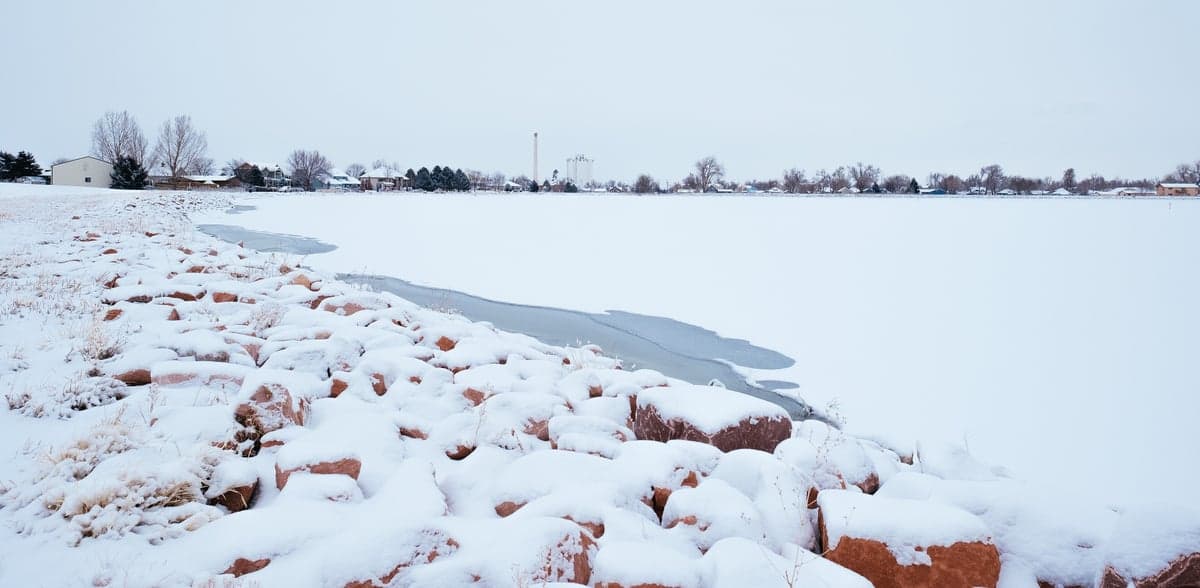
Photo: Wikipedia
Political ClimatePolitical Climate in Windsor, CO
District shown is the primary district for this city’s centroid. Cities may span multiple districts.
Local Political AnalysisPolitical Analysis of Windsor, CO
Windsor, Colorado, has long been a reliably conservative community, and that hasn't changed much at the ballot box. The town sits in a Cook PVI of R+9, meaning it votes about nine points more Republican than the national average, and that’s held steady through recent cycles. But if you’ve lived here a while, you’ve noticed the political lean isn’t just about who wins elections anymore—it’s about a growing tension between the old-school, live-and-let-live mindset and the creeping influence of progressive policies from the Front Range. The core is still solid, but the edges are getting frayed.
How it compares
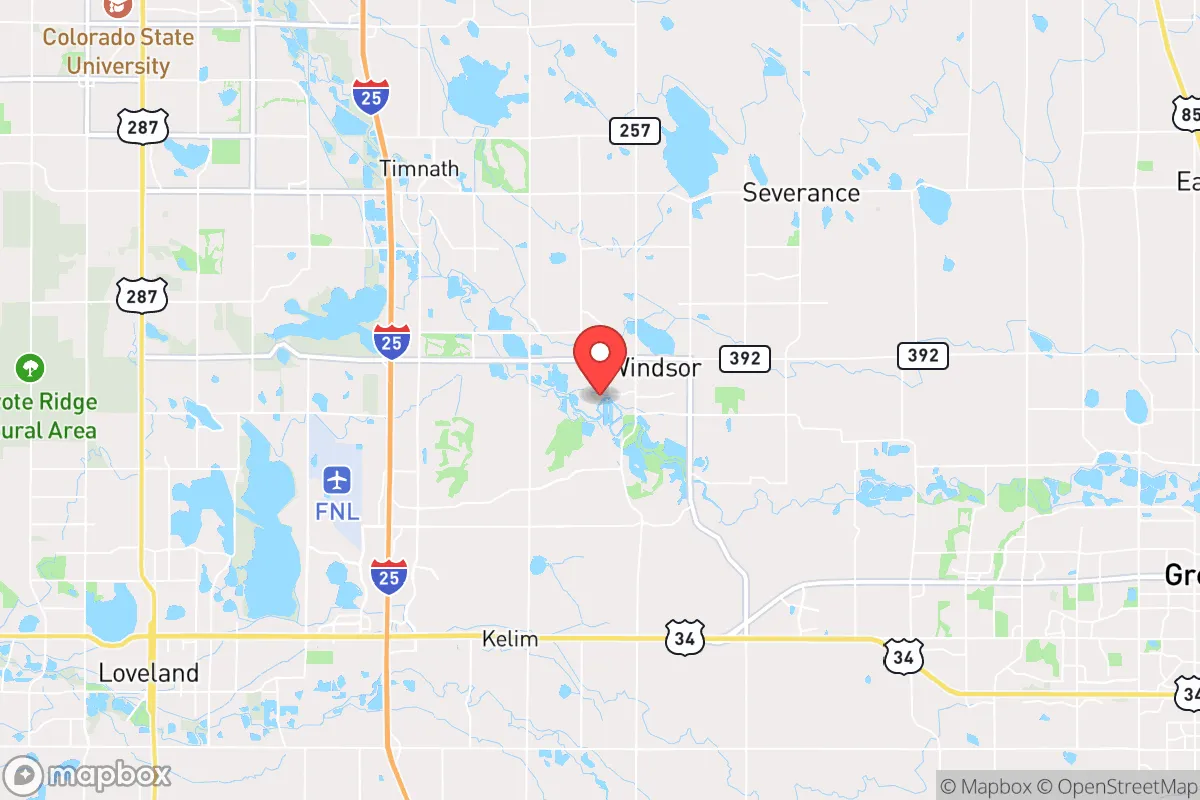
Drive ten miles south to Greeley, and you’ll find a similar conservative streak, though it’s a bit more blue-collar and less polished. Head west to Fort Collins, and it’s a whole different world—that’s a deep-blue college town where government intervention in housing, energy, and even local business practices is the norm. Loveland, just to the southwest, has been swinging left in recent years, with city council races getting more progressive. Windsor, by contrast, has held the line. Our town council and school board elections still tend to favor candidates who talk about fiscal restraint and individual responsibility, not social engineering. But the pressure is real: as more people move here from places like California and the Denver metro, they bring expectations for more regulation, more oversight, and less personal freedom. You can feel it in the zoning debates and the quiet push for “sustainability” mandates that sound nice but often mean more red tape.
What this means for residents
For folks who value personal freedom, the political climate in Windsor is still a breath of fresh air compared to the surrounding areas, but it’s not immune to the bigger trends. Property taxes and local fees have crept up, and there’s been chatter about adopting stricter building codes and energy efficiency standards that would hit homeowners and small builders hardest. The school board has mostly resisted the kind of curriculum overhauls you see in larger districts, but parents need to stay engaged—those fights are coming. On the plus side, the town’s leadership still generally believes that government’s job is to keep the roads paved and the water clean, not to micromanage how you live your life. That’s a big deal when you compare it to Fort Collins, where they’ve banned natural gas in new construction and are pushing density mandates that feel more like social experiments than practical policy.
One thing that stands out about Windsor is its cultural resistance to the “we know better” attitude that’s taken over so many Colorado towns. The annual Windsor Harvest Festival still feels like a community gathering, not a political rally. The local businesses—like the Windsor Mill Tavern and the farmers market—are places where you can have a real conversation without worrying about someone reporting you for wrongthink. That said, the long-term trend is concerning. If the influx of new residents continues at this pace, and if they bring the same voting habits that turned Loveland and parts of Larimer County blue, Windsor could lose its character. It’s not there yet, but the warning signs are there: more housing mandates, more talk of “equity” in local policy, and a slow erosion of the idea that your property and your choices are your own business. For now, it’s still a place where a conservative can feel at home, but you’ve got to keep your eyes open and your voice heard.

State Political ClimatePolitical Climate in Colorado
State Political AnalysisPolitical Environment in the State
Colorado has shifted from a classic purple swing state to a solidly blue-leaning one over the past two decades, with Democrats now controlling the governorship, both U.S. Senate seats, and both chambers of the state legislature. The state’s overall partisan lean is roughly D+5 to D+7 in statewide elections, but that number masks a deep and growing chasm between the liberal Front Range urban corridor and the conservative rural and mountain communities. For a conservative considering relocation, the trajectory is concerning: what was once a live-and-let-live Western state has become a laboratory for progressive policy, with government overreach into personal freedoms accelerating since 2018.
Urban vs. rural divide
The political map of Colorado is essentially a tale of two states. The Denver metro area, including Denver, Aurora, and the inner-ring suburbs of Lakewood and Westminster, is the Democratic engine, delivering 60-70% of the vote for statewide Democratic candidates. Boulder, home to the University of Colorado, is even further left, routinely voting 80%+ Democratic. Colorado Springs, anchored by the military and evangelical communities, remains a conservative stronghold, but its influence is waning as the city’s tech sector grows. The real story is the collapse of suburban Republicanism: once-reliable GOP suburbs like Arapahoe and Jefferson counties have flipped decisively blue since 2016. Meanwhile, the rural Eastern Plains (counties like Yuma, Kit Carson, and Prowers) vote 75-80% Republican, as do the Western Slope counties like Mesa (Grand Junction) and Montrose. The divide is stark: drive 30 minutes east of Denver and you’re in Trump country; drive 30 minutes west and you’re in Boulder. The state’s population growth is overwhelmingly concentrated in the blue metros, meaning the rural conservative vote is being diluted every election cycle.
Policy environment
Colorado’s policy environment has shifted hard left in the last decade. The state income tax is a flat 4.4%, which is moderate, but property taxes are relatively low compared to Texas or the Northeast. The real burden comes from regulatory overreach. The state has a strict red flag law (HB 19-1177) that allows for temporary firearm seizure without due process, and in 2023, the legislature passed a ban on so-called “assault weapons” (SB 23-169) that is currently tied up in court. On education, Colorado has adopted the controversial READ Act and Comprehensive Health Education Standards that many parents view as pushing progressive sexual ideology on children. The state also has a universal mail-in ballot system (passed in 2013) that, while convenient, raises election integrity concerns for many conservatives. Healthcare is heavily regulated, with a state-run insurance exchange and strict certificate-of-need laws that limit competition. On energy, Colorado has some of the most aggressive renewable portfolio standards in the nation, targeting 100% clean electricity by 2040, which has driven up utility costs and hurt the oil and gas industry that once provided good-paying jobs in Weld County and the Western Slope.
Trajectory & freedom
Colorado is becoming less free by almost any measure, especially for conservatives. The most alarming trend is the erosion of Second Amendment rights. In addition to the red flag law and the assault weapons ban, the legislature passed a three-day waiting period for firearm purchases (HB 24-1349) in 2024. On parental rights, the state has moved in the opposite direction of places like Florida: Colorado law now allows minors to consent to certain medical procedures without parental notification, and the “Jared Polis” administration has championed transgender medical procedures for minors, with the state becoming a sanctuary for families seeking such care from other states. Property rights have been weakened by aggressive land-use regulations, including a 2023 law that effectively ended single-family zoning in many cities, allowing duplexes and triplexes in formerly quiet neighborhoods. On taxes, while the rate is flat, the state has a progressive property tax structure that has led to massive increases in home valuations, especially along the Front Range. The Taxpayer’s Bill of Rights (TABOR), once a hallmark of Colorado’s fiscal restraint, has been repeatedly weakened by ballot measures that allow the state to keep surplus revenue. For a freedom-loving conservative, the trend is unmistakable: more government control, less individual liberty.
Civil unrest & political movements
Colorado has seen its share of political flashpoints. The 2020 George Floyd protests in Denver turned violent, with looting and fires in the downtown area, and the city’s progressive DA, Beth McCann, was criticized for a lenient approach to prosecution. The “Defund the Police” movement had real traction in Denver, leading to a 2020 budget cut of $15 million from the police department, though some funding was later restored. On the right, the Weld County secession movement (the “51st state” proposal) has simmered for years, with frustrated conservatives in the rural north wanting to break away from the Denver-dominated state government. The Colorado Republican Party has been riven by internal conflict between establishment and MAGA factions, making it less effective as an opposition force. Immigration is a growing flashpoint: Denver has declared itself a sanctuary city, and the state has a “Safe Haven” law (HB 23-1100) that limits cooperation with federal immigration enforcement. In 2023, the city bused thousands of illegal immigrants from the southern border to Denver, straining social services and creating visible homelessness in the city’s parks. Election integrity remains a concern for many conservatives, with the state’s universal mail-in system and lack of strict voter ID laws (Colorado allows same-day registration with just a utility bill) fueling distrust.
Projection
Over the next 5-10 years, Colorado will likely continue its leftward drift. The demographic trends are clear: the state is attracting young, college-educated professionals from blue states like California and New York, who bring their progressive politics with them. The rural conservative population is aging and shrinking. The only wild card is the cost of living: Denver and Boulder have become prohibitively expensive, which could slow in-migration and shift growth to more affordable conservative areas like Colorado Springs, Pueblo, or the Western Slope. But even Colorado Springs is becoming more moderate as its tech sector expands. The state’s political future is likely one of one-party Democratic control, with the GOP reduced to a rump party in the legislature. For conservatives, the realistic hope is not to flip the state, but to hold the line in local government and school boards, and to preserve the rural and mountain communities that still value individual liberty. The 2026 gubernatorial election will be a key test: if a moderate Republican can’t make inroads, the state is lost for a generation.
Bottom line for a new resident: If you’re a conservative moving to Colorado, be prepared for a state government that is actively hostile to your values on guns, education, parental rights, and taxes. The Front Range cities are increasingly progressive, and the state legislature is a rubber stamp for the governor’s agenda. Your best bet is to settle in a conservative enclave like Colorado Springs, Grand Junction, or a rural county on the Eastern Plains or Western Slope, where local government still respects property rights and the Second Amendment. But even there, you’ll be fighting an uphill battle against state-level overreach. Colorado is a beautiful state with a great economy, but its political trajectory is a cautionary tale for anyone who values personal freedom over government control.
* Values derived from national, state, county, city and local statistics and may differ in a specific area. Last updated: 2026-05-01T18:42:05.000Z
Narrative content on this page is AI-generated and may contain mistakes. Verify any details that matter before acting on them.
ReloMaps may earn a commission from affiliate links at no extra cost to you.

