
Photo by Dylan Hunter on Unsplash
Political ClimatePolitical Climate in Annetta South, TX
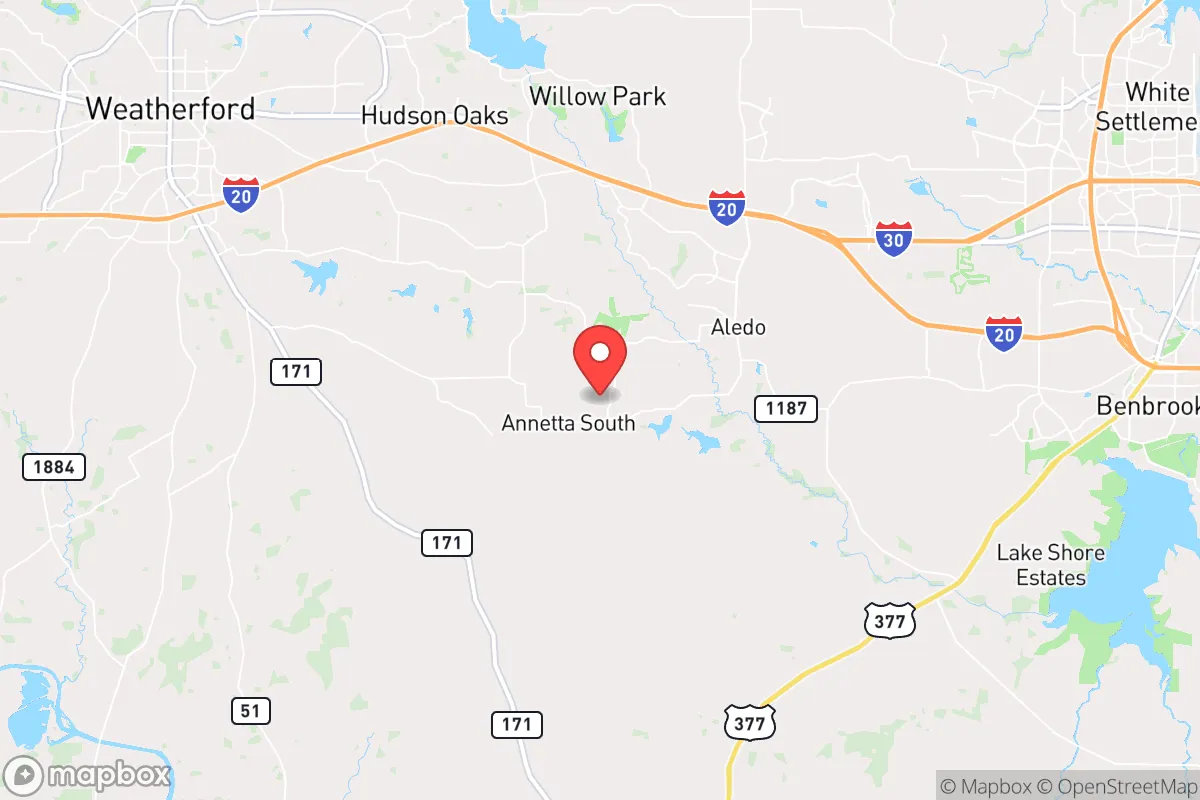
District shown is the primary district for this city’s centroid. Cities may span multiple districts.
Local Political AnalysisPolitical Analysis of Annetta South, TX
Annetta South, Texas, is about as reliably conservative as it gets in the Lone Star State, with a Cook Partisan Voting Index of R+11 that puts it solidly in the deep-red column. That number means the area votes about 11 points more Republican than the national average, and in practice, you see it in every local election, school board race, and even the way folks talk about property rights and taxes. The political lean here hasn't shifted much in the last decade, but there's a growing unease among long-time residents about the creeping influence of progressive ideas from the Dallas-Fort Worth metroplex, especially as more people move out from Tarrant County looking for space and lower costs.
How it compares
Compared to nearby cities like Weatherford (R+15) and Aledo (R+13), Annetta South is slightly less conservative, but that's splitting hairs—all three are deeply Republican strongholds. The real contrast is with Fort Worth proper, which has a Cook PVI of D+8 and has seen a noticeable shift toward progressive policies on zoning, policing, and local taxes over the past five years. Drive 20 minutes east and you're in a world where city council debates are about bike lanes and affordable housing mandates; drive back to Annetta South and the conversation is still about keeping government out of your backyard and your wallet. The difference is stark, and it's why a lot of folks who left Fort Worth for Parker County did so—they wanted to escape the overreach they saw coming from the city.
What this means for residents
For the people living here, the R+11 lean means local government tends to stay small and hands-off. Property taxes are a perennial concern—Texas has no income tax, so the burden falls on property, and there's constant pressure to keep assessments reasonable and school district spending in check. You won't see the kind of mask mandates or business shutdowns that hit other parts of the state during the pandemic; Annetta South's leaders generally trusted residents to make their own choices. The downside is that as the area grows, there's a real risk of that small-government ethos eroding. New subdivisions bring new voters, and some of them come from blue areas with different ideas about what government should do. If you value personal freedom and low interference, this is still one of the best spots in North Texas, but you have to stay engaged—school board meetings and city council elections matter more here than national politics.
Culturally, Annetta South is a place where the Second Amendment is a given, not a debate, and where church attendance on Sunday is still the norm for a big chunk of the population. There's no city income tax, no noise ordinances that would stop you from working on your truck in the driveway, and no zoning that tells you what color to paint your fence. The biggest policy distinction from the surrounding area is the lack of a municipal police force—the county sheriff handles law enforcement, which keeps another layer of bureaucracy off the books. That's the kind of thing that matters here: less government, more freedom, and a quiet expectation that your neighbors will leave you alone as long as you do the same. If that changes, it'll be because people stopped paying attention, not because the area's core values shifted.

State Political ClimatePolitical Climate in Texas
State Political AnalysisPolitical Environment in the State
Texas remains a solidly Republican state at the statewide level, but the coalition that keeps it red has shifted dramatically over the past 20 years. The GOP still dominates rural and exurban areas, while the explosive growth of the “Texas Triangle” — Houston, Dallas-Fort Worth, San Antonio, and especially Austin — has injected a deep-blue urban core that now makes the state a genuine battleground at the margins. In 2024, Donald Trump carried Texas by roughly 9 points, down from 15 points in 2016, and Democrats have flipped a handful of state House seats in the suburbs. The long-term trajectory is a slow squeeze: the GOP’s rural base is shrinking in relative population, while the metroplexes keep adding millions of new residents, many from blue states. That doesn’t mean Texas is turning blue anytime soon — but it does mean the political fights are getting sharper, and the state’s policy direction is increasingly contested.
Urban vs. rural divide
The political map of Texas is a study in contrasts. The big four metros — Houston, Dallas-Fort Worth, San Antonio, and Austin — account for over 70% of the state’s population, and they lean left. Austin is the bluest major city in the South, with Travis County giving Biden 72% in 2020. Harris County (Houston) and Dallas County are reliably Democratic, while Bexar County (San Antonio) is trending that way. The suburbs that used to be GOP strongholds — Collin County (north of Dallas), Fort Bend County (southwest of Houston), and Williamson County (north of Austin) — are now purple, with Collin County voting for Trump by only 5 points in 2024. Meanwhile, rural and small-town Texas is deeply red. The Panhandle, West Texas, and East Texas piney woods are GOP strongholds where margins often exceed 70%. Lubbock, Midland, and Odessa are Republican bastions, while the Rio Grande Valley — historically Democratic — has shifted right, with Starr County flipping from Clinton by 60 points in 2012 to Trump by 5 points in 2024. The divide isn’t just geographic; it’s cultural. Urban voters prioritize transit, density, and progressive social policies, while rural voters care about property rights, gun access, and local control. That tension defines every legislative session.
Policy environment
Texas’s policy environment is defined by a low-tax, low-regulation posture that has attracted millions of new residents and businesses. There is no state income tax, and property taxes are high but capped by a 2023 law that limits appraisal increases to 10% annually. The regulatory climate is business-friendly: no state-level minimum wage above the federal $7.25, no state-level paid leave mandate, and a right-to-work law that weakens unions. On education, the state funds schools through a complex Robin Hood system that redistributes property tax revenue from wealthy districts to poor ones, but per-pupil spending remains below the national average. School choice is a live issue: in 2023, Governor Greg Abbott pushed a universal education savings account (ESA) bill that failed in the House due to rural Republican opposition, but it’s expected to return. On healthcare, Texas has not expanded Medicaid under the ACA, leaving roughly 1.5 million low-income adults uninsured. Election laws tightened in 2021 with SB 1, which banned 24-hour and drive-through voting, added ID requirements for mail ballots, and gave partisan poll watchers more access. Texas also has a permitless carry law (HB 1927, 2021), allowing most adults to carry a handgun without a license. The state has a near-total abortion ban (SB 8, 2021, and the trigger law that took effect in 2022), with no exceptions for rape or incest. For a conservative-leaning resident, the policy environment is broadly favorable on taxes, guns, and abortion, but the property tax burden and school funding fights are persistent pain points.
Trajectory & freedom
On balance, Texas has become more free on several fronts over the past five years, but the trajectory is mixed. The 2021 permitless carry law expanded gun rights significantly. The 2023 “Parental Bill of Rights” (HB 900) requires school libraries to get parental consent before students can check out books deemed “sexually explicit,” and it created a statewide rating system for library materials — a win for parental control advocates. The same session saw a ban on gender-transition care for minors (SB 14), which the state is defending in court. On property rights, the 2023 law limiting appraisal increases was a direct response to skyrocketing tax bills driven by rising home values. However, the state has also expanded government power in ways that worry liberty-minded residents. The 2021 election law (SB 1) added bureaucratic hurdles to voting, which critics say restricts access, but supporters argue it secures integrity. The state’s aggressive use of the death penalty and its strict drug laws remain unchanged. On medical freedom, Texas banned vaccine mandates by private employers in 2023 (SB 7), a clear win for bodily autonomy. The overall direction is toward more state-level control on social issues and less on economic ones, but the growth of government spending — the state budget has doubled in a decade — is a concern for fiscal conservatives. The freedom picture is best described as “expanding in some areas, contracting in others,” with the net direction depending on which rights you prioritize.
Civil unrest & political movements
Texas has seen its share of political flashpoints. The 2020 Black Lives Matter protests in Austin, Houston, and Dallas were large and occasionally violent, leading to property damage and a lasting police reform debate. The 2021 “People’s March” in Austin drew thousands to protest the election law, but the movement fizzled without major legislative change. On the right, the “Take Back Texas” movement — a coalition of rural counties pushing for secession or nullification of state preemption laws — has gained traction, with over a dozen counties passing resolutions supporting the idea of Texas independence. The 2022 Uvalde school shooting sparked a renewed gun control push, but the Legislature instead passed a law raising the minimum age to buy assault-style rifles from 18 to 21, a modest compromise. Immigration is the most visible flashpoint. Governor Abbott’s Operation Lone Star has bused over 100,000 migrants to blue cities, deployed state troopers to the border, and installed razor wire along the Rio Grande — a direct challenge to federal authority that has drawn lawsuits. The state’s SB 4, which would allow state and local police to arrest people suspected of illegal entry, is currently blocked by the courts. El Paso, a blue city on the border, has been a focal point of both migrant surges and political backlash, with local officials clashing with the state over enforcement. A new resident would notice the heavy law enforcement presence in border areas and the constant political ads about immigration during election season.
Projection
Over the next 5-10 years, Texas will continue to shift purple, but the pace depends on who moves in and where they settle. The state is adding roughly 1,000 new residents a day, many from California, New York, and Illinois — states with high taxes and progressive governance. These newcomers tend to settle in the suburbs and exurbs, and they bring their voting habits with them. If current trends hold, the GOP’s statewide margin could shrink to 3-5 points by 2030, making Texas a true swing state. That would likely trigger a backlash: expect the Legislature to pass even stricter election laws, redraw congressional maps to maximize GOP seats, and double down on cultural issues to energize the rural base. The urban-rural divide will widen, with cities like Austin and Houston becoming more progressive while small towns and the Panhandle become more conservative. The biggest wildcard is the Hispanic vote: the Rio Grande Valley’s shift right suggests that Democrats can’t take the Hispanic vote for granted, but the fast-growing, college-educated Hispanic population in the suburbs leans left. For a conservative moving in now, the next decade will likely bring more political volatility, more legal fights over state vs. federal authority, and a constant battle over the direction of the state’s schools and tax code.
For a new resident, the bottom line is this: Texas still offers a low-tax, high-freedom environment compared to most blue states, but the political ground is shifting under your feet. You’ll find a state that fiercely protects gun rights, parental control, and economic liberty, but you’ll also see growing fights over property taxes, school funding, and the role of government in your daily life. If you’re moving here for the freedom, you’ll get it — but you’ll also be moving into a state where that freedom is increasingly contested, and where your vote will matter more every cycle.
* Values derived from national, state, county, city and local statistics and may differ in a specific area. Last updated: 2026-04-28T18:20:24.000Z
Narrative content on this page is AI-generated and may contain mistakes. Verify any details that matter before acting on them.
ReloMaps may earn a commission from affiliate links at no extra cost to you.

