
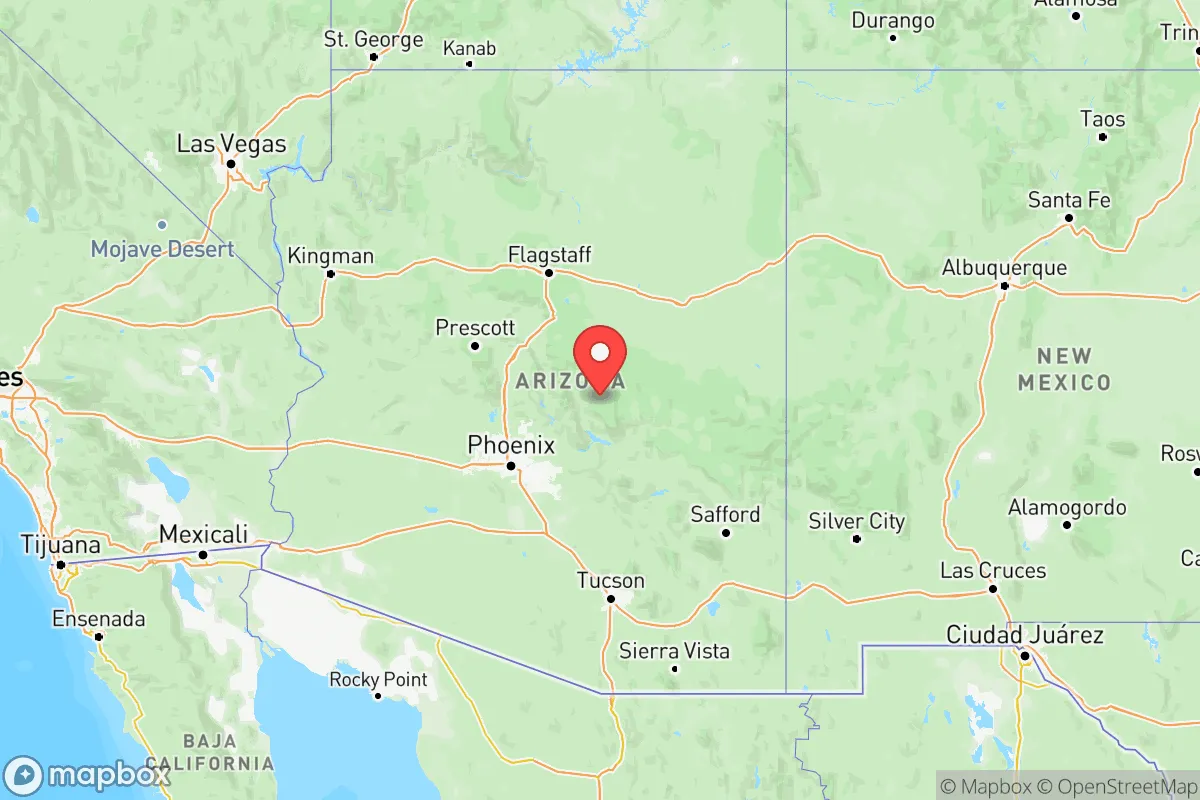
Photo: Wikipedia
Quality of Life in Arizona
A livable area that tracks near national norms for affordability, walkability, and neighborhood health.
What does Quality of Life tell us?
Quality of Life measures an area by evaluating factors like cost of living, nearby amenities, country club access, airport proximity, socioeconomic signals and neighborhood character. For large states, this is a general average — quality of life can vary dramatically between metro areas, suburbs, and rural communities within the same state.
What does this tell us?
Quality of Life measures an area by evaluating factors like cost of living, nearby amenities, country club access, airport proximity, socioeconomic signals and neighborhood character. For large states, this is a general average — quality of life can vary dramatically between metro areas, suburbs, and rural communities within the same state.
Cost of Living
25% above national average
75%
The Real Cost of Living in Arizona for 2026
| Tier | Individual | Family (4) |
|---|---|---|
| Survival | $23k | $43k |
| Comfortable | $70k | $103k |
| Luxury | $139k+ | $215k+ |
| Elite (Top 5%) | $168k+ | $260k+ |
Quality-of-Life Analysis
Arizona offers one of the most dramatic quality-of-life spectrums in the American Southwest, ranging from the dense, 24-hour urban core of Phoenix to remote, off-grid homesteads in the high desert near the New Mexico border. The state’s overall cost of living index sits at 125 (100 = U.S. average), with a median home value of $358,900 and median rent of $1,431, but these averages mask extreme variation: a downtown Scottsdale condo can cost four times as much as a starter home in Douglas. The average commute across the state is 25.5 minutes, though that figure jumps to over 30 minutes in the Phoenix suburbs and drops below 15 minutes in towns like Bisbee or Show Low. This analysis breaks down the state’s lifestyle tiers by concrete place names, real numbers, and the specific type of resident each area serves.
Major metros
Arizona’s urban life is dominated by two distinct metro areas: Phoenix-Mesa-Scottsdale and Tucson. Phoenix, the state’s economic engine, is a sprawling, car-dependent sunbelt metropolis with a population exceeding 1.6 million. Its economy is anchored by semiconductor manufacturing (Intel employs over 12,000 in Chandler), healthcare (Banner Health, Dignity Health), and a growing financial services sector. The vibe is fast-paced, family-oriented, and relentlessly hot — summer highs routinely exceed 110°F. Scottsdale, a wealthy enclave within the metro, offers luxury shopping, golf resorts, and a median home value above $700,000, attracting retirees and affluent professionals. Mesa, the third-largest city, provides a more affordable, family-focused alternative with a large Mormon population and a strong aerospace presence (Boeing, Honeywell). Tucson, 110 miles southeast, is a smaller, slower, and more culturally distinct metro of about 545,000. Its economy leans on the University of Arizona (40,000+ students), Raytheon Missiles & Defense (13,000 employees), and a vibrant arts scene. The vibe is more laid-back, with a strong Hispanic heritage, a thriving local food scene, and a landscape of saguaro-studded mountains. Tucson’s median home value is roughly $320,000 — significantly lower than Phoenix’s $430,000 — making it attractive for remote workers and academics seeking a lower cost of living with urban amenities.
Mid-size cities & college towns
Beyond the two major metros, Arizona offers several mid-size cities and college towns that balance opportunity with a more manageable scale. Flagstaff (pop. 77,000) is the state’s premier mountain town, sitting at 7,000 feet elevation with four distinct seasons and a median home value of $560,000. It is home to Northern Arizona University (20,000 students) and serves as a gateway to the San Francisco Peaks and Grand Canyon. The vibe is outdoorsy, liberal, and expensive — Flagstaff’s cost of living is 15% above the state average. Prescott (pop. 47,000) offers a more conservative, retiree-friendly alternative at 5,400 feet, with a historic downtown, a strong cowboy culture, and a median home value of $475,000. It attracts second-home buyers and those seeking a quieter, cooler climate than Phoenix. Yuma (pop. 97,000), in the far southwest corner, is a major agricultural hub (winter lettuce, citrus) and a border city with a large military presence (Marine Corps Air Station Yuma). Its median home value is just $280,000, making it one of the state’s most affordable mid-size cities, but summer temperatures regularly exceed 110°F. Sedona (pop. 10,000) is technically a small town but functions as a mid-size destination for tourism and luxury living, with red rock views, a New Age spiritual scene, and a median home value above $800,000. It is not a practical place for most working families but is a top choice for wealthy retirees and vacation-home buyers.
Small towns & rural areas
Arizona’s small towns and rural areas offer the most dramatic lifestyle contrasts, from high-desert ranches to historic mining communities. Bisbee (pop. 5,000), near the Mexican border, is a former copper mining town turned arts colony, with steep, winding streets, Victorian architecture, and a median home value of $250,000. It attracts artists, retirees, and those seeking an offbeat, walkable community. Show Low (pop. 11,000), in the White Mountains at 6,300 feet, is a hub for outdoor recreation (fishing, hiking, skiing at Sunrise Park Resort) and offers a median home value of $350,000. It appeals to families and retirees who want four seasons without Flagstaff’s price tag. Page (pop. 7,500), on the Utah border near Lake Powell and Antelope Canyon, is a tourism-dependent town with a median home value of $320,000. It is isolated — the nearest major city is Flagstaff, 130 miles away — but offers unparalleled access to slot canyons and water sports. Willcox (pop. 3,500), in the Sulphur Springs Valley, is a farming and ranching community with a median home value under $200,000. It is one of the cheapest places to live in the state, attracting those who prioritize land and solitude over amenities. Rural areas like Mohave County (Lake Havasu City, Kingman) and Greenlee County (Clifton, Morenci) offer desert living with low costs but limited healthcare and employment options outside mining and tourism.
Luxury vs. affordable living
The luxury tier in Arizona is concentrated in Paradise Valley (median home value $2.5 million+), Scottsdale’s DC Ranch and Silverleaf neighborhoods, and Sedona’s Chapel Area. These areas offer custom homes on large lots, private golf clubs, and proximity to high-end dining and shopping. Fountain Hills, with its iconic fountain and mountain views, is a more moderately priced luxury option (median home value $650,000). At the opposite end, the most affordable areas include Douglas (median home value $140,000), San Luis ($200,000), and Eloy ($210,000). These are border or agricultural towns with limited job markets but extremely low housing costs. South Phoenix and Maryvale within the Phoenix metro offer urban affordability (median home values $280,000–$320,000) but come with higher crime rates and older housing stock. Coolidge and Casa Grande, between Phoenix and Tucson, are growing exurbs where new construction homes can be found for under $350,000, appealing to commuters willing to drive 45–60 minutes to work.
The practical reality is that Arizona’s quality-of-life options are defined by trade-offs in climate, cost, and convenience. Remote workers and retirees can afford a high-desert lifestyle in Show Low or a historic home in Bisbee for under $350,000, while professionals tied to Phoenix’s job market must pay a premium for proximity or accept a long commute. The state’s 25.5-minute average commute masks the fact that many residents in exurbs like Maricopa or Queen Creek drive over 40 minutes each way. Those who thrive in Arizona are typically comfortable with extreme heat (or seek elevation), value outdoor recreation, and are willing to trade urban density for space or vice versa. The cost-of-living spread — from a COL index of 95 in rural Greenlee County to 160+ in Paradise Valley — means that the same state offers both some of the cheapest and most expensive housing in the Sun Belt.

Crime in Arizona
Crime rates similar to the national median for U.S. locations.
Violent CrimeViolent Crime Analysis
Property CrimeProperty Crime Analysis
Crime Analysis
Arizona's overall crime landscape presents a mixed picture, with property crime rates significantly above the national average while violent crime hovers near the national median. The state's 2023 violent crime rate of 359.9 per 100,000 residents is slightly below the U.S. average of 380.7, but its property crime rate of 1,453.3 per 100,000 is notably higher than the national figure of 1,954.5. These statewide numbers, however, mask dramatic disparities between cities and counties, driven largely by population density, policing strategies, and the ideological leanings of local prosecutors.
Crime in context
When compared to national benchmarks, Arizona's violent crime rate sits roughly 5% below the U.S. average, but property crime is about 26% higher. The state's largest metro areas pull these figures upward. Phoenix recorded a violent crime rate of 493.1 per 100,000 in 2023, well above the state average, while Tucson reported 527.4 per 100,000. Both cities have district attorneys who have adopted progressive prosecution policies, including reduced charging for certain nonviolent offenses and diversion programs that critics argue keep repeat offenders on the streets. In contrast, Scottsdale and Gilbert maintain violent crime rates roughly half the state average, at 189.2 and 161.8 per 100,000 respectively, reflecting more conservative law enforcement approaches and higher property values that attract fewer transient offenders. Flagstaff, a smaller college town, sees elevated property crime (2,011.3 per 100,000) driven by vehicle break-ins and thefts near Northern Arizona University.
What residents experience
Property crime is the most tangible safety concern for most Arizonans. Vehicle theft is particularly acute: Arizona ranks 5th nationally for auto theft, with a rate of 371.2 per 100,000—nearly double the U.S. average. Phoenix alone accounted for over 18,000 stolen vehicles in 2023. Burglary rates are also elevated in urban corridors, especially in neighborhoods near major freeways like I-10 and I-17, which provide quick escape routes. Violent crime is more concentrated: aggravated assault makes up 62% of all violent offenses statewide, with domestic violence incidents accounting for a significant share. In Maricopa County, the county attorney's office has faced criticism for plea deals that reduce felony assault charges to misdemeanors, a policy that some residents believe emboldens repeat offenders. Pima County (Tucson) has a similar pattern, with a 2024 audit showing that 41% of felony violent crime cases were resolved without prison time.
Neighborhood-level variation
Safety in Arizona is highly localized. Within metro Phoenix, neighborhoods in Mesa east of the 101 freeway and Chandler near the Ocotillo area report property crime rates 30-40% below the citywide average. Conversely, areas near downtown Phoenix's "Zone 1" (roughly bounded by I-10, I-17, and the Salt River) see property crime rates exceeding 2,000 per 100,000. In Tucson, the Foothills and Oro Valley areas are significantly safer than the central corridor near the University of Arizona. Rural counties like Greenlee and Apache have violent crime rates below 200 per 100,000, but limited law enforcement resources mean response times can exceed 30 minutes. For families and retirees, the safest bets remain the affluent suburbs of the East Valley—Gilbert, Chandler, and Scottsdale—where progressive prosecution policies have less impact due to lower overall crime volumes and stronger community policing.
Top Cities for Quality of Life in Arizona
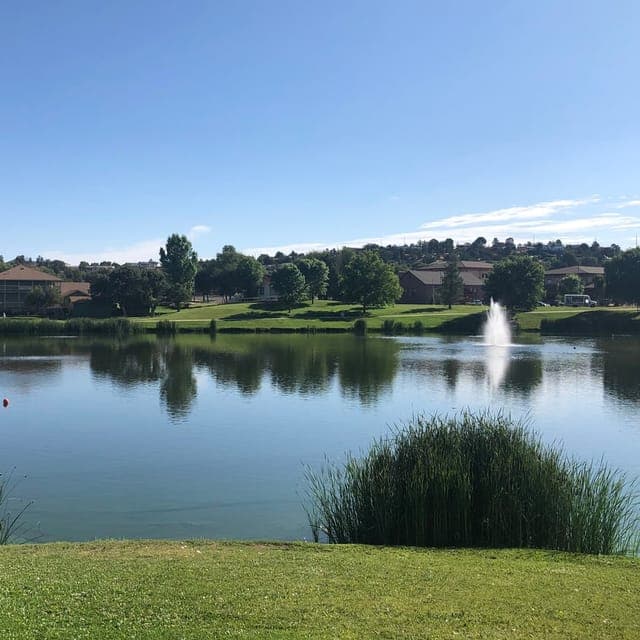
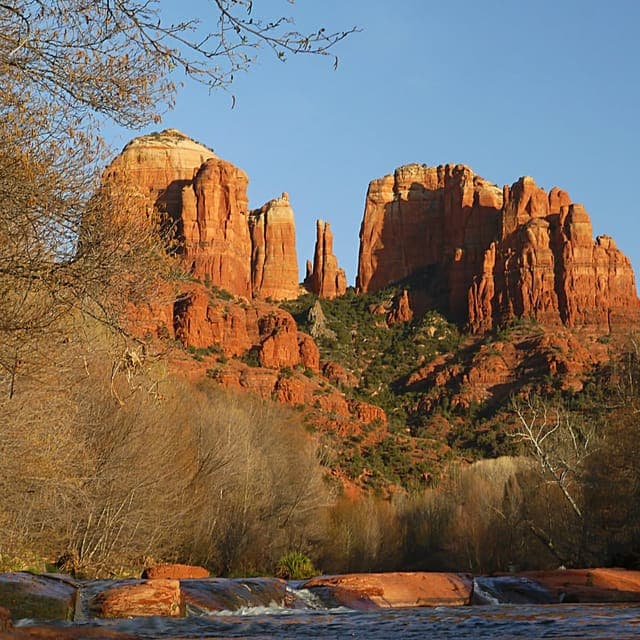


* Values derived from national, state, county, city and local statistics and may differ in a specific area. Last updated: 2026-04-16T00:42:46.000Z
Narrative content on this page is AI-generated and may contain mistakes. Verify any details that matter before acting on them.
ReloMaps may earn a commission from affiliate links at no extra cost to you.

