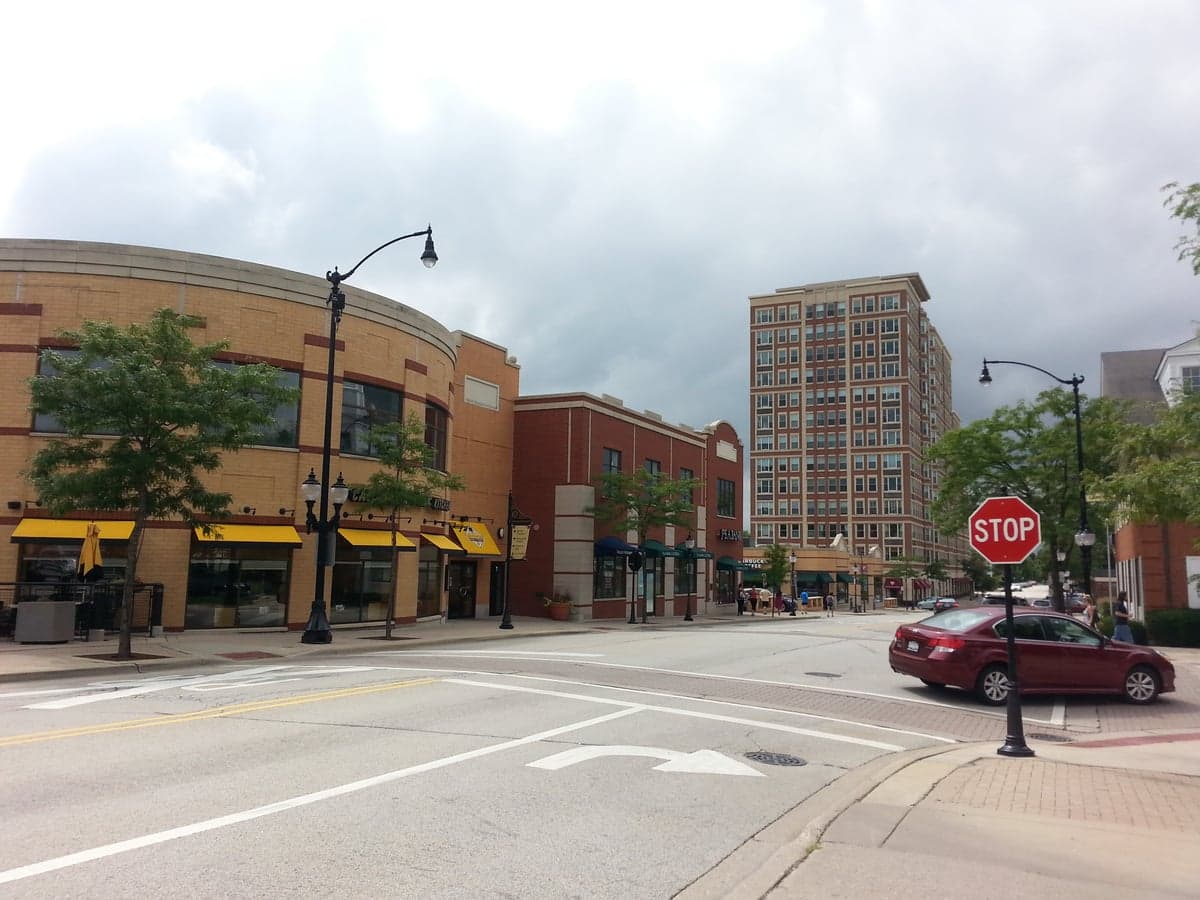
Photo: Wikipedia
Political ClimatePolitical Climate in Arlington Heights, IL
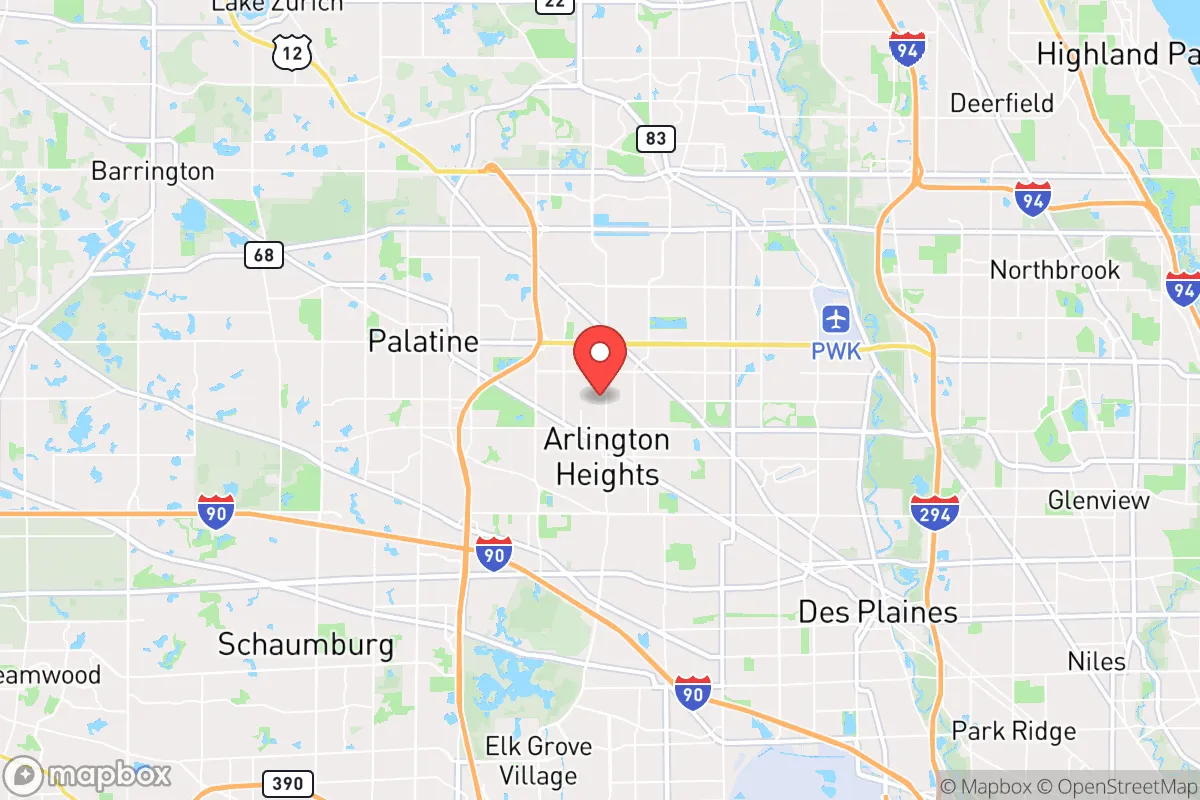
District shown is the primary district for this city’s centroid. Cities may span multiple districts.
Local Political AnalysisPolitical Analysis of Arlington Heights, IL
Arlington Heights leans heavily Democratic, with a Cook PVI of D+19, meaning the area votes about 19 points more Democratic than the national average. This wasn’t always the case—I remember when this town was a solidly moderate, middle-class suburb where folks voted for the person, not the party. Over the last decade, though, the shift has been unmistakable. The 2020 election saw Joe Biden win the village by a landslide margin, and local races have followed suit, with progressive candidates increasingly dominating school board and village trustee seats. If you’re a conservative, you’ve likely felt like your voice is getting drowned out in local meetings and elections.
How it compares
Drive 15 minutes west to Palatine or Rolling Meadows, and you’ll find a more balanced political mix—still blue-leaning, but with a noticeable conservative presence in local government and community groups. Head north to Buffalo Grove or Wheeling, and the dynamic is similar: Democratic strongholds, but with enough GOP voters to keep things from going off the rails. The real contrast is south and west: Mount Prospect and Des Plaines are even more uniformly liberal, while Barrington and Inverness to the northwest still hold onto a more traditional, fiscally conservative vibe. Arlington Heights sits right in the middle of this suburban sea change, and it’s been trending left faster than most of its neighbors. The Cook County Board and Illinois General Assembly districts covering the village are solidly Democratic, so state-level policies—like the assault weapons ban and expanded parental rights restrictions—are a done deal regardless of local sentiment.
What this means for residents
For a conservative family, daily life here means navigating a local government that increasingly prioritizes progressive social agendas over practical concerns. The school board has pushed critical race theory-inspired curriculum and gender identity policies that allow students to change names and pronouns without parental consent—a major red flag for anyone who believes parents should be in the driver’s seat. Village hall has been aggressive on zoning and business regulations, with new fees and permit requirements that make it harder for small, independent shops to survive. Property taxes are among the highest in the state, and the village’s climate action plan has led to mandates on energy efficiency that feel more like government overreach than common-sense conservation. If you value Second Amendment rights, Cook County’s strict gun ordinances apply here, and the state’s recent ban on many semi-automatic firearms has made it harder to exercise that right legally.
Culturally, Arlington Heights still has its charms—the Arlington Park redevelopment debate has been a rare issue where local conservatives and moderates have found common ground, pushing back against high-density, transit-oriented development that would change the village’s character. But the long-term trend is concerning: the Democratic Party of Arlington Heights is well-organized and active, while the local GOP is a shadow of what it was 20 years ago. If you’re considering a move here, know that you’ll be in the minority politically, and you’ll need to stay engaged to protect your freedoms—whether it’s at school board meetings, village hall hearings, or the ballot box. The next few years will tell us if this town can hold onto its independent spirit or if it fully becomes another progressive suburb where individual liberty takes a backseat to government mandates.

State Political ClimatePolitical Climate in Illinois
State Political AnalysisPolitical Environment in the State
Illinois is a solidly Democratic state in federal elections, having voted for the Democratic presidential candidate by double digits in every election since 1992, with margins of +17 in 2020 and +11 in 2024. However, this blue veneer masks a deep and growing urban-rural chasm: the Chicago metro area, home to roughly 65% of the state’s population, drives the statewide lean, while the rest of Illinois—particularly downstate and the collar counties—has shifted sharply red over the past two decades. For a conservative considering relocation, the state presents a stark choice: live in a high-tax, heavily regulated blue enclave or find refuge in increasingly red rural and exurban areas where the political culture is more aligned with traditional values.
Urban vs. rural divide
The political map of Illinois is essentially a tale of two states. Cook County, anchored by Chicago, delivers roughly 40% of the state’s total vote and consistently votes Democratic by 40-50 points. The collar counties—DuPage, Lake, Kane, McHenry, and Will—were once Republican strongholds but have trended blue over the last decade, with DuPage County flipping to Biden in 2020 after voting for Trump in 2016. Meanwhile, downstate Illinois—places like Effingham, Marion, and Quincy—votes Republican by margins of 30-40 points. The St. Louis metro spillover in Madison and St. Clair counties is a mixed bag, with the city of Belleville trending blue but surrounding rural areas staying red. The Peoria area is a bellwether: it voted for Obama twice, then flipped to Trump and has stayed red since. The Rockford region (Winnebago County) is a classic swing area that has moved rightward, voting for Trump in 2020 and 2024 after backing Obama. The divide is so sharp that some downstate counties—like Hamilton and Wayne—vote Republican by 80-point margins, making them among the most conservative in the nation.
Policy environment
Illinois’s policy environment is a cautionary tale for conservatives. The state has the second-highest property tax burden in the nation (averaging 2.1% of home value) and a flat income tax rate of 4.95% that is among the highest in the Midwest. In 2020, voters rejected a progressive income tax amendment, but the legislature continues to push for higher taxes through other means. The regulatory climate is heavy: Illinois has some of the strictest gun laws in the country, including a 2023 ban on assault weapons and high-capacity magazines (the Protect Illinois Communities Act), which has sparked massive legal challenges and a federal lawsuit. Education policy is dominated by the Chicago Teachers Union, which has successfully blocked charter school expansion and pushed for progressive curricula. Healthcare is heavily regulated, with a state-run insurance exchange and Medicaid expansion under the Affordable Care Act. Election laws are among the most liberal: same-day voter registration, no-excuse mail-in voting, and automatic voter registration are all in place. For conservatives, the policy environment feels like a constant uphill battle against a one-party state government that has held supermajorities in both chambers for most of the last decade.
Trajectory & freedom
Illinois is becoming less free by nearly any measure, especially for gun owners, taxpayers, and parents. The Protect Illinois Communities Act (2023) banned over 170 types of firearms and magazines over 10 rounds, with no grandfather clause for future sales—a direct infringement on Second Amendment rights that has led to over 100 lawsuits. On parental rights, the state passed the Keeping Youth Safe and Healthy Act (2021), which mandates comprehensive sex education in public schools, including LGBTQ+ content, without an opt-out for parents. In 2023, the legislature passed a law requiring schools to allow students to use bathrooms and locker rooms matching their gender identity, overriding parental notification. Medical freedom took a hit with the Reproductive Health Act (2019), which removed nearly all restrictions on abortion and mandated insurance coverage. Property rights are under pressure from high property taxes and a 2021 law that allows counties to create “community land trusts” with eminent domain powers. The only bright spot for conservatives is the Firearm Owners Identification (FOID) Card Act reform in 2023, which streamlined the card renewal process, but that’s a small win in a sea of restrictions.
Civil unrest & political movements
Illinois has a history of intense political activism, particularly in Chicago. The 2020 George Floyd protests in Chicago were among the largest in the nation, with looting and property damage that led to over $60 million in losses. The city remains a flashpoint for organized left-wing activism, with groups like Chicago for Abortion Rights and the Chicago Teachers Union holding frequent rallies. On the right, the Illinois State Rifle Association and Gun Owners of America have been highly active in challenging the assault weapons ban, with large rallies at the state capitol in Springfield. Immigration politics are contentious: Illinois is a sanctuary state (the Trust Act of 2017 and the Illinois Way Forward Act of 2021), which limits local law enforcement cooperation with ICE. This has led to tensions in downstate communities like Effingham and Marion, where local sheriffs have publicly refused to comply. Election integrity remains a hot-button issue: the 2020 election saw widespread use of mail-in ballots, and a 2023 law (the Election Integrity Act) actually expanded mail-in voting, drawing criticism from conservatives who worry about ballot security. The Illinois Freedom Caucus, a group of hardline conservative state legislators, has been vocal in opposing these measures but has little power in the supermajority environment.
Projection
Over the next 5-10 years, Illinois is likely to become more blue and more divided. Demographic trends favor Democrats: Chicago’s population is stabilizing after decades of decline, while the collar counties continue to suburbanize and trend left. Downstate, however, is aging and shrinking, which will reduce its electoral clout. The state’s fiscal situation is dire—Illinois has the worst-funded pension system in the nation, with a $140 billion unfunded liability—which will likely force either massive tax hikes or severe service cuts, both of which will accelerate out-migration of conservatives to states like Indiana, Tennessee, and Florida. The gun ban will likely be upheld in court (the 7th Circuit has already ruled in favor of the state), further alienating rural residents. The only wildcard is a potential federal court ruling that strikes down the assault weapons ban, which could galvanize the right. For a conservative moving in now, expect to see the state’s political culture become even more hostile to traditional values, with higher taxes, more regulations, and less local control. The best bet is to settle in a deep-red downstate county like Hamilton or Wayne, where the local government provides a buffer against state overreach.
For a new resident, the bottom line is this: Illinois offers a high cost of living, heavy taxes, and a political environment that is actively hostile to conservative values. If you value low taxes, gun rights, and local control, you will find yourself constantly fighting the state government. The only reason to move here is if you have a high-paying job in Chicago or a specific family tie—otherwise, the state’s trajectory is one of declining freedom and rising costs. Choose your county carefully, and be prepared for a political fight that shows no signs of letting up.
* Values derived from national, state, county, city and local statistics and may differ in a specific area. Last updated: 2026-04-24T16:44:11.000Z
Narrative content on this page is AI-generated and may contain mistakes. Verify any details that matter before acting on them.
ReloMaps may earn a commission from affiliate links at no extra cost to you.

