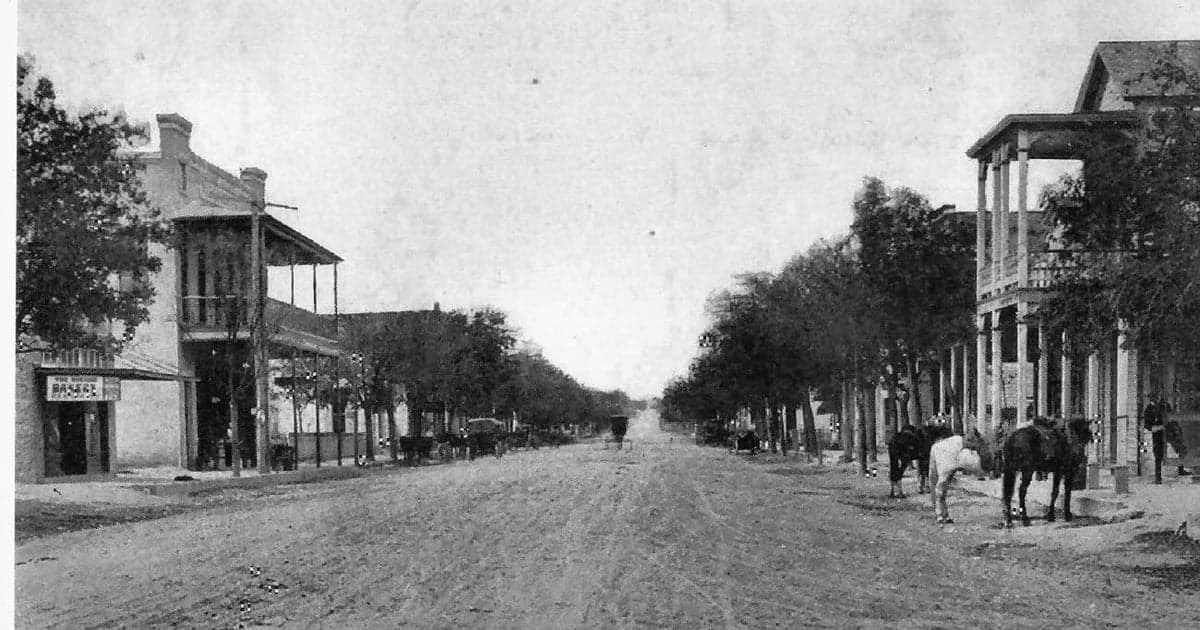
Photo: Wikipedia
Political ClimatePolitical Climate in Boerne, TX
District shown is the primary district for this city’s centroid. Cities may span multiple districts.
Local Political AnalysisPolitical Analysis of Boerne, TX
Boerne has long been a rock-ribbed conservative stronghold, and that hasn't changed. The Cook PVI rating of R+11 tells you the math, but it doesn't capture the feel. This is a place where the Second Amendment isn't debated, property rights are sacred, and the general attitude is "leave us alone." For decades, that was the default. You could go to the Kendall County Commissioners Court meeting and know, without a doubt, that the folks in charge believed in limited government and local control. That bedrock is still here, but like everywhere else in Texas, you can feel the pressure from the growth spilling out of San Antonio. The political trajectory isn't toward a blue shift—not yet—but it's a fight to keep the character of the place from being diluted by folks who moved here for the schools and the safety but then want to change the rules.
How it compares
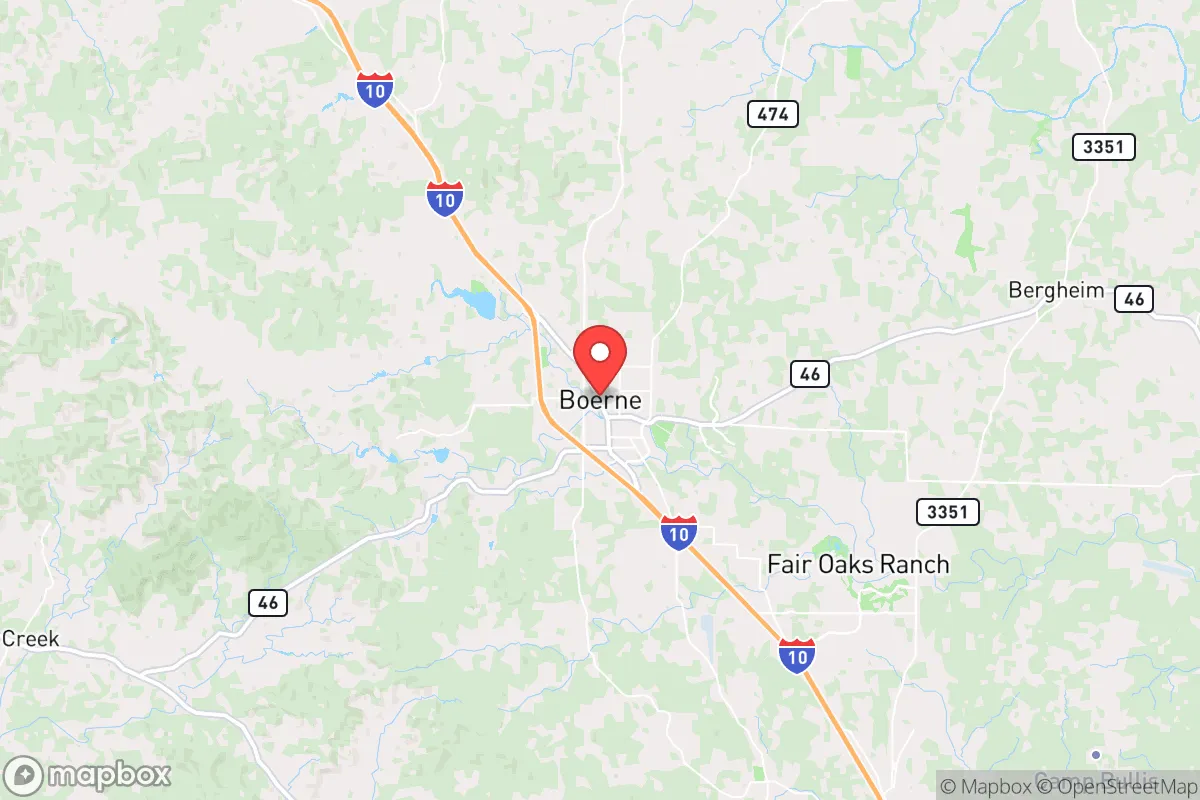
Drive 15 minutes south on I-10, and you hit the edge of San Antonio's Bexar County, which is reliably Democratic. That's the starkest contrast you'll find. Boerne is the wall. Go west to Kerrville, and you're in a similar conservative pocket, though it's older and a bit more libertarian-leaning on things like alcohol sales. Head east toward the sprawl of Fair Oaks Ranch and Bulverde, and you'll find a more suburban, slightly more moderate Republican vibe—folks who might vote red but are less likely to show up at a school board meeting to fight a critical race theory curriculum. Boerne itself is still the heart of the resistance to that kind of drift. The surrounding unincorporated areas of Kendall County are even more hardline, where a zoning ordinance is viewed with deep suspicion. The real contrast, though, is with the city of San Antonio itself. Boerne exists, in many ways, as a conscious alternative to the big-city politics of taxes, regulations, and progressive social experiments. People move here to get away from that.
What this means for residents
For a resident, this political climate means a lighter touch from government in daily life. You won't see the city council trying to ban gas stoves or impose strict rental registration schemes like you hear about in Austin or even parts of San Antonio. The local police are generally pro-community, not pro-overreach. Property taxes are still a burden—that's a Texas-wide problem—but you don't have the added layer of a city government looking for new ways to nickel-and-dime you. The school board here has been a battleground, but the conservative majority has held the line on parental rights and curriculum transparency. For a family, that's the big one: you can send your kid to Boerne ISD and not worry about them being exposed to radical gender ideology or divisive racial politics without your knowledge. The downside? If you're hoping for a more "progressive" city government that will spend heavily on bike lanes, public art, or affordable housing mandates, you'll be frustrated. The local ethos is "keep the taxes low and the regulations few." That's the trade-off, and for most people here, it's not a trade-off at all—it's the whole point.
One cultural distinction that sets Boerne apart is the deep, almost reflexive skepticism of any new government program. When the state or federal government starts talking about "mandates" or "guidelines," the local reaction isn't "how do we comply?"—it's "how do we opt out?" You see this in the way the city handled COVID restrictions (very few, very short-lived) and in the ongoing resistance to any form of regional transit authority or land-use planning that comes from Austin. There's a strong strain of "we know what's best for us" that runs through everything. The long-term concern among locals isn't that Boerne will turn blue—it's that the sheer volume of new residents, many from California or the Northeast, will slowly erode that independent spirit. The fear is that one day, you'll wake up and find your city council has passed a noise ordinance that kills the local gun range, or a "complete streets" policy that narrows lanes and slows traffic for the sake of "equity." For now, the old guard is still holding the line, but the fight is getting more expensive and more frequent every election cycle.

State Political ClimatePolitical Climate in Texas
State Political AnalysisPolitical Environment in the State
Texas remains a solidly Republican state, but the margin has tightened noticeably over the past two decades. In 2004, George W. Bush carried the state by 23 points; by 2020, Donald Trump’s margin had shrunk to just 5.5 points. The dominant coalition is still conservative — rural voters, suburban families, and the oil-and-gas economy — but explosive growth in the blue-leaning metros of Austin, Dallas, Houston, and San Antonio has shifted the needle. For a conservative considering relocation, the key question is whether the state’s traditional freedom-friendly posture can withstand the demographic tide.
Urban vs. rural divide
The political map of Texas is a stark checkerboard. The vast rural and exurban counties — places like Lubbock, Midland, and the Panhandle — vote Republican by 60-80% margins. Meanwhile, the major urban cores have swung hard left. Harris County (Houston) flipped from +12 R in 2004 to +15 D in 2020. Travis County (Austin) is now a Democratic stronghold at +50 D. Dallas County went from +1 R in 2004 to +16 D in 2020. The suburbs are the battleground: Collin County (north of Dallas) still votes Republican, but its margin dropped from +32 R in 2012 to +14 R in 2020. Fort Bend County (southwest of Houston) flipped from +6 R in 2012 to +8 D in 2020. The fastest-growing counties — Williamson (north of Austin), Comal (north of San Antonio), and Montgomery (north of Houston) — remain red but are drifting purple as Californians and New Yorkers arrive.
Policy environment
Texas’s policy environment is a mixed bag for conservatives. On the plus side, there is no state income tax, a constitutional cap on property tax growth (Proposition 4, 2023), and a regulatory climate that favors business — no state-level minimum wage above the federal $7.25, no state OSHA plan, and a right-to-work law. The Texas Education Agency has expanded school choice through the 2023 creation of education savings accounts, though the program is capped at 100,000 students. On the healthcare front, Texas has not expanded Medicaid, keeping the state’s uninsured rate at 18% (highest in the nation). Election integrity saw a major overhaul with SB 1 (2021), which banned 24-hour and drive-through voting, tightened mail-in ballot rules, and empowered poll watchers. The state also passed a permitless carry law (HB 1927, 2021), allowing most adults to carry a handgun without a license. However, the state’s abortion ban (trigger law, 2021) is among the strictest in the nation, with no exceptions for rape or incest — a policy that pleases social conservatives but has drawn national backlash.
Trajectory & freedom
On balance, Texas has been expanding personal liberty in several key areas over the past five years. Permitless carry (HB 1927) was a major win for gun rights, removing a licensing requirement that many saw as a bureaucratic barrier. The 2023 parental rights law (HB 900) restricted sexually explicit content in school libraries and required parental consent for medical care, including gender transition procedures for minors (SB 14, 2023). Property rights were strengthened by the 2023 ban on foreign ownership of agricultural land near military bases (SB 147). However, there are worrying signs of government overreach: the 2021 law banning mask mandates (SB 968) was a double-edged sword — it protected individual choice but also overrode local control. The state’s heavy-handed response to the 2021 winter storm (ERCOT failures) led to new mandates for power plant weatherization, which some see as a regulatory creep. The biggest freedom concern is the rapid growth of property taxes: even with the 2023 cap, Texas homeowners pay the 6th-highest effective property tax rate in the nation (1.68%), and valuations have soared 30-50% in some suburbs since 2020.
Civil unrest & political movements
Texas has seen its share of political flashpoints. The 2020 Black Lives Matter protests in Austin, Dallas, and Houston were large and occasionally violent, with Austin alone seeing over $10 million in property damage. The state’s response was aggressive: Governor Abbott deployed the Texas Department of Public Safety and the National Guard to patrol protests, and the 2021 legislature passed a law (HB 9) increasing penalties for rioting and blocking highways. Immigration politics are a constant flashpoint. Operation Lone Star (2021-present) has deployed thousands of state troopers and National Guard to the border, bused migrants to sanctuary cities like New York and Chicago, and arrested over 500,000 illegal border crossers. The state has also sued the Biden administration over border policies 50+ times. Sanctuary city bans (SB 4, 2017) remain in effect, though they’ve been partially blocked by courts. Secession rhetoric is mostly fringe — the Texas Nationalist Movement has little electoral success — but the state’s legal battles with the federal government over border enforcement, environmental rules, and education policy keep the “Texas vs. Washington” narrative alive. Election integrity remains a hot-button issue: the 2020 election saw no evidence of widespread fraud, but the 2021 voting law (SB 1) was passed amid deep partisan distrust.
Projection
Over the next 5-10 years, Texas will likely become more politically competitive, but not necessarily more liberal. The key demographic driver is in-migration: Texas added 4 million people between 2010 and 2020, and the trend continues. About 40% of new arrivals come from blue states (California, New York, Illinois), but many are conservatives fleeing high taxes and crime. The suburbs of Dallas-Fort Worth, Houston, and San Antonio are growing fastest, and these areas are trending purple. The 2024 election will be a test: if Trump wins Texas by less than 5 points, the state will be considered a swing state by 2028. The Texas GOP is also fracturing internally between establishment conservatives and a more populist, anti-establishment wing (the “Texas Freedom Caucus”). This could lead to primary battles that shift the party further right on immigration and education, but also create gridlock on issues like school vouchers and property tax reform. The biggest wild card is the state’s power grid: if another winter storm causes blackouts, the political fallout could reshape the governor’s race. For a conservative moving in now, expect a state that remains broadly free but is increasingly contested — with higher property taxes, more political advertising, and a growing urban-rural cultural war.
For a conservative relocating to Texas, the bottom line is this: you’ll find a state that still respects gun rights, parental authority, and low taxes, but you’ll need to choose your county carefully. Stick to the red suburbs — Collin, Denton, Comal, Montgomery — and avoid the blue urban cores of Austin, Dallas, and Houston if you want to live among like-minded neighbors. The political climate is shifting, but Texas’s constitutional protections (no income tax, right-to-work, permitless carry) are durable. The biggest practical concern is property taxes: budget for annual increases of 5-10% and consider homestead exemptions. If you value personal freedom and a business-friendly environment, Texas is still one of the best bets in the country — just don’t expect it to stay as solidly red as it was in 2000.
* Values derived from national, state, county, city and local statistics and may differ in a specific area. Last updated: 2026-04-19T07:20:34.000Z
Narrative content on this page is AI-generated and may contain mistakes. Verify any details that matter before acting on them.
ReloMaps may earn a commission from affiliate links at no extra cost to you.

