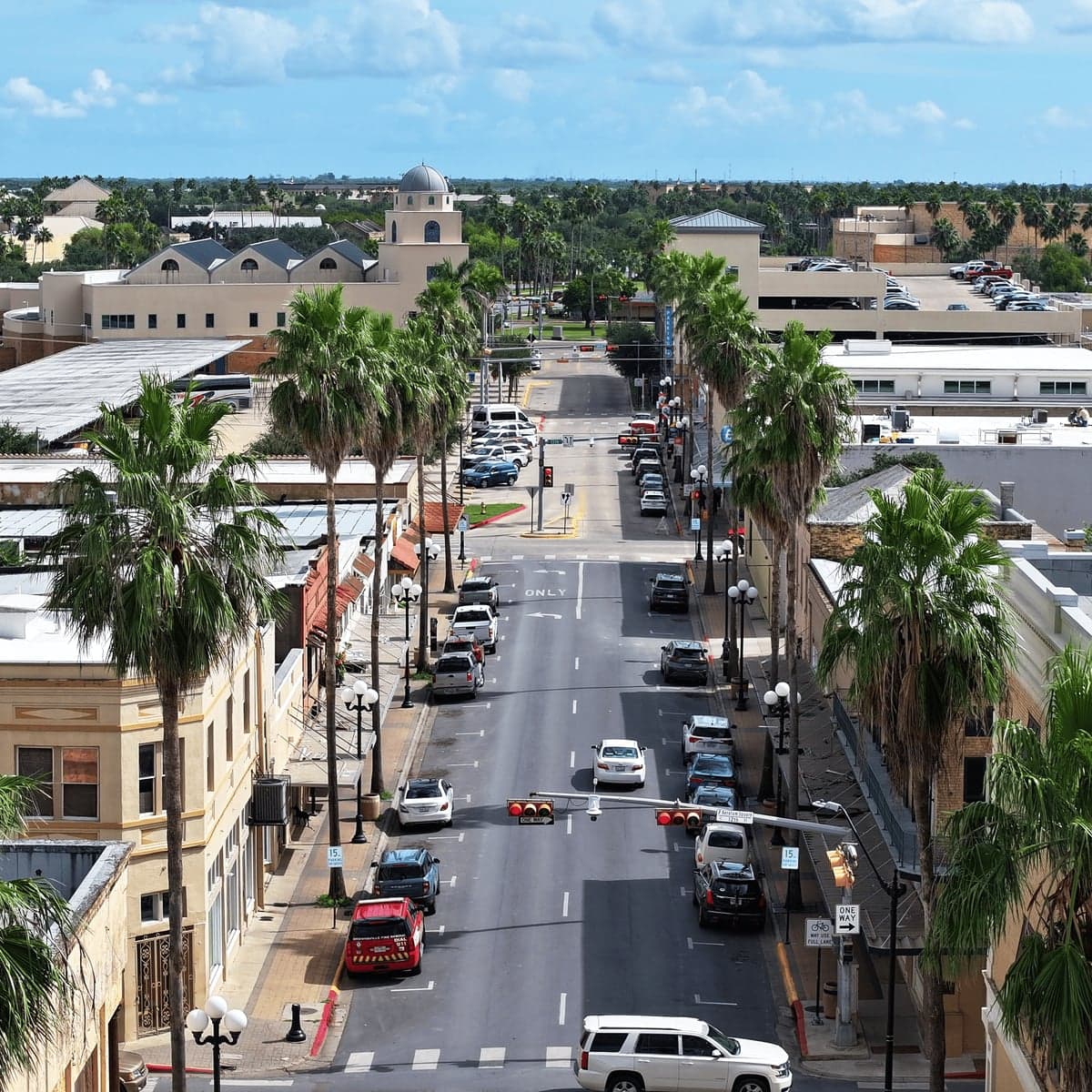
Photo: brownsvilletx.gov
Political ClimatePolitical Climate in Brownsville, TX
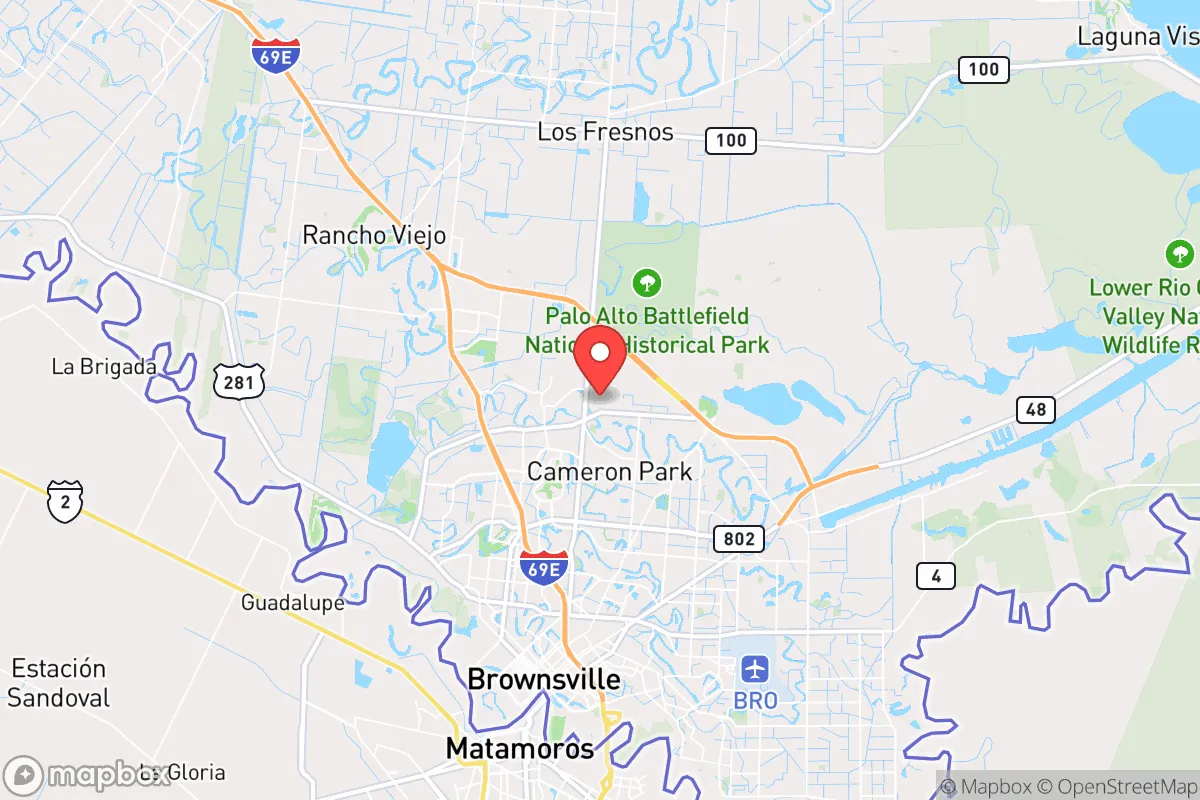
District shown is the primary district for this city’s centroid. Cities may span multiple districts.
Local Political AnalysisPolitical Analysis of Brownsville, TX
Brownsville, Texas, sits in a unique political spot. The Cook PVI rating of EVEN tells you everything you need to know about the tightrope this city walks. For decades, this was a reliably Democratic stronghold, driven by strong union ties and a deep-rooted sense of community. But things have been shifting. You see it in the local elections, you hear it in the diners. The old guard is giving way to a more independent, even conservative-leaning voter who is tired of being told how to live their life. The trajectory is toward a more balanced, and in my view, a more liberty-minded future, but it's a slow, hard-fought change.
How it compares
Drive 20 minutes north to Harlingen, and you'll feel a different energy. Harlingen has a more established, business-friendly conservative base. It's not as flashy, but it's steady. Then you have McAllen, just west, which is a whole different beast—more progressive, more reliant on government programs, and frankly, more willing to accept the kind of top-down mandates that make a lot of us in Brownsville nervous. The contrast is stark. In Brownsville, you still have a strong sense of "live and let live," but that's being challenged by a growing push for progressive policies, especially from the city council and some school board members. It's a real tug-of-war between the old, practical conservatism of the border and the new, ideological progressivism coming from outside.
What this means for residents
For a long-time resident like me, the biggest concern is government overreach. We've seen it with overzealous health mandates, with zoning rules that feel like they're designed to stifle small businesses, and with a school system that seems more interested in social experiments than teaching kids to read and do math. The shift toward progressive ideology is a red flag because it often comes with a "we know better than you" attitude. It means higher property taxes to fund programs you didn't ask for, and a creeping sense that your personal freedoms—like how to run your own business or what to teach your own children—are being chipped away. The good news is that the conservative voice is getting louder. More people are showing up to city council meetings, more are running for office, and there's a growing distrust of any politician who promises to "fix" things by taking more control.
Culturally, Brownsville is still a place where family and faith come first. That's the bedrock. But you see the policy distinctions playing out in real time. For example, the push for "sanctuary city" policies is a hot-button issue. Many of us see it as a direct challenge to the rule of law and a dangerous precedent for ignoring federal statutes. On the other hand, the city's strong pro-life stance and its resistance to certain state-level mandates on local businesses show that the conservative spirit is far from dead. The long-term future depends on whether the people who value personal liberty and limited government can keep pushing back against the tide of progressive overreach. If we can, Brownsville will remain a place where you can live your life without the government breathing down your neck. If we can't, it'll become just another border town run by bureaucrats who don't trust their own citizens.

State Political ClimatePolitical Climate in Texas
State Political AnalysisPolitical Environment in the State
Texas has been a reliably Republican state for decades, with the GOP holding every statewide office and both chambers of the legislature since the mid-1990s. The 2024 presidential election saw Donald Trump carry the state by roughly 14 points, a slight improvement over his 2020 margin, though down from the 16-point win in 2016. The dominant coalition is a mix of rural conservatives, suburban families, and business-oriented voters, but the state's explosive population growth—over 9 million new residents since 2010—is slowly shifting the political terrain, particularly in the fast-growing suburbs of Dallas-Fort Worth, Houston, San Antonio, and Austin.
Urban vs. rural divide
The political map of Texas is a stark checkerboard. The major urban cores—Austin (Travis County), Dallas (Dallas County), Houston (Harris County), San Antonio (Bexar County), and El Paso (El Paso County)—are solidly Democratic, often voting blue by 20 to 40 points. Austin, in particular, is the state's progressive stronghold, with Travis County giving Biden a 45-point margin in 2020. Meanwhile, the vast rural and exurban areas—places like Lubbock (Lubbock County), Midland (Midland County), and the Rio Grande Valley's Hidalgo County—are deeply Republican. The real battleground is the suburbs. Counties like Collin (north of Dallas), Denton, and Fort Bend (southwest of Houston) have been trending leftward as educated, moderate professionals move in, but they still lean red overall. In 2024, Collin County voted for Trump by about 10 points, down from 15 in 2016. The rural-urban split is so pronounced that a drive from downtown Austin to the Hill Country town of Fredericksburg feels like crossing into a different country politically.
Policy environment
Texas's policy environment is defined by a low-tax, low-regulation posture that appeals to conservatives. There is no state income tax, and property taxes are high (averaging about 1.6% of home value) but partially offset by a 2023 law that increased the homestead exemption to $100,000. The state's regulatory climate is business-friendly, with minimal zoning in many cities and a right-to-work law that limits union power. On education, Texas has embraced school choice through a 2023 voucher-like program (HB 3) that allows parents to use state funds for private school tuition. Healthcare policy remains a flashpoint: Texas is one of 10 states that has not expanded Medicaid under the Affordable Care Act, leaving roughly 1.5 million low-income adults uninsured. Election laws tightened after 2021's SB 1, which banned 24-hour and drive-through voting, added ID requirements for mail ballots, and gave poll watchers more access. For a conservative family, the policy mix is generally favorable, but the lack of Medicaid expansion and rising property taxes are persistent concerns.
Trajectory & freedom
On the freedom front, Texas has moved in two directions simultaneously. On the positive side for conservatives, the state expanded gun rights in 2021 with permitless carry (HB 1927), allowing adults to carry handguns without a license. Parental rights were strengthened in 2023 with the passage of the "Parental Bill of Rights" (HB 900), which requires schools to notify parents about instructional materials and allows them to opt their children out of lessons they find objectionable. Medical autonomy took a hit with the 2021 abortion ban (SB 8), which prohibits abortion after roughly six weeks and allows private citizens to sue violators—a law that remains in effect post-Dobbs. On the concerning side, property rights have been eroded by the state's aggressive use of eminent domain for private infrastructure projects, like the controversial Texas Central high-speed rail project between Dallas and Houston, which has faced years of legal battles from landowners. Taxation, while low, is regressive, and the 2023 property tax relief was a one-time measure, not a structural reform. The overall trajectory is toward more government intervention in social issues (abortion, education) but less in economic matters—a mixed bag for a liberty-minded resident.
Civil unrest & political movements
Texas has seen its share of political turbulence. The 2020 Black Lives Matter protests in Austin were among the largest in the country, with the city council later defunding the police by about $150 million—a move that was partially reversed after a crime spike. On the right, the "Patriot" movement is strong in rural areas, with groups like the Texas Nationalist Movement advocating for secession, though this remains fringe. Immigration politics are a constant flashpoint. Governor Greg Abbott's Operation Lone Star, launched in 2021, has deployed thousands of National Guard troops to the border and bused migrants to Democratic-led cities like New York and Chicago. The state has also passed laws allowing local police to arrest suspected illegal immigrants (SB 4, currently tied up in court). Sanctuary city policies are banned statewide, but El Paso and Austin have declared themselves "welcoming cities," creating tension with state authorities. Election integrity remains a hot-button issue: the 2020 and 2022 cycles saw widespread claims of fraud from the right, though no major cases were proven. A new resident in a blue city like Austin will see regular protests on both sides, while in a red town like Lubbock, the political scene is quieter but more organized around church and gun clubs.
Projection
Over the next 5-10 years, Texas is likely to become more competitive at the statewide level, but not necessarily more liberal. The influx of Californians and other out-of-staters is often overstated—many new residents are actually conservatives from blue states fleeing high taxes and crime. However, the growing Hispanic population, particularly in the Rio Grande Valley and around Houston, is trending Democratic, though not as fast as national pundits predict. The suburbs will continue to be the key: if places like Collin County and Fort Bend County flip blue, the state could become a swing state by 2032. For now, the legislature is likely to remain Republican but with a narrower majority, leading to more moderate compromises on issues like school funding and property taxes. A conservative moving in now should expect a state that remains broadly friendly to their values but with growing pockets of progressive influence, especially in the cities. The biggest wildcard is the border: if federal policy doesn't change, Texas will continue to assert its own authority, potentially leading to more legal clashes and a hardening of the state's identity as a conservative bulwark.
For a new resident, the bottom line is that Texas offers a high degree of personal and economic freedom compared to most states, but it's not a libertarian paradise. You'll pay high property taxes, deal with a patchwork of local regulations (especially in blue cities like Austin), and live in a state that is increasingly polarized between its urban and rural halves. If you're a conservative looking for a place where your values are reflected in state law and your wallet is left alone, Texas is still one of the best bets in the country—just be prepared for the culture war to be a constant backdrop, especially if you land in a suburb that's still deciding which direction it wants to go.
* Values derived from national, state, county, city and local statistics and may differ in a specific area. Last updated: 2026-04-11T04:40:45.000Z
Narrative content on this page is AI-generated and may contain mistakes. Verify any details that matter before acting on them.
ReloMaps may earn a commission from affiliate links at no extra cost to you.

