Photo: Wikipedia
Find The Best Places To Live
in Captain Cook
PRO TIP! You can paste a Zillow or Redfin link to get info on that property.
What It's Like Living in Captain Cook, HI
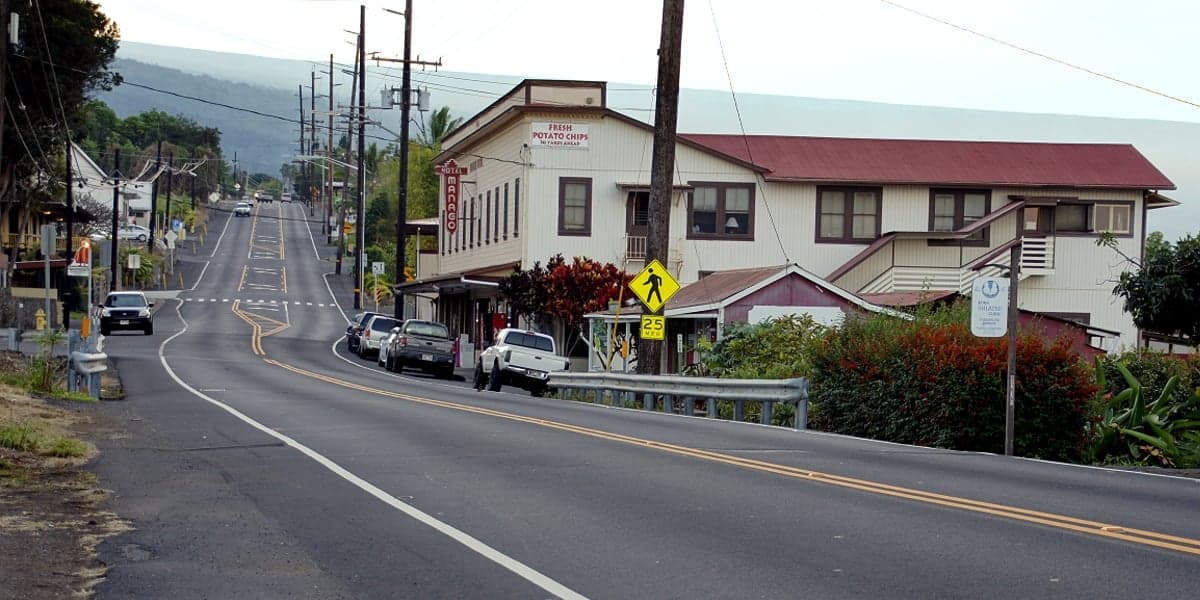
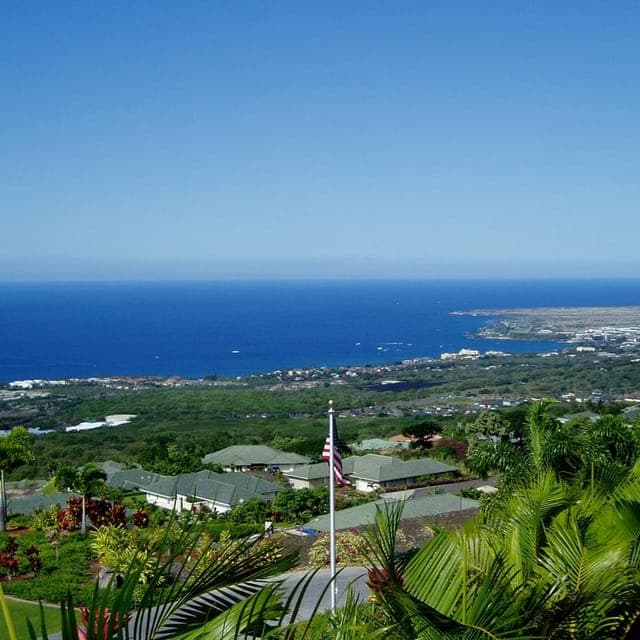
Captain Cook feels less like a town and more like a slow-moving, green corridor along the Mamalahoa Highway, where the air smells like coffee blossom and wet earth. It’s the kind of place where you wave at the same pickup truck every morning, where the post office is a social hub, and where the biggest decision of your day might be whether to stop at the South Kona Fruit Stand or the Manago Hotel for lunch. For the roughly 3,751 people who call it home, life here is defined by a deliberate pace, a deep connection to the land, and a quiet independence that appeals to those who want to be part of Hawaii without the resort-town energy of Kailua-Kona.
The Daily Rhythm: Coffee, Commutes, and Quiet Evenings
Most mornings start early, often before sunrise, because that’s when the coffee farmers are already in their fields. Captain Cook is the heart of Kona’s coffee belt, and a significant portion of the local economy revolves around the small, family-run farms that dot the slopes of Hualālai. For those not in agriculture, the workday often involves a commute—averaging about 26 minutes—north to Kailua-Kona for jobs in tourism, healthcare, or retail. That drive along the winding, two-lane highway is a daily ritual, and locals know exactly which stretch of road to avoid during the school bus run. Evenings are quiet. There’s no downtown strip of bars or nightclubs; instead, people gather at home, on lanai overlooking the ocean, or at a neighbor’s for a potluck. The median age of 40.7 reflects a community that skews toward established adults and families rather than a young, transient crowd.
Who Fits In: The Self-Sufficient and the Land-Hungry
Captain Cook attracts a specific type: people who value privacy, self-reliance, and a slower cadence. You’ll find a mix of coffee farmers, remote workers, retired professionals, and tradespeople who don’t mind the isolation. The median household income of $124,551 is notably high for the Big Island, but that number can be deceptive—many households are dual-income, and a good chunk of that money goes toward the cost of living index of 185, which is nearly double the national average. A gallon of milk costs more, gas is pricier, and the median home value of $642,500 buys you a modest three-bedroom on an acre of lava rock, not a mansion. This isn’t a place for someone looking for nightlife or a quick path to wealth. It’s for the person who wants to grow their own food, fix their own fence, and be left alone to enjoy the view.
What’s There to Do: Coffee, Coast, and Community Gatherings
Weekends are spent outdoors. The most popular activity is simply driving south to Puʻuhonua o Hōnaunau National Historical Park for a swim or a picnic, or hiking the Captain Cook Monument Trail down to Kealakekua Bay—a steep, sweaty descent that rewards you with some of the best snorkeling on the island. The local high school, Konawaena High School, is a genuine community anchor; Friday night football games in the fall draw a crowd that rivals any mainland small town, with parents, alumni, and local businesses all turning out. There’s no pro sports team, but the Wildcats are the closest thing to a local franchise. For entertainment, the Aloha Theatre in nearby Hōlualoa shows indie films and hosts live performances, and the annual Kona Coffee Cultural Festival in November is the biggest event of the year, featuring farm tours, a cupping competition, and a parade. Restaurants are few but beloved: the Manago Hotel serves no-frills, family-style Japanese-American comfort food, and Teshima’s Restaurant in Kealakekua is a local institution for breakfast.
Pros and Cons of Living Here
Longtime residents love the genuine sense of community, the lack of traffic compared to Kailua-Kona, and the ability to live a life that feels connected to the land. The weather is near-perfect—warm days, cool nights, and a reliable afternoon shower that keeps everything green. But the downsides are real. The violent crime rate of 215 per 100,000 is higher than the national average, and while most incidents are property-related or domestic, it’s a statistic that gives some newcomers pause. The isolation can wear on people who aren’t used to it; the nearest Target is a 45-minute drive, and Amazon deliveries take longer than on the mainland. Only 26.6% of adults hold a college degree, which reflects a workforce that’s more trade-oriented than white-collar—a plus if you value practical skills, but a limitation if you’re looking for a deep pool of professional peers. The biggest frustration for many is the cost of everything: housing, groceries, and utilities all take a bigger bite out of that high median income than most people expect. Captain Cook is a trade-off—you trade convenience and affordability for beauty, space, and a pace of life that feels increasingly rare. For the right person, it’s worth every penny.

Similar small towns to Captain Cook

* Values derived from national, state, county, city and local statistics and may differ in a specific area. Last updated: 2026-05-15T21:56:05.000Z
Narrative content on this page is AI-generated and may contain mistakes. Verify any details that matter before acting on them.
ReloMaps may earn a commission from affiliate links at no extra cost to you.

