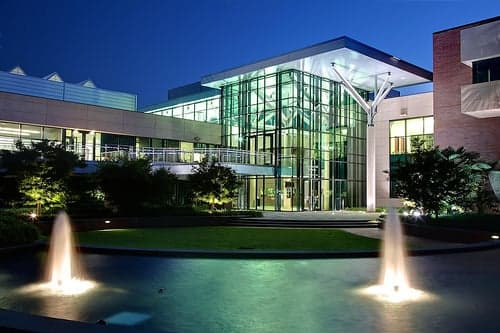
Photo: Wikipedia
Political ClimatePolitical Climate in Cary, NC
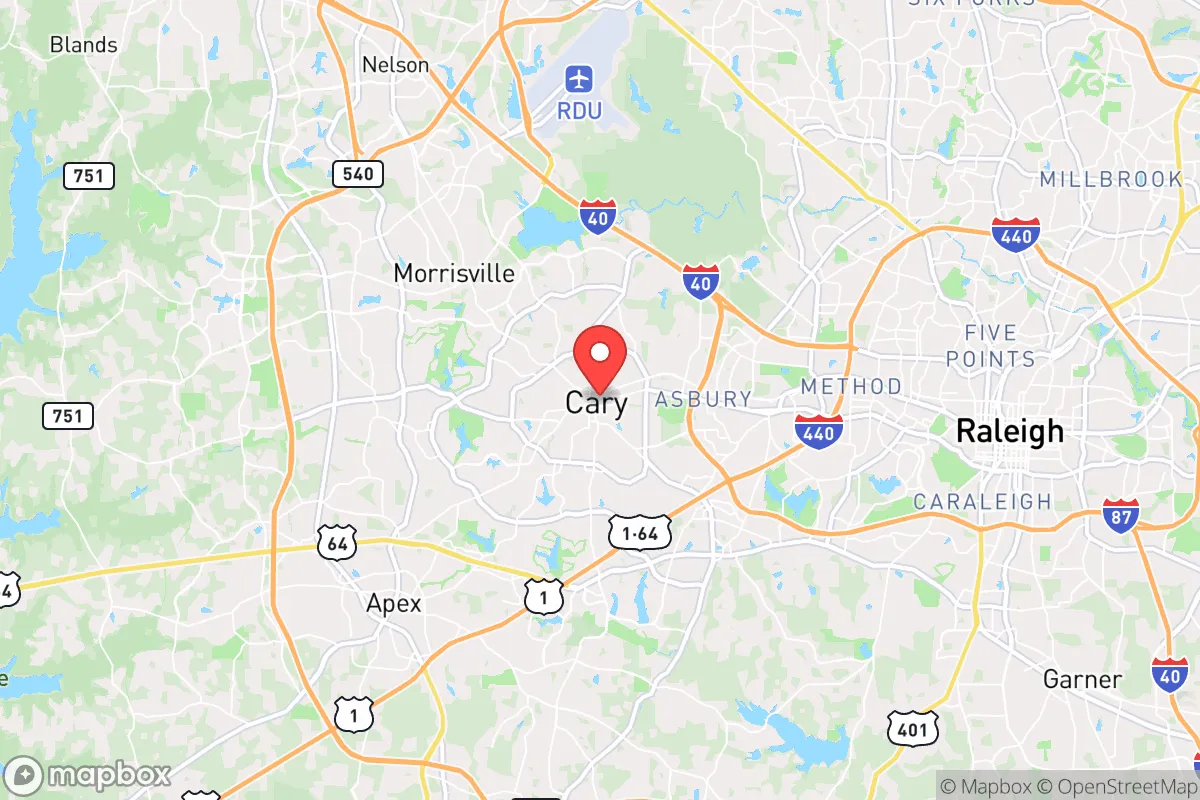
District shown is the primary district for this city’s centroid. Cities may span multiple districts.
Local Political AnalysisPolitical Analysis of Cary, NC
Look, I’ve lived in Cary long enough to remember when this town was a quiet, family-oriented place where folks mostly kept to themselves and let you live your life. That’s changed. Cary’s political climate has shifted hard and fast. The Cook PVI now sits at D+17, meaning the area votes about 17 points more Democratic than the national average. That’s not just a lean—it’s a deep blue stronghold. In the 2024 election, Wake County went for the Democratic candidate by a wide margin, and Cary was a big part of that. The trajectory is clear: each cycle, the progressive wing gets louder, and the old-school, live-and-let-live vibe gets pushed further out.
How it compares
Drive 20 minutes north to Apex or Holly Springs, and you’ll find a slightly more balanced mix—still trending blue, but with a noticeable conservative undercurrent. Head west to Fuquay-Varina or even further out to Johnston County, and you’re in solidly red territory where folks still wave the Gadsden flag and mean it. Cary, though? It’s become the epicenter of Wake County’s progressive experiment. Compared to Raleigh, which has its own liberal pockets, Cary feels more uniformly activist—more organized around issues like zoning for high-density housing, bike lanes everywhere, and local ordinances that feel like they’re designed to manage your choices rather than protect your rights. The contrast with nearby conservative towns isn’t subtle; it’s a cultural and political chasm.
What this means for residents
For a long-time resident like me, the biggest red flag is the creeping government overreach into personal freedoms. It started with small things—strict noise ordinances, limits on what you can do with your own property, a homeowner’s association culture that’s basically a mini-government. Now it’s bigger. The town council has pushed through policies that feel less about community safety and more about social engineering. There’s a real push for “equity” initiatives that prioritize group outcomes over individual rights, and the school board has leaned into curriculum changes that make you wonder if your kid is being taught to think or to conform. The tax burden has crept up too, funding programs that a lot of us never asked for. If you value personal liberty—the freedom to make your own choices without a bureaucrat’s approval—Cary is becoming a harder place to call home.
On the cultural side, the shift is palpable. The old Cary was known for its excellent schools, safe streets, and a sense that you could raise a family without the government breathing down your neck. Now, there’s a growing activist class that shows up at every town hall demanding more regulations, more spending, and more control. The local paper and social media are dominated by voices that treat any dissent as dangerous. If you’re a conservative or even a moderate who values limited government, you’ll find yourself increasingly isolated. The long-term trend? Unless there’s a major course correction, Cary will continue to drift further left, with more rules, higher taxes, and less room for the kind of personal independence that used to define this area. It’s not the Cary I moved to, and I’m watching closely to see if it becomes a place I can still stay.

State Political ClimatePolitical Climate in North Carolina
State Political AnalysisPolitical Environment in the State
North Carolina has long been the quintessential swing state of the South, but over the last decade, it has settled into a reliably red-leaning posture, though the margins are razor-thin. The state voted for Donald Trump in both 2016 and 2024, with the 2024 margin hovering around 3 points, while simultaneously electing a Democratic governor in Josh Stein in 2024. This split-ticket reality defines the state: a conservative-leaning legislature and judiciary, checked by a moderate Democratic executive. The 10-20 year arc shows a state that was purple in the 2000s, trending redder in the 2010s due to rural turnout and suburban shifts, but now facing a demographic squeeze from massive in-migration into the Charlotte and Raleigh-Durham metros. The dominant coalition is a rural and exurban conservative base, anchored by the Piedmont Triad and eastern counties, versus a growing, highly educated, and increasingly progressive urban corridor.
Urban vs. rural divide
The political map of North Carolina is a story of two states. The urban crescent—Charlotte, Raleigh, Durham, and Greensboro—drives the Democratic vote. Mecklenburg County (Charlotte) and Wake County (Raleigh) alone account for nearly a quarter of the state's population and vote reliably blue by 20+ points. Durham County is a deep-blue stronghold, often going 80% Democratic. Meanwhile, the rural east and the mountain west are deeply red. Counties like Johnston (south of Raleigh) and Union (southeast of Charlotte) have flipped from purple to solid red as suburban sprawl brought conservative families seeking lower taxes and better schools. The real battleground is the exurban ring around Charlotte and Raleigh—places like Cabarrus County and Harnett County—where growth is fastest and the vote is competitive. The rural-urban divide is stark: a voter in rural Robeson County lives in a different political universe than one in downtown Raleigh.
Policy environment
North Carolina's policy environment is a mixed bag, but the legislature has been consistently conservative since the 2010 Republican wave. The state has a flat income tax rate of 4.5%, with a scheduled phase-down to 3.99% by 2027—one of the lowest in the Southeast. There is no state property tax, and the sales tax is capped at 7.5% in most counties. The regulatory posture is business-friendly, with a right-to-work law and no state-level minimum wage above the federal $7.25. Education policy has been a flashpoint: the state has a robust school choice program, including Opportunity Scholarships (vouchers) that now cover all income levels, and a growing charter school sector. However, the state also expanded Medicaid in 2023 under a bipartisan deal, a move that rankled fiscal conservatives but was sold as a compromise to keep rural hospitals open. Election laws have tightened: voter ID is now required (after years of litigation), and same-day registration was eliminated in 2023. The state also banned abortion after 12 weeks in 2023, with exceptions for rape and incest, a major win for pro-life advocates.
Trajectory & freedom
On the freedom front, North Carolina has been a tale of two trends. On the positive side for conservatives, the legislature passed a landmark parental rights bill in 2023 (HB 755), requiring schools to notify parents of any changes to a child's health or well-being, and banning instruction on gender identity and sexuality in K-4 classrooms. The state also enacted a permitless carry law for concealed handguns in 2023, a major expansion of Second Amendment rights. Property rights were strengthened with a 2024 law limiting the use of eminent domain for private economic development. On the concerning side, the state's medical autonomy took a hit with the 12-week abortion ban, which, while popular with the base, has energized progressive opposition. The biggest red flag for liberty-minded residents is the continued growth of local government overreach: Charlotte and Raleigh have passed non-discrimination ordinances that effectively create a patchwork of local rules on housing and employment, and the state legislature has repeatedly preempted these with statewide standards, but the fight is ongoing. The trajectory is toward more state-level preemption of local progressive policies, which is a net positive for conservatives who want uniform rules.
Civil unrest & political movements
North Carolina has seen its share of political flashpoints. The 2020 protests in Charlotte and Raleigh over George Floyd's death were large but mostly peaceful, though there were isolated incidents of property damage. The state has a strong, organized conservative grassroots movement, particularly around the John Locke Foundation and local GOP precinct organizations. Immigration politics are less heated than in border states, but Durham and Orange County have declared themselves sanctuary jurisdictions, refusing to cooperate with ICE detainers—a source of ongoing tension with the state legislature, which has passed laws threatening to withhold state funds from such counties. Election integrity remains a live issue: the 2020 and 2024 elections were closely contested, with the state GOP pushing for tighter absentee ballot rules and the Democratic governor vetoing them. The most visible flashpoint for a new resident would be the ongoing battle over school curriculum: conservative parents have become highly organized, packing school board meetings in Wake County and Mecklenburg County to protest critical race theory and LGBTQ+ content in classrooms. This is not a passive state—people are engaged and vocal.
Projection
Over the next 5-10 years, North Carolina is likely to become more competitive, not less. The in-migration from blue states—primarily New York, New Jersey, and California—is concentrated in the urban crescent, and these newcomers tend to vote Democratic. The Charlotte and Raleigh metros are growing at 2-3% annually, and if that trend holds, the state could flip to a toss-up or lean-blue by the early 2030s. However, the rural and exurban areas are also growing, and the state's Republican legislature has shown a willingness to gerrymander congressional and legislative maps aggressively, which will buffer against a rapid flip. The wildcard is the state's growing Hispanic population, which is currently split but trending Democratic. A conservative moving in now should expect a state that remains red-leaning for the next decade, but with increasingly tight margins. The policy environment will likely stay conservative on taxes and gun rights, but the culture war battles over education and local ordinances will intensify. The bottom line: North Carolina is a great place for a conservative who wants low taxes, strong gun rights, and a vibrant economy, but you will need to be politically engaged to keep it that way.
For a new resident, the practical takeaway is this: if you move to Raleigh or Charlotte, you will live in a blue bubble with progressive local government, but the state-level laws will protect your rights. If you choose the exurbs—Fuquay-Varina, Holly Springs, Concord—you will find a more conservative environment with good schools and lower taxes. The state is not Texas or Florida in terms of conservative dominance, but it is a solidly red-leaning state with a strong grassroots conservative movement. Just be prepared to fight for it.
* Values derived from national, state, county, city and local statistics and may differ in a specific area. Last updated: 2026-04-15T23:28:05.000Z
Narrative content on this page is AI-generated and may contain mistakes. Verify any details that matter before acting on them.
ReloMaps may earn a commission from affiliate links at no extra cost to you.

