
Photo: Wikipedia
Political ClimatePolitical Climate in Adams County
Showing district-level results — no local-only data available.
Local Political AnalysisPolitical Analysis of Adams County
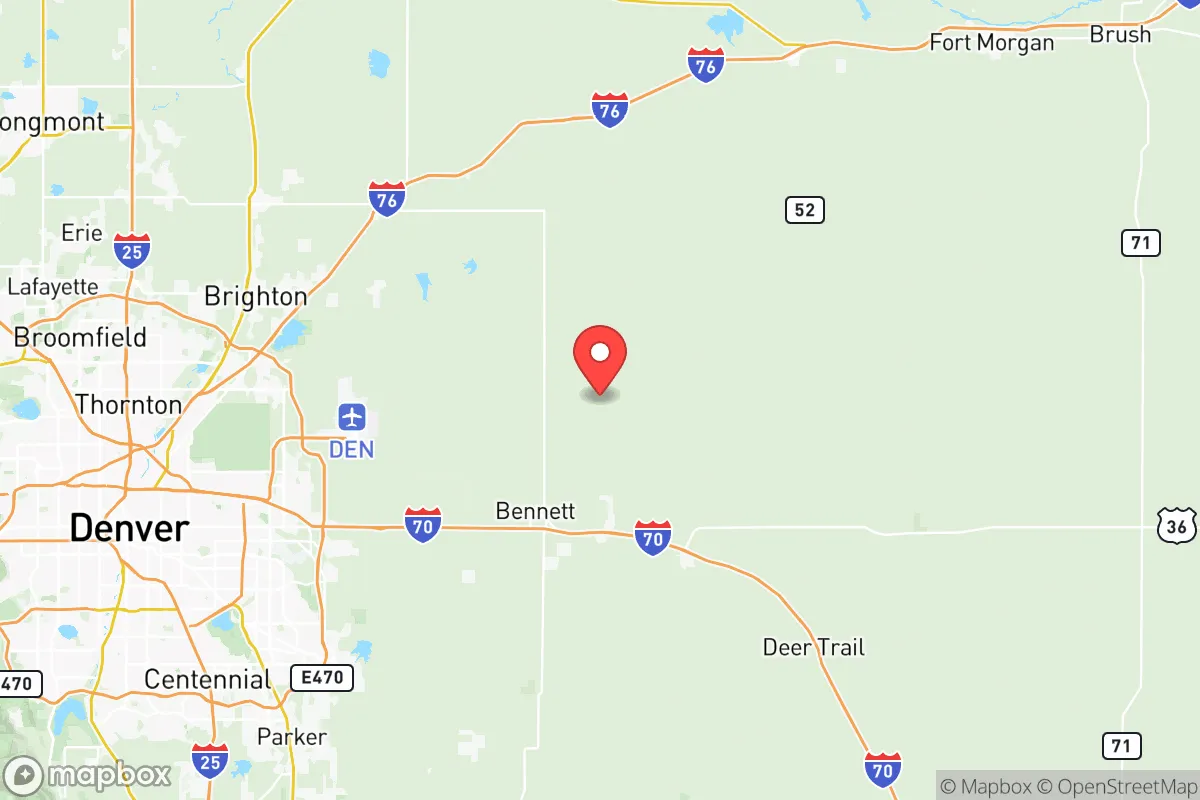
Adams County, Colorado, has historically been a bellwether for the state’s working-class politics, but over the past decade it’s shifted noticeably leftward, now carrying a Cook PVI of R+9. That’s still a Republican-leaning district on paper, but the trend is concerning for anyone who values limited government and personal freedoms. The county’s political center of gravity has moved from the rural, conservative strongholds like Brighton and Bennett toward the more densely populated, progressive-leaning suburbs of Aurora and Thornton. If you’ve lived here as long as I have, you’ve watched the old-school, “leave me alone” ethos get slowly crowded out by a wave of new arrivals who seem to think government has a role in every aspect of your life.
How it compares
When you stack Adams County against the rest of Colorado, the contrast is stark. The state as a whole carries a Cook PVI of D+6, meaning it’s solidly blue—driven by the Denver-Boulder corridor and the Front Range’s urban centers. Adams County, at R+9, is still redder than the state average, but that gap is closing fast. In the 2020 presidential election, Adams County voted for Joe Biden by about 10 points, while Colorado overall went for Biden by 13 points. That’s a far cry from 2012, when the county backed Mitt Romney by a similar margin. The real split is inside the county: the northern towns like Brighton and Fort Lupton still lean conservative, with many precincts voting +15 to +20 for Trump in 2020. Meanwhile, Aurora’s western precincts and Thornton’s newer subdivisions are trending blue, often flipping by 5-10 points per cycle. The swing precincts are in unincorporated areas like Commerce City and Northglenn, where working-class families are being squeezed by rising taxes and housing costs—and increasingly voting for whoever promises relief, even if that means more government handouts.
What this means for residents
For those of us who value personal freedom, the shift is a warning sign. As Adams County’s politics drift left, you’re seeing more local ordinances that nibble at your rights—think stricter land-use rules, higher impact fees on new construction, and a growing appetite for “equity” programs that pick winners and losers. The county commission, once reliably conservative, now has a Democratic majority that’s been pushing for more public transit spending and density mandates, which inevitably means higher property taxes and less control over your own property. If you live in a rural pocket like Bennett or Strasburg, you’re still mostly left alone, but the pressure is mounting. The long-term trajectory is clear: unless the trend reverses, Adams County will look more like Denver within a decade—with all the overreach that implies.
Culturally, the county is losing its independent, frontier spirit. The old-timers who remember when you could build a shed without a permit are being outnumbered by transplants who see government as a problem-solver. The policy distinctions are real: Adams County has already adopted “sanctuary” policies that limit cooperation with federal immigration enforcement, and there’s talk of rent control and mandatory paid leave. For a conservative, that’s a red flag—a sign that the county is trading personal responsibility for government dependency. If you’re thinking of moving here, look at the precinct-level voting maps. The areas around Brighton and Fort Lupton still feel like the Colorado I grew up in. The rest? It’s a slow-motion takeover by the progressive agenda, and it’s happening faster than most folks realize.

State Political ClimatePolitical Climate in Colorado
State Political AnalysisPolitical Environment in the State
Colorado today is a solidly blue state with a Cook PVI of D+6, meaning it leans about six points more Democratic than the national average in presidential elections. But that wasn’t always the case — as recently as 2004, the state voted for George W. Bush. Over the last two decades, explosive population growth in the Denver metro and along the Front Range has flipped the state from a classic purple swing state to a reliably Democratic stronghold, driven largely by an influx of out-of-state transplants and a sharp urban-rural divide. For a conservative considering a move here, the political landscape is a mixed bag: stunning natural beauty and a libertarian Western heritage clash with increasingly progressive state-level policies that many feel encroach on personal freedoms.
Urban vs. rural divide
The political map of Colorado is a tale of two worlds. The Democratic stronghold is the I-25 corridor, anchored by Denver, Boulder, and the sprawling suburbs of Aurora and Lakewood. These areas are packed with young professionals, tech workers, and out-of-state transplants who reliably vote blue. Boulder County, for instance, gave Biden over 77% of the vote in 2020. In contrast, the rest of the state — the Eastern Plains, the Western Slope, and the San Luis Valley — is deeply red. El Paso County, home to Colorado Springs, is the largest conservative stronghold, voting +14 points for Trump in 2020. Rural counties like Moffat and Baca routinely deliver 80%+ Republican margins. The divide is stark: the Front Range’s population density simply overwhelms the rural vote. A notable exception is Weld County (Greeley), which has been a reliable red bastion but is now seeing blue creep as Denver exurbs expand northward. The 2022 gubernatorial race saw Democrat Jared Polis win by 19 points statewide, but he lost 55 of 64 counties — a perfect illustration of the urban-rural chasm.
Policy environment
Colorado’s policy environment has shifted dramatically leftward over the past decade. The state income tax is a flat 4.4%, which is moderate, but property taxes are relatively low thanks to the Gallagher Amendment (repealed in 2020, but its effects linger). However, the regulatory climate is increasingly burdensome. The state has some of the strictest oil and gas regulations in the nation, passed via SB 19-181, which gave local governments sweeping control over drilling — a direct blow to property rights and energy independence. On education, Colorado has adopted progressive curricula and poured money into public schools, but parental rights have taken hits: the state passed a law in 2023 requiring schools to adopt policies that affirm a student’s gender identity without notifying parents, a major flashpoint for conservative families. Healthcare is heavily regulated, with a state-run insurance exchange and strict mandates. Election laws have also tightened: Colorado was one of the first states to implement universal mail-in voting and automatic voter registration, which critics argue erodes ballot security. The state also has a “red flag” law (HB 19-1177), allowing courts to temporarily seize firearms from individuals deemed a risk — a policy many conservatives view as a violation of Second Amendment rights.
Trajectory & freedom
On the freedom front, Colorado is moving in a concerning direction for conservatives. The most glaring example is the 2023 “Parental Rights” bill (HB 23-1221), which effectively prevents schools from notifying parents if a child changes their gender identity or pronouns — a clear erosion of parental authority. On gun rights, the state passed a ban on “ghost guns” and raised the purchasing age for all firearms to 21 in 2023, with more restrictions likely on the horizon. Medical autonomy took a hit with the passage of a strict vaccine mandate for healthcare workers in 2021, though it was later softened. Property rights are under pressure from aggressive land-use planning and renewable energy mandates that force solar and wind installations on private land. On the positive side, Colorado remains a right-to-work state, and there is no state-level rent control. But the overall trajectory is unmistakably toward more government intervention in personal choices — from what you can drive (California-style EV mandates are being debated) to how you can heat your home (natural gas bans in new construction are being pushed in Denver and Boulder).
Civil unrest & political movements
Colorado has seen its share of political flashpoints. The 2020 protests in Denver were large and occasionally violent, with property damage and clashes with police. The state’s sanctuary policies — Denver and Boulder County are “sanctuary” jurisdictions that limit cooperation with federal immigration enforcement — have created tension, especially as the influx of migrants from the southern border has strained resources. On the right, the “Colorado Project” and grassroots groups like the Weld County Republican Assembly have been active in pushing back against progressive policies, but they remain outmatched in statewide elections. There have been serious election integrity concerns: in 2020, Mesa County Clerk Tina Peters was indicted for allegedly allowing unauthorized access to voting machines, a case that has become a national symbol of election skepticism. The state’s universal mail-in voting system remains a point of contention, with many conservatives arguing it invites fraud. Immigration politics are particularly heated in Aurora, where a surge of Venezuelan migrants has overwhelmed shelters and schools, leading to local backlash and calls for stronger enforcement.
Projection
Looking ahead 5-10 years, Colorado is likely to get bluer, not redder. The demographic trends are clear: the Front Range continues to attract young, educated, left-leaning transplants from California, Texas, and the East Coast. Rural counties are losing population, further diluting their electoral influence. The state’s Republican Party is fractured between moderates and a populist wing, making it difficult to mount a competitive statewide campaign. However, there are pockets of hope: Colorado Springs remains a conservative anchor, and the exurbs of Parker and Castle Rock are growing with families seeking lower taxes and better schools. But unless there is a major shift in migration patterns or a national realignment, expect more progressive policies on guns, energy, and education. A new resident moving in now should anticipate a state where their vote for conservative candidates will likely be a minority voice, but where local control in rural and suburban counties can still provide a buffer against the worst of state-level overreach.
Bottom line for a new resident: If you’re a conservative moving to Colorado, you’re coming for the mountains, the climate, and the outdoor lifestyle — not the politics. You’ll find like-minded communities in Colorado Springs, Weld County, and the Western Slope, but you’ll be swimming against the tide in statewide elections. Be prepared for a state government that increasingly views personal freedoms — from gun ownership to parental rights to energy choices — as negotiable. Choose your county carefully, get involved in local politics, and don’t expect the state to swing back anytime soon. It’s a beautiful place to live, but it’s no longer the libertarian paradise it once was.
* Values derived from national, state, county, city and local statistics and may differ in a specific area. Last updated: 2026-05-13T12:29:41.000Z
Narrative content on this page is AI-generated and may contain mistakes. Verify any details that matter before acting on them.
ReloMaps may earn a commission from affiliate links at no extra cost to you.

