
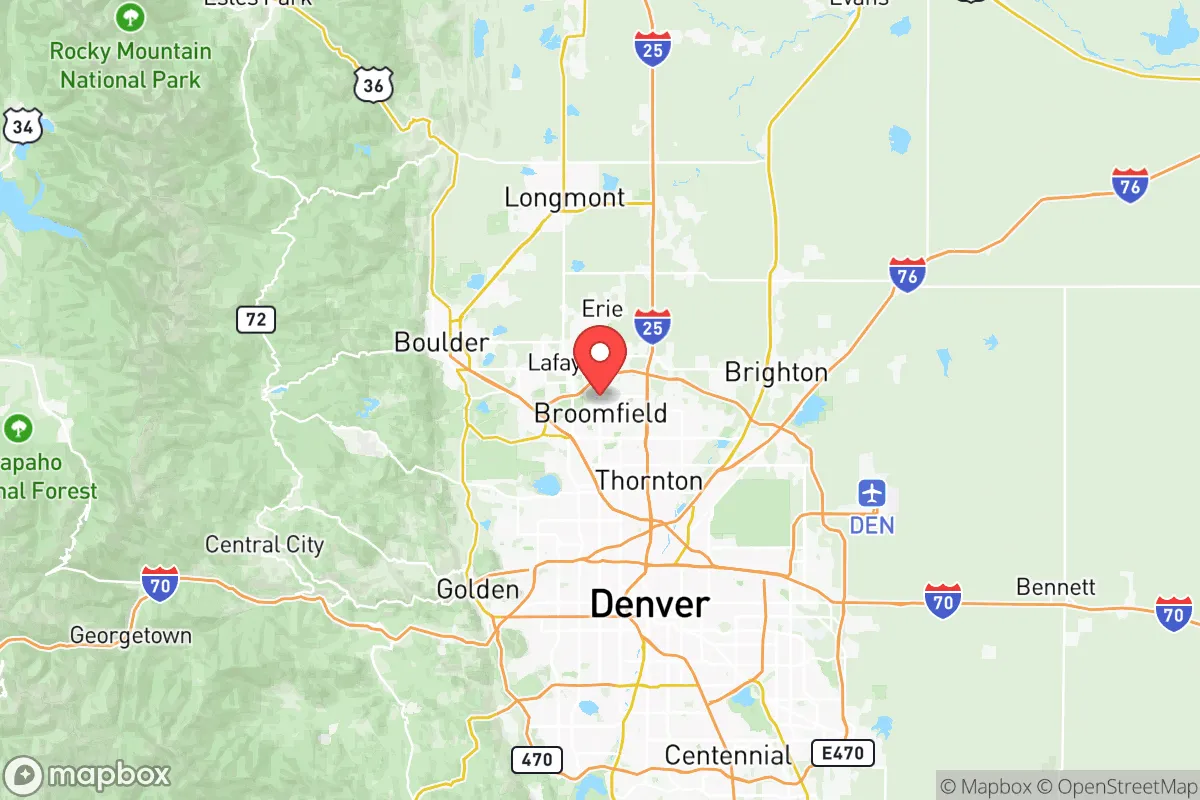
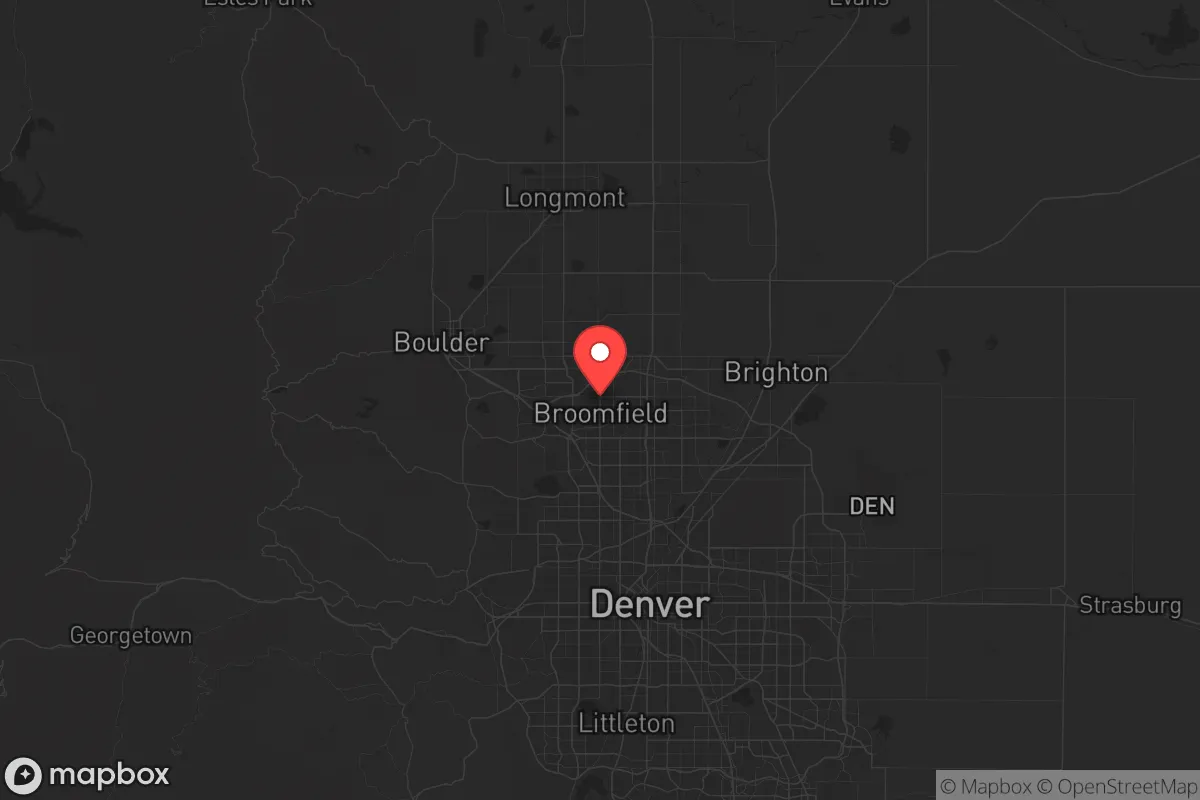
Photo: Wikipedia
Quality of Life in Broomfield County
A livable area that tracks near national norms for affordability, walkability, and neighborhood health.
What does Quality of Life tell us?
Quality of Life measures an area by evaluating factors like cost of living, nearby amenities, country club access, airport proximity, socioeconomic signals and neighborhood character. For large states, this is a general average — quality of life can vary dramatically between metro areas, suburbs, and rural communities within the same state.
What does this tell us?
Quality of Life measures an area by evaluating factors like cost of living, nearby amenities, country club access, airport proximity, socioeconomic signals and neighborhood character. For large states, this is a general average — quality of life can vary dramatically between metro areas, suburbs, and rural communities within the same state.
Cost of Living
97% above national average
67%
The Real Cost of Living in Broomfield County for 2026
| Tier | Individual | Family (4) |
|---|---|---|
| Survival | $33k | $62k |
| Comfortable | $123k | $180k |
| Luxury | $186k+ | $288k+ |
| Elite (Top 5%) | $219k+ | $339k+ |
Quality-of-Life Analysis
Broomfield County, Colorado, offers a surprisingly narrow but high-quality spectrum of living environments, ranging from a dense, master-planned city center to quiet suburban neighborhoods and a handful of agricultural pockets. The county is geographically compact—one of the smallest in the state—and is essentially coterminous with the City and County of Broomfield itself, meaning there are no separately incorporated towns within its borders. This unique structure draws a specific type of resident: professionals and families who want the amenities of a large metro area (Denver and Boulder are minutes away) without leaving a single, efficiently managed jurisdiction. The lifestyle gradient is less about moving between distinct towns and more about choosing between a walkable urban core, a traditional suburban subdivision, or a rural-residential property on the county's fringes.
Largest town(s) & population centers
The entirety of Broomfield County's population of roughly 75,000 lives within the City and County of Broomfield, making it the sole population center. Daily life here is defined by the city's master-planned design, particularly in the Interlocken and FlatIron Crossing districts. Interlocken is a major employment hub housing corporate campuses for companies like Vail Resorts, Sierra Nevada Corporation, and Level 3 Communications, creating a live-work-play dynamic for many residents. The FlatIron Crossing mall and surrounding retail corridor form the commercial heart, while newer mixed-use developments like Arista offer apartments, restaurants, and a walkable street grid that feels distinctly urban for the county. The average commute of 26.3 minutes is manageable, largely because many residents work within Broomfield or in nearby Boulder, Westminster, or Louisville. The area is served by the Broomfield School District, which consistently ranks among the top in the state, and the RTD Flatiron Flyer bus rapid transit line provides direct connections to downtown Denver and Boulder.
Smaller towns & rural pockets
Because Broomfield County is a single consolidated city-county, there are no smaller incorporated towns. However, the county does contain distinct unincorporated neighborhoods and rural pockets that offer a different pace of life. The Broomfield Heights and Greenbriar neighborhoods, developed in the 1960s and 1970s, feature larger lots, mature trees, and a quieter, more established suburban feel compared to the newer, denser developments. On the county's northern and eastern edges, particularly near Wadsworth Parkway and Eagle Trace, you'll find properties with acreage, horse pastures, and a semi-rural atmosphere that feels disconnected from the commercial core. The McKay Lake area and the open space around Broomfield County Commons Park provide a buffer of trails and farmland that preserves a rural character. These pockets are rare and highly sought after, as they offer a country lifestyle within a 20-minute drive of the Interlocken tech hub.
Cost & lifestyle range
The cost of living in Broomfield County is high, with a composite index of 197 (nearly double the U.S. average), driven primarily by housing. The median home value of $631,600 and median rent of $2,074 place it firmly in the upper tier of Colorado's Front Range. The lifestyle range is defined by housing type and location. At the higher end, the Broadlands and Anthem neighborhoods feature large single-family homes on cul-de-sacs, with HOA-managed parks and pools, commanding prices well above the county median. In the middle, older neighborhoods like Broomfield Heights offer more affordable ranch-style homes on quarter-acre lots, often with no HOA. At the lower end of the cost spectrum, the Arista and FlatIron districts offer modern apartments and townhomes, with rents that, while high by national standards, are competitive for the region. The trade-off is clear: paying a premium for a newer, amenity-rich home in a planned community versus getting more land and space in an older, less regulated area. Property taxes remain relatively low compared to other Front Range counties, which helps offset the high purchase prices for long-term owners.
Broomfield County is best suited for professionals and families who prioritize top-rated schools, short commutes, and efficient local government over the urban energy of Denver or the bohemian culture of Boulder. The county's compact size and unified city-county structure mean residents get consistent services, low crime rates, and well-maintained infrastructure across all neighborhoods. Those seeking a true rural lifestyle with significant acreage will find the options limited and expensive, while those wanting a walkable, urban environment will find it concentrated in a few specific districts. For the right buyer—typically a dual-income household working in tech, aerospace, or professional services—Broomfield offers a balanced, low-friction quality of life that is hard to replicate elsewhere in the Denver metro area.

Crime in Broomfield County
Higher crime rates than 57% of comparable U.S. locations.
Violent CrimeViolent Crime Analysis
Property CrimeProperty Crime Analysis
Crime Analysis
Broomfield County, Colorado, presents a mixed safety profile for potential residents. With a violent crime rate of 428.1 per 100,000 residents and a property crime rate of 2,177.4 per 100,000, the county sits above national averages, a reality shaped significantly by its proximity to the Denver metro area and the progressive criminal justice policies common across Colorado's Front Range. While Broomfield is often perceived as a safer alternative to Denver proper, the data reveals that property crime, in particular, is a concern that requires proactive mitigation from both law enforcement and residents.
Crime in context
Broomfield County's violent crime rate of 428.1 per 100,000 is notably higher than the national average of roughly 380 per 100,000, and significantly exceeds the Colorado state average of approximately 410 per 100,000. This places Broomfield in a challenging position: it is safer than nearby Denver (which routinely exceeds 700 per 100,000 for violent crime) but more dangerous than smaller, more conservative jurisdictions to the north like Loveland or Windsor. The property crime rate of 2,177.4 per 100,000 is a more acute concern, sitting well above the national average of around 1,950 per 100,000. This is largely driven by auto theft and theft from vehicles, a regional epidemic exacerbated by Colorado's soft-on-crime approach to repeat property offenders. The 17th Judicial District, which prosecutes cases in Broomfield, has faced criticism for plea deals that allow serial property criminals to cycle through the system with minimal consequences, a direct result of progressive prosecutorial policies that prioritize diversion over incarceration.
What residents experience
For those living in Broomfield, the day-to-day reality is less about violent confrontation and more about opportunistic property crime. Residents in the Broadlands and Anthem neighborhoods, while enjoying lower violent crime rates, frequently report package thefts and vehicle break-ins, especially near shopping corridors like the FlatIron Crossing mall. The Baseline area, with its higher-density apartments and proximity to US 36, sees a disproportionate share of these incidents. Violent crime, while less common, is not absent; aggravated assaults and robberies tend to cluster near transit hubs and along the Eagle Trace and Brandeis neighborhoods, which are closer to the Westminster border. The Broomfield Police Department has implemented community policing initiatives, but the effectiveness is hampered by a state-level legal environment that decriminalized many low-level offenses and reduced penalties for theft, creating a permissive atmosphere for habitual offenders.
Neighborhood-level variation is significant. The McKay Landing and Northmoor areas, characterized by single-family homes and active homeowners' associations, report the lowest crime rates in the county. Conversely, the areas surrounding the US 36 and 120th Avenue corridor, which includes numerous hotels and retail centers, experience higher rates of both property and violent crime. The influence of the progressive Boulder County District Attorney's office, which has jurisdiction over some cross-border cases, is a persistent concern; policies that limit cash bail and decline to prosecute certain theft thresholds have been shown to increase recidivism, directly impacting Broomfield residents who live near these jurisdictional overlaps. For families and retirees considering a move, the safest bet is to focus on the northern and western residential enclaves, while remaining vigilant about property security regardless of location.
* Values derived from national, state, county, city and local statistics and may differ in a specific area. Last updated: 2026-08-08T16:14:43.000Z
Narrative content on this page is AI-generated and may contain mistakes. Verify any details that matter before acting on them.
ReloMaps may earn a commission from affiliate links at no extra cost to you.

