
Photo: Wikipedia
Find The Best Places To Live in Broomfield County
PRO TIP! You can paste a Zillow or Redfin link to get info on that property.
Best Places to Live in Broomfield County
Cities & Towns in Broomfield County
Cities in Broomfield County
What It's Like Living in Broomfield County, CO
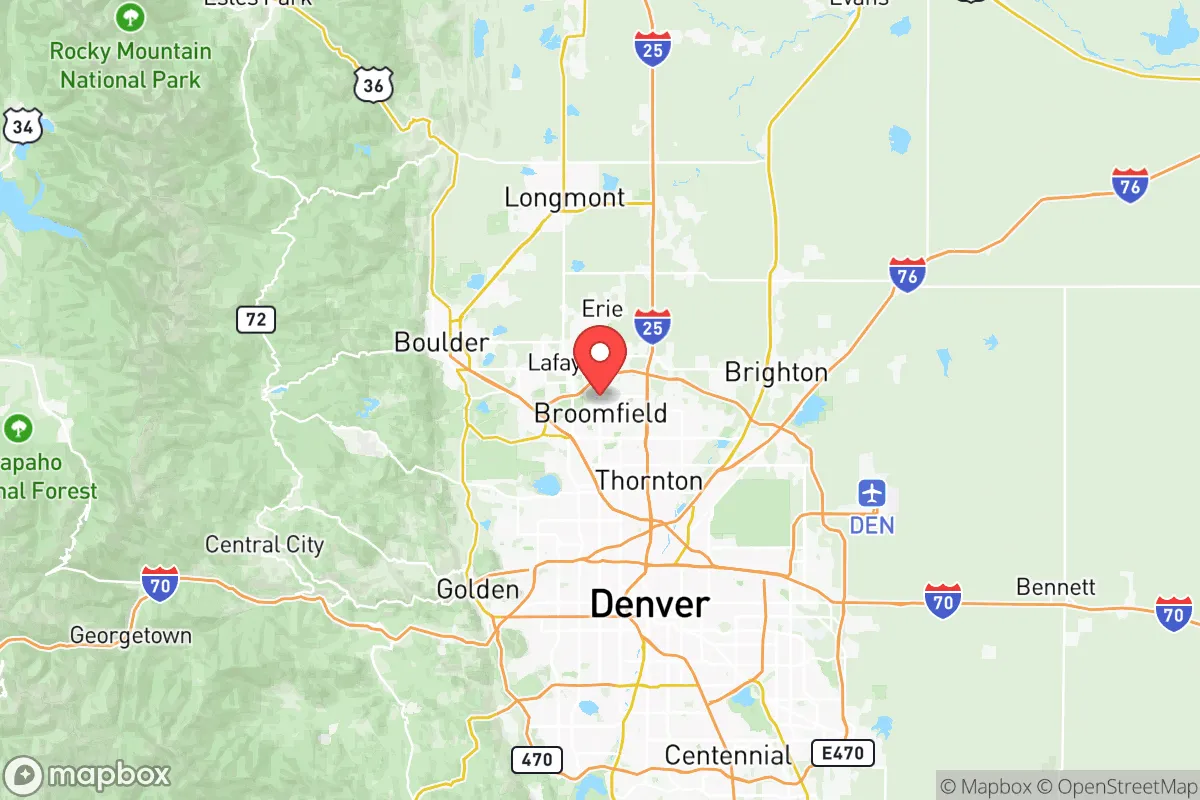
Living in Broomfield County means straddling two worlds: you get the open space and quieter pace of a smaller community, with Denver and Boulder just a short drive away when you need big-city energy. It’s a place where people actually use the trail system on weekends, where the high school football game is a genuine social event, and where the median income of $121,025 reflects a workforce heavy on tech, aerospace, and healthcare. If you’re looking for a Colorado base that feels suburban but not sleepy, with solid schools and a reliably conservative tilt in local elections, Broomfield is worth a serious look.
The Daily Rhythm: Commutes, Errands, and Weekend Habits
Most mornings, you’ll see a steady stream of cars heading south on US-36 toward Denver or west toward Boulder — the average commute here is about 26 minutes, which feels reasonable for the Front Range. People who work at Level 3 Communications or Sierra Nevada Corporation (both major Broomfield employers) often have a shorter drive, while those commuting to downtown Denver or the Boulder tech corridor budget a bit more time. The FlatIron Crossing mall and the surrounding retail area handle most shopping needs, from Target runs to weekend browsing at REI. On Saturdays, you’ll find families at the Broomfield Farmers Market at the Bay Aquatic Park, grabbing local produce and listening to a live band. For a night out, locals gravitate toward 3 Margaritas for reliable Mexican food or The Post Brewing Co. in nearby Lafayette for fried chicken and craft beer — Broomfield itself has a handful of solid spots, but many residents happily drive 10-15 minutes to neighboring towns for more variety.
Sports, Schools, and Community Identity
High school sports are a genuine centerpiece here. Broomfield High School and Legacy High School both have passionate followings, and Friday-night football in the fall draws crowds that include not just parents but plenty of residents without kids in the district. The Broomfield Eagles have a strong reputation in basketball and soccer, and the rivalry games against Legacy are the kind of events people plan their weekends around. For pro sports, Denver’s teams are about 25 minutes away — Broncos, Nuggets, Avalanche, and Rockies games are all accessible for a day trip, but they don’t define local culture the way they might in a closer suburb. The schools themselves are a major draw: Broomfield County schools consistently rank well, and with 58.6% of adults holding a college degree, the community places a high value on education. That said, the median home value of $631,600 means that young families often have to stretch to buy in, and some end up looking at more affordable options in Thornton or Northglenn just to the east.
What to Do: Parks, Festivals, and Local Hangouts
Outdoor life is baked into the routine here. Broomfield County Commons is the go-to for soccer games, disc golf, and dog walking, while Rocky Mountain Lake Park offers a quieter spot for fishing or a picnic. The Big Dry Creek Trail runs through the county and connects to a larger regional trail network — you’ll see runners, cyclists, and parents pushing strollers on it year-round. The annual Broomfield Days festival in August is the community’s biggest event, with a parade, carnival rides, and a fireworks show that feels genuinely small-town. For music and nightlife, most people head to Boulder (20 minutes west) for the Fox Theatre or to Denver’s RiNo district for a wider bar and concert scene. Broomfield itself has a few breweries like Broomfield Brewing Company, but the nightlife is low-key — think trivia nights and patio hangs rather than dance clubs. The kind of person who fits in here is someone who values safety, good schools, and outdoor access over urban excitement, and who doesn’t mind driving 20 minutes for a really great dinner.
Honest Pros and Cons of Living in Broomfield County
- Pro: Strong job market. With major employers like Vail Resorts, Ball Aerospace, and Crocs headquartered or operating here, you don’t have to commute far for a solid white-collar job. The median income of $121,025 is well above the national average, and unemployment tends to stay low.
- Con: Cost of living is steep. The cost of living index sits at 197 — nearly double the U.S. average. Housing is the biggest culprit, with the median home value at $631,600. Renters face similar pressure; a two-bedroom apartment often runs $1,800–$2,200 per month.
- Pro: Low crime for the Front Range. The violent crime rate of 428.1 per 100,000 is higher than the national average, but it’s concentrated in specific areas and Broomfield feels safe compared to Denver or Aurora. Property crime is the bigger annoyance — lock your car and don’t leave bikes out overnight.
- Con: Traffic on US-36. The commute corridor to Denver can back up significantly during peak hours, and there’s no light rail directly serving Broomfield (the nearest RTD station is in Westminster). If you work downtown, plan for a 35-45 minute drive on bad days.
- Pro: Weather that’s actually manageable. Broomfield gets about 300 days of sunshine a year, and while winter brings snow, it usually melts within a few days. Summers are warm but dry, and the lack of humidity makes 90-degree days feel tolerable. The seasonal rhythm is real: people ski in winter, hike in spring, and spend summer evenings at outdoor concerts.

* Values derived from national, state, county, city and local statistics and may differ in a specific area. Last updated: 2026-08-08T16:14:43.000Z
Narrative content on this page is AI-generated and may contain mistakes. Verify any details that matter before acting on them.
ReloMaps may earn a commission from affiliate links at no extra cost to you.

