 Popular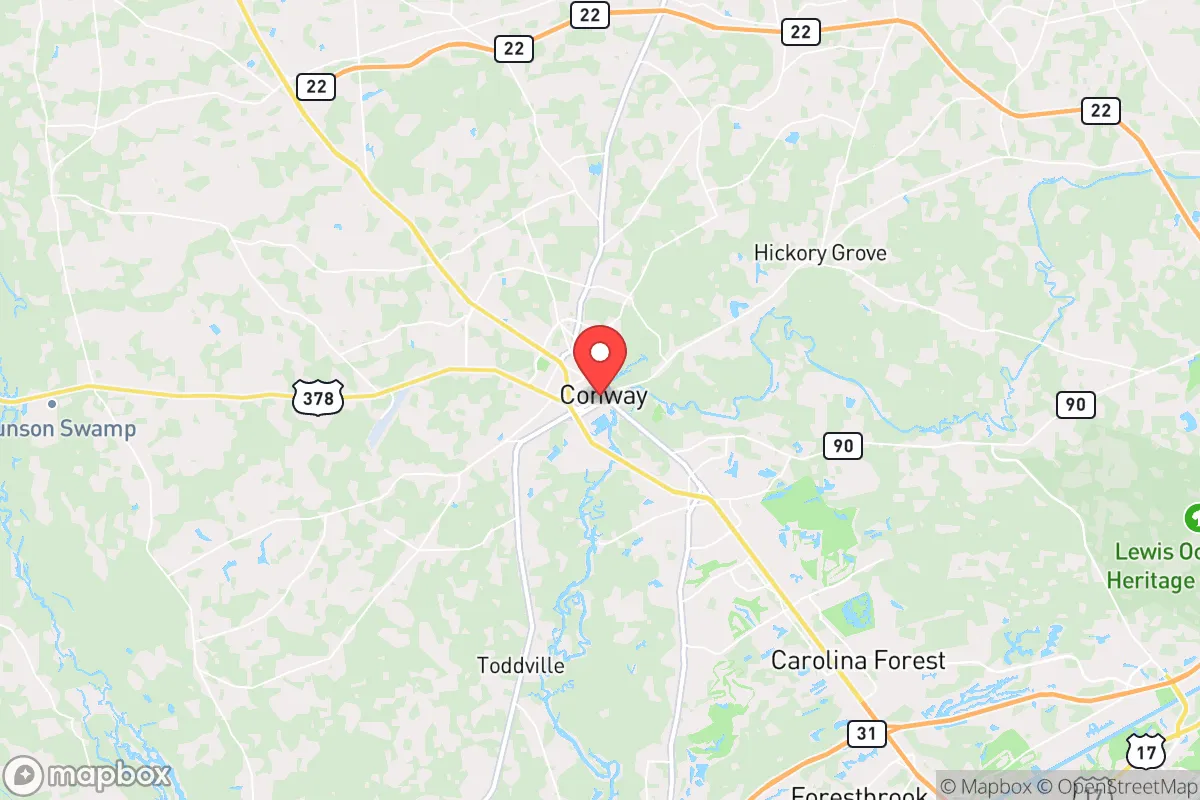
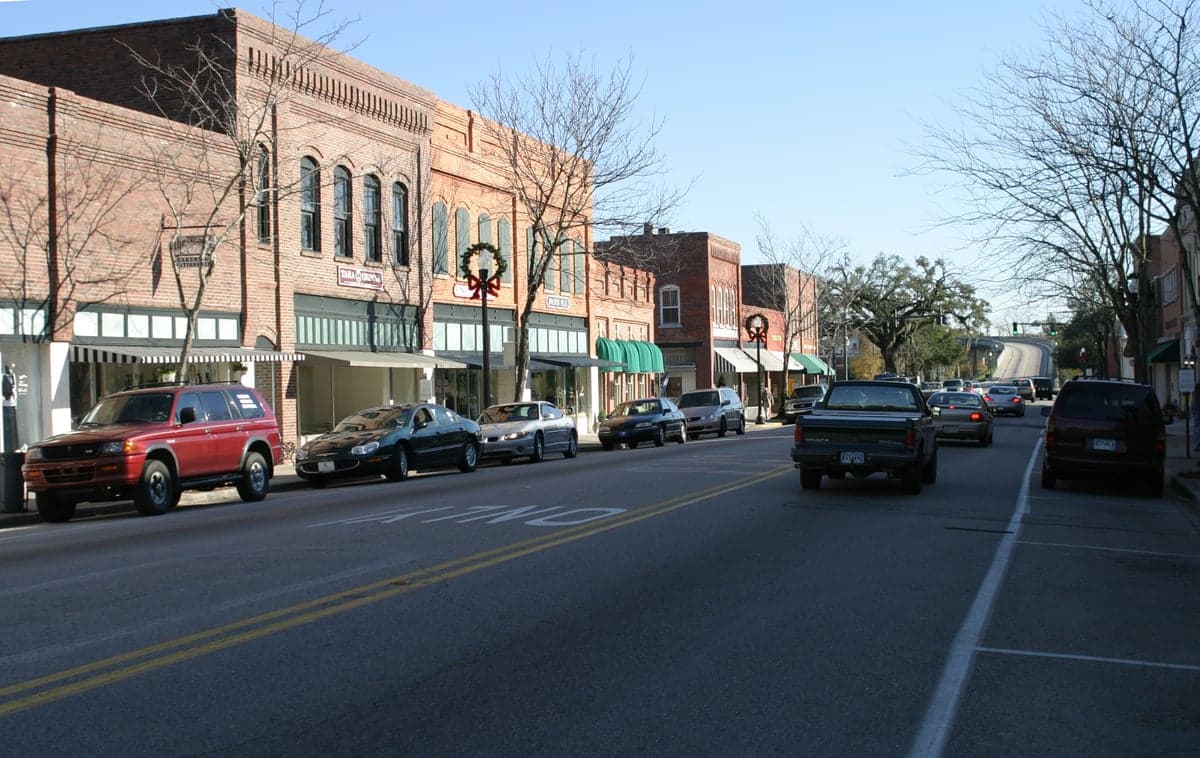
Photo: Wikipedia
Political ClimatePolitical Climate in Conway, SC
District shown is the primary district for this city’s centroid. Cities may span multiple districts.
Local Political AnalysisPolitical Analysis of Conway, SC
Conway, South Carolina, has long been a reliably conservative stronghold, and the numbers back that up with a Cook PVI of R+12. This isn't just a statistic; it reflects a community where traditional values and a hands-off approach to government are deeply ingrained. For decades, the political lean here has been steady, with local elections and state representation consistently favoring candidates who prioritize limited government, lower taxes, and protecting individual liberties. However, like many growing areas in the South, you can feel the winds shifting a bit, especially as folks from more progressive parts of the country move in, drawn by the lower cost of living and slower pace of life.
How it compares
To really understand Conway, you have to look at its neighbors. Head south to Myrtle Beach, and you'll find a much more transient, tourist-driven population that tends to lean more moderate or even left-leaning on certain social issues. The contrast is stark. Conway feels like the steady, grounded anchor to Myrtle Beach's flashier, more unpredictable politics. Up the road in Loris or Aynor, you'll find even deeper shades of red, where the conservative values are even more pronounced. Conway sits in a sweet spot—conservative enough to feel safe and familiar, but with a growing diversity of thought that can sometimes feel like a slow creep toward the kind of government overreach we've always resisted. The real concern isn't the people who've been here; it's the outside influence that tries to change what makes this area special.
What this means for residents
For those of us who call Conway home, the political climate directly shapes daily life. You see it in the local school board meetings, where debates over curriculum and parental rights are front and center. It shows up in the county council's decisions on zoning and development, where the push and pull between growth and preserving our way of life is constant. The biggest worry for long-time residents is that the very freedoms that drew people here—the right to live without excessive regulation, to keep more of what you earn, and to raise your family without government intrusion—are under a slow, steady assault. The shift toward progressive ideology isn't a sudden revolution; it's a thousand small compromises that, over time, erode the foundation of personal liberty. We're watching closely to make sure Conway doesn't become a place where the government tells you how to run your business or what you can say.
Culturally, Conway still holds onto its small-town charm, with events like the Riverfest and the historic downtown that feel genuinely local. But there's a growing tension between the old guard and the newcomers who want to bring big-city policies to a small town. The biggest policy distinction you'll notice is the strong resistance to any form of state or local overreach into property rights and Second Amendment protections. While some nearby areas are flirting with more restrictive ordinances, Conway's leadership has largely held the line. The long-term outlook depends on whether we can keep that line strong. If the current trajectory holds, we'll likely see more heated local elections and a continued battle to keep Conway a place where freedom isn't just a word—it's the way of life.

State Political ClimatePolitical Climate in South Carolina
State Political AnalysisPolitical Environment in the State
South Carolina has long been a reliably red state, but the flavor of that conservatism has shifted noticeably over the past 15-20 years. The old-school, establishment Republicanism that dominated Columbia and Charleston is giving way to a more populist, liberty-minded energy, especially in the fast-growing Upstate and along the coast. While the state hasn't flipped blue in a presidential race since 1976, the margins have tightened in some suburban pockets, even as the rural and exurban vote has hardened. The real story isn't a leftward drift, but a realignment within the right itself, with a growing tension between the business-friendly, Chamber-of-Commerce GOP and a newer wave of constitutional conservatives and Trump-aligned activists.
Urban vs. rural divide
The political map of South Carolina is a study in contrasts. The state's two major population centers, Charleston and Columbia, are the primary blue dots on an otherwise red map. Charleston County has trended leftward for a decade, driven by an influx of out-of-state professionals and a growing tourism economy; it voted for Biden in 2020 and is now represented by a Democrat in the state Senate. Columbia, anchored by the University of South Carolina and a large state government workforce, is similarly Democratic-leaning, though the surrounding Lexington County is one of the most reliably conservative suburban areas in the country. The real engine of the state's red majority is the Upstate—Greenville, Spartanburg, and Anderson counties—where explosive growth has actually reinforced conservative dominance, not diluted it. Greenville County itself is a Republican stronghold, but the suburbs like Simpsonville and Greer are where you see the most energized grassroots activism. The rural Lowcountry, places like Beaufort and Hilton Head, are more mixed: retirement communities bring in moderate Republicans and some Democrats, while the inland rural areas remain deeply conservative. The Pee Dee region, around Florence and Myrtle Beach, is a wildcard—historically Democratic but now reliably red, with a strong populist streak that shows up in primary elections.
Policy environment
South Carolina's policy environment is broadly conservative, but with some notable wrinkles. The state has a flat income tax rate of 6.2% (with a scheduled phase-down to 6% by 2027), and no state-level property tax on vehicles, which is a big win for personal freedom. The regulatory climate is generally light, especially for small businesses, but the state's occupational licensing requirements can be a headache for newcomers in trades like cosmetology or contracting. On education, the state passed a universal school choice program in 2023—the Education Scholarship Trust Fund—which allows any family to use state funds for private school tuition, homeschooling materials, or tutoring. This was a major victory for parental rights. Healthcare is a mixed bag: the state did not expand Medicaid under the ACA, which keeps government out of your medical decisions but also leaves a coverage gap for low-income adults. Election integrity is a hot topic; the state has voter ID laws and no-excuse absentee voting was tightened in 2021, but early voting was expanded to two weeks. The state legislature is firmly in GOP hands, with a supermajority in both chambers, so major progressive overhauls are unlikely in the near term.
Trajectory & freedom
On the freedom front, South Carolina has been moving in a positive direction for conservatives, but it's not a straight line. The biggest win in recent years was the passage of constitutional carry (permitless carry of handguns) in 2024, which was a long-fought victory for Second Amendment advocates. The state also passed a fetal heartbeat bill in 2023, banning most abortions after about six weeks, which was a major win for the pro-life movement. On parental rights, the state has been proactive: the Parents' Bill of Rights (2023) requires schools to notify parents of any changes to a child's health or well-being, and it bans instruction on sexual orientation and gender identity in K-5 classrooms. However, there are concerns about government overreach in other areas. The state's medical marijuana bill has stalled repeatedly, leaving patients with few legal options. Property rights are generally strong, but the state's business recruitment incentives—like tax breaks for large corporations—can feel like corporate welfare to small-business owners. The biggest looming threat to personal liberty is the potential for local government overreach: some cities, like Columbia, have tried to pass local ordinances that conflict with state law (e.g., on housing or environmental regulations), which has led to a push for stronger preemption laws at the state level.
Civil unrest & political movements
South Carolina has seen its share of political flashpoints, but they tend to be more organized and less chaotic than in some other states. The Confederate flag removal from the Statehouse grounds in 2015 was a watershed moment that split the conservative coalition—some saw it as a necessary step for economic growth, others as a surrender to progressive pressure. Since then, the most visible activism has been on the right. The Moms for Liberty movement has a strong presence in the Upstate, particularly in Greenville and Spartanburg, where they've successfully challenged school board policies on critical race theory and library books. The Palmetto Family Council remains a powerful lobbying force on social issues. On the left, the Indivisible groups in Charleston and Columbia have organized protests on abortion and voting rights, but they haven't gained the same traction as in neighboring Georgia or North Carolina. Immigration politics are relatively quiet—South Carolina is not a border state, and the state's sanctuary city ban (2019) has been effective in preventing local governments from adopting non-cooperation policies. The most visible flashpoint for a new resident would likely be the school board meetings in the suburbs, where debates over curriculum and library books are the main arena for political conflict.
Projection
Looking ahead 5-10 years, South Carolina is likely to become more conservative, but in a different way. The in-migration from blue states—especially to the Greenville-Spartanburg corridor and the Grand Strand (Myrtle Beach area)—is bringing in people who are fleeing high taxes and lockdowns, which reinforces the liberty-minded wing of the GOP. However, the Charleston area is attracting a more moderate, tech-oriented crowd that could shift the coastal counties toward purple over time. The state's Hispanic population is growing, particularly in the Upstate, but it's not yet a politically cohesive voting bloc. The biggest wildcard is the Republican primary electorate: as the state becomes more populist, establishment incumbents may face serious challenges from the right. Expect more legislation on school choice expansion, further tax cuts, and continued battles over local control vs. state preemption. The state is not going to turn blue, but the internal GOP dynamics will determine whether it becomes a model of limited government or a more interventionist, business-dominated state.
For a conservative moving to South Carolina, the bottom line is this: you'll find a state that broadly shares your values, but you'll need to be engaged at the local level to keep it that way. The school board races, county council meetings, and Republican primaries are where the real decisions are made. The state is a good bet for personal freedom, especially on guns, taxes, and education, but the fight over the soul of the GOP is ongoing. If you want a place where your vote counts and your voice matters, South Carolina is a solid choice—just don't expect it to be a libertarian paradise. It's a red state with a strong conservative culture, but it's also a state where government can still get in your way if you're not paying attention.
* Values derived from national, state, county, city and local statistics and may differ in a specific area. Last updated: 2026-04-30T02:27:01.000Z
Narrative content on this page is AI-generated and may contain mistakes. Verify any details that matter before acting on them.
ReloMaps may earn a commission from affiliate links at no extra cost to you.

