Photo: Wikipedia
Political ClimatePolitical Climate in Crowley, TX
District shown is the primary district for this city’s centroid. Cities may span multiple districts.
Local Political AnalysisPolitical Analysis of Crowley, TX
Crowley, Texas, is about as solidly conservative as they come, with a Cook PVI of R+18—that’s a deep red pocket even by Texas standards. The town has long been a place where folks value personal responsibility and limited government, and that sentiment hasn’t budged much over the years. You’ll find a strong sense of community here, where neighbors look out for each other and expect the same from their elected officials—meaning minimal interference in daily life, low taxes, and a general distrust of overreach from Austin or Washington. The trajectory has been steady: Crowley has resisted the progressive drift seen in some nearby suburbs, and if anything, the recent influx of families from bluer areas has only reinforced the local resolve to keep things traditional.
How it compares
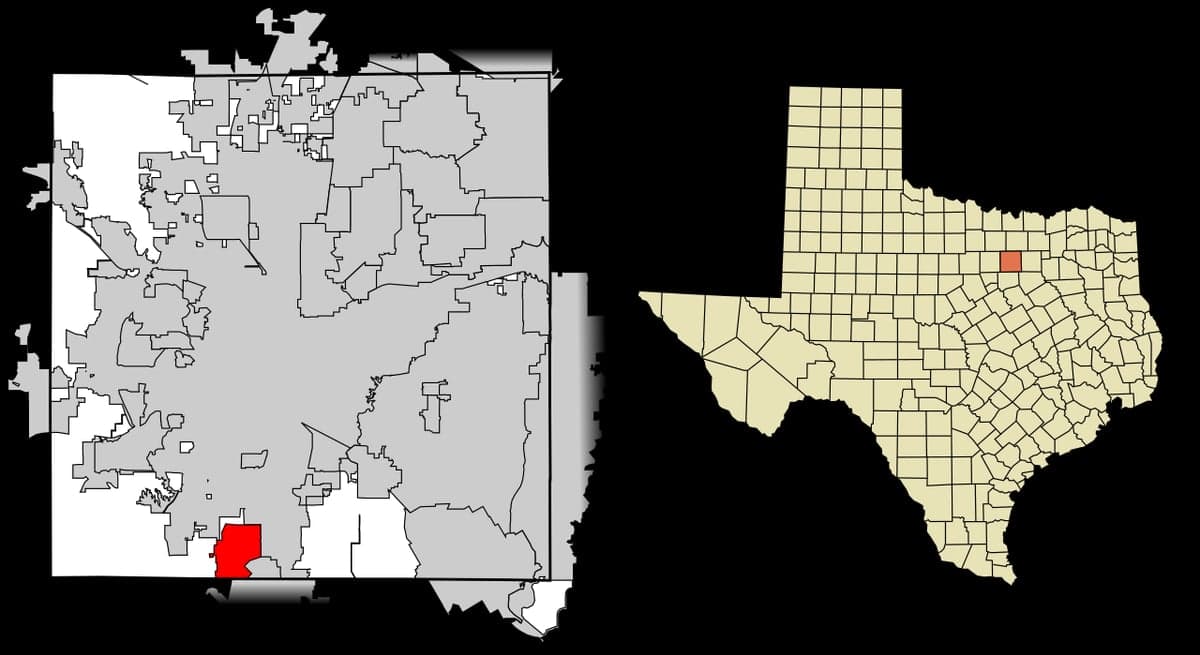
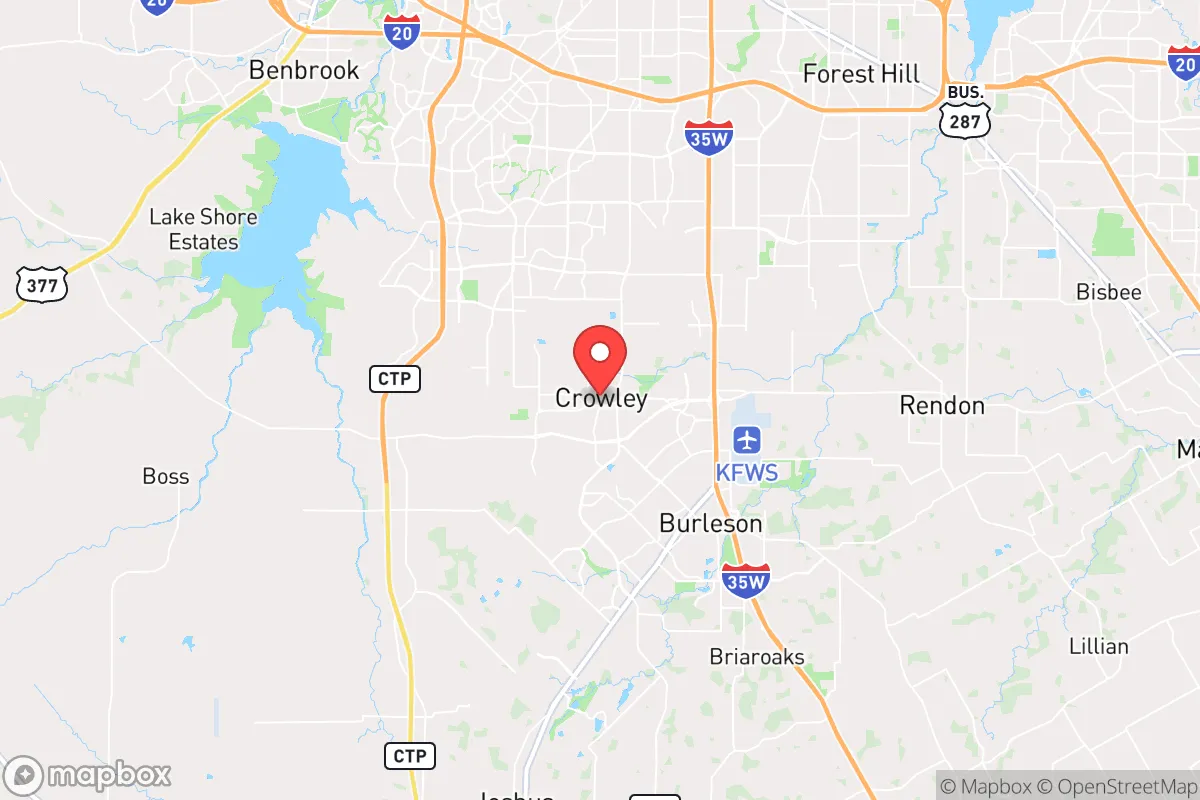
Compared to Texas as a whole, which sits at R+4, Crowley is a political outlier—far more conservative than the state average. That R+4 for Texas already leans Republican, but it masks the deep divide between urban centers like Dallas and Houston and the rural and suburban strongholds. Crowley, sitting just south of Fort Worth, is part of that conservative belt that contrasts sharply with places like Arlington or Denton, where you’ll see more purple tendencies. Even within Tarrant County, Crowley stands out: while the county has been trending slightly more competitive in recent cycles, Crowley itself has held firm. Drive 15 minutes north to Burleson, and you’ll find a similar vibe, but head east toward Mansfield, and you start seeing a bit more diversity in political signs. Crowley’s R+18 rating isn’t just a number—it reflects a community that actively pushes back against progressive policies, whether it’s on school curriculum, property rights, or Second Amendment issues.
What this means for residents
For someone living in Crowley, the political climate means you can expect local government to stay out of your business. There’s no appetite for heavy-handed zoning, high property taxes, or mandates that infringe on personal freedoms. The school board and city council tend to lean conservative, so you won’t see the kind of ideological experiments that have caused friction in more progressive districts. That said, it’s not a bubble—Crowley is close enough to Fort Worth that you’ll still feel the pressure of state-level debates, especially on issues like property tax reform and school choice. But locally, the culture is one of self-reliance: if you want to put up a fence, start a home business, or carry a firearm, you’re not going to run into a lot of red tape. The downside? If you’re hoping for rapid urban development or a bustling nightlife, that’s not the priority here—stability and tradition are.
Culturally, Crowley has a distinct small-town feel that’s increasingly rare in the Dallas-Fort Worth metroplex. You won’t find the same kind of progressive activism you might see in Austin or even parts of Fort Worth proper. Instead, the local churches, veterans’ groups, and civic organizations set the tone. There’s a wariness of government overreach that runs deep—whether it’s about mask mandates, land-use regulations, or tax hikes. In the long term, Crowley is likely to stay conservative, but as the metroplex expands, there’s always a risk of dilution. For now, though, it remains a place where you can live your life without a lot of bureaucratic hassle, and that’s exactly how most folks here want it.

State Political ClimatePolitical Climate in Texas
State Political AnalysisPolitical Environment in the State
Texas has been a reliably Republican state for decades, with a Cook PVI of R+4, but the coalition that keeps it red is shifting under your feet. The dominant coalition is still conservative, anchored by rural and suburban voters who prioritize low taxes, gun rights, and traditional values, but the margins have been tightening since 2016. Over the last 10-20 years, the state has moved from a solid +12 or +16 Republican presidential margin to a more competitive +5 or +6, driven by explosive growth in the blue-leaning metros of Austin, Dallas, Houston, and San Antonio, while the rural and exurban counties that once delivered 70-80% Republican margins are holding steady but not growing fast enough to offset the urban influx.
Urban vs. rural divide
The political map of Texas is a tale of two worlds. The major metros—Harris County (Houston), Dallas County, Travis County (Austin), and Bexar County (San Antonio)—are now solidly Democratic, with Travis County voting +50 points for Biden in 2020. These areas are growing fast, fueled by transplants from California and the Northeast, and they drive the state's leftward drift. Meanwhile, the rural and exurban counties that ring these metros—like Collin County (north of Dallas), Fort Bend County (southwest of Houston), and Comal County (north of San Antonio)—are still Republican but have seen their margins shrink. Collin County, once a +20 Republican stronghold, went only +5 for Trump in 2020. The real action is in the "collar counties" like Kaufman, Ellis, and Parker around Dallas, which are still deep red but are absorbing the spillover from the urban core. The Panhandle and West Texas—places like Lubbock, Amarillo, and Midland-Odessa—remain the GOP's bedrock, often voting 80% Republican, but they're losing population relative to the booming I-35 corridor.
Policy environment
Texas's policy environment is a mixed bag for conservatives. On the plus side, there is no state income tax, which is a huge draw for families and businesses. Property taxes are high (around 1.6-2.0% of assessed value), but the state has been using surplus revenue to buy down school property tax rates through the Texas Property Tax Relief Act of 2023. The regulatory posture is light-touch: no state-level OSHA, no state-level environmental review beyond federal requirements, and a right-to-work law that keeps unions weak. On education, the state has a robust school choice program through the Texas Education Savings Account (ESA) program, passed in 2023, which allows parents to use state funds for private school or homeschooling. Healthcare is a mixed bag: Texas did not expand Medicaid, which keeps costs down for the state but leaves many low-income residents uninsured. Election laws have been tightened with SB 1 (2021), which banned 24-hour and drive-through voting, added ID requirements for mail ballots, and gave poll watchers more access—a net positive for election integrity in the view of most conservatives. The biggest red flag is the Texas Privacy Act (HB 1181, 2023), which restricts government collection of biometric data and limits warrantless surveillance, but there's also a growing push for more transparency in property tax appraisals.
Trajectory & freedom
On the freedom front, Texas is a mixed picture trending in the right direction on some fronts but slipping on others. The state expanded gun rights with constitutional carry (HB 1927, 2021), allowing permitless carry of handguns for anyone 21 or older who can legally possess a firearm. Parental rights got a boost with the Parental Bill of Rights (HB 900, 2023), which requires school libraries to get parental consent before giving students sexually explicit materials. Medical autonomy took a hit with the Texas Heartbeat Act (SB 8, 2021), which bans abortion after about six weeks and allows private citizens to sue violators—a major expansion of life protection that many conservatives celebrate. On property rights, the Texas Property Rights Act (SB 1050, 2023) strengthened eminent domain protections for landowners. The concerning trend is the growth of local government overreach: cities like Austin and Houston have passed paid sick leave ordinances, plastic bag bans, and "sanctuary city" policies that the state legislature has had to preempt. The Texas Regulatory Consistency Act (HB 2127, 2023) was a major win, stripping cities of the power to pass local ordinances that exceed state law on things like labor, agriculture, and finance. Overall, the state is becoming more free on core issues like guns and parental rights, but the fight against local progressive overreach is constant.
Civil unrest & political movements
Texas has seen its share of political flashpoints. The 2020 protests in Austin and Houston over George Floyd's death were large and sometimes violent, leading to property damage and a lasting distrust of local officials. The Texas Capitol in Austin has been a regular site of dueling rallies—pro-choice vs. pro-life, gun rights vs. gun control, and immigration reform. The immigration issue is a constant: the state has bused thousands of migrants to sanctuary cities like New York and Chicago under Governor Abbott's Operation Lone Star, and the border crisis in places like El Paso and the Rio Grande Valley is a daily reality. Secession rhetoric is mostly fringe, but the Texas Nationalist Movement has a small but vocal following. Election integrity remains a hot topic: the 2020 and 2022 cycles saw intense scrutiny of Harris County's voting procedures, leading to the removal of the county's elections administrator in 2023. A new resident would notice the heavy police presence at political events and the constant media coverage of border issues.
Projection
Over the next 5-10 years, Texas is likely to become more competitive but not flip blue. The demographic trends are clear: the Hispanic population, which leans Democratic but is culturally conservative, is growing fast, and the white suburban vote is softening. However, the in-migration from blue states is actually more conservative than the national average—many people move to Texas specifically for the low taxes and freedom. The state's Republican supermajority in the legislature is likely to hold, but the margins will shrink. Expect more preemption battles as blue cities try to pass progressive ordinances and the state cracks down. The biggest wildcard is the border: if the federal government doesn't secure it, Texas will continue to bear the cost, and that could either galvanize conservative voters or create a backlash against state spending. For a new resident, the bottom line is that Texas will remain a conservative state for at least the next decade, but the culture war will intensify, especially in the suburbs of Dallas, Houston, and Austin.
For a conservative family or individual moving to Texas, the practical takeaway is this: you'll find a state that respects your gun rights, protects your parental authority, and keeps taxes low, but you'll need to be strategic about where you live. Stick to the exurbs and rural counties—places like Keller (north of Fort Worth), Boerne (northwest of San Antonio), or Rockwall (east of Dallas)—where the school boards are conservative and the local government won't fight the state. Avoid the urban cores of Austin, Houston, and Dallas if you want to avoid progressive local policies. The state is still a beacon of freedom compared to most of the country, but the fight to keep it that way is ongoing, and your vote and your voice matter more here than in a deep blue state where your ballot is meaningless.
* Values derived from national, state, county, city and local statistics and may differ in a specific area. Last updated: 2026-05-11T21:59:45.000Z
Narrative content on this page is AI-generated and may contain mistakes. Verify any details that matter before acting on them.
ReloMaps may earn a commission from affiliate links at no extra cost to you.

