Photo: Wikipedia
Political ClimatePolitical Climate in Cuyahoga Falls, OH
District shown is the primary district for this city’s centroid. Cities may span multiple districts.
Local Political AnalysisPolitical Analysis of Cuyahoga Falls, OH
Cuyahoga Falls has long been a bit of a political bellwether in Summit County, leaning reliably conservative for decades, but the winds have shifted noticeably in the last few cycles. The Cook PVI rating of EVEN tells the story: this isn't a deep-red stronghold anymore, but a true swing community where the old-school, blue-collar values that built the place are now clashing with the progressive wave washing in from Akron and Cleveland. You can feel it at the ballot box and in local debates—the town's identity is being pulled in two directions, and a lot of folks who've been here for generations are getting uneasy about where it's heading.
How it compares
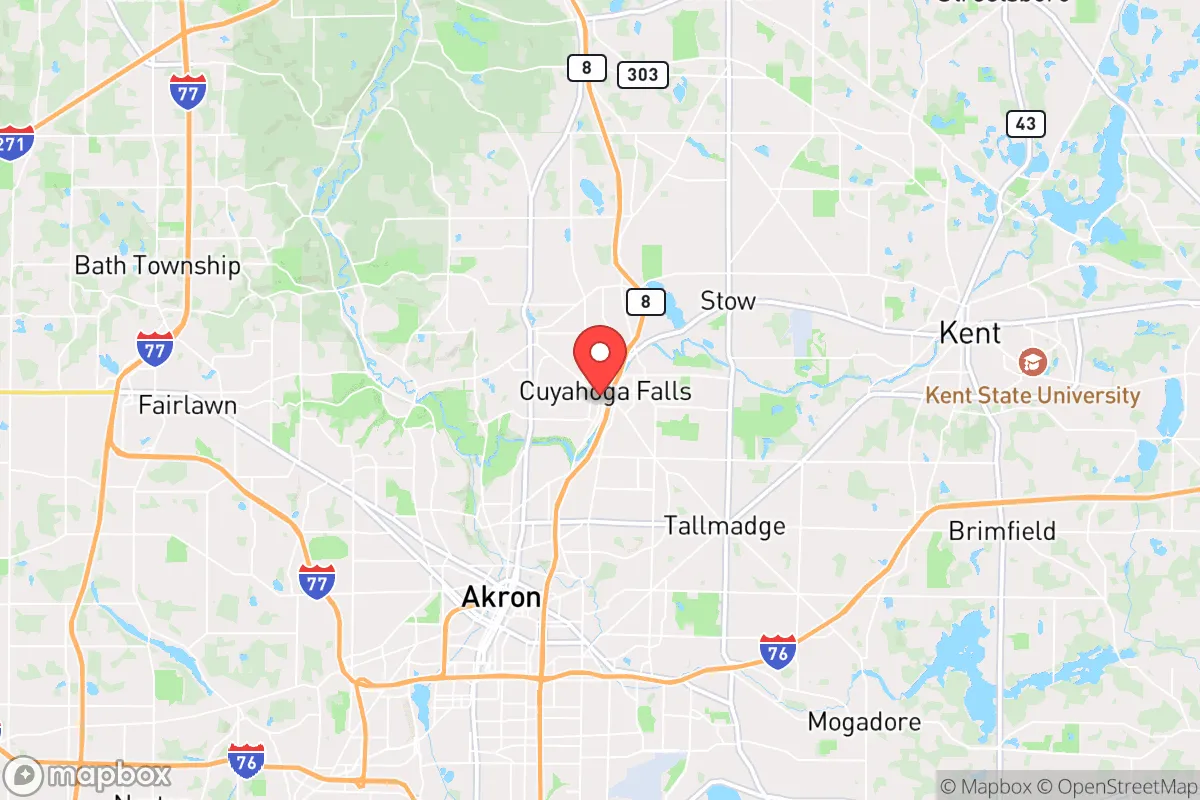
To understand Cuyahoga Falls, you have to look at its neighbors. Drive ten minutes south into Akron, and you're in a solidly Democratic city where progressive policies on taxes, policing, and land use are the norm. Head north or west into places like Stow, Hudson, or Bath Township, and you'll find communities that still lean comfortably Republican—places where fiscal conservatism and a "leave us alone" attitude are the baseline. Cuyahoga Falls sits right in the middle, politically and geographically. It's not as red as the outer suburbs, but it's a far cry from the urban core. That EVEN rating means every local election is a toss-up, and the city council has seen a slow but steady influx of candidates who are more aligned with Akron's agenda than with the Falls' traditional, family-first, low-regulation ethos. It's a tension that's only getting sharper.
What this means for residents
For the average person living here, the biggest practical impact is on your wallet and your freedoms. The city has been flirting with zoning changes and "complete streets" initiatives that sound nice on paper but often mean more government oversight on what you can do with your own property. There's been chatter about raising local taxes to fund bike lanes and transit-oriented development—things that sound progressive but don't do much for the working families who just want safe roads and low utility bills. The school board has also become a battleground, with some pushing for curriculum changes that prioritize social agendas over core academics. If you value local control and minimal interference from City Hall, you're going to want to pay close attention to who's running for office. The old guard of common-sense, limited-government folks is still here, but they're fighting for every inch.
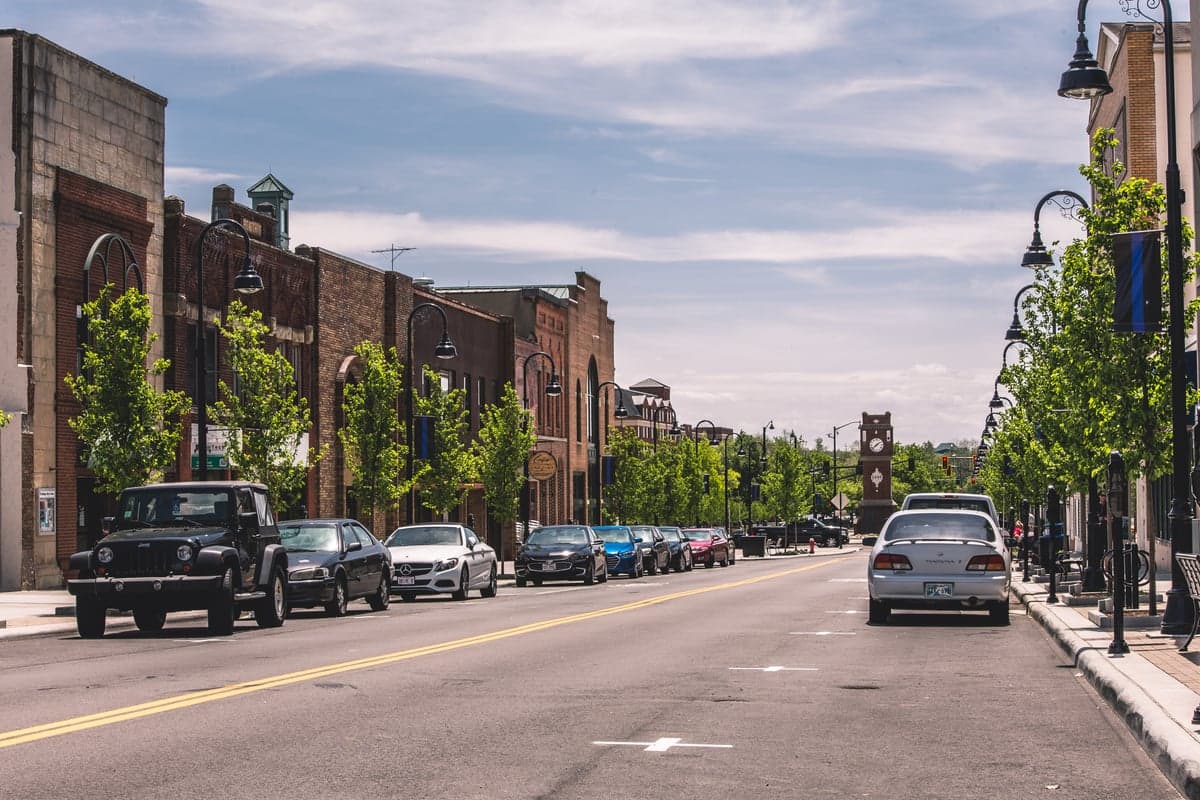
Culturally, Cuyahoga Falls still has that small-town, neighborly feel where people wave from their porches and the Fourth of July parade is a big deal. But you can see the cracks. The city has embraced some "diversity and inclusion" initiatives that feel more like box-checking than genuine community-building, and there's a growing push to rebrand the downtown as a hip, walkable hub—which sounds great until you realize it often comes with higher rents and more regulations on small businesses. The old-timers remember when the Falls was a place where you could buy a house, start a family, and be left alone to live your life. That's still possible, but it's getting harder. If the trend continues, this town could look a lot more like Akron in ten years—and for those of us who moved here to get away from that, it's a real concern. Keep your ear to the ground and your vote ready.

State Political ClimatePolitical Climate in Ohio
State Political AnalysisPolitical Environment in the State
Ohio has long been the quintessential bellwether state, but its political center of gravity has shifted noticeably rightward over the past decade. While the state still leans Republican in statewide elections—Donald Trump won it by 8 points in 2020 and 11 points in 2024—the real story is the collapse of Democratic strongholds in the industrial northeast and the explosive growth of conservative suburbs and exurbs around Columbus and Cincinnati. The old "three C's" (Cleveland, Columbus, Cincinnati) no longer tell the full story; places like Delaware County (north of Columbus) now vote +30 Republican, while Butler County (north of Cincinnati) has become a fortress of conservative activism. The trajectory over the last 20 years is unmistakable: Ohio is becoming more reliably red, but with important internal fractures that matter for anyone considering a move here.
Urban vs. rural divide
The political map of Ohio is a study in contrasts. The major urban cores—Cleveland (Cuyahoga County), Columbus (Franklin County), and Cincinnati (Hamilton County)—vote reliably Democratic, with margins of 20-40 points in presidential elections. But these cities are shrinking or stagnating in population, while the surrounding suburban and exurban counties are booming. Delaware County, just north of Columbus, has grown by over 40% since 2010 and now votes Republican by 30+ points. Warren County, between Cincinnati and Dayton, is similarly red and growing fast. The rural counties in the Appalachian southeast (like Meigs County and Vinton County) are deep red, often voting 70-80% Republican. The only Democratic-leaning rural areas are a few counties in the Mahoning Valley near Youngstown, where union roots still hold, but even those are trending right. The divide isn't just urban vs. rural—it's growing suburbs vs. stagnant cities, and the suburbs are winning the demographic war.
Policy environment
Ohio's state-level policy environment has shifted decisively conservative over the last decade. The state has a flat income tax rate of 3.5% (down from 5% in 2019), with a goal of eliminating it entirely by 2030. Sales tax is 5.75% statewide, with local add-ons. Property taxes are moderate, but recent reforms capped annual increases at 3.5% for owner-occupied homes. On education, Ohio passed universal school choice in 2023, allowing any family to use state funds for private or homeschool expenses—a major win for parental rights. The state also enacted a "Parents' Bill of Rights" in 2024, requiring schools to notify parents of any changes to a child's health or well-being. On healthcare, Ohio expanded Medicaid under the Affordable Care Act in 2014, but the legislature has resisted further expansion and passed a law requiring parental consent for minors' abortions. Election laws tightened in 2023 with stricter voter ID requirements and limits on drop boxes, though early voting remains robust. The regulatory environment is business-friendly, with right-to-work laws (though not a full right-to-work state) and limited zoning restrictions in most rural and suburban areas.
Trajectory & freedom
Ohio's trajectory on personal freedom is a mixed bag, but the trend is clearly toward more liberty in most domains. Gun rights expanded significantly with the 2022 passage of constitutional carry (no permit needed to carry a concealed handgun), and the state preempts local gun ordinances, preventing cities like Columbus from enacting their own restrictions. Parental rights were strengthened by the 2024 Parents' Bill of Rights and the 2023 universal school choice law. Medical autonomy took a hit with the 2019 abortion ban (six weeks, no exceptions for rape or incest), but voters rejected a 2023 ballot measure that would have made it harder to amend the constitution—a sign that direct democracy still works. On the downside, property rights have been eroded by aggressive eminent domain for the Intel semiconductor plant in Licking County, where the state used its power to seize farmland for the project. Taxation is trending downward, with the flat tax rate dropping and a 2024 law eliminating the state tax on Social Security benefits. The biggest concern for liberty-minded residents is the growth of local government overreach in blue cities—Columbus has enacted rental registration fees and energy efficiency mandates that feel like creeping regulation. But at the state level, the legislature has been consistently pushing back against federal overreach, passing a 2023 law that nullifies federal gun regulations in Ohio.
Civil unrest & political movements
Ohio has seen its share of political flashpoints. The 2020 protests in Columbus and Cincinnati over George Floyd's death were large but largely peaceful, though property damage occurred in the Short North district of Columbus. The 2023 East Palestine train derailment in Columbiana County sparked a populist backlash against both the railroad industry and federal regulators, with local residents organizing independent testing and demanding accountability. Immigration politics are less heated than in border states, but the 2024 influx of Haitian migrants to Springfield (Clark County) caused tensions, with local officials complaining about strains on schools and healthcare. The state has no sanctuary cities, and the legislature passed a 2024 law requiring local law enforcement to cooperate with ICE. Election integrity remains a live issue: the 2020 election in Ohio was smooth, but the 2023 constitutional amendment on abortion saw allegations of signature fraud in Cuyahoga County. The most visible political movement is the rise of "Moms for Liberty" chapters in suburban counties like Delaware and Warren, which have successfully pushed for school board reforms and book challenges. On the left, the "Ohio Poor People's Campaign" has organized around healthcare access and housing, but it remains a fringe movement.
Projection
Over the next 5-10 years, Ohio will likely become more conservative, but not uniformly. The key demographic driver is the continued growth of the Columbus exurbs—Delaware County is projected to add another 100,000 residents by 2035, mostly young families from blue states seeking lower taxes and better schools. The Intel plant in Licking County will bring 3,000 high-paying jobs and tens of thousands of construction workers, many of whom will settle in the surrounding conservative townships. Meanwhile, Cleveland and Youngstown will continue to lose population, shrinking the Democratic base. The state's political future will be shaped by two forces: the suburbanization of conservatism (think Dublin and Mason becoming even redder) and the rural radicalization of the Appalachian counties. The biggest risk is that the state's blue cities—Columbus, Cleveland, Cincinnati—will try to impose progressive policies locally, creating a patchwork of regulations that frustrate businesses and families. But the state legislature will likely continue to preempt these efforts, as it has with gun laws and rental regulations. Expect Ohio to remain a solidly Republican state in presidential elections, with a potential shift to +12-15 points by 2032.
For a new resident, the bottom line is this: Ohio offers a strong conservative policy environment at the state level, with low and falling taxes, school choice, and robust gun rights. But you need to choose your location carefully. If you move to Delaware County or Warren County, you'll find like-minded neighbors and good schools. If you land in Cleveland or Columbus proper, you'll face higher taxes, more regulation, and a local government that may not share your values. The state is trending in the right direction on most freedom metrics, but the urban-rural divide means your experience will depend heavily on which zip code you pick. Do your homework on the county and city level—the state is safe, but the local landscape varies dramatically.
* Values derived from national, state, county, city and local statistics and may differ in a specific area. Last updated: 2026-04-19T05:04:40.000Z
Narrative content on this page is AI-generated and may contain mistakes. Verify any details that matter before acting on them.
ReloMaps may earn a commission from affiliate links at no extra cost to you.

