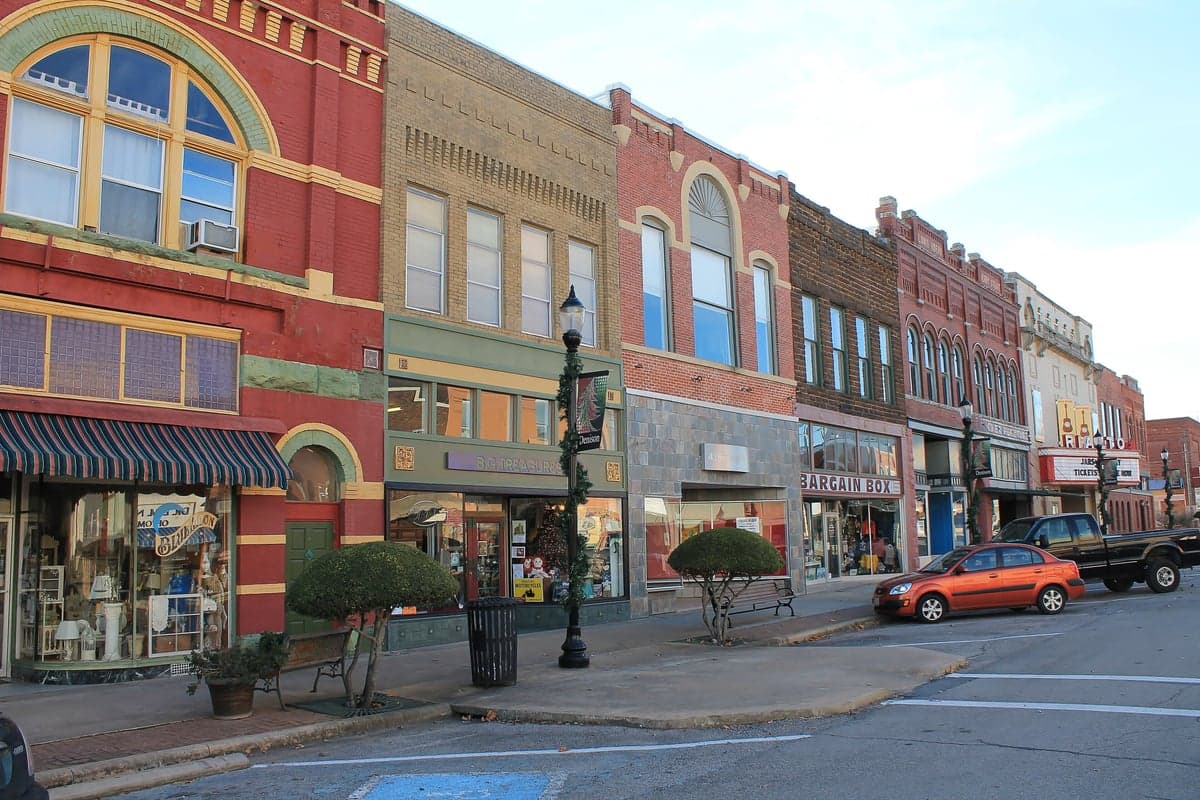
Photo: Wikipedia
Political ClimatePolitical Climate in Denison, TX
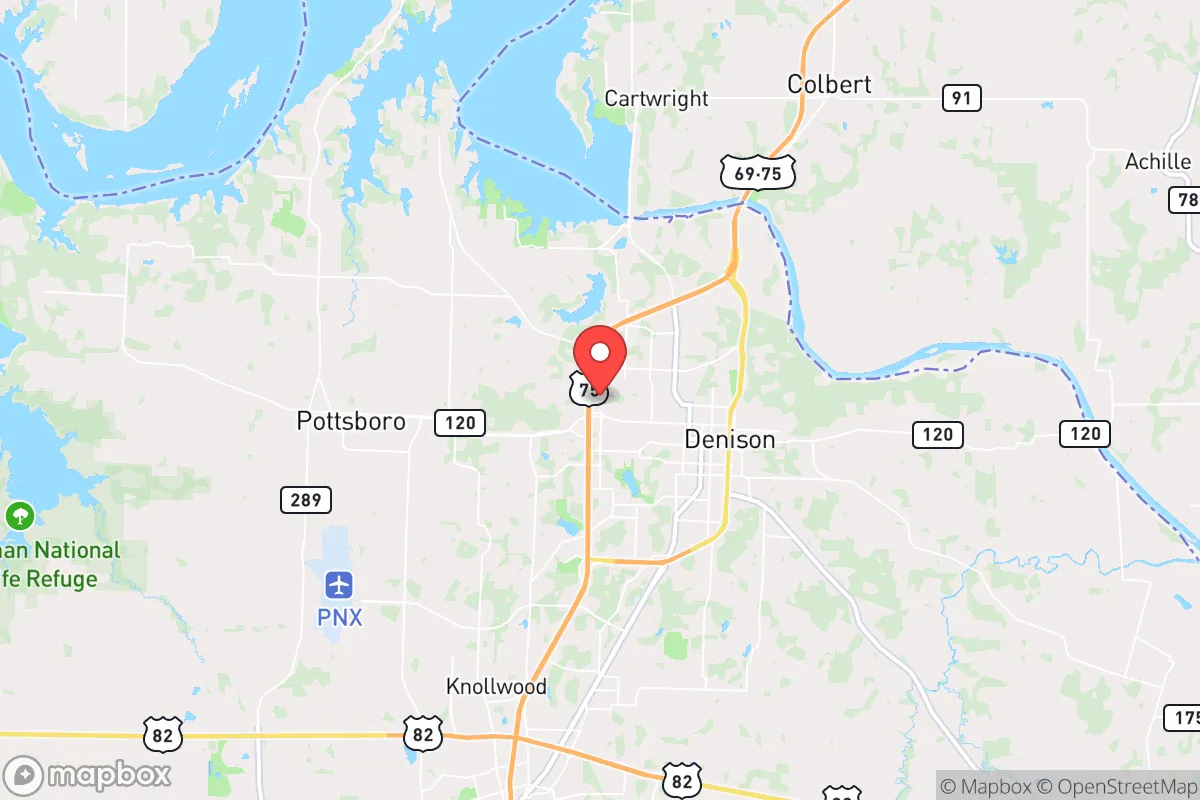
District shown is the primary district for this city’s centroid. Cities may span multiple districts.
Local Political AnalysisPolitical Analysis of Denison, TX
Denison, Texas, has long been a rock-solid conservative stronghold, and that hasn't changed much even as the rest of the state has seen some shifts. With a Cook Partisan Voting Index (PVI) of R+16, this town leans heavily Republican—far more than the state of Texas as a whole, which sits at R+4. You can feel it in the local elections, the school board meetings, and just about every conversation at the coffee shop. People here value their independence and aren't shy about pushing back when they feel like government is getting too big for its britches. That said, there's a quiet concern among long-time residents that the winds of change are blowing, especially as folks from more progressive areas like Dallas or Austin start moving north for cheaper land and a slower pace.
How it compares
When you stack Denison up against the rest of Texas, the difference is stark. The state's R+4 rating means it's still reliably red, but it's a purple-ish red—think of places like Tarrant County or the suburbs of Houston that have been trending left. Denison, by contrast, is deep red, more in line with rural counties like Grayson County, where it sits. Drive 30 minutes south to Sherman, and you'll find a similar vibe, but head an hour east to the outskirts of the Metroplex, and you'll start seeing more mixed politics. The contrast is even sharper if you go west to places like Wichita Falls, which is also conservative but has a different flavor. Denison's R+16 isn't just a number; it means that in local races, a Republican can practically count on winning without breaking a sweat. That's a comfort for folks who worry about the state's gradual drift toward progressive policies on things like property taxes, energy regulations, and school curriculum.
What this means for residents
For the people living here, this political climate translates into a daily life that feels more grounded in traditional values. You don't see the same kind of government overreach that you might in blue-leaning cities—no heavy-handed mandates on businesses, no aggressive zoning that tells you what you can do with your own land. The local government tends to keep its hands off, letting folks run their lives as they see fit. That's a big deal for families and small business owners who just want to be left alone. But there's a growing unease that as the state's overall politics shift, even Denison might feel the pressure. The recent push for more state-level oversight on local issues, like housing or environmental rules, has some residents worried that their way of life could get squeezed. It's not a crisis yet, but you hear it in conversations: "We need to hold the line before it's too late."
One thing that sets Denison apart is its cultural stubbornness. While Texas as a whole has become a bit more cosmopolitan, especially in the big cities, Denison still feels like a place where the Second Amendment is a given, not a debate. You won't find the same kind of progressive activism here that you might in Austin or even parts of Dallas. The local schools stick to basics, and there's a strong sense of community self-reliance. If you're looking for a place where the government stays out of your backyard and your wallet, Denison is a breath of fresh air. But keep an eye on the long-term trends—if the state keeps moving left, even this corner of Texas might have to fight harder to keep its character. For now, though, it's a safe bet for anyone who values personal freedom over bureaucratic control.

State Political ClimatePolitical Climate in Texas
State Political AnalysisPolitical Environment in the State
Texas has been a reliably Republican state for decades, with a Cook PVI of R+4, but the political landscape is far from monolithic. The dominant coalition is a mix of rural conservatives, suburban moderates, and a growing number of transplants from blue states, creating a dynamic where the GOP still holds a comfortable edge but faces increasing pressure in fast-growing metro areas. Over the last 10-20 years, the state has shifted from a solid red stronghold to a more competitive battleground, with Democrats making gains in the suburbs while Republicans have consolidated power in rural and exurban regions. This tension defines Texas politics today.
Urban vs. rural divide
The political map of Texas is a study in contrasts. The major metros—Houston, Dallas-Fort Worth, San Antonio, and Austin—are the engines of Democratic growth, with Harris County (Houston) and Dallas County flipping blue in recent cycles. Austin, in particular, has become a progressive stronghold, with Travis County delivering margins of +40 points for Democrats. Meanwhile, the rural and exurban areas—places like Lubbock, Midland, and the Panhandle—are deeply red, often voting 70-80% Republican. The suburbs, once reliably GOP, are now the key battlegrounds. Collin County (north of Dallas) and Fort Bend County (southwest of Houston) have shifted from +20 Republican to lean Democratic or toss-up status, driven by an influx of college-educated professionals and diverse populations. This urban-rural split is the defining feature of Texas politics, and it’s only widening.
Policy environment
Texas’s policy environment is a reflection of its conservative leadership. The state has no income tax, a low regulatory burden, and a business-friendly climate that attracts corporations and residents alike. On education, the state has embraced school choice through programs like the Texas Education Savings Account (ESA) pilot, though it remains limited. Healthcare policy is a mixed bag: Texas expanded Medicaid eligibility only slightly, and the state has some of the highest uninsured rates in the country. Election laws have tightened in recent years, with the 2021 Senate Bill 1 imposing stricter voter ID requirements and limiting drive-through and 24-hour voting. Property taxes are high, but the state has periodically passed relief measures, like the 2023 property tax cut package that reduced school district tax rates. Overall, the policy environment leans heavily toward limited government, but the lack of income tax is offset by high property taxes and a regressive sales tax structure.
Trajectory & freedom
On the freedom front, Texas has moved in both directions. On the positive side, the state has expanded gun rights significantly, with permitless carry (HB 1927) becoming law in 2021, allowing most adults to carry a handgun without a license. Parental rights have been strengthened through the 2023 "Parental Bill of Rights" (HB 900), which requires schools to notify parents about instructional materials and allows them to opt their children out of certain content. Medical autonomy saw a major win with the 2021 Texas Heartbeat Act (SB 8), which bans abortions after detection of a fetal heartbeat and empowers private citizens to enforce it. However, there are concerning trends. The state’s response to COVID-19 included heavy-handed business closures and mask mandates in some cities, though rural areas largely resisted. More recently, the 2023 "Drag Ban" (SB 12) has been criticized as government overreach into free expression. Property rights remain strong, with no statewide zoning, but local governments in places like Austin have imposed restrictive land-use policies that limit housing supply. The trajectory is mixed: Texas is freer on guns and parental rights, but less so on speech and local governance.
Civil unrest & political movements
Texas has seen its share of political flashpoints. The 2020 Black Lives Matter protests in Austin and Dallas were large and sometimes violent, leading to property damage and a backlash that fueled the "defund the police" debate. On the right, the "Texas Nationalist Movement" has gained some traction, with calls for secession that are more rhetorical than practical. Immigration politics are a constant flashpoint, with Governor Greg Abbott’s Operation Lone Star deploying state troopers and National Guard to the border, and the state busing migrants to sanctuary cities like New York and Chicago. The 2021 election integrity law (SB 1) sparked massive protests at the state capitol, with Democrats walking out to block its passage. More recently, the 2023 impeachment of Attorney General Ken Paxton divided the GOP, with rural conservatives rallying behind him while suburban moderates called for accountability. A new resident would notice the strong presence of political signage, especially in rural areas, and the occasional protest in urban centers.
Projection
Over the next 5-10 years, Texas is likely to become more competitive but not flip blue. The demographic trends are clear: the state is growing rapidly, with most new residents moving to the suburbs of Houston, Dallas, and Austin. These newcomers are often younger, more diverse, and more moderate than the existing population. The GOP will need to hold onto its rural base while winning back suburban voters who have drifted left. The state’s political trajectory will depend on how the party handles issues like school choice, property taxes, and abortion. If Republicans overreach on social issues, they risk alienating the suburban moderates who are key to their majority. Conversely, if Democrats continue to push progressive policies on crime and taxes, they may struggle to win over the same voters. For a new resident, expect a state that remains conservative on fiscal and gun issues but becomes more polarized on social and cultural matters. The urban-rural divide will only deepen, with San Antonio and El Paso likely to become more Democratic while the Panhandle and West Texas stay deeply red.
For someone moving to Texas, the bottom line is this: you’ll find a state that values low taxes, gun rights, and parental control, but you’ll also encounter growing political tension in the suburbs and cities. If you’re looking for a place where your personal freedoms are respected and government overreach is minimal, Texas is still a strong bet—but keep an eye on the suburbs, because that’s where the future of the state will be decided.
* Values derived from national, state, county, city and local statistics and may differ in a specific area. Last updated: 2026-05-11T16:10:35.000Z
Narrative content on this page is AI-generated and may contain mistakes. Verify any details that matter before acting on them.
ReloMaps may earn a commission from affiliate links at no extra cost to you.

