
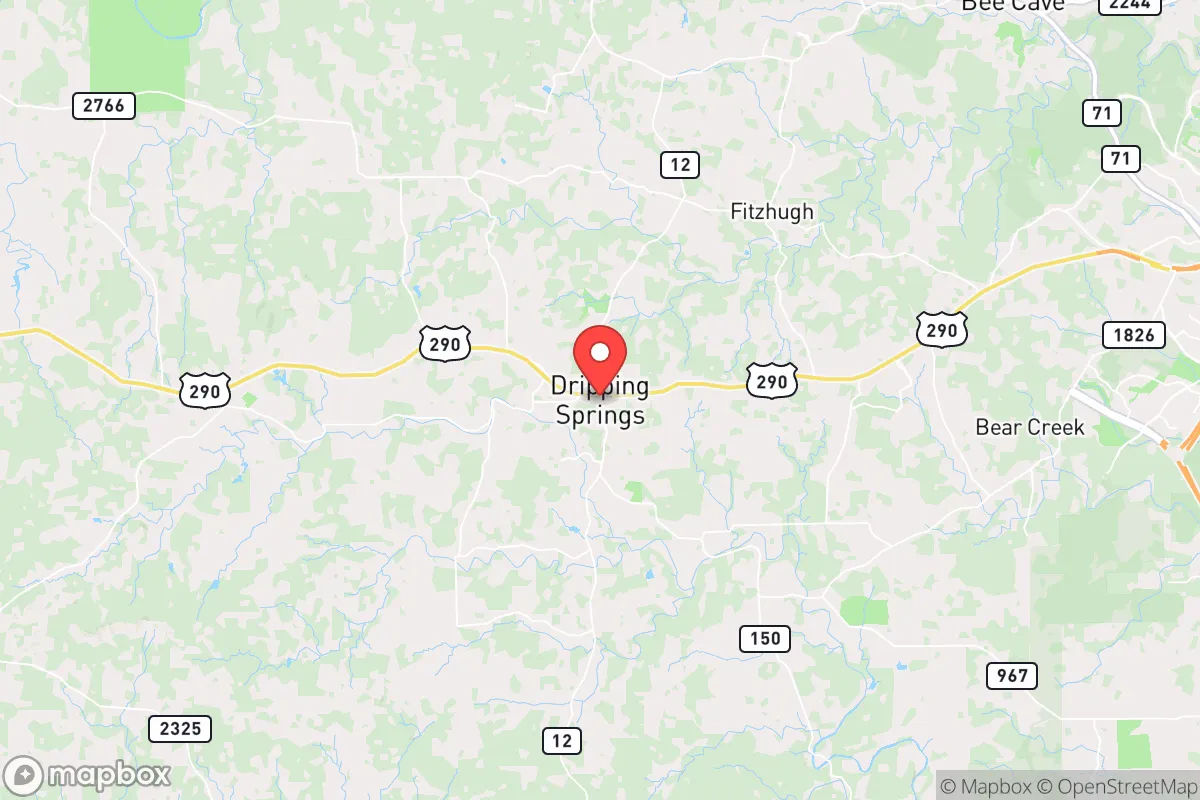
Political ClimatePolitical Climate in Dripping Springs, TX
District shown is the primary district for this city’s centroid. Cities may span multiple districts.
Local Political AnalysisPolitical Analysis of Dripping Springs, TX
Dripping Springs has long been a reliably conservative stronghold, and that hasn’t changed much—even as the area grows. The Cook Partisan Voting Index (PVI) sits at R+11, meaning the district leans 11 points more Republican than the national average. That’s a solid, dependable red, and it’s held steady through the last few election cycles. But if you’ve lived here as long as I have, you’ve seen the subtle shifts. The old guard—ranchers, small business owners, folks who remember when the square was just a feed store—still vote the same way, but the newcomers from Austin and Houston are starting to bring a different energy. It’s not a flip, not yet, but you can feel the pressure.
How it compares
Drive ten miles east and you’re in Austin—a city that’s gone hard progressive, with a PVI around D+20. That’s a world away from Dripping Springs. Head west to Johnson City or Blanco, and you’re back in deep red territory, R+20 or more. Dripping Springs sits right in that buffer zone, and it shows. We’ve got the same conservative values—low taxes, strong Second Amendment support, a general distrust of government overreach—but we’re also seeing more folks who want “smart growth” and “sustainability,” which is code for more regulations and higher costs. The contrast with Austin is stark: they’re all about bike lanes and density, while we’re still fighting to keep our property rights and our quiet roads. The worry is that as more people flee Austin’s chaos, they’ll bring the same policies that caused it.
What this means for residents
For now, life in Dripping Springs still feels free. You can build a fence without a dozen permits, carry a firearm without a hassle, and send your kids to a school that teaches civics without the political spin. But the warning signs are there. The county’s been pushing for more zoning—something that used to be a dirty word here—and there’s talk of expanding the city’s extraterritorial jurisdiction. That’s government creep, plain and simple. If you value your autonomy, you’ll want to keep an eye on city council meetings and school board elections. The local elections are where the real battles happen, and a few progressive wins could change the character of this place fast. The long-term trajectory depends on whether the newcomers assimilate or try to remake Dripping Springs in Austin’s image.
Culturally, Dripping Springs still holds onto its roots. The Founders Day parade, the rodeo, the local gun shows—these aren’t just traditions, they’re statements. But you’ll also see more “Keep Dripping Springs Weird” bumper stickers, and the farmers market now has a kombucha stand. The policy distinctions are subtle but real: we’ve resisted mask mandates, kept our tax rate low, and maintained a sheriff’s office that doesn’t enforce federal gun laws. That’s the kind of local control that matters. The challenge ahead is keeping that spirit alive as the population swells. If you’re thinking of moving here, know that you’re buying into a community that still believes in personal responsibility over government solutions—but you’ll have to work to keep it that way.

State Political ClimatePolitical Climate in Texas
State Political AnalysisPolitical Environment in the State
Texas remains a solidly Republican state, but the margin has tightened noticeably over the past decade. In 2024, Donald Trump carried Texas by roughly 9 points, down from 10 points in 2020 and 16 points in 2016. The dominant coalition remains a mix of rural conservatives, suburban moderates, and a growing Hispanic electorate that is splitting more evenly than in past cycles. The biggest shift is happening in the suburbs of Dallas-Fort Worth, Houston, and San Antonio, where college-educated voters are drifting left, while the rural and exurban vote has hardened right. For a conservative looking to relocate, Texas still offers a strong policy environment, but the political geography is becoming more complex.
Urban vs. rural divide
The political map of Texas is a tale of three zones. The major urban centers — Austin, Dallas, Houston, San Antonio, and El Paso — are Democratic strongholds. Austin is the bluest major city in the state, with Travis County delivering a 50-point margin for Democrats in 2024. El Paso is similarly deep blue, driven by a heavily Hispanic population that leans left on immigration and labor issues. The suburbs are the battleground: Collin County (north of Dallas) and Fort Bend County (southwest of Houston) have flipped from red to purple, with Collin County voting for Trump by only 4 points in 2024 after a 15-point margin in 2016. Meanwhile, rural and exurban counties — Gillespie County (Fredericksburg), Kendall County (Boerne), and Hood County (Granbury) — are voting 70-80% Republican. The divide is stark: the state’s 20 largest counties account for 70% of the population, and they are trending left, while the other 234 counties are overwhelmingly red and shrinking. This geographic split means statewide races remain Republican, but local control in the big metros is increasingly progressive.
Policy environment
Texas has no state income tax, which is a major draw for conservatives. Property taxes are high — averaging about 1.7% of home value — but the state uses a portion of its sales tax revenue to fund schools and local services, keeping the overall tax burden below many blue states. The regulatory posture is business-friendly: Texas is a right-to-work state, with no state-level minimum wage above the federal $7.25, and occupational licensing is relatively light. On education, the state has expanded school choice through the Texas Education Savings Account program (passed in 2023), which allows parents to use state funds for private school tuition, tutoring, or homeschooling. Healthcare policy is mixed: Texas did not expand Medicaid under the ACA, keeping the uninsured rate high (about 18%), but the state has also passed laws protecting conscience rights for medical providers and banning vaccine mandates for private employers. Election laws tightened after 2020 with SB 1, which added ID requirements for mail-in ballots, limited drop boxes, and banned drive-through voting. For a conservative, the policy environment is broadly favorable, though the lack of Medicaid expansion and high property taxes are recurring complaints.
Trajectory & freedom
On personal liberty, Texas has moved in a mixed direction. On the positive side for conservatives, the state passed constitutional carry (HB 1927) in 2021, allowing permitless carry of handguns. Parental rights were strengthened with HB 900 (2023), which requires libraries to restrict access to sexually explicit materials for minors. The state also passed a near-total abortion ban (SB 8, 2021) and a trigger law (HB 1280) that took effect after Dobbs. On the concerning side, the state has expanded government power in some areas: SB 147 (2023) banned certain foreign nationals from buying land near military installations, which some see as a property rights overreach. The Texas Privacy Act (2023) imposed new data collection rules on tech companies, which conservatives generally support, but it also created a new state enforcement bureaucracy. The biggest freedom concern for many is the property tax burden, which has risen faster than inflation in most counties, though the state did pass a $12 billion tax cut package in 2023 that raised the homestead exemption. Overall, Texas is still a high-freedom state by national standards, but the trend is toward more state intervention, not less.
Civil unrest & political movements
Texas has seen significant protest activity, particularly in Austin and Houston. The 2020 George Floyd protests in Austin led to property damage and a police budget cut that was later partially restored. The Texas Capitol in Austin has been a flashpoint for both left-wing and right-wing demonstrations, including the 2021 protest against the abortion ban and the 2022 rally for gun rights after the Uvalde shooting. Immigration politics are a constant source of tension: Governor Abbott’s Operation Lone Star has bused over 100,000 migrants to Democratic-run cities, and the state has sued the Biden administration over border policies. The Texas National Guard has been deployed to the border, and the state has installed razor wire and buoys in the Rio Grande, leading to legal battles with the federal government. Secession rhetoric, while not mainstream, has a vocal fringe: the Texas Nationalist Movement pushes for a referendum on independence, but polling shows only about 10-15% support. Election integrity remains a hot topic: the 2022 midterms saw high turnout and no major irregularities, but activists on both sides continue to dispute the 2020 results. A new resident in a blue city will see progressive activism regularly; in a red suburb or rural area, the political climate is quieter but more polarized.
Projection
Over the next 5-10 years, Texas will likely remain Republican at the state level, but the margin will continue to narrow. The key demographic driver is in-migration: about 1,000 people move to Texas every day, and they are disproportionately young, college-educated, and from blue states. These newcomers tend to vote more Democratic than native Texans, especially in the suburbs. The Dallas-Fort Worth metroplex is the bellwether: if Collin County and Denton County continue their leftward drift, statewide races could become competitive by 2032. However, the rural and exurban vote is not shrinking as fast as expected — many counties are actually gaining population from urban flight. The Hispanic vote is the wild card: younger Hispanic voters are trending more Republican, especially in the Rio Grande Valley, where Starr County flipped to Trump in 2024 after voting for Democrats by 30 points in 2016. If that trend holds, Texas could stay red for another decade. For a conservative moving in now, expect the political environment to remain favorable for the next 5 years, but with increasing cultural and electoral friction in the suburbs.
For a new resident, the bottom line is this: Texas still offers a low-tax, business-friendly, and culturally conservative environment, but it is not immune to the national trends of polarization and demographic change. If you move to a red suburb like Keller (north of Fort Worth) or Boerne (west of San Antonio), you will find a community that aligns with traditional values. If you move to Austin or inner-ring Houston suburbs, you will encounter a more progressive local government. The state’s policy environment is a net positive for conservatives, but the property tax burden and the growing influence of blue-state transplants are real concerns. Choose your county carefully, and expect the political landscape to shift gradually over the next decade.
* Values derived from national, state, county, city and local statistics and may differ in a specific area. Last updated: 2026-10-10T16:27:18.000Z
Narrative content on this page is AI-generated and may contain mistakes. Verify any details that matter before acting on them.
ReloMaps may earn a commission from affiliate links at no extra cost to you.

