

Photo: Wikipedia
Political ClimatePolitical Climate in East Chicago, IN
District shown is the primary district for this city’s centroid. Cities may span multiple districts.
Local Political AnalysisPolitical Analysis of East Chicago, IN
East Chicago, Indiana, has long been a Democratic stronghold, with a Cook PVI of D+1 reflecting its deep-rooted union and industrial heritage. But if you’ve lived here as long as I have, you know the political winds have shifted in ways that feel less about working-class values and more about top-down progressive experiments. The city’s voting patterns have stayed reliably blue, but the flavor of that blue has changed—from a pragmatic, pro-jobs, pro-union stance to something that increasingly prioritizes social engineering over personal freedoms. It’s a trajectory that has many of us watching closely, wondering if the old East Chicago we knew is slipping away.
How it compares
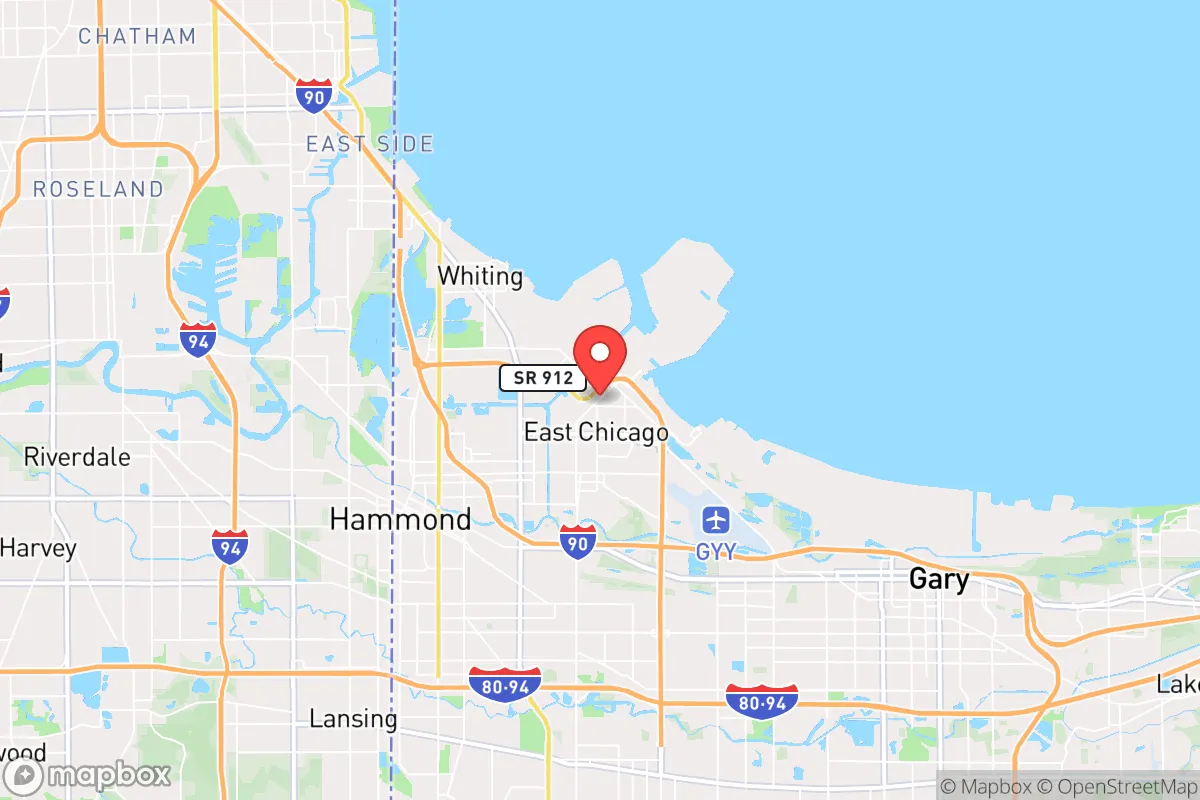
To understand East Chicago’s political climate, you have to look at the neighbors. Head west to Hammond or south to Munster, and you’ll find a similar Democratic lean, but with a more moderate, suburban sensibility—folks there still value their Second Amendment rights and aren’t as quick to embrace every new social mandate. Drive a little farther south to Crown Point or Valparaiso, and you’re in solidly Republican territory, where property taxes are lower and the local government is more skeptical of state-level overreach. East Chicago, by contrast, has become a testing ground for progressive policies—from sanctuary city rhetoric to aggressive zoning changes that prioritize high-density housing over single-family homes. The contrast is stark: while surrounding towns focus on keeping taxes low and police funded, East Chicago’s leadership seems more concerned with signaling virtue than protecting the everyday liberties of its residents.
What this means for residents
For those of us living here, the political tilt translates into real-world consequences. Property taxes have crept up as the city pursues grant-funded programs tied to state and federal mandates, leaving homeowners to foot the bill for initiatives they didn’t vote for. There’s also a growing unease about public safety—crime rates in East Chicago remain higher than the national average, yet local leaders have been slow to fully fund the police, instead diverting resources to social services that sound good on paper but don’t stop break-ins or drug dealing. If you value your right to make decisions about your own property, your kids’ education, or even your business operations without a bureaucrat’s sign-off, you’ll find the local government increasingly intrusive. The long-term trend is concerning: as the city leans harder into progressive ideology, the exodus of families and small businesses to more freedom-friendly suburbs like Schererville or Dyer is likely to accelerate.
Culturally, East Chicago has always been a blue-collar town—proud, hardworking, and independent. But the recent push for things like equity-based hiring quotas and restrictive housing ordinances feels like a departure from that spirit. There’s a sense that the old guard, who understood the importance of keeping government out of your backyard, has been replaced by activists who see personal freedoms as obstacles to their vision. If you’re considering a move here, keep an eye on the school board and city council elections—those are the battlegrounds where the future of this town’s political soul will be decided. For now, East Chicago remains a place where you can still find good neighbors and affordable homes, but the political climate is one you’ll want to navigate with your eyes wide open.

State Political ClimatePolitical Climate in Indiana
State Political AnalysisPolitical Environment in the State
Indiana has been a reliably Republican state for decades, but don’t let the “red” label fool you—it’s a more nuanced place than the presidential maps suggest. The state has voted for the GOP candidate in every presidential election since 2008 (when Obama narrowly flipped it), and in 2024, Donald Trump carried Indiana by roughly 18 points. But beneath that top-line number, the state is a patchwork of deep-red rural counties, swingy suburban districts, and a few stubbornly blue urban cores. Over the last 10-20 years, the overall trajectory has been a slow but steady rightward shift, driven by out-migration from liberal-leaning cities and an influx of conservative-leaning transplants from Illinois and California, though the Indianapolis suburbs have become more competitive.
Urban vs. rural divide
The political map of Indiana is a textbook case of the urban-rural split. Indianapolis (Marion County) is the state’s Democratic stronghold, consistently voting blue by double digits—Biden won it by about 23 points in 2020. But the city’s influence is diluted by the surrounding ring of suburban and exurban counties. Hamilton County, just north of Indy, is one of the wealthiest and fastest-growing counties in the Midwest, and it votes reliably Republican—Trump won it by 18 points in 2024. Fort Wayne (Allen County) and Evansville (Vanderburgh County) are more purple, often flipping between parties depending on the race, while South Bend (St. Joseph County) and Gary (Lake County) are solidly Democratic. The real engine of the state’s GOP dominance is the vast rural expanse: counties like Dubois, Jasper, and Whitley routinely deliver 70-80% of their votes to Republicans. The divide isn’t just cultural—it’s economic. Rural counties depend on agriculture and manufacturing, while urban centers are more tied to healthcare, education, and tech. This split means state policy almost always reflects rural and suburban priorities, not urban ones.
Policy environment
Indiana’s policy environment is broadly conservative, with a strong emphasis on low taxes and limited regulation. The state has a flat income tax rate of 3.05% (down from 3.23% in 2023, with further cuts scheduled), and no inheritance or estate tax. Property taxes are capped at 1% of assessed value for owner-occupied homes, which keeps housing costs manageable. The regulatory posture is business-friendly: Indiana is a right-to-work state (though that law was repealed in 2025, a controversial move that many conservatives opposed), and it has a robust tort reform framework. On education, Indiana has one of the most expansive school choice programs in the nation, with universal voucher eligibility for K-12 students. Parents can use state-funded Education Savings Accounts (ESAs) for private school tuition, homeschooling, or tutoring—a major draw for conservative families. Healthcare policy is mixed: the state expanded Medicaid under the Affordable Care Act (HIP 2.0), but it also has some of the strictest abortion laws in the country, banning the procedure at conception with narrow exceptions. Election laws are moderately restrictive: voter ID is required, and early voting is available but not as expansive as in some states. There’s no automatic voter registration, and same-day registration is not permitted. Overall, the policy environment leans heavily toward personal responsibility and local control, though the Medicaid expansion is a notable exception that some conservatives view as a government overreach.
Trajectory & freedom
Indiana’s trajectory on personal freedom is a mixed bag, but the trend is generally positive for conservatives. Gun rights have expanded significantly: in 2022, the state passed constitutional carry (permitless carry), and there are no magazine capacity limits or “assault weapon” bans. Property rights are strong, with no statewide zoning preemption, though local governments can still impose restrictions. On parental rights, Indiana passed a law in 2023 requiring schools to notify parents if a child requests a name or pronoun change, and it banned instruction on sexual orientation and gender identity in K-3 classrooms (the “Don’t Say Gay” law). Medical autonomy is a flashpoint: the state’s near-total abortion ban has been upheld by the courts, but there are ongoing efforts to restrict access to gender-affirming care for minors, with a ban passed in 2023 that is currently being litigated. On the negative side, the state’s COVID-era emergency powers were a concern for many conservatives, as Governor Eric Holcomb (a Republican) imposed mask mandates and business closures without legislative approval. In response, the legislature passed a law in 2021 limiting a governor’s emergency powers to 30 days without legislative extension—a clear win for limited government. Taxation is trending in the right direction: the income tax rate is scheduled to drop to 2.9% by 2027, and there’s ongoing talk of eliminating it entirely. Overall, Indiana is becoming more free on most fronts, but the fight over medical mandates and educational content is far from over.
Civil unrest & political movements
Indiana has seen its share of political flashpoints, though large-scale civil unrest is rare. The most notable recent event was the 2020 George Floyd protests in Indianapolis, which turned violent with looting and arson, leading to a heavy police response and a lasting sense of unease among residents. Since then, the city has seen a rise in organized left-wing activism, particularly around racial justice and police reform, but these groups have little influence outside Marion County. On the right, the Indiana Freedom Coalition and local Moms for Liberty chapters have been highly active, pushing for school board transparency, parental rights, and opposition to critical race theory. Immigration politics are relatively quiet—Indiana is not a border state, and sanctuary city policies are virtually nonexistent (though Bloomington and Indianapolis have considered them). Election integrity was a major topic after 2020, with the legislature passing a law in 2021 requiring stricter voter ID for absentee ballots and limiting drop boxes. There’s no serious secession or nullification movement, though some rural counties have passed symbolic resolutions asserting local control. The most visible flashpoint for a new resident would likely be the ongoing culture war in public schools, especially in suburban districts like Carmel and Zionsville, where school board meetings have become heated over library books and curriculum.
Projection
Over the next 5-10 years, Indiana is likely to become more conservative, but with growing internal friction. In-migration from blue states like Illinois and California is accelerating, particularly to the Indianapolis suburbs and the Lake Michigan shoreline (e.g., Porter County). These newcomers tend to be more moderate or even left-leaning, which could make places like Hamilton County more competitive over time. However, the rural and exurban areas are growing faster in terms of raw population, and they are deeply Republican. The state’s demographic profile is aging and white, but the Hispanic population is growing, especially in central Indiana and the northwest corner—a group that leans conservative on social issues but is not reliably Republican yet. The biggest wildcard is the state’s economic trajectory: if manufacturing continues to decline and tech/healthcare grows, the political center of gravity could shift. But for now, the state legislature is solidly Republican and likely to stay that way, with supermajorities in both chambers. A new resident moving in now should expect a state that remains red, but with more visible cultural battles in the suburbs and a slow, steady influx of people who may not share their values. The policy environment will likely continue to favor school choice, low taxes, and gun rights, but the fight over medical freedom and educational content will intensify.
Bottom line for a new resident: Indiana is a good bet if you value low taxes, school choice, and gun rights, and you’re comfortable with a state that is culturally conservative but not uniformly so. You’ll find a welcoming environment in the rural areas and most suburbs, but you’ll need to be prepared for the blue pockets in Indianapolis, Gary, and Bloomington. The state is trending in the right direction on most freedom metrics, but the culture war is real and will be fought in school boards and local elections. If you’re looking for a place where your values are the majority and the government mostly stays out of your way, Indiana is a solid choice—just don’t expect it to be a monolith.
* Values derived from national, state, county, city and local statistics and may differ in a specific area. Last updated: 2026-04-22T08:55:24.000Z
Narrative content on this page is AI-generated and may contain mistakes. Verify any details that matter before acting on them.
ReloMaps may earn a commission from affiliate links at no extra cost to you.

