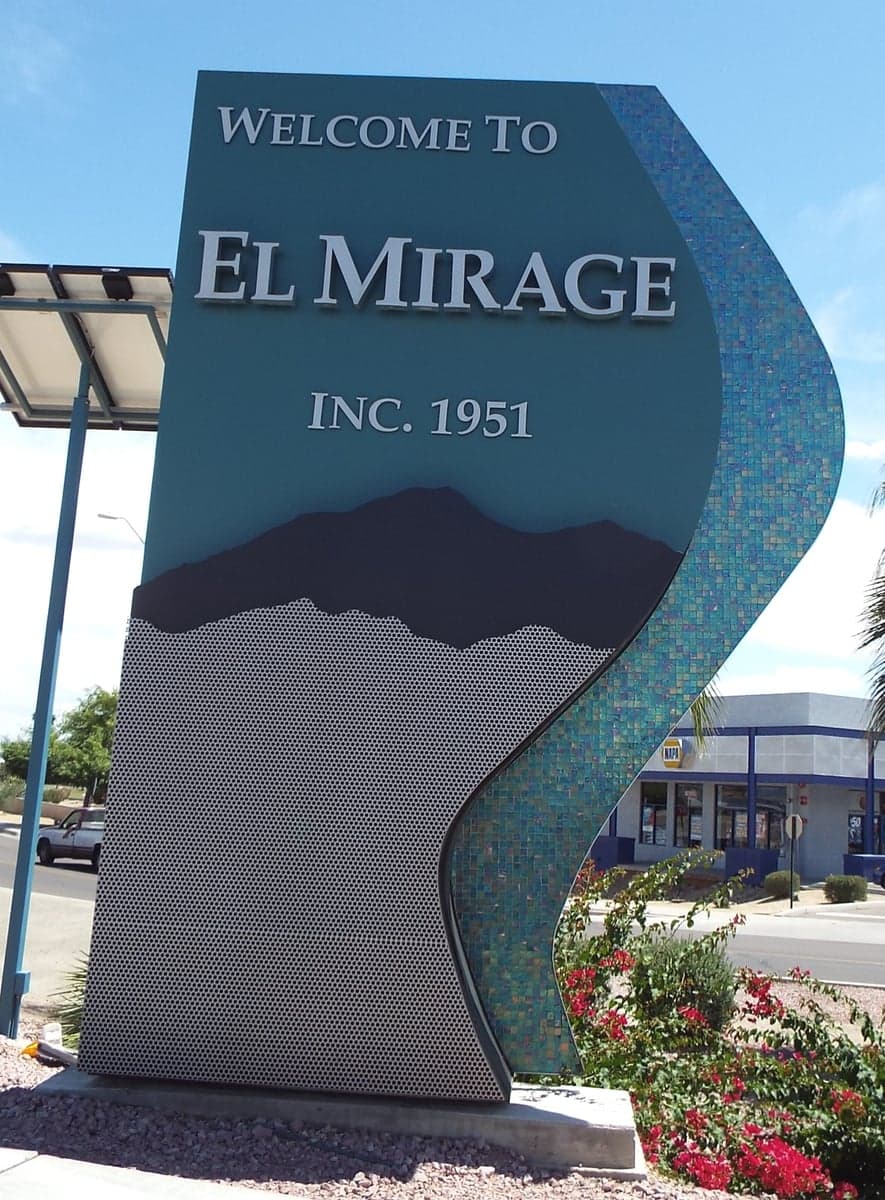
Photo: Wikipedia
Political ClimatePolitical Climate in El Mirage, AZ
District shown is the primary district for this city’s centroid. Cities may span multiple districts.
Local Political AnalysisPolitical Analysis of El Mirage, AZ
El Mirage has long been a solidly conservative community, and that hasn't changed much at the ballot box. The area carries a Cook PVI of R+15, meaning it votes about 15 points more Republican than the national average, and that number feels about right if you've lived here a while. You still see more Trump signs than anything else in the yards off Grand Avenue, and the local chatter at the hardware store or the diner leans heavily toward keeping taxes low and government out of people's business. But I've noticed a slow shift in the last five or six years, especially as Phoenix's sprawl pushes further northwest. More folks are moving in from Maricopa County's bluer areas, and while El Mirage itself hasn't flipped, the surrounding towns like Surprise and Peoria are starting to show a little more purple around the edges. That's something to keep an eye on.
How it compares
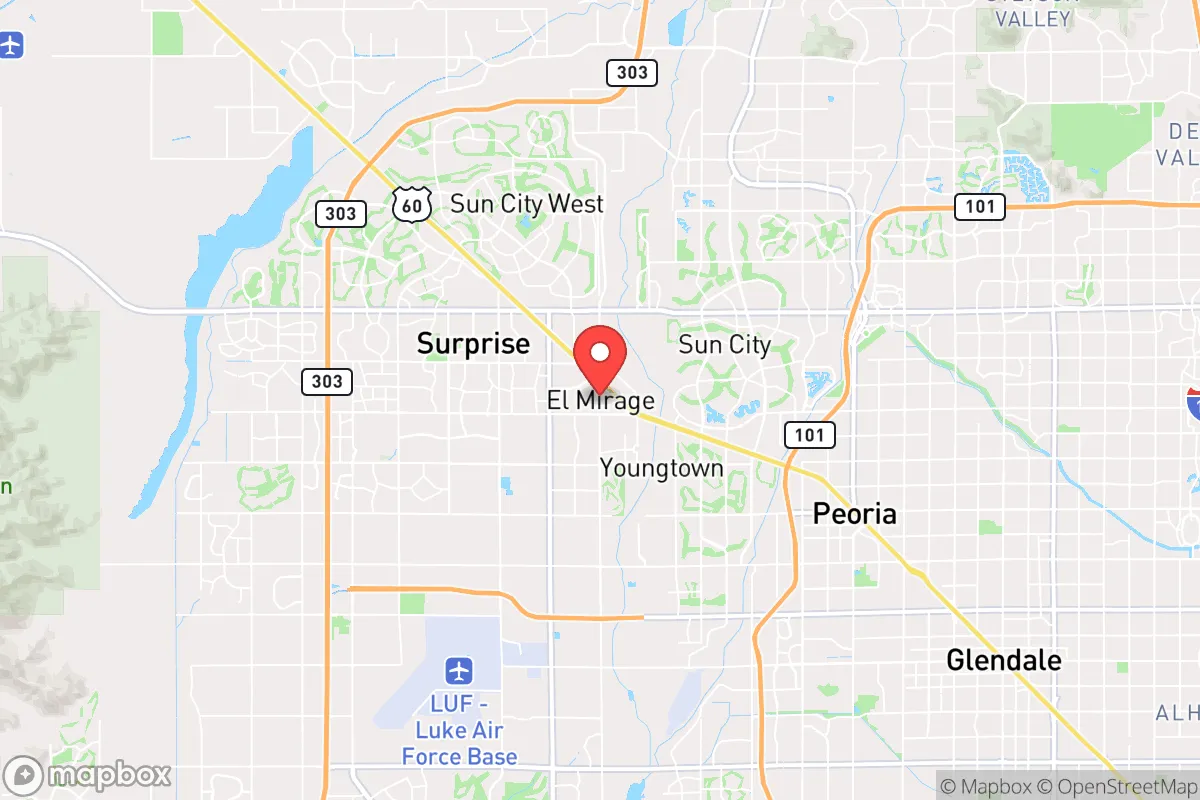
If you drive ten minutes east to Sun City, you'll find a reliably conservative retiree base that hasn't budged much. But head south toward Glendale or west toward Buckeye, and the picture gets messier. Glendale's city council has taken some progressive stances on housing and public spending that would never fly here in El Mirage. The contrast is stark: El Mirage still votes like the old Arizona, where personal responsibility and Second Amendment rights are non-negotiable. Neighboring Surprise, for example, has a similar R+ lean but has seen a few city council races tighten as younger families move in from California and Colorado. That's the real worry for folks like me — not that El Mirage will turn blue overnight, but that the slow creep of progressive policies from the county level could start bleeding into local ordinances. The county board of supervisors, which has a Republican majority, has held the line on things like mask mandates and zoning overreach, but you can feel the pressure building.
What this means for residents
For now, life here means you can still count on low property taxes and a city government that doesn't meddle much with how you run your household or your business. The city council is majority conservative, and they've resisted calls for things like rent control or "sanctuary city" policies that have popped up in Tucson and Phoenix. That's a big deal if you value keeping your paycheck in your pocket and your rights intact. But the long-term trend is concerning. As the metro area grows, we're seeing more ballot initiatives pushed by out-of-state money that try to expand government control over everything from water usage to school curriculum. If you're thinking of moving here, know that the political culture is still very much "live and let live" with a conservative backbone, but you'll want to pay attention to city council elections. Those are the races where a single progressive candidate can slip in and start chipping away at the freedoms that make this place worth living in.
One thing that sets El Mirage apart culturally is its strong sense of local identity — it's not just a bedroom community for Phoenix. People here take pride in their small-town feel, and that translates into a resistance to big-government solutions. You won't find the same enthusiasm for bike lanes, light rail expansions, or "equity" task forces that you see in Tempe or Scottsdale. The local police are well-supported, and there's a general understanding that personal safety and property rights come first. The biggest policy distinction is probably the city's stance on development: they've been cautious about approving large-scale apartment complexes that could change the voting demographics, preferring single-family homes and owner-occupied neighborhoods. That's a quiet but deliberate choice that keeps the political character stable. If you're looking for a place where the government stays out of your way and your neighbors share your values, El Mirage still delivers. But don't get complacent — the pressure from the left is real, and it's coming up the I-10 every single day.

State Political ClimatePolitical Climate in Arizona
State Political AnalysisPolitical Environment in the State
Arizona has transformed from a reliably red stronghold into a purple battleground over the past two decades, but don’t let the national headlines fool you—the state’s political soul is still deeply conservative outside of Maricopa County’s urban core. The 2024 election saw Donald Trump carry the state by roughly 5 points, a reversal from Biden’s 2020 win by just 10,457 votes, signaling that the old GOP coalition is regrouping. However, the real story is the widening chasm between the booming, left-leaning Phoenix metro and the rest of the state, where rural counties like Mohave, Yavapai, and Cochise vote 70-80% Republican. For a conservative considering relocation, Arizona offers a mixed bag: low taxes and gun-friendly laws, but a growing progressive foothold in the cities that controls the legislature and governor’s mansion.
Urban vs. rural divide
The political map of Arizona is essentially a tale of two Arizonas. Maricopa County, home to Phoenix, Scottsdale, Mesa, and Chandler, holds 60% of the state’s population and decides every statewide election. In 2020, Maricopa flipped blue for the first time since 1948, driven by suburban women in Paradise Valley and Tempe who rejected Trump’s style. But in 2024, Trump won Maricopa back by a narrow 1.5 points, thanks to a surge in Latino and working-class voters in Mesa and Avondale. Meanwhile, Tucson (Pima County) is a deep blue island—Biden won it by 20 points in 2020—but the surrounding Green Valley and Sahuarita areas lean conservative. The rural north and east, including Flagstaff (Coconino County) and Prescott (Yavapai County), are starkly different: Yavapai voted 72% for Trump in 2024, while Coconino went 58% for Biden. The divide isn’t just about cities vs. farms—it’s about lifestyle. Phoenix’s tech and service economy attracts young, diverse, and often left-leaning transplants, while the rest of the state holds onto ranching, mining, and a fierce independence that resents Phoenix’s growing influence.
Policy environment
Arizona’s policy landscape is a conservative’s dream on paper, but the devil is in the details. The state has a flat income tax rate of 2.5% (down from 4.5% in 2022), no estate tax, and a sales tax that averages 8.4% locally. Property taxes are among the lowest in the nation—about 0.62% of assessed value—which is a huge draw for families. However, the state’s education system is a mess: Arizona ranks 48th in per-pupil spending, and the 2023 “school choice” expansion (Empowerment Scholarship Accounts) lets parents use public funds for private or homeschool, which is a win for freedom but has strained rural districts. Healthcare is a mixed bag—Medicaid expansion under the 2013 “Arizona Health Care Cost Containment System” (AHCCCS) was pushed by then-Governor Jan Brewer, a Republican, but the state still has some of the highest uninsured rates. Election laws are a flashpoint: the 2021 “Arizona Voter ID” law (SB 1260) tightened proof of citizenship requirements, but the 2020 “ballot harvesting” controversy (HB 2023) was struck down by courts. The bottom line: the state’s tax and regulatory posture is pro-business and pro-liberty, but the legislature is often gridlocked by a moderate GOP governor (Katie Hobbs, a Democrat) who vetoed 143 bills in 2023, including a ban on transgender surgeries for minors.
Trajectory & freedom
Is Arizona becoming more or less free? It depends on the issue. On gun rights, it’s a fortress: constitutional carry became law in 2010, and the 2021 “Second Amendment Sanctuary” statute (SB 1382) prohibits state enforcement of federal gun bans. That’s solid. On parental rights, the 2022 “Parental Bill of Rights” (HB 2162) gives parents control over medical decisions and school curriculum, but it’s been weakened by court challenges. On medical freedom, the 2023 “COVID-19 Vaccine Mandate Prohibition” (HB 2498) bans employer mandates for state workers, but private businesses can still require shots. The real concern is the 2024 “Abortion Access Act” (Proposition 139), which enshrined abortion up to fetal viability in the state constitution—a major loss for pro-life conservatives. Meanwhile, property rights are strong: Arizona is a “right-to-farm” state, and the 2022 “Land Use Bill” (HB 2671) limits local governments from downzoning without compensation. The trajectory is a tug-of-war: the legislature passes conservative bills, but the courts and ballot initiatives (which require only a simple majority) often undo them. For a new resident, expect more fights over election integrity (the 2024 “Secure the Border Act” (Proposition 314) made illegal entry a state crime) and school curriculum (the 2023 “Critical Race Theory” ban was upheld).
Civil unrest & political movements
Arizona has been a national flashpoint for political activism, and you’ll feel it on the ground. The 2020 “Stop the Steal” protests in Phoenix drew tens of thousands, and the 2022 audit of Maricopa County ballots (the “Cyber Ninjas” fiasco) became a national symbol of election integrity concerns. On the left, the “Red for Ed” teacher strikes in 2018 shut down schools for days and led to a 20% pay raise, but also energized progressive activism. Immigration politics are raw: the 2010 “SB 1070” (the “show me your papers” law) was partially struck down, but the 2024 “Proposition 314” allows state police to arrest suspected illegal immigrants—a direct challenge to federal authority that’s already being sued. Cochise County (border with Mexico) has seen armed civilian patrols and clashes with Border Patrol. You’ll also see “Moms for Liberty” chapters active in school board meetings in Gilbert and Queen Creek, pushing back on LGBTQ+ curriculum. The vibe is tense but not violent—most activism is legal and loud. A new resident should expect to see campaign signs in yards year-round and heated debates at local coffee shops, especially in swing precincts like Chandler.
Projection
Over the next 5-10 years, Arizona will likely remain a purple state, but the conservative base is growing in the exurbs and rural areas. In-migration from California and Illinois is bringing both left-leaning tech workers to Phoenix and conservative retirees to Lake Havasu City and Bullhead City. The 2024 election showed that Trump’s gains with Latino voters (especially in Yuma and Santa Cruz County) could offset losses in suburban Maricopa. However, the 2028 Senate race (Kyrsten Sinema’s seat is up) will be a proxy war for the state’s direction. The biggest wildcard is water: the Colorado River crisis could force growth restrictions, which would disproportionately hit Phoenix’s liberal expansion. If the state stays on its current path, expect more ballot initiatives on education funding and abortion, and a legislature that’s increasingly conservative but hamstrung by a Democratic governor. For a conservative moving in now, the next decade will be a fight to keep the state from sliding into California-style governance—but the tools (low taxes, gun rights, school choice) are already in place to resist.
Bottom line for a new resident: Arizona is a great place to live if you’re willing to engage in the political fight. You’ll enjoy low taxes, strong gun rights, and a growing network of conservative communities in places like Prescott and Green Valley. But you’ll also face a state government that’s split, a public school system that’s underfunded, and a constant battle over ballot initiatives that can override the legislature. If you’re moving here, get involved in local politics—your vote in Maricopa County really does decide the nation’s future. Just don’t expect a red utopia; expect a purple battleground where your freedom is earned, not given.
* Values derived from national, state, county, city and local statistics and may differ in a specific area. Last updated: 2026-04-20T11:24:45.000Z
Narrative content on this page is AI-generated and may contain mistakes. Verify any details that matter before acting on them.
ReloMaps may earn a commission from affiliate links at no extra cost to you.

