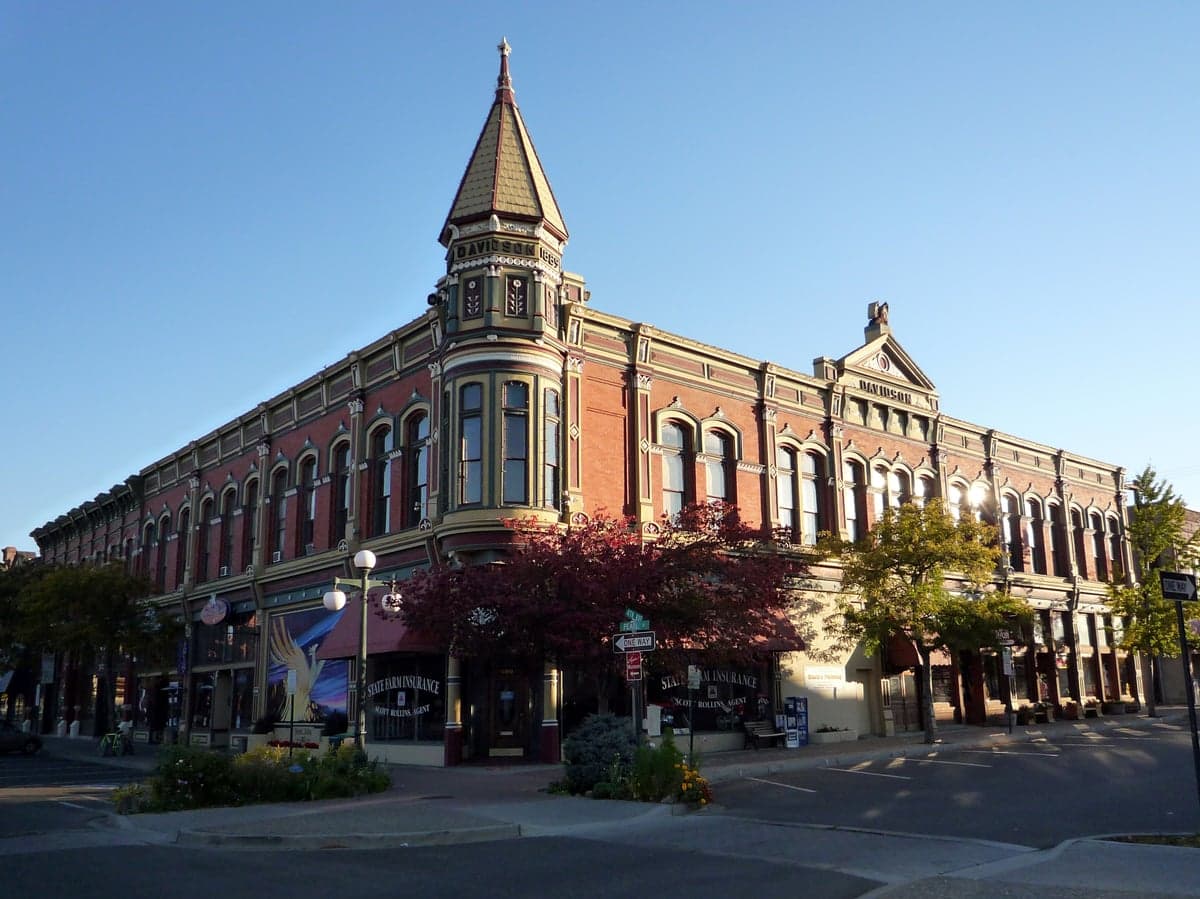
Photo: Wikipedia
Political ClimatePolitical Climate in Ellensburg, WA
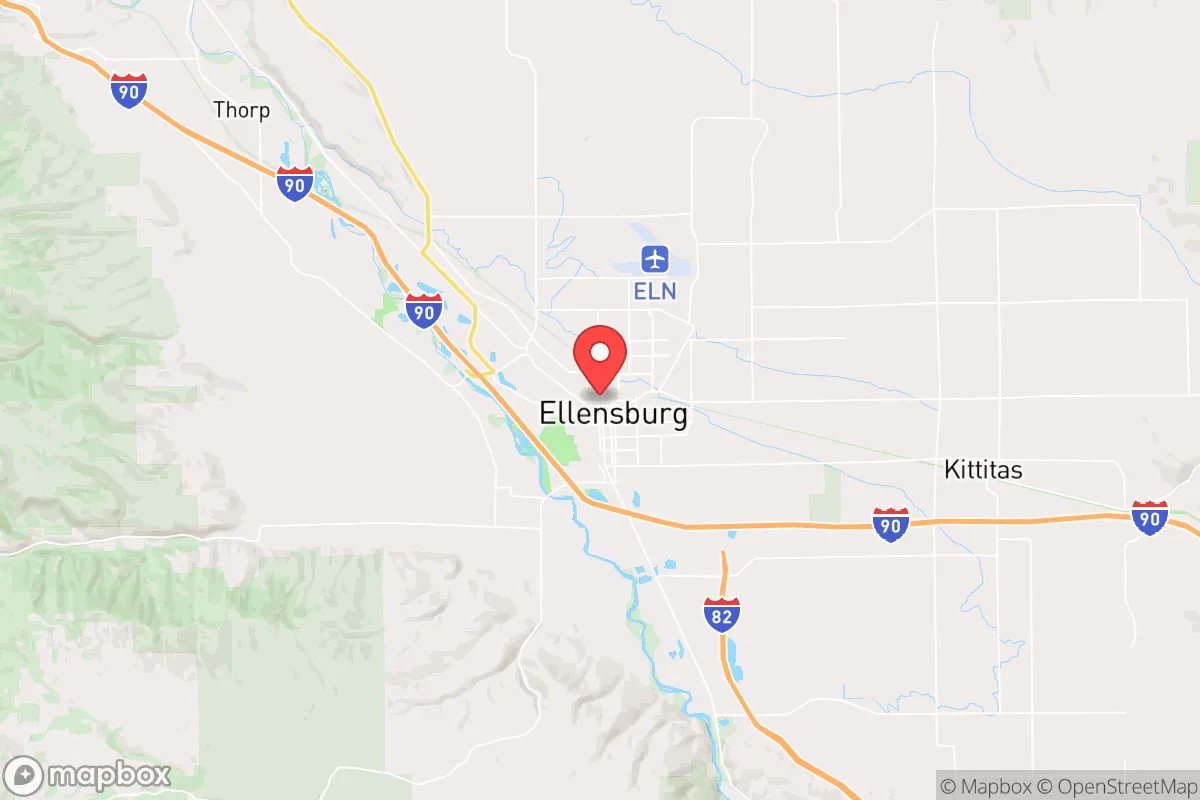
District shown is the primary district for this city’s centroid. Cities may span multiple districts.
Local Political AnalysisPolitical Analysis of Ellensburg, WA
Ellensburg’s political climate is a classic blue island in a deep-red sea. The city itself leans reliably Democratic, with a Cook Partisan Voting Index of D+3, driven largely by Central Washington University’s student and faculty population. But step just a few miles outside city limits, and you’re in solidly conservative territory—Kittitas County as a whole voted for Donald Trump by a comfortable margin in 2024, and towns like Cle Elum and Roslyn are more purple than blue. The trajectory here is subtle but real: Ellensburg is getting slightly bluer over time as the university expands and remote workers from Seattle trickle in, but the surrounding rural areas are digging in harder on the right.
How it compares
Compared to Washington state as a whole—which has a Cook PVI of D+8 and is reliably Democratic at the statewide level—Ellensburg is noticeably more moderate. The state’s political center of gravity is in King County (Seattle), where Democrats hold overwhelming majorities. Ellensburg, by contrast, is a place where a Democrat can win a city council seat but a Republican can still carry the county commission. The practical effect is that local elections here are genuinely competitive: in 2023, the mayor’s race was decided by fewer than 200 votes, while statewide races in Washington often see 15-point margins. If you drive 30 minutes east to Yakima, you’ll find a much more conservative, agricultural base; 30 minutes west to Snoqualmie Pass, and you’re back in the Seattle orbit. Ellensburg sits right in the middle, politically and geographically.
What this means for residents
For conservative residents, Ellensburg is a place where your vote matters more than it does in Seattle. You can win local office, and your voice carries weight on issues like land use, water rights, and school board policy. The downside is that you’ll feel culturally out of step with the university crowd—especially during election season, when yard signs and bumper stickers are a clear dividing line. For liberal residents, the city itself feels welcoming and progressive on social issues, but you’ll quickly hit a wall of conservative opposition on county-level decisions about development, taxes, and environmental regulations. The practical reality is that both sides have to compromise. The city council often passes resolutions on climate or diversity that the county commission ignores, and vice versa. It’s not a place where either side can steamroll the other.
Culturally, this split shows up in everyday life. The Ellensburg Rodeo in September is a conservative touchstone—flags, trucks, country music—while the university’s art walk and film series draw a more liberal crowd. The local newspaper, the Daily Record, covers both with equal seriousness. There’s no real policy flashpoint like a sanctuary city ordinance or a mask mandate battle here; the fights are more about growth management and water rights. That’s the Kittitas County way—pragmatic, land-focused, and stubbornly independent. If you’re moving here, expect to have neighbors who disagree with you on national politics but will still help you dig your car out of a snowbank. That’s the Ellensburg bargain.

State Political ClimatePolitical Climate in Washington
State Political AnalysisPolitical Environment in the State
Washington State has been a reliably Democratic stronghold for over a decade, but its politics are far more complex than a simple blue label. The state has voted for the Democratic presidential candidate in every election since 2004, with margins widening from about 7 points in 2008 to nearly 20 points in 2020. However, this top-line number masks a deep and growing urban-rural chasm, where the Seattle metro area’s explosive growth has overwhelmed the conservative lean of the rest of the state. For a conservative-leaning relocator, the practical reality is that state-level policy is firmly progressive, but local control varies dramatically—you can live in a deep-red county while still paying state income tax (which doesn’t exist) and dealing with statewide gun laws you may not like.
Urban vs. rural divide
The political map of Washington is essentially a tale of two states. The Puget Sound region—King County (Seattle), Snohomish County (Everett), and Pierce County (Tacoma)—drives the Democratic majority. King County alone casts about 30% of the state’s vote and routinely goes 70-75% Democratic. Spokane County, the largest inland population center, is a competitive swing area that has trended redder in recent cycles, voting for Trump by about 8 points in 2020. The rural counties east of the Cascades—Yakima, Grant, Douglas, and Okanogan—are reliably Republican, often voting 65-70% for GOP candidates. The Olympic Peninsula and southwest Washington, including Clark County (Vancouver), are more mixed; Clark County has been a key battleground, flipping from Obama in 2012 to Trump in 2016 and back to Biden in 2020 by just 3 points. The San Juan Islands and Whatcom County (Bellingham) are liberal enclaves, while Walla Walla and Wenatchee lean conservative. The practical takeaway: if you move to a rural county like Ferry or Stevens, your local government will be conservative, but you’ll still be subject to state-level policies passed by Seattle-area legislators.
Policy environment
Washington’s policy landscape is defined by a few key features that directly affect relocators. First, there is no state income tax—a major draw for conservatives. Instead, the state relies on a high sales tax (6.5% state rate, plus local add-ons that can push it over 10% in Seattle) and a regressive property tax system. Second, the state has a strong regulatory posture: it has a statewide plastic bag ban, a cap-and-trade program for carbon emissions (the Climate Commitment Act), and some of the strictest gun laws in the nation, including a ban on assault weapons passed in 2023 and a 10-day waiting period for all firearm purchases. Third, education policy is heavily unionized, with the Washington Education Association wielding significant influence; school choice is limited, with no voucher or charter school expansion. Fourth, healthcare is dominated by a strong public option (Cascade Care) and a state-based health insurance exchange. Fifth, election laws are among the most accessible in the country: universal mail-in voting, automatic voter registration, and same-day registration. For a conservative, this means lower taxes on income but higher costs on consumption and property, and a regulatory environment that can feel stifling for business or personal freedom.
Recent policy direction
The last five years have seen a clear progressive acceleration. In 2023, the legislature passed HB 1240, banning the sale, manufacture, and import of dozens of semi-automatic firearms, and HB 1143, requiring a 10-day waiting period and proof of safety training for all gun purchases. On parental and education rights, the state has moved in the opposite direction of many red states: it passed a law requiring school districts to adopt policies that affirm transgender students’ gender identity, and it has resisted efforts to restrict curriculum on race or sexuality. On speech and privacy, Washington has a strong state privacy law (the Washington Privacy Act) and has banned the use of facial recognition by government agencies without a warrant. On medical and bodily autonomy, the state has codified abortion rights into law (the Reproductive Parity Act) and protects access to gender-affirming care for minors. On property rights, the state’s Growth Management Act heavily restricts rural development, and recent legislation (HB 1110) has preempted local zoning to allow duplexes and fourplexes in single-family neighborhoods. On taxation, the state passed a capital gains tax on high earners (over $250,000 in gains) in 2021, which is currently being challenged in court. On voting and ballot access, the state has expanded mail-in voting and automatic registration, with no voter ID requirement beyond a signature match. For a conservative, the direction is clear: more regulation on guns, more state control over local land use, and more protections for progressive social policies.
Civil unrest & political movements
Washington has a visible history of political activism, particularly on the left. The 2020 protests in Seattle over George Floyd’s murder led to the Capitol Hill Autonomous Zone (CHAZ), a six-block area occupied by protesters for about two weeks, which became a national flashpoint. The state also has a strong environmental activist presence, with groups like 350.org and the Sierra Club heavily involved in blocking fossil fuel projects, including the proposed oil terminal at Cherry Point in Whatcom County. On the right, the Washington State Republican Party has become more populist and Trump-aligned, with the Spokane County GOP and Yakima County GOP being particularly active. There have been election integrity controversies, including a 2022 incident where a Republican candidate for secretary of state, Julie Anderson, lost by 12 points amid unsubstantiated claims of fraud. Immigration politics are a flashpoint: Washington is a sanctuary state, with a 2019 law (HB 1923) limiting local law enforcement cooperation with ICE. The secession movement is mostly rhetorical—there’s a long-running proposal to create a “Liberty State” from eastern Washington counties, but it has no serious political traction. For a new resident, you’ll see more visible left-wing activism in Seattle and Olympia, but right-wing activism is concentrated in rural areas and at county fairs and gun shows.
Projection
Over the next 5-10 years, Washington is likely to become more Democratic at the state level, driven by continued in-migration to the Seattle metro area from California and other blue states. The 2024 redistricting cycle already gave Democrats a slight advantage, and the state’s population growth is concentrated in King, Snohomish, and Pierce counties. However, the urban-rural divide will deepen: rural counties will become more Republican as they lose population and feel alienated from state policy. The capital gains tax will likely be upheld or replaced by a more progressive income tax, which could push some high-earning conservatives out of the state. The gun laws will probably get stricter, with potential magazine capacity limits and a permit-to-purchase requirement. The Climate Commitment Act will drive up gas prices and energy costs, which will be a constant source of friction for rural residents. The housing crisis will force more state preemption of local zoning, which will anger property-rights advocates. For a conservative moving in now, expect to be in a permanent minority at the state level, but with strong local control in many counties. The state’s no-income-tax advantage will remain a powerful draw, but it will be increasingly offset by other taxes and regulations.
For a new resident, the bottom line is that Washington offers a trade-off: low income taxes and stunning natural beauty, but a state government that is actively moving left on guns, education, and social policy. If you’re a conservative who values low taxes and outdoor recreation, you can find a home in a red county like Spokane or Yakima, but you’ll need to accept that your vote won’t change state-level outcomes. If you’re a liberal, you’ll find a welcoming policy environment in Seattle or Bellingham, but you’ll pay for it with high housing costs and traffic. The state’s political trajectory is set: more blue, more regulation, and more cultural conflict between the coasts and the interior. Plan accordingly.
* Values derived from national, state, county, city and local statistics and may differ in a specific area. Last updated: 2026-08-15T00:45:23.000Z
Narrative content on this page is AI-generated and may contain mistakes. Verify any details that matter before acting on them.
ReloMaps may earn a commission from affiliate links at no extra cost to you.

