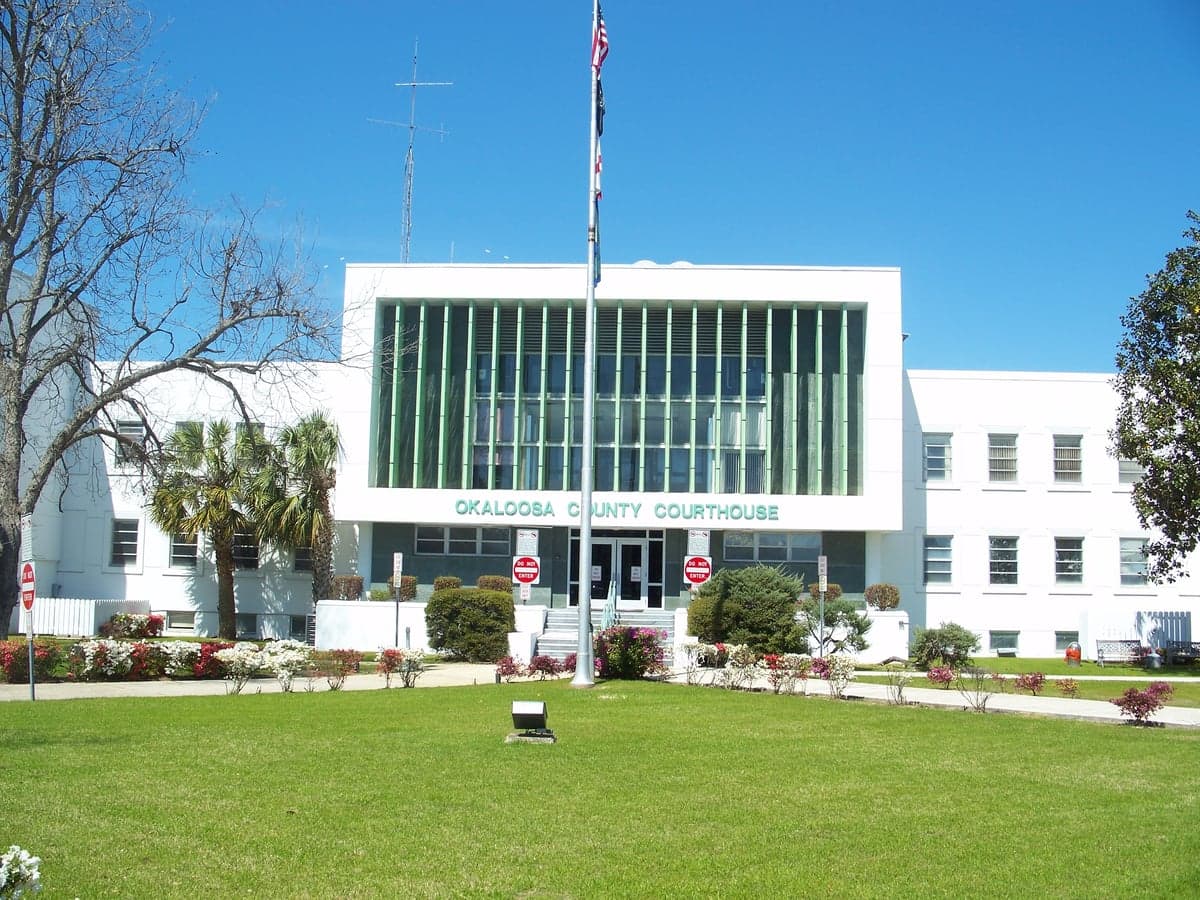
Photo: Wikipedia
Personal Sovereignty in Okaloosa County
Viable for self-reliance. Generally workable, though some barriers may limit total independence.
What does Personal Sovereignty tell us?
Personal Sovereignty measures your capacity for self-reliance and independence with minimal government friction. Higher scores mean fewer barriers between you and the way you want to live... but it assumes you have the space you need and good neighbors.
What does this tell us?
Personal Sovereignty measures your capacity for self-reliance and independence with minimal government friction. Higher scores mean fewer barriers between you and the way you want to live... but it assumes you have the space you need and good neighbors.
State Policy
Energy independence: Importer (10% of energy produced in-state)
Personal Liberty
Homesteading

Personal Liberty Analysis
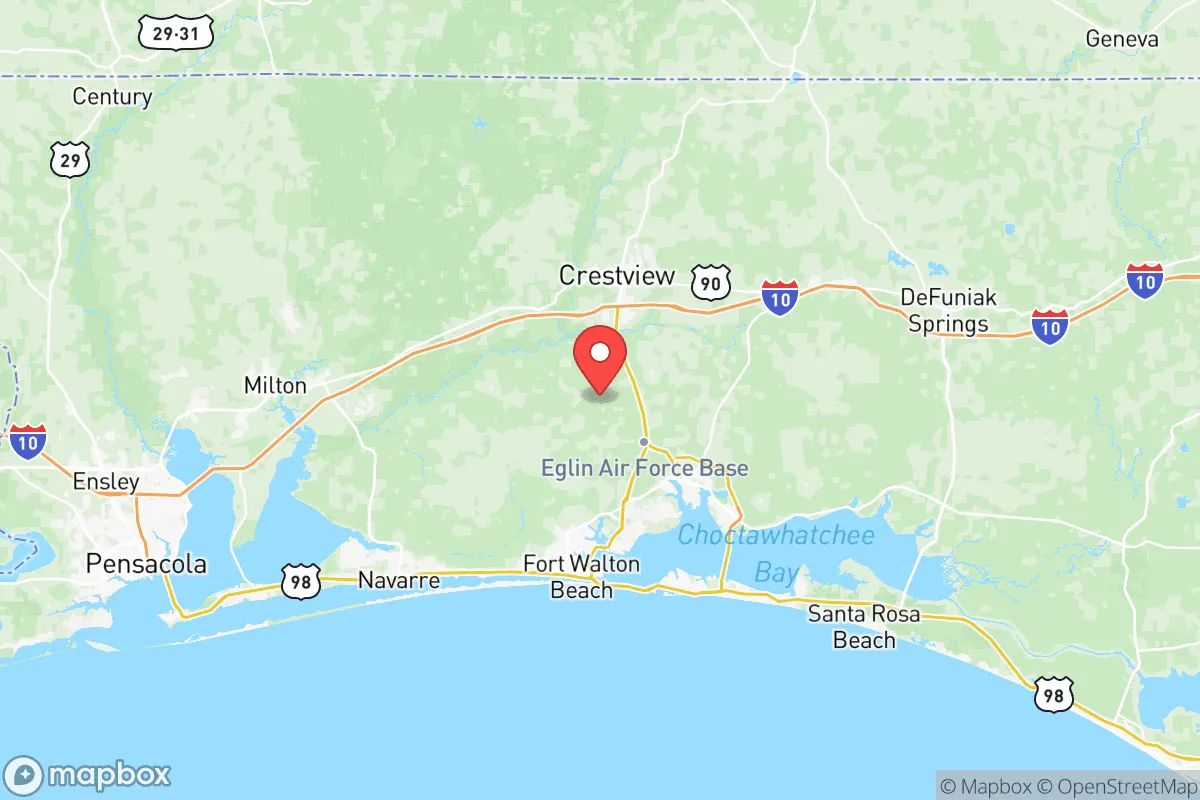
Okaloosa County, Florida, offers one of the strongest environments for personal sovereignty in the southeastern United States, particularly for those who view government overreach as a primary threat to individual liberty. Unlike the increasingly restrictive policies found in urban centers like Miami or Tallahassee, this Panhandle county—anchored by the cities of Crestview, Fort Walton Beach, and Destin—maintains a culture where self-reliance is not just tolerated but expected. The county’s political DNA, shaped by a heavy military presence from Eglin Air Force Base and a rural-to-suburban population spread, consistently votes against expanding government authority, creating a legal and social atmosphere where individuals and families can operate with minimal interference. For the strategic relocator who prioritizes autonomy over convenience, Okaloosa County represents a deliberate choice to live under a lighter regulatory hand, though the degree of freedom varies notably between its beachside tourist zones and its inland rural tracts.
Tax burden and regulatory posture: How Okaloosa compares to Florida’s urban cores
Florida’s lack of a state income tax is the baseline advantage, but Okaloosa County amplifies this with a relatively low property tax millage rate—typically hovering around 4.5 to 5.0 mills for the unincorporated areas, compared to over 6 mills in Broward or Miami-Dade counties. The county’s regulatory posture is deliberately lean: there is no countywide rental registration or short-term rental licensing scheme that mimics the heavy-handed oversight seen in Orange County (Orlando) or Monroe County (Key West). In the inland city of Crestview, zoning ordinances are notably permissive for home-based businesses and workshops, a stark contrast to the restrictive codes in Destin’s coastal corridor. The Baker Act and Marchman Act—Florida’s involuntary commitment statutes—are applied with far less frequency here than in urban counties, reflecting a community preference for family-led intervention over state-mandated treatment. For the prepper or survivalist, the absence of a county-level business tax receipt requirement for small-scale agricultural sales (under certain thresholds) means you can sell eggs, honey, or produce from your property without triggering bureaucratic scrutiny, a freedom that is quietly being eroded in more populated Florida counties.
Self-defense and gun law specifics: Stand Your Ground in practice
Okaloosa County is a stronghold for Second Amendment rights, with the local sheriff’s office—particularly under current leadership—taking an explicit stance against any form of “red flag” law enforcement beyond what state statute minimally requires. Florida’s constitutional carry law, effective July 2023, means no permit is needed to carry a concealed firearm, and Okaloosa’s gun culture is deeply ingrained, with ranges and gun shops dotting the landscape from Niceville to Baker. The county’s Stand Your Ground statute is applied with notable consistency: in 2022, a homeowner in the rural community of Milligan who fired warning shots at trespassers was not charged, a decision that would likely face more scrutiny in a jurisdiction like Broward or Palm Beach. For those concerned about government overreach in self-defense, Okaloosa’s judicial circuit (1st Judicial Circuit) has a reputation for denying motions to suppress in cases where defendants acted to protect life or property, and the state attorney’s office rarely pursues charges against lawful gun owners who use force in clearly defensive situations. The county also has no local ordinance restricting magazine capacity or ammunition types, leaving those decisions entirely to state law, which preempts local gun control entirely.
Self-reliance and homesteading viability: Lot sizes, zoning, and off-grid feasibility
Okaloosa County’s inland areas offer genuine homesteading potential that is increasingly rare in Florida’s coastal counties. In unincorporated areas near Laurel Hill and Baker, minimum lot sizes in agricultural zoning districts start at one acre, with many parcels available in 5- to 20-acre tracts that allow for livestock, orchards, and even small-scale aquaculture. The county’s land development code explicitly permits “accessory dwelling units” (ADUs) on properties over one acre without special exception, a boon for multi-generational living or rental income that supports self-sufficiency. Off-grid feasibility is high: while the county requires a septic system permit, there is no mandate to connect to municipal water or sewer in rural zones, and rainwater catchment systems are legal without restriction. Solar panel installation is permitted by right, though the county does enforce the Florida Building Code’s wind-load requirements, which can add cost but are not prohibitive. In contrast, the coastal cities of Destin and Fort Walton Beach impose stricter setback requirements and prohibit certain agricultural uses entirely, making them less viable for serious homesteading. For the prepper, the inland corridor along Highway 90 and County Road 4 offers the best balance of affordability, land availability, and regulatory leniency.
Personal liberties: Parental rights, medical autonomy, speech, and property
Okaloosa County is a stronghold for parental rights, with the local school board—covering districts from Crestview to Mary Esther—having adopted policies that require parental notification for any medical or mental health services provided on campus, and that allow parents to opt their children out of any curriculum materials they find objectionable. The county’s health department does not operate vaccine mandates for school attendance beyond state requirements, and there is no county-level public health order that overrides parental medical decision-making, a contrast to the emergency powers exercised in counties like Miami-Dade during 2020-2021. Medical autonomy extends to the practitioner level: Okaloosa has a higher-than-average density of direct primary care (DPC) clinics and cash-pay specialists, particularly in Niceville and Shalimar, allowing individuals to bypass insurance bureaucracy and maintain private medical records. Free speech is robustly protected, with the county commission having rejected any form of “hate speech” ordinance or public assembly permit requirement that could chill political expression. Property rights are defended through the county’s strict adherence to the Bert J. Harris Jr. Private Property Rights Protection Act, with the county’s legal department historically settling inverse condemnation claims rather than litigating them, signaling that property owners will be compensated if government action devalues their land.
Overall, Okaloosa County ranks among the top 10% of Florida counties for personal sovereignty when measured against the criteria of tax burden, gun rights, homesteading feasibility, and resistance to federal or state overreach. The inland communities—Crestview, Baker, Laurel Hill, and Milligan—offer a level of autonomy that rivals rural counties in the Florida Panhandle like Holmes or Washington, while still providing access to the medical and logistical infrastructure of the Destin-Fort Walton Beach metro area. For the individual or family seeking to minimize government entanglement while maintaining a high standard of living, this county represents a deliberate middle ground: not as isolated as the deep rural counties, but far more respectful of personal liberty than the urbanized coastal zones. The key strategic insight is that sovereignty here is not uniform—choose the inland tracts over the beachside suburbs, and you will find a jurisdiction that treats your property, your family, and your decisions as your own.

* Values derived from national, state, county, city and local statistics and may differ in a specific area. Last updated: 2026-05-08T19:50:05.000Z
Narrative content on this page is AI-generated and may contain mistakes. Verify any details that matter before acting on them.
ReloMaps may earn a commission from affiliate links at no extra cost to you.

