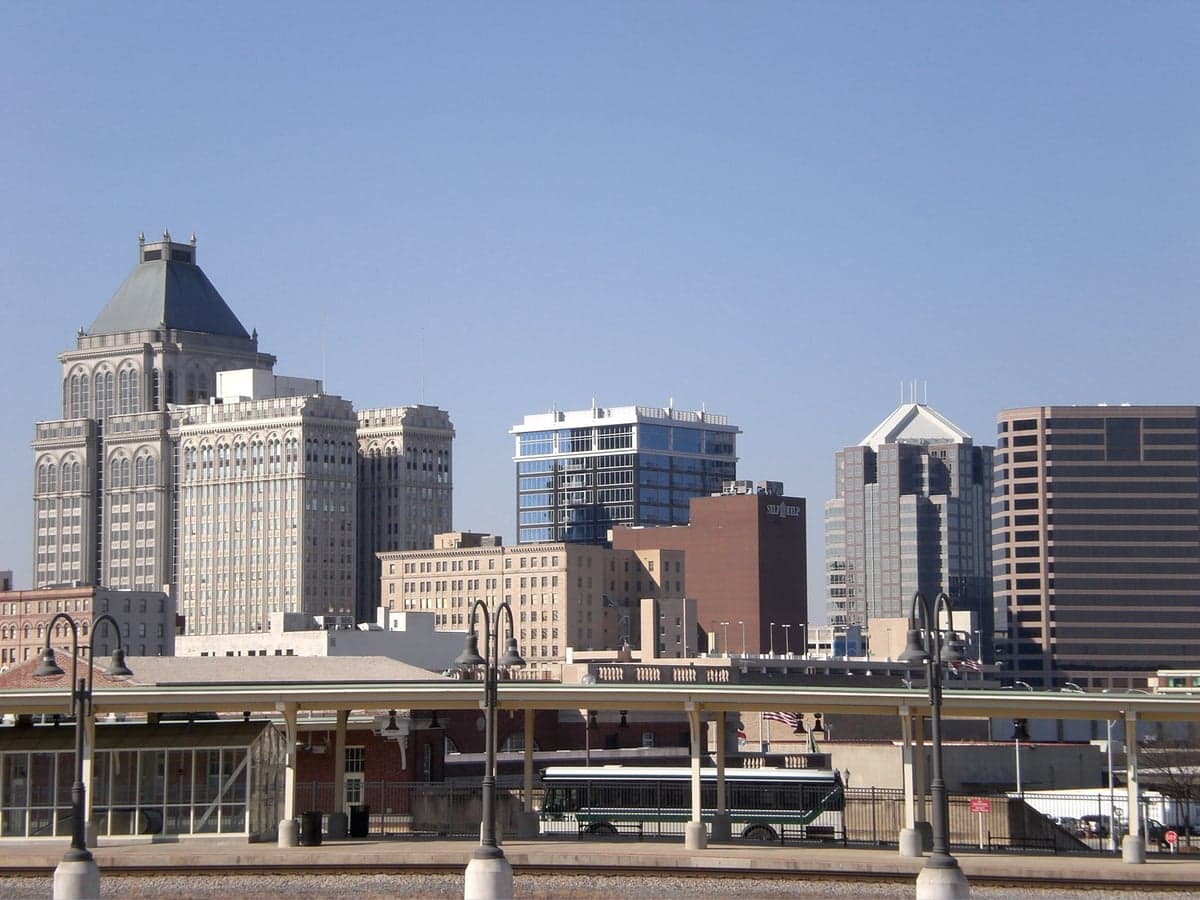
Photo: Wikipedia
Political ClimatePolitical Climate in Greensboro, NC
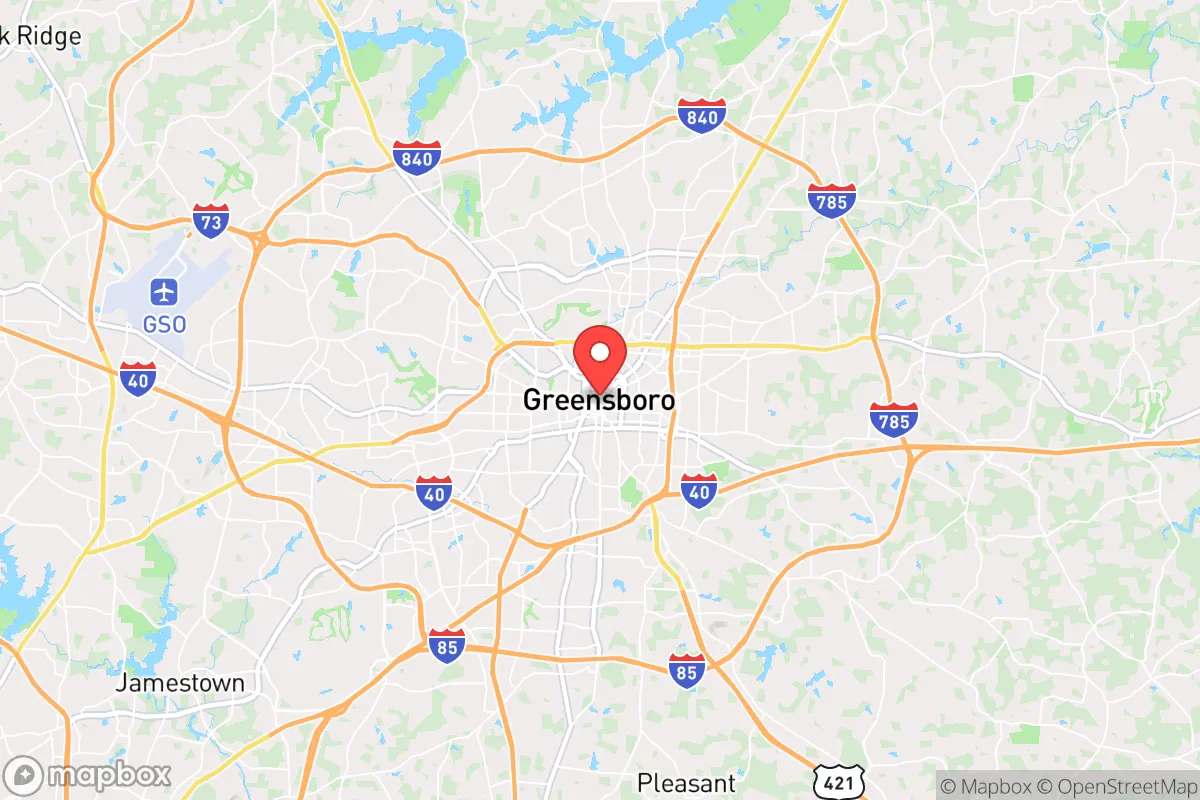
District shown is the primary district for this city’s centroid. Cities may span multiple districts.
Local Political AnalysisPolitical Analysis of Greensboro, NC
Greensboro, North Carolina, has long been a place where the political climate feels like it’s shifting under your feet, and not always for the better if you value personal freedoms and limited government. The city itself leans left, but the surrounding county, Guilford, has a Cook PVI of R+9, meaning it’s actually more Republican-leaning than the nation as a whole. That split tells you a lot: you’ve got a progressive urban core pushing for more government control, while the rural and suburban areas around it—places like Summerfield, Oak Ridge, and even parts of High Point—still hold onto a more conservative, hands-off approach. It’s a tension that’s been building for years, and it’s only getting sharper.
How it compares
If you look at the broader Piedmont Triad, Greensboro stands out as the most progressive of the major cities. Winston-Salem, just 30 minutes west, has a similar urban-rural divide but feels a bit more grounded in traditional values, especially with its strong Baptist roots. Down south, High Point is still a furniture and manufacturing town, so it leans more conservative and practical. But the real contrast is with the smaller towns around Greensboro—places like Gibsonville, Whitsett, and even parts of eastern Guilford County. Those communities vote reliably red, and they’re where you’ll find folks who are wary of the city council’s recent moves, like pushing for more zoning regulations or expanding public transit projects that feel like a reach. It’s a classic story: the city tries to impose its will, and the surrounding areas push back, worried about losing their way of life to overreach.
What this means for residents
For someone living in Greensboro, especially if you’re a conservative, the day-to-day reality is a mixed bag. You’ll see the city government getting more involved in things that used to be left to individuals—like property rights, small business regulations, and even how you can use your own land. There’s been a push for more affordable housing mandates and environmental rules that sound good on paper but often mean more red tape and higher costs for homeowners and landlords. The school board has also become a battleground, with debates over curriculum and parental rights heating up. If you’re a parent, you might feel like you’re constantly fighting to keep your kids’ education free from ideological agendas. The silver lining is that the county-level government is still more balanced, so some of the worst ideas get slowed down. But you can’t ignore the trend: the city is moving left, and it’s making life a little more complicated for anyone who just wants to be left alone.
What sets Greensboro apart culturally and politically
One thing that’s unique about Greensboro is its history as a civil rights hub—the sit-ins at the Woolworth’s counter are a big deal here. That legacy gives the progressive side a lot of moral weight, and it’s used to push for more government action on social issues. But for conservatives, that same history can feel like a double-edged sword: it’s used to justify policies that limit personal choice, like speech codes or diversity mandates in local contracts. The city also has a strong arts and university presence (UNC Greensboro and NC A&T), which brings in a younger, more liberal crowd that’s eager to change things. In the long term, I see Greensboro continuing to drift left, especially as the city grows and attracts more people from outside the region. The rural areas will hold the line, but the political center of gravity is shifting. If you’re a conservative, you’ll need to stay engaged—vote in local primaries, show up at council meetings, and keep an eye on the school board. It’s still a good place to live, but you’ve got to work to keep it that way.

State Political ClimatePolitical Climate in North Carolina
State Political AnalysisPolitical Environment in the State
North Carolina has long been considered a quintessential swing state, but over the past 10-20 years, its political center of gravity has shifted noticeably rightward, particularly in statewide and legislative races. While the state voted for Donald Trump in 2024 by a margin of roughly 1.5 points, the real story is the consolidation of Republican power in the General Assembly and the steady erosion of Democratic strongholds outside of a few major metros. The dominant coalition today is a mix of rural conservatives, suburban fiscal conservatives, and a growing number of transplants from the Northeast and Midwest who are fleeing high taxes and progressive policies in their home states. The trajectory is one of cautious conservatism, with the state legislature consistently pushing back against federal overreach and progressive social experiments, though the battle lines are drawn sharply in the fast-growing suburbs of Charlotte and the Research Triangle.
Urban vs. rural divide
The political map of North Carolina is a tale of two worlds. The urban cores of Charlotte (Mecklenburg County) and Raleigh-Durham (Wake and Durham Counties) are deep blue, driven by a mix of tech workers, university faculty, and a growing population of out-of-state liberals. These two metros alone account for roughly 30% of the state's vote, and they reliably deliver margins of 20-30 points for Democrats. However, the rest of the state is a sea of red. The rural counties of the Piedmont and the Coastal Plain—places like Johnston County, Union County, and Cabarrus County—have been trending harder right, often voting 60-70% Republican. The real battleground is the suburban ring counties around Charlotte and Raleigh, such as Wake County's exurbs and Mecklenburg's northern suburbs. These areas are politically mixed, with many voters who are fiscally conservative but socially moderate, making them the key to any statewide election. The mountains in the west, including Buncombe County (Asheville), are a blue island in an otherwise red region, driven by a counterculture and retiree influx.
Policy environment
North Carolina's policy environment is a study in conservative restraint, especially when compared to its neighbors. The state has a flat income tax rate of 4.5%, which is scheduled to drop to 3.99% by 2027 under legislation passed in 2021. There is no state property tax, and the sales tax is capped at 7.5% in most counties. The regulatory posture is business-friendly, with a right-to-work law and a tort reform system that limits lawsuit abuse. On education, the state has a robust school choice program, including the Opportunity Scholarship Program, which provides vouchers for low-income families to attend private schools. In 2024, the legislature expanded this program to all families, regardless of income, a move that has drawn fierce opposition from teachers' unions but strong support from conservative parents. Healthcare policy is a mixed bag: the state did expand Medicaid in 2023 under a bipartisan deal, but it also passed a law requiring parental consent for minors seeking abortions and banned most abortions after 12 weeks. Election laws have been tightened, with voter ID requirements now in effect after years of legal battles, and early voting hours have been standardized to prevent county-level manipulation.
Trajectory & freedom
North Carolina is becoming more free in several key areas, particularly when it comes to personal liberty and resistance to federal overreach. In 2023, the legislature passed a Parents' Bill of Rights, which requires schools to notify parents about curriculum changes and medical services offered to minors, and prohibits instruction on gender identity and sexuality in K-4 classrooms. Gun rights have been expanded: permitless carry (constitutional carry) became law in 2021, and the state preempts local gun ordinances, meaning cities like Charlotte cannot impose their own restrictions. On medical autonomy, the state banned COVID-19 vaccine mandates for state employees and contractors in 2023, and it has resisted federal pressure to adopt mask mandates in schools. Property rights are strong, with a strict eminent domain law that limits government seizure of private land. However, there are concerns: the state's ABC (Alcoholic Beverage Control) system remains a government monopoly on liquor sales, and the state still has a high corporate income tax (though it is being phased down). The biggest red flag for conservatives is the growing influence of the Research Triangle tech sector, which is pushing for more progressive policies on climate and diversity, but so far the legislature has held the line.
Civil unrest & political movements
North Carolina has seen its share of political flashpoints, but they are largely contained to the urban centers. The 2020 protests in Charlotte and Raleigh over the death of George Floyd were significant, with property damage and clashes with police, but they were smaller and shorter-lived than in Portland or Seattle. The state has a strong organized conservative movement, particularly through groups like the North Carolina Republican Party and the John Locke Foundation, which have successfully pushed for school choice and tax cuts. On the left, the Moral Monday movement, led by the NAACP, has been a persistent force since 2013, staging regular protests at the General Assembly over voting rights and social justice issues. Immigration politics are relatively quiet compared to border states, but there have been flashpoints in Siler City and Monroe, where meatpacking plants employ large numbers of immigrant workers. The state has no sanctuary city policies; in fact, the legislature passed a law in 2015 requiring sheriffs to cooperate with ICE, and most counties comply. Election integrity has been a hot topic since 2020, with the state's absentee ballot process coming under scrutiny. The legislature has since tightened rules on ballot drop boxes and signature verification, and the State Board of Elections has been restructured to ensure partisan balance.
Projection
Over the next 5-10 years, North Carolina is likely to remain a lean-Republican state, but the margin will narrow as the Charlotte and Raleigh metros continue to grow. The key demographic shift is the influx of out-of-state transplants, many of whom are coming from blue states like New York and California. While some of these newcomers are conservative-leaning (fleeing taxes and crime), many are bringing their progressive voting habits with them. The state's rural counties are losing population, which will dilute their electoral power. However, the Republican-controlled General Assembly has shown it is willing to use redistricting to maintain its advantage, and the state's voter ID law and other election integrity measures will likely survive court challenges. The biggest wildcard is the growth of the Charlotte suburbs, particularly Union County and Cabarrus County, which are becoming more diverse and could flip to purple in the next decade. For now, the state's trajectory is one of cautious conservatism, with the legislature focused on tax cuts, school choice, and parental rights, while the urban centers push for more progressive policies. A new resident moving in today should expect a state that is broadly conservative in its laws and culture, but with growing pockets of blue that will make every election a fight.
For a conservative-leaning individual or family, North Carolina offers a strong mix of low taxes, school choice, and personal freedom, particularly on gun rights and parental authority. The key is to choose your location carefully: the rural and suburban counties outside the major metros are where the conservative culture is strongest, while the urban cores are increasingly hostile to traditional values. If you're looking for a state that respects your right to live your life without government interference, North Carolina is a solid bet—just keep an eye on the Charlotte and Raleigh city councils, which are constantly trying to import the policies you left behind.
* Values derived from national, state, county, city and local statistics and may differ in a specific area. Last updated: 2026-05-03T04:45:57.000Z
Narrative content on this page is AI-generated and may contain mistakes. Verify any details that matter before acting on them.
ReloMaps may earn a commission from affiliate links at no extra cost to you.

