Photo: Wikipedia
Political ClimatePolitical Climate in Greenville, TX
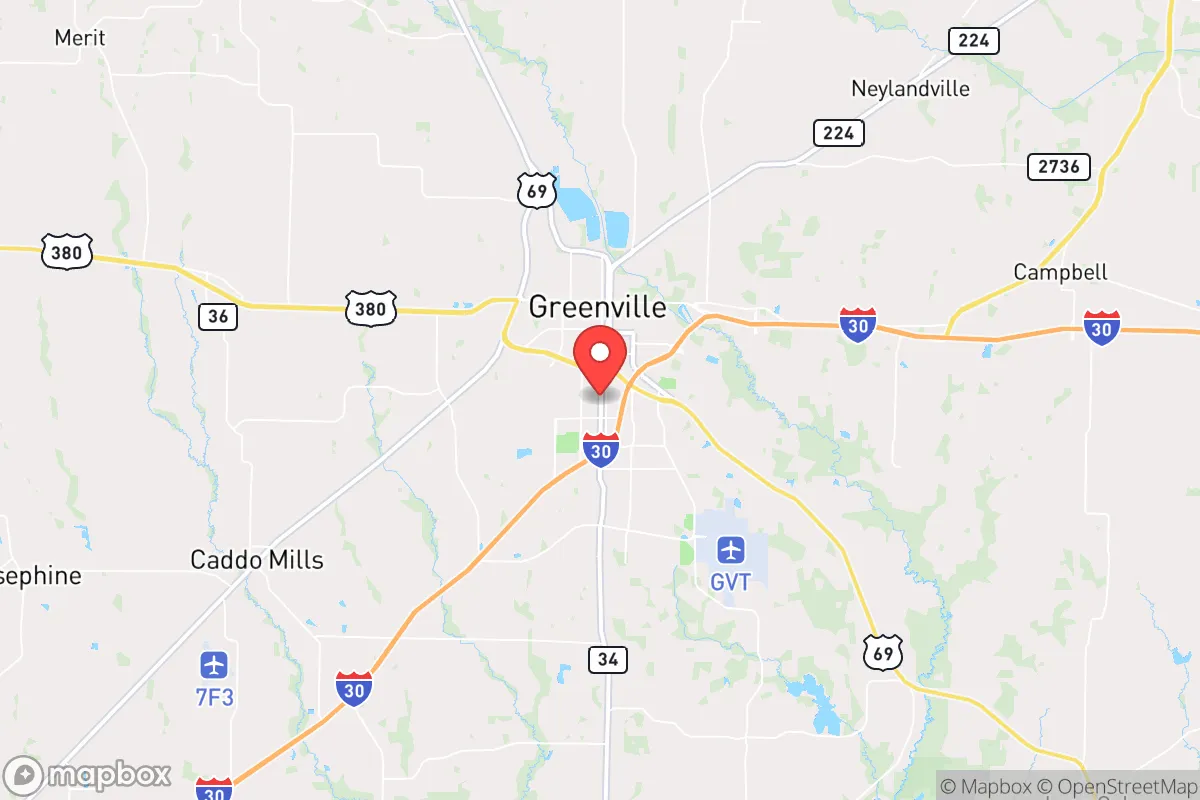
District shown is the primary district for this city’s centroid. Cities may span multiple districts.
Local Political AnalysisPolitical Analysis of Greenville, TX
Greenville, Texas, has long been a solid conservative stronghold, and that hasn't changed much, though you can feel the winds shifting a bit at the edges. The Cook PVI here is R+10, which is significantly more Republican than the state of Texas as a whole, which sits at R+4. That means when you're voting in Greenville, you're in a place that's reliably red, but we're not an island—the broader state's shift toward purple is something you can sense in the local chatter, especially as folks from the more progressive Dallas-Fort Worth metroplex start moving out this way for cheaper land and a quieter life.
How it compares
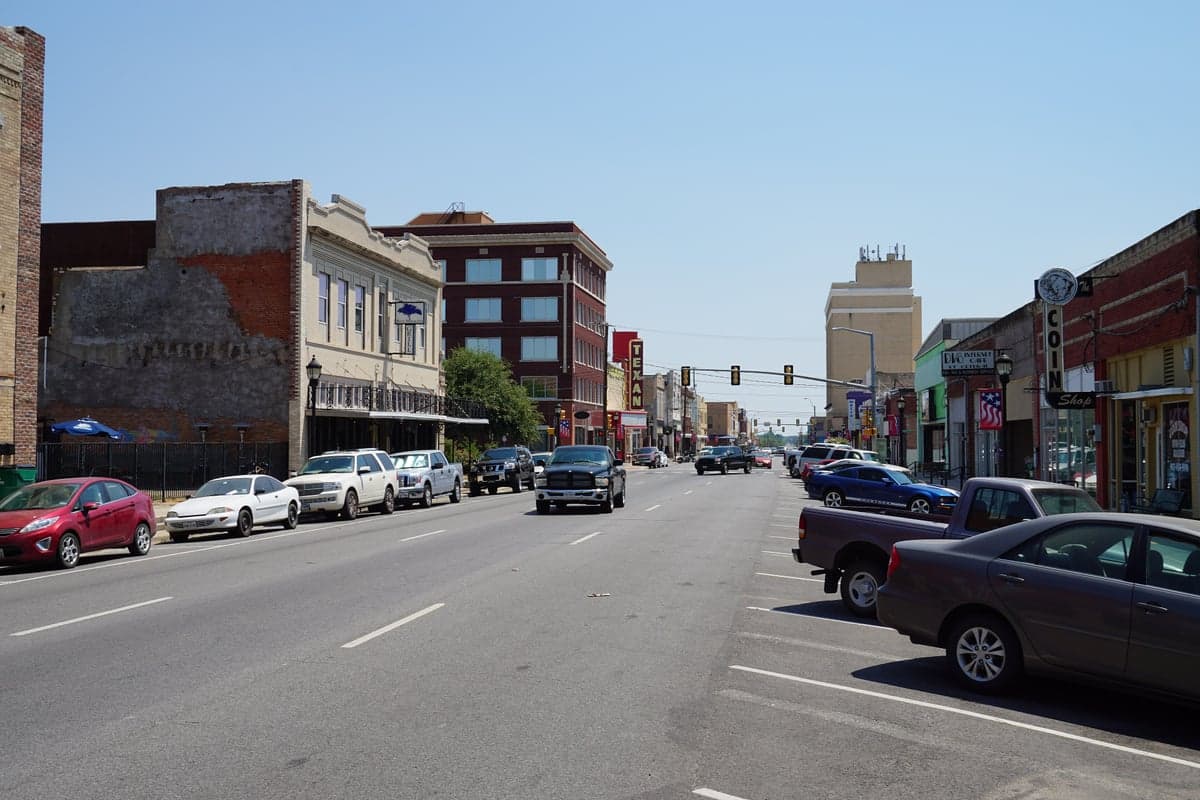
Compared to the rest of Texas, Greenville feels like a time capsule of what the state used to be politically. The R+10 rating puts us in a different league than, say, Dallas County (which leans blue) or even Collin County (which is trending purple). Nearby cities like McKinney and Frisco have seen a noticeable influx of out-of-state transplants bringing more progressive ideas, and that's starting to show in local elections there. But here in Hunt County, we've held the line better. You don't see the same push for things like heavy-handed zoning regulations or tax hikes for pet projects. The contrast is stark when you drive 30 minutes south to Rockwall, which is still conservative but has a more suburban, "let's compromise" vibe. Greenville is more old-school: we value personal freedom, low taxes, and the right to live without a bunch of government telling you how to run your property or your business.
What this means for residents
For folks living here, the conservative tilt means you generally get left alone. There's less of that feeling that the county or city is going to meddle in your personal choices—whether that's how you raise your kids, what you do on your land, or which school you send them to. The local government tends to be hands-off, which is a breath of fresh air compared to some of the more progressive areas where you see overreach on everything from mask mandates to energy codes. That said, there's a growing concern among long-time residents that as more people move in from the cities, we'll start seeing pressure to adopt their policies. The school board and city council races are getting more attention now, because people know that's where the fight to keep Greenville from turning into another McKinney will be won or lost.
Cultural and policy distinctions
One thing that sets Greenville apart is the strong sense of local identity and a healthy skepticism of state and federal overreach. You see it in the way people talk about property rights—there's a real "my land, my rules" attitude that's baked into the culture. The city has also been slower to adopt things like strict short-term rental regulations or excessive permitting for home businesses, which is a big deal for folks who value self-reliance. There's a quiet but firm resistance to any progressive agenda that would limit Second Amendment rights or impose new taxes disguised as "sustainability" initiatives. If you're looking for a place where the government stays out of your way and the community looks out for each other without a bunch of red tape, Greenville still feels like that kind of place. But keep an eye on the newcomers—if we're not careful, the freedom we take for granted could start slipping away.

State Political ClimatePolitical Climate in Texas
State Political AnalysisPolitical Environment in the State
Texas remains a solidly Republican state with a Cook PVI of R+4, but the coalition that delivers those victories has shifted dramatically over the past two decades. The dominant political force is still a blend of suburban conservatives, rural voters, and business interests, but the margin of victory has shrunk from double digits in the early 2000s to single digits in recent cycles. The 2024 presidential race saw Donald Trump carry the state by roughly 9 points, down from 11 in 2020 and 16 in 2016, driven largely by explosive growth in the urban crescent from Dallas-Fort Worth down to San Antonio and Houston. That said, the state’s political center of gravity remains firmly center-right, with a legislature that has consistently pushed conservative policy on taxes, guns, and education.
Urban vs. rural divide
The political map of Texas is a tale of two landscapes. The major metros—Houston, Dallas, San Antonio, and Austin—are the Democratic strongholds, with Harris County (Houston) and Dallas County delivering margins of 15-20 points for Democrats in recent elections. Austin is the bluest major city in the state, with Travis County voting +45 Democratic in 2024, a trend that has accelerated as tech transplants from California and the Northeast flood in. Meanwhile, the rural and exurban counties that ring these metros—like Collin County (north of Dallas), Comal County (north of San Antonio), and Fort Bend County (southwest of Houston)—are where the real action is. Collin County, once a Republican lock, has shifted from +30 R in 2012 to +15 R in 2024, as suburbanites, particularly women and college-educated voters, have drifted left. The Rio Grande Valley, historically a Democratic stronghold, has been a fascinating battleground: counties like Hidalgo and Cameron swung hard toward Trump in 2020 and 2024, driven by conservative social values and frustration with the Biden administration’s border policies. The Panhandle and West Texas—places like Lubbock and Midland—remain deep red, with Republican margins of 40-50 points, anchored by oil, agriculture, and evangelical churches.
Policy environment
Texas’s policy environment is a conservative’s dream in many respects, but it’s not without its frustrations. The state has no income tax, which is a huge draw for families and businesses, and property taxes are high but capped by a 2023 law (Proposition 4) that raised the homestead exemption to $100,000 and cut school property tax rates. The regulatory posture is light-touch: no state-level occupational licensing for many trades, and the Texas Public Policy Foundation has pushed for further deregulation. On education, the 2023 school choice bill (HB 3) created education savings accounts for special needs students, but a broader universal voucher program failed in the House due to rural Republican opposition. The state’s abortion ban (trigger law SB 8) went into effect after Dobbs, with no exceptions for rape or incest, which has been a rallying cry for Democrats but a settled issue for most conservatives. Election laws tightened in 2021 with SB 1, which banned drive-through voting, added ID requirements for mail ballots, and restricted early voting hours—a response to the 2020 election controversies that remains popular with the base. Healthcare is a mixed bag: Texas has the highest uninsured rate in the nation, and the state has refused Medicaid expansion under Obamacare, a stance that conservatives defend as fiscally prudent but critics call a moral failure.
Trajectory & freedom
On the freedom front, Texas has been a mixed bag over the past five years. The good news for conservatives: constitutional carry (HB 1927) passed in 2021, allowing permitless carry of handguns for anyone 21 or older who can legally possess a firearm. Parental rights got a boost with the 2023 law banning gender transition procedures for minors (SB 14), which has been a flashpoint but remains in effect after court challenges. Property rights were strengthened by the 2021 law limiting eminent domain for private projects (HB 2730). The bad news: the state’s COVID-era emergency powers were a mess—Governor Abbott’s executive orders closed businesses and mandated masks in 2020, which many conservatives saw as government overreach. The backlash led to the 2021 law (HB 3) that limits a governor’s ability to issue extended emergency orders without legislative approval. On speech, the 2021 law (HB 20) that sought to regulate social media platforms’ content moderation was struck down by federal courts, leaving a lingering sense that Big Tech still has the upper hand. The Texas Privacy Act (HB 4390) passed in 2023, giving residents more control over their personal data, but enforcement has been weak. Overall, the trajectory is toward more personal liberty on guns and family issues, but the state’s growing population and urbanization are creating pressure for more government services and spending, which could erode that freedom over time.
Civil unrest & political movements
Texas has seen its share of political flashpoints. The 2020 Black Lives Matter protests in Austin, Dallas, and Houston were large and sometimes violent, with Austin alone seeing over $10 million in property damage. The backlash fueled a surge in law-and-order rhetoric and the 2021 law (HB 1900) that increased penalties for rioting and blocking highways. The border crisis has been a constant source of tension: Governor Abbott’s Operation Lone Star, launched in 2021, deployed state troopers and National Guard to the border, bused migrants to Democratic cities, and installed razor wire along the Rio Grande. This has been wildly popular with conservatives but has drawn lawsuits from the Biden administration and civil rights groups. The secessionist movement, led by the Texas Nationalist Movement, has gained some traction online but remains fringe—a 2023 poll found only 18% of Texans support leaving the Union. Election integrity remains a hot-button issue: the 2022 primary saw a few counties (like Harris) struggle with long lines and machine malfunctions, fueling ongoing distrust. The school board wars over critical race theory and library books have been intense in suburbs like Keller and Southlake, with conservative parents winning control of several boards in 2023. A new resident would notice the political polarization in everyday life—yard signs, bumper stickers, and even church sermons often wear their politics on their sleeve.
Projection
Looking ahead 5-10 years, Texas is likely to become more competitive but not necessarily more liberal. The in-migration from California, New York, and Illinois is slowing but still significant—about 300,000 net new residents per year—and many of these newcomers are moderate or conservative-leaning, drawn by jobs and low taxes. The suburbs will be the key battleground: places like Collin County and Williamson County (north of Austin) are trending purple, but the rural and exurban vote is hardening. The Hispanic vote is the wildcard: if the Rio Grande Valley trend continues, Democrats could lose their last foothold in South Texas, making the state even redder. The legislature will likely remain Republican-controlled through 2030, thanks to gerrymandering and rural overrepresentation, but the governor’s race in 2026 could be close if Democrats find a moderate candidate. On policy, expect more school choice, continued resistance to Medicaid expansion, and a push for property tax relief. The biggest threat to freedom is the state’s own growth: more people mean more demand for roads, water, and schools, which could force higher taxes or more government intervention. A new resident moving in now should expect a state that is still deeply conservative but with a growing urban-liberal minority that will keep the culture wars hot for the foreseeable future.
For a conservative family or individual considering relocation, Texas offers a strong alignment with your values on taxes, guns, and parental rights, but you’ll need to pick your county carefully. The rural and exurban areas—think Comal County or Parker County—are where the political climate matches the state’s reputation. The big cities and inner suburbs are increasingly hostile to conservative views, especially on education and public health. Bottom line: Texas is still a red state, but it’s a red state that’s fighting for its soul. If you’re looking for a place where your vote counts and your values are respected, the smaller towns and outer suburbs are your best bet. Just don’t expect it to stay the same forever—nothing in Texas does.
* Values derived from national, state, county, city and local statistics and may differ in a specific area. Last updated: 2026-05-23T03:33:11.000Z
Narrative content on this page is AI-generated and may contain mistakes. Verify any details that matter before acting on them.
ReloMaps may earn a commission from affiliate links at no extra cost to you.

