Photo: Wikipedia
Political ClimatePolitical Climate in Highland, MI
District shown is the primary district for this city’s centroid. Cities may span multiple districts.
Local Political AnalysisPolitical Analysis of Highland, MI
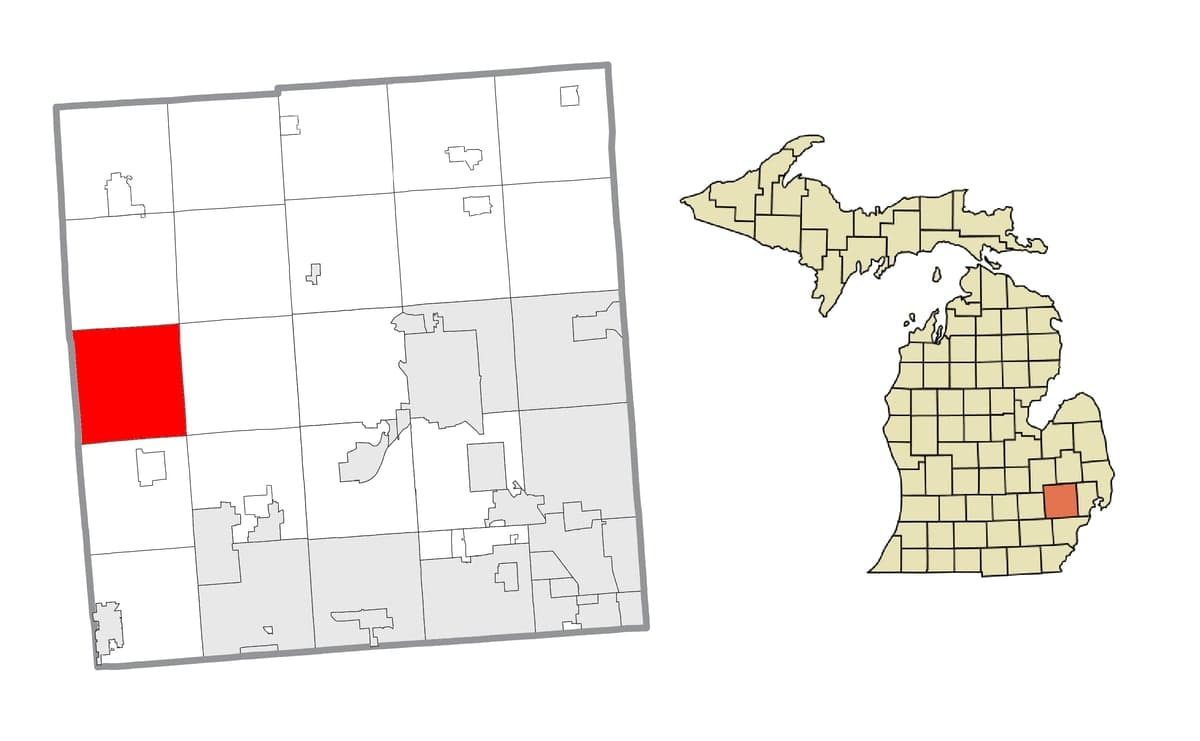
Highland, Michigan, is a deep blue island in a purple state, with a Cook PVI of D+22 that makes it one of the most reliably Democratic communities in the region. This isn't a recent shift — the area has been a stronghold for decades, anchored by union-heavy auto workers and a dense concentration of public-sector employees from nearby Detroit and Pontiac. While Michigan as a whole has trended toward swing-state status (Cook PVI: EVEN), Highland has only gotten bluer, with Democratic margins widening in every presidential election since 2008. The 2024 race saw Harris carry the township by roughly 30 points, a gap that mirrors the partisan sorting happening across metro Detroit's inner-ring suburbs.
How it compares
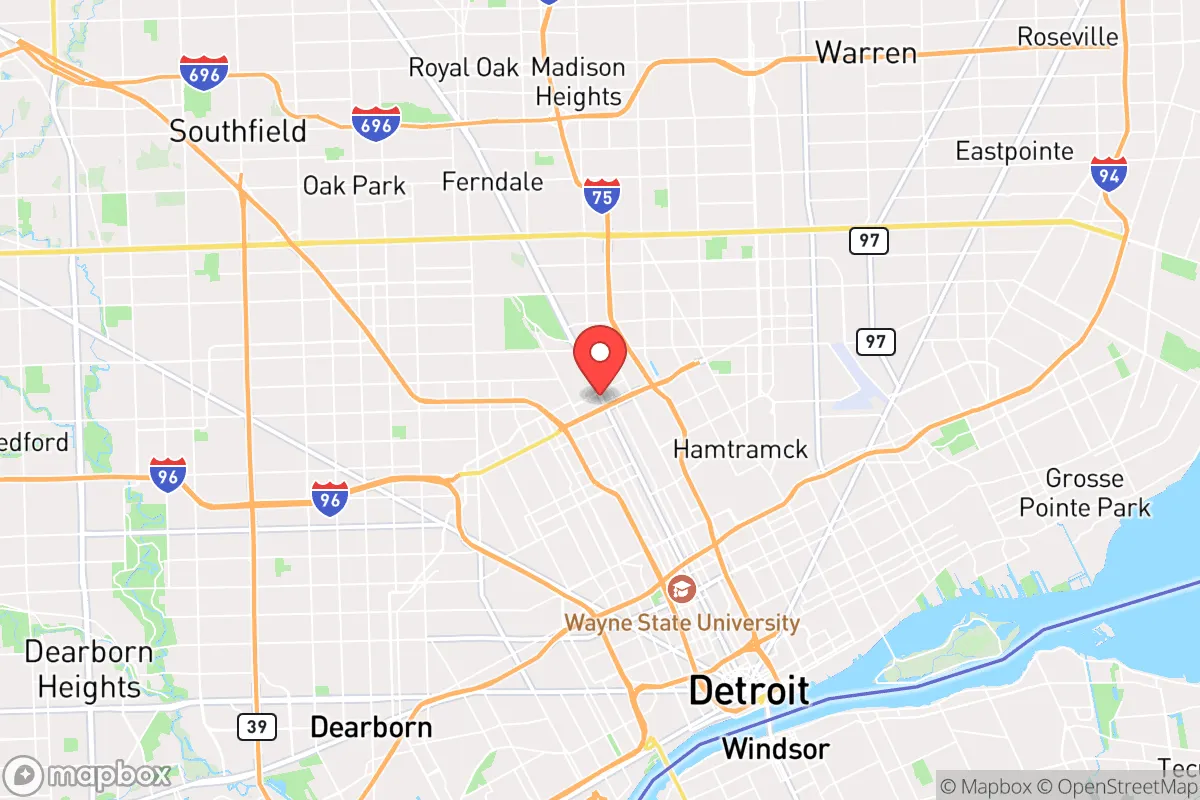
Drive 15 minutes north to White Lake or 20 minutes west to Milford, and you'll find communities that are far more competitive — White Lake leans Republican by about 5 points, while Milford is a true toss-up. The contrast is even sharper heading south: Walled Lake and Wixom are D+10 and D+8 respectively, but still nowhere near Highland's intensity. The real political divide shows up in the rural townships beyond, like Springfield Township (R+12) or Rose Township (R+15), where Trump flags still fly year-round. Highland's D+22 rating puts it in the same league as Ann Arbor's outer wards, though without the university influence — here the Democratic base is older, more working-class, and less culturally progressive than Washtenaw County's. The township's precincts consistently deliver 65-70% of the vote for Democratic candidates, a pattern that holds even in midterm cycles when statewide turnout drops.
What this means for residents
For liberal residents, Highland offers a rare comfort zone in a county (Oakland) that's otherwise split nearly 50-50. You can assume your neighbors share your views on labor rights, public education funding, and environmental regulations — the local Democratic club is one of the most active in the region, with 200+ members who canvass for state house races every cycle. Conservative residents, by contrast, often feel like a permanent minority. There's no Republican precinct delegate network to speak of, and local school board races tend to be decided in the Democratic primary. That said, the political homogeneity keeps things civil — Highland isn't a place where yard signs get vandalized or town hall meetings turn into shouting matches. The culture is more "live and let live" than activist, with most political energy directed at state-level issues like road funding and school aid formulas rather than national culture wars.
The practical upshot is that Highland's politics shape daily life in subtle but real ways. The township's zoning board and planning commission lean heavily toward environmental protections, which means stricter wetland ordinances and slower commercial development than in neighboring White Lake or Milford. The local library system gets robust funding (the Highland Township Public Library has a millage renewal rate above 80%), and the school district — Huron Valley Schools — consistently passes operating millages by wide margins. For conservatives, the main friction points are property taxes (among the highest in Oakland County) and a perceived lack of business-friendly policies. But the trade-off is a community where public services are well-funded and the local government rarely makes national headlines. As one longtime resident put it, "You know exactly how your neighbor votes, but you also know they'll help you dig your car out of a snowbank."

State Political ClimatePolitical Climate in Michigan
State Political AnalysisPolitical Environment in the State
Michigan is the ultimate swing state in the 2020s, carrying a Cook PVI of EVEN and proving it by flipping from Trump in 2016 to Biden in 2020 by just 154,000 votes, then delivering a Democratic trifecta in 2022. Over the last 20 years, the state has shifted from a reliably blue Rust Belt anchor to a pure battleground, driven by the collapse of union density in Detroit’s suburbs and the explosive growth of conservative-leaning exurbs like those around Grand Rapids and Traverse City. For a conservative relocator, Michigan offers a rare mix: a state where your vote actually counts, where gun laws are among the most permissive in the Midwest, and where local control means you can find a deep-red township just 30 minutes from a deep-blue city.
Urban vs. rural divide
The political map of Michigan is a textbook study in geographic sorting. The Democratic stronghold is Wayne County (Detroit), which alone delivered 68% of the margin for Biden in 2020, along with Washtenaw County (Ann Arbor) and Ingham County (Lansing). These three counties are the engine of the state’s blue vote, powered by union households, university faculty, and a growing professional class. The Republican base is anchored in Ottawa County (Holland/Grand Haven), which voted +27 for Trump, and Livingston County (Howell), the fastest-growing county in the state and now a solid +30 red. The real story is the shift in Macomb County — the classic “Reagan Democrat” territory north of Detroit. Macomb went for Obama twice, then flipped to Trump by 12 points in 2016 and stayed red in 2020. That county alone explains Michigan’s swing-state status. Meanwhile, Kent County (Grand Rapids) has moved from reliably red to a true toss-up, driven by an influx of young professionals and refugees, while the rural Upper Peninsula and northern Lower Peninsula (think Traverse City and Alpena) remain deeply red but are losing population.
Policy environment
Michigan’s policy landscape is a patchwork that reflects its divided politics. The state income tax is a flat 4.25%, and property taxes are capped by Proposal A (1994), meaning annual increases are limited to the rate of inflation or 5%, whichever is lower — a huge plus for long-term homeowners. Sales tax is 6%. On guns, Michigan is a shall-issue state for concealed carry with no permit required for open carry, and in 2023 the Democratic legislature passed universal background checks and safe storage laws, but the core right to carry remains intact. Education policy is a flashpoint: the state has one of the strongest charter school laws in the nation (Detroit has more charter students than any city except New Orleans), but the teachers’ union is powerful and the Detroit Public Schools Community District remains under state oversight. Election laws are moderate — no-excuse absentee voting was passed by voters in 2018 (Prop 3), and early voting was expanded in 2022. There is no voter ID law requiring a photo; a signed affidavit suffices. For conservatives, the biggest win is right-to-work (repealed in 2023, but the repeal is being challenged by a ballot initiative), and the state has no income tax on Social Security benefits.
Recent policy direction
The 2023-2024 Democratic trifecta moved Michigan sharply left on several fronts. The repeal of right-to-work (Public Acts 1-2 of 2023) was the biggest labor policy shift in a decade, though a referendum to restore it is likely on the 2024 ballot. On guns, the legislature passed universal background checks (HB 4138) and safe storage laws (HB 4142), but the state remains a castle doctrine state with no duty to retreat — self-defense law is still strong. On education, the state banned the teaching of “certain concepts” related to race and sex in K-12 (the “Don’t Say Gay” law, HB 4545), but also expanded LGBTQ+ anti-discrimination protections. On abortion, Prop 3 (2022) enshrined reproductive rights in the state constitution, making Michigan one of the most protective states in the Midwest. On voting, the legislature passed early voting expansion and ballot drop box requirements (SB 311). On property rights, the state has no statewide zoning preemption, so local governments control land use — a mixed bag for conservatives who want low regulation but also want local control. The biggest libertarian win: marijuana is fully legal for recreational use (2018 ballot initiative), and the state has a robust home-grow provision.
Civil unrest & political movements
Michigan has been a national flashpoint for political activism. The Wolverine Watchmen militia plot to kidnap Governor Gretchen Whitmer in 2020 brought national attention to far-right extremism in the state, and the trial and convictions (2022-2023) remain a live issue. The “Operation Gridlock” protests at the state capitol in April 2020, where armed protesters entered the building over COVID restrictions, were a defining moment for the conservative movement. On the left, the “Stand Up for Science” rallies in Ann Arbor and Detroit have been large, and the Palestinian solidarity encampments at the University of Michigan in 2024 were among the largest in the country. Immigration politics are relatively quiet — Michigan is not a border state, but Dearborn (home to the largest Arab-American population in the U.S.) is a powerful voting bloc that has shifted left on foreign policy. Election integrity remains a live issue: the 2020 election in Michigan was subject to multiple audits and lawsuits, with the Republican-led Senate Oversight Committee finding no evidence of widespread fraud, but many grassroots conservatives remain skeptical. You will see “Stop the Steal” flags in rural areas and “Trump Won” signs alongside “In This House We Believe” signs in the same county.
Projection
Over the next 5-10 years, Michigan is likely to remain a pure toss-up, but the demographic trends favor a slight rightward drift. The key factor is out-migration from Detroit and in-migration to exurbs like Livingston, Ottawa, and northern Kent counties. The state’s population is aging and white, but the growth areas are in the conservative-leaning exurbs. The Democratic coalition is increasingly reliant on the Detroit-Ann Arbor-Lansing corridor, which is growing slowly, while the Republican base in the suburbs and rural areas is growing faster. The wild card is the Arab-American vote in Dearborn, which has been reliably Democratic but is fracturing over Gaza policy — in the 2024 primary, “Uncommitted” got 13% statewide, driven by Dearborn. If that bloc shifts to third-party or Republican, it could flip the state. The policy direction will oscillate with control of the legislature — expect continued fights over right-to-work, school choice, and election laws. A conservative moving to Michigan now should expect to live in a state where the political winds shift every two years, and where local control means your township board has more impact on your daily life than the governor.
For a new resident, the bottom line is this: Michigan offers a high degree of local political choice. You can live in a deep-red township like Gaines Township (Kent County) with low taxes and strong gun rights, or a blue city like Ann Arbor with high taxes and progressive policies — and both are within an hour of each other. The state’s swing nature means your vote matters, but it also means policy whiplash every election cycle. If you value local control, low property taxes (thanks to Proposal A), and a strong self-defense law, Michigan is a solid pick. If you want a state that is consistently red or blue, look elsewhere. The state is what it is: a mirror of America’s divisions, with all the friction and opportunity that brings.
* Values derived from national, state, county, city and local statistics and may differ in a specific area. Last updated: 2026-10-20T18:16:34.000Z
Narrative content on this page is AI-generated and may contain mistakes. Verify any details that matter before acting on them.
ReloMaps may earn a commission from affiliate links at no extra cost to you.

