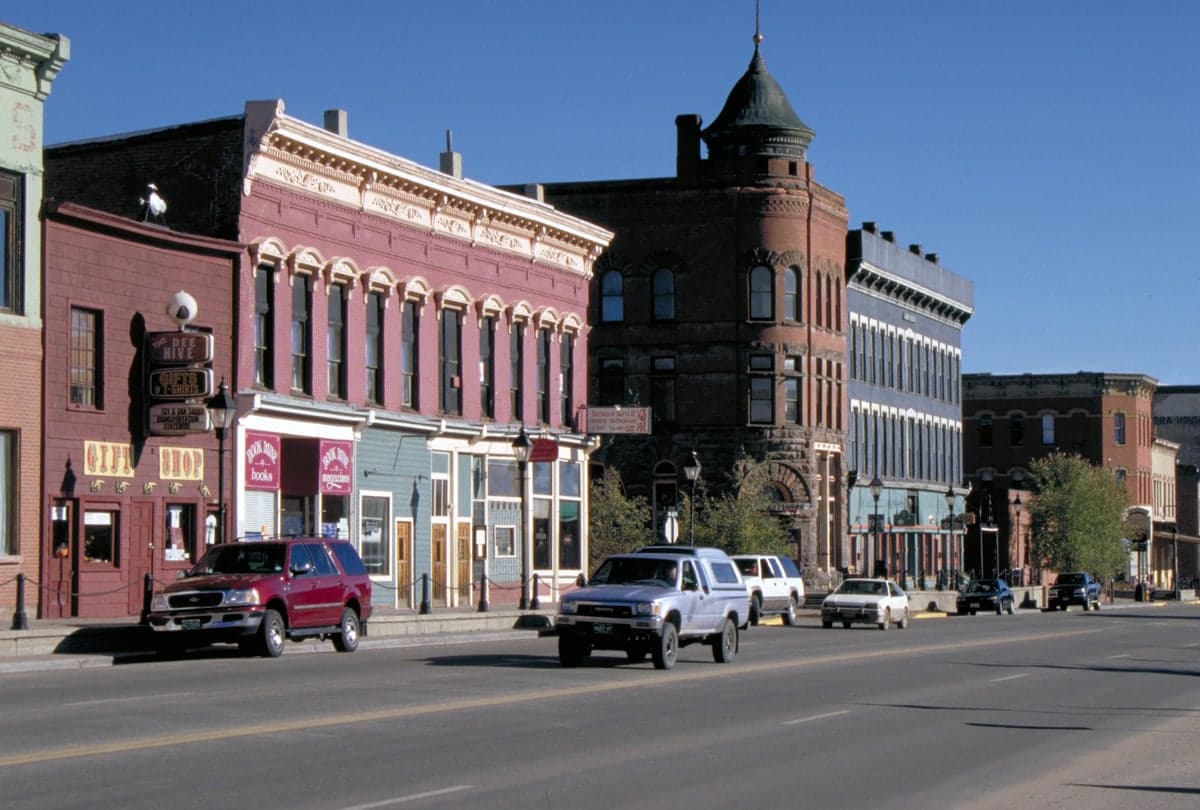
Photo: Wikipedia
Political ClimatePolitical Climate in Leadville, CO
District shown is the primary district for this city’s centroid. Cities may span multiple districts.
Local Political AnalysisPolitical Analysis of Leadville, CO
Leadville, Colorado, has a Cook PVI of D+8, meaning it leans significantly more Democratic than the national average, but that number doesn't tell the whole story of what it's like to live here. If you've been around as long as I have, you remember when this town was a lot more independent-minded, with folks who didn't want anyone—government or otherwise—telling them how to run their lives. Now, you see a steady shift toward progressive policies that feel more like they're coming from Boulder or Denver than from a historic mining town. It's not all bad, but the trajectory is something to keep an eye on if you value personal freedoms and local control.
How it compares
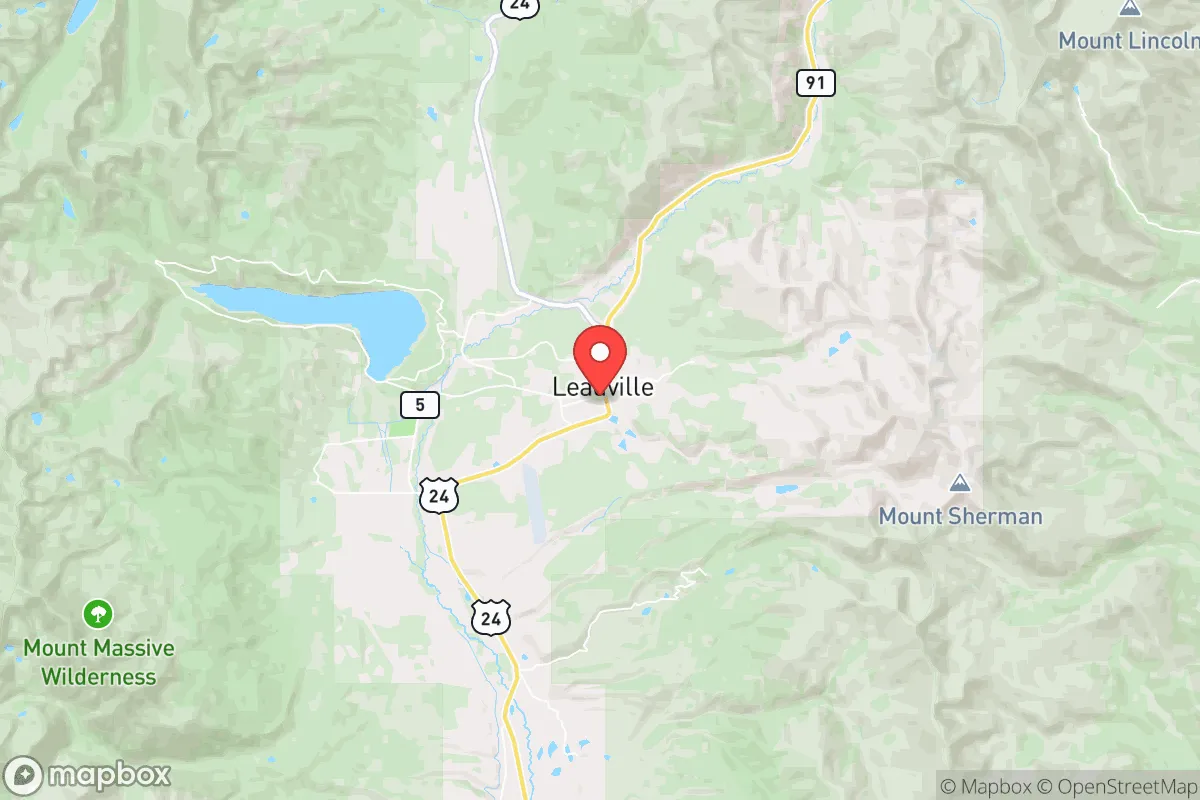
Leadville sits in Lake County, and it's an island of blue in a sea of red when you look at the surrounding areas. Drive 30 minutes north to Frisco or Breckenridge, and you'll find similar progressive leanings, but those are resort towns with a different economic base. Head east toward Fairplay in Park County, and you're in solidly conservative territory—places where the Second Amendment isn't debated, and property taxes stay low. The contrast is stark: Leadville's D+8 rating puts it in the same camp as Colorado Springs is to the right, but with a much smaller population. What worries me is how quickly the local government here has embraced state-level mandates on everything from energy to land use, often without much pushback from residents who just want to be left alone.
What this means for residents
For those of us who've lived here a while, the biggest concern is how this political tilt affects daily life. Property taxes have crept up as the county adopts more progressive spending priorities, and new regulations on short-term rentals and building codes feel like overreach. If you're a small business owner or a rancher, you're probably already feeling the squeeze from state-level environmental rules that make it harder to operate without a stack of permits. The local school board and county commission have shifted left, too, which means more emphasis on diversity initiatives and climate goals than on keeping costs down for families. It's not a disaster yet, but the trend is clear: personal freedoms are being traded for government programs that many of us never asked for.
What daily life is like for families
On the ground, you'll find a mix of old-timers and newcomers, and the political divide shows up in everyday conversations. The local grocery store and hardware store are still run by folks who remember when Leadville was a blue-collar town, but the new coffee shops and boutiques cater to a crowd that votes differently. School board meetings have become battlegrounds over curriculum and parental rights, with progressive activists pushing for changes that many parents find intrusive. If you're a family looking to move here, you'll want to check the local ordinances on everything from firearm storage to land use—because what was once a given right is now up for debate. The long-term outlook? If the trend continues, Leadville could become a smaller version of Boulder, with all the regulations and costs that come with it.
Culturally, Leadville still has its mining heritage and a rugged independence that hasn't completely faded. You'll see "Keep Leadville Weird" bumper stickers next to "Don't Tread on Me" flags, but the balance is tipping. The biggest policy distinction is the county's embrace of renewable energy mandates and land-use restrictions that limit what you can do with your own property. For now, it's still a place where you can breathe and have space, but if you value local control and minimal government interference, you'll want to watch how the next few elections go. The old Leadville is still here, but it's getting harder to find.

State Political ClimatePolitical Climate in Colorado
State Political AnalysisPolitical Environment in the State
Colorado has shifted from a classic purple swing state to a solidly blue-leaning one over the past two decades, with Democrats now controlling the governorship, both U.S. Senate seats, and both chambers of the state legislature. The state voted for Hillary Clinton by 5 points in 2016, Joe Biden by 13 points in 2020, and Kamala Harris by roughly 11 points in 2024, reflecting a durable Democratic advantage driven primarily by explosive growth in the Denver metro and Front Range corridor. For a conservative considering relocation, the state’s trajectory is concerning: what was once a live-and-let-live Western state has become a laboratory for progressive policy, though significant redoubts remain in the eastern plains, Western Slope, and southern Colorado.
Urban vs. rural divide
The political map of Colorado is a tale of two states. The Denver-Boulder-Aurora metroplex, home to over 60% of the state’s population, is the engine of Democratic dominance — Denver County routinely votes 80%+ Democratic, while Boulder County is even further left. The I-25 corridor from Fort Collins down through Denver to Colorado Springs is where the election is decided. Colorado Springs itself is the notable exception: El Paso County is a conservative stronghold, voting +15 Republican in 2024, and is home to Focus on the Family, the Air Force Academy, and a heavy military and evangelical presence. Meanwhile, the rural eastern plains (counties like Yuma, Kit Carson, and Prowers) vote 75-80% Republican, as do many Western Slope counties like Mesa (Grand Junction) and Montrose. The swing counties that used to decide elections — Jefferson, Arapahoe, and Larimer — have all trended blue over the past decade, with Jefferson County flipping from purple to reliably Democratic. The bottom line: if you want conservative neighbors, you’re looking at Colorado Springs, Grand Junction, or any small town east of I-25.
Policy environment
Colorado’s policy environment has become aggressively progressive under unified Democratic control. The state income tax rate was cut from 4.63% to 4.4% under the Taxpayer’s Bill of Rights (TABOR) framework, but Democrats have found ways around TABOR through fee increases and ballot measures — including Proposition HH in 2023, which attempted to retain surplus revenue that would otherwise be refunded. Property taxes have risen sharply, especially in Denver and surrounding counties, as assessed values have doubled since 2020. On education, Colorado adopted the READ Act and has expanded full-day kindergarten, but parental rights have taken hits: the state passed a law in 2023 requiring schools to allow students to use names and pronouns without parental notification, and a 2024 law banned conversion therapy for minors. Healthcare is heavily regulated, with a state-run reinsurance program and a public option study underway. Election laws have moved left: Colorado was an early adopter of universal mail-in voting (all active registered voters get a ballot automatically) and same-day voter registration, which conservatives argue erodes ballot security. The state also has a red flag law (Extreme Risk Protection Order) passed in 2019, allowing courts to temporarily seize firearms from individuals deemed a risk.
Trajectory & freedom
Colorado is becoming less free by any conservative measure. The most glaring example is gun rights: after the 2012 Aurora theater shooting and 2021 Boulder King Soopers shooting, Democrats passed a series of restrictions including a 2024 law banning the sale, transfer, and manufacture of many semi-automatic firearms (the so-called “assault weapons” ban), a 2023 law raising the purchasing age to 21 for all firearms, and a 2022 law eliminating the state’s preemption statute — meaning Denver, Boulder, and other cities can now pass their own gun ordinances stricter than state law. On medical freedom, Colorado voters approved the legalization of recreational marijuana in 2012, but the state has also mandated COVID-19 vaccine requirements for healthcare workers and state employees, and a 2023 law expanded vaccine mandates for schoolchildren. Parental rights have eroded: the 2023 “Safe Schools” law (HB23-1197) requires schools to keep a student’s gender identity confidential from parents if the student requests it. Property rights are under pressure from a 2024 law that allows local governments to impose rent control (previously banned statewide) and from a 2023 law that expanded the state’s ability to take land for conservation easements. On the plus side, Colorado remains a right-to-work state and has no state-level income tax on Social Security benefits.
Civil unrest & political movements
Colorado has seen its share of political flashpoints. The 2020 George Floyd protests in Denver turned violent, with property damage and clashes between police and demonstrators, and the city’s defund-the-police movement led to a $15 million cut to the police budget that was partially restored after a crime spike. The state has a sanctuary policy: the 2019 “Colorado Immigrant Rights Act” (SB19-211) limits local law enforcement cooperation with federal immigration authorities, and Denver has been a designated sanctuary city since 2017. In 2023, the city saw a surge of migrant arrivals from the southern border, straining shelter resources and sparking backlash. On the right, the Colorado Republican Party has been fractured between establishment and populist factions, with the 2024 state convention devolving into chaos over delegate selection. The “Colorado State of Mind” secession movement in the eastern plains (the 2013 “51st state” proposal) fizzled but reflected deep rural frustration. Election integrity remains a hot-button issue: while Colorado’s mail-in system is widely seen as secure, the 2020 election saw lawsuits over signature verification and ballot drop boxes, and a 2022 audit in Mesa County led to the indictment of the county clerk for alleged tampering. A new resident would notice the stark cultural divide: drive 30 minutes east of Denver and you’re in Trump country; drive 30 minutes west and you’re in Boulder, where “defund the police” signs still linger.
Projection
Over the next 5-10 years, Colorado will likely become more progressive, not less. The demographic trends are clear: the state is growing fastest in the Denver metro and along the Front Range, driven by young professionals and remote workers from California and the Northeast. The Hispanic population, which leans Democratic, is also growing rapidly. The rural counties that vote Republican are losing population. The state’s political map is unlikely to flip back unless there’s a major national realignment or a backlash against specific policies like the gun ban. The 2024 election results showed that Colorado is now a safe blue state for presidential races, and the state legislature will remain under Democratic control for the foreseeable future. For a conservative moving in now, expect more of the same: higher taxes, more gun restrictions, erosion of parental rights, and a political culture that increasingly views traditional values as suspect. The best-case scenario is that the state’s libertarian streak — the “leave me alone” ethos of the Old West — reasserts itself, but that seems unlikely given the current trajectory.
For a conservative considering relocation, Colorado offers a mixed bag. The natural beauty, outdoor recreation, and strong economy are undeniable draws, but the political climate is hostile to many conservative values. If you’re willing to live in Colorado Springs, Grand Junction, or a small town on the plains, you can find like-minded neighbors and a lower cost of living. But you’ll still be subject to state-level policies — the gun ban, the mail-in voting system, the sanctuary policies — that you can’t escape. The bottom line: Colorado is a beautiful state with a deteriorating political environment for conservatives. Visit first, talk to locals, and understand that the state’s trajectory is blue and getting bluer. If you value freedom from government overreach, you may want to look at Wyoming or Texas instead.
* Values derived from national, state, county, city and local statistics and may differ in a specific area. Last updated: 2026-04-29T00:32:22.000Z
Narrative content on this page is AI-generated and may contain mistakes. Verify any details that matter before acting on them.
ReloMaps may earn a commission from affiliate links at no extra cost to you.

