
Photo by Alla Kemelmakher on Unsplash
Political ClimatePolitical Climate in Marianna, FL
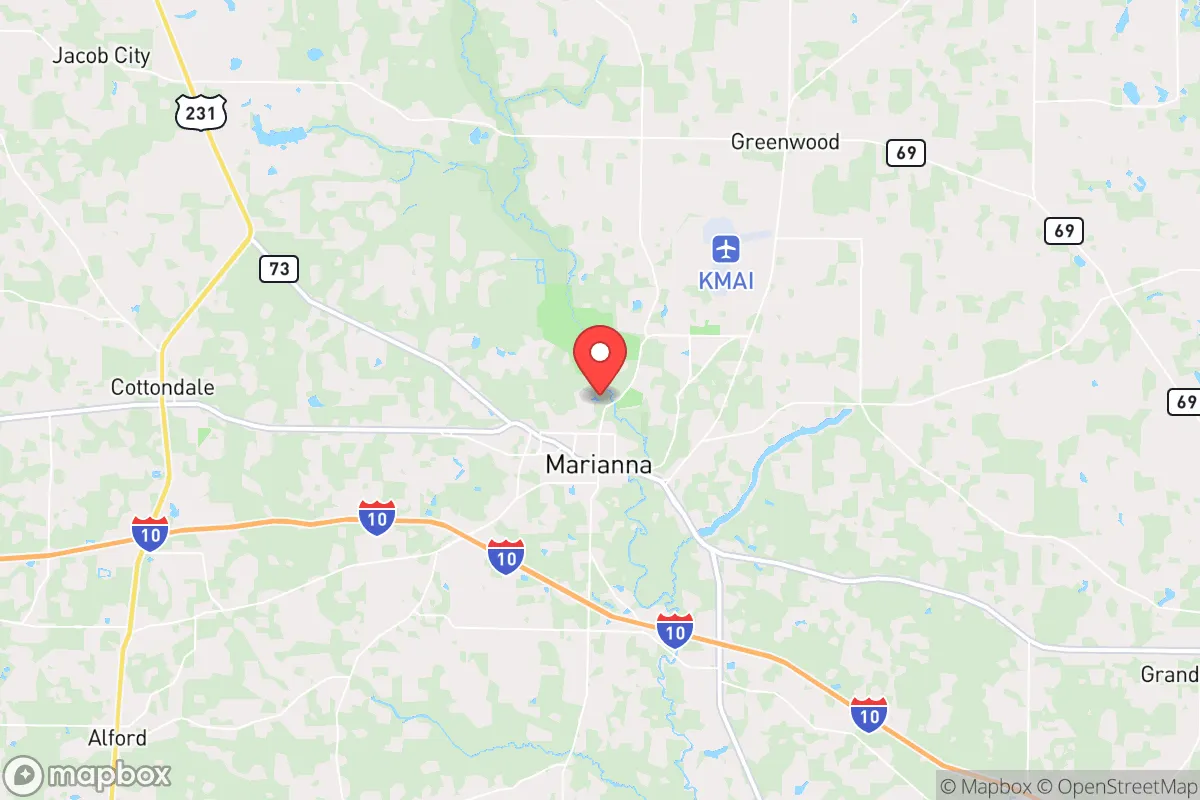
District shown is the primary district for this city’s centroid. Cities may span multiple districts.
Local Political AnalysisPolitical Analysis of Marianna, FL
Marianna, Florida, sits in a reliably conservative corner of the Panhandle, and it’s been that way for as long as most folks around here can remember. The Cook PVI for the area clocks in at R+8, which is a solid three points more Republican than the state of Florida as a whole, which sits at R+5. That might not sound like a huge gap, but when you live here, you feel it in the day-to-day—fewer debates about zoning for high-density apartments, more conversations about keeping property taxes low and the Second Amendment safe. The political trajectory here isn’t shifting leftward; if anything, the local sentiment has hardened against what people see as Tallahassee’s creeping overreach, especially on issues like education and land use.
How it compares
When you stack Marianna up against the rest of Florida, the difference is more than just a number on a chart. Drive an hour south to Panama City or an hour west to Tallahassee, and you’ll feel the political temperature change fast. Tallahassee, with its university crowd and state government workers, leans noticeably more progressive—it’s a place where you hear talk of bike lanes and carbon-neutral goals that would get laughed out of a Jackson County commission meeting. Meanwhile, Marianna’s surrounding towns like Chipley and Bonifay are cut from the same cloth: deeply conservative, with a strong distrust of any government program that smells like a mandate. The state’s R+5 average gets pulled left by those urban and suburban pockets, but here in the Panhandle’s rural spine, the R+8 rating feels like a floor, not a ceiling. Local elections rarely see a competitive Democrat, and the primary is where the real action happens.
What this means for residents
For someone living in Marianna, the political climate translates into a pretty straightforward daily life. You don’t see a lot of heavy-handed regulation on small businesses—no surprise fees or complicated permitting processes that make you want to throw in the towel. The county commission tends to side with property owners over planners, which means if you want to put a fence up or run a home-based welding shop, you’re usually left alone. That said, there’s a growing unease about state-level moves that feel like they’re testing the limits of local control. The recent push for more uniform building codes and environmental restrictions out of Tallahassee has folks here watching closely, because once the state starts dictating what you can do on your own land, it’s a slippery slope. The general vibe is: we’d rather handle our own business than have someone in an office 200 miles away tell us how to live.
One cultural distinction that sets Marianna apart is the strong sense of personal responsibility that runs through the community. You won’t find a lot of hand-wringing over national trends here—people are more concerned with whether the local school board is teaching practical skills and whether the sheriff’s office is keeping the peace without getting too big for its britches. The biggest worry I hear from neighbors isn’t about crime or taxes; it’s about the slow creep of progressive ideology into everyday life, whether that’s through curriculum changes or new state mandates that feel like they’re solving problems nobody here actually has. For now, Marianna remains a place where you can still raise a family without feeling like the government is looking over your shoulder, but the long-term outlook depends on whether the state keeps its hands off local affairs. If the trend toward centralized control continues, you might see more folks digging in their heels—or packing up for counties that still remember what freedom looks like.

State Political ClimatePolitical Climate in Florida
State Political AnalysisPolitical Environment in the State
Florida is a solidly Republican state with a Cook PVI of R+5, but calling it a simple red state misses the real story. Over the past 20 years, the state has shifted from a classic purple battleground — where presidential elections were decided by a few hundred votes in 2000 — to a reliably right-leaning powerhouse, driven by a massive influx of conservative-leaning transplants from the Northeast and Midwest, particularly into the I-4 corridor and the Gulf Coast. The dominant coalition is a mix of native-born conservatives, Cuban-American Republicans in South Florida, and a growing wave of retirees and remote workers who fled high-tax, high-regulation states for Florida’s low-tax, low-regulation environment. The trajectory has been a steady rightward march, with Republicans now holding supermajorities in both chambers of the legislature and a trifecta in state government.
Urban vs. rural divide
The political map of Florida is a textbook study in the urban-rural split, but with a few unique twists. The major Democratic strongholds are the dense, diverse cities of Miami-Dade County (especially the city of Miami itself), Orlando (Orange County), and Tampa (Hillsborough County), along with the college town of Gainesville (Alachua County). These metros are blue, but they are surrounded by deep-red suburbs and exurbs that have been growing fast. The real story is the I-4 corridor — the stretch from Tampa through Lakeland to Orlando — which was historically the swing region. In the last two cycles, that corridor has shifted noticeably right, with counties like Polk County (Lakeland) and Volusia County (Daytona Beach) voting increasingly Republican. The Panhandle, from Pensacola to Tallahassee (the capital, which is a blue island in a red sea), is deeply conservative, as is the entire Gulf Coast north of Tampa, including Sarasota and Naples. The rural interior — the cattle country around Okeechobee and the citrus belt — is solidly red. What’s changed is that the suburbs of Miami, like Kendall and Weston, have been trending redder as Cuban-American and Venezuelan-American voters, who remember socialism firsthand, have become more Republican. The urban cores are still blue, but they are shrinking as a share of the electorate.
Policy environment
Florida’s policy environment is a conservative’s dream, and that’s by design. There is no state income tax, which is the single biggest draw for relocating families and businesses. The regulatory posture is famously business-friendly — permitting is fast, zoning is loose in most areas, and there is no state-level rent control (preempted by law). Education policy has been a major battleground. Governor Ron DeSantis pushed through the Parental Rights in Education Act (HB 1557, the "Don't Say Gay" law), which prohibits classroom instruction on sexual orientation and gender identity in grades K-3, and the Stop WOKE Act (HB 7), which restricts critical race theory training in schools and workplaces. School choice is expansive: Florida has one of the largest voucher programs in the country, with the Family Empowerment Scholarship allowing any student to use state funds for private school. On healthcare, the state did not expand Medicaid under the Affordable Care Act, and there is a strong push for medical freedom — the legislature passed a ban on vaccine mandates for private employers (HB 1) in 2023. Election laws were tightened after 2020: SB 90 (2021) added voter ID requirements, limited drop boxes, and restricted third-party ballot collection. The state also passed a law (SB 7050) in 2024 making it a felony for non-citizens to vote, with automatic voter registration purges. On the Second Amendment, Florida is a "shall issue" state for concealed carry, and in 2023, HB 543 allowed permitless (constitutional) carry for residents. Property taxes are moderate, but homeowners get a generous Save Our Homes cap (3% annual assessment increase) and a $50,000 homestead exemption.
Trajectory & freedom
On the freedom index, Florida is moving in the right direction — more free, not less — but it’s a mixed bag. The biggest expansion of personal liberty in recent years was permitless carry (HB 543, 2023), which removed the government permission slip for carrying a firearm. The Parental Rights in Education Act and the Stop WOKE Act were framed as expansions of freedom from government-imposed ideology in schools and workplaces. The ban on vaccine mandates (HB 1, 2023) was a direct pushback against federal and corporate overreach. On the other hand, there have been some concerning contractions. The state’s six-week abortion ban (HB 5, 2023, signed after the Dobbs decision) is one of the strictest in the country, which some see as a government overreach into personal medical decisions. The anti-riot law (HB 1, 2021) increased penalties for protests that turn violent, which critics say chills free assembly. And the state’s election integrity laws (SB 90, 2021) have been criticized for making it harder to vote, though supporters argue they protect the integrity of the ballot box. Overall, the trajectory is toward more individual freedom in economic and educational matters, but with a heavier hand on social issues and public order. For a conservative moving in, the net effect is positive — you keep more of your money, your kids are shielded from progressive curricula, and your gun rights are strong.
Civil unrest & political movements
Florida has seen its share of political flashpoints, but they are less frequent and less intense than in states like Oregon or California. The most visible recent unrest was during the 2020 George Floyd protests, which saw significant demonstrations in Miami, Orlando, and Tampa, with some looting and property damage. The state’s response was aggressive — DeSantis declared a state of emergency and deployed the Florida Highway Patrol and National Guard. The anti-riot law (HB 1, 2021) was a direct legislative response, making it a felony to participate in a violent protest and creating new penalties for blocking roads. On the right, the most organized movement is the Moms for Liberty group, which started in Florida and has been highly active in school board elections, pushing for parental rights and book bans. Immigration politics are a constant undercurrent, especially in South Florida. The state passed SB 1718 (2023), one of the toughest anti-illegal immigration laws in the country, requiring businesses with 25+ employees to use E-Verify and making it a felony for undocumented immigrants to use fake IDs to get jobs. This led to some labor shortages in agriculture and construction, but it was popular with the base. There have been no serious secession or nullification movements — Florida is too integrated into the national economy for that. Election integrity controversies have been minimal compared to states like Georgia or Arizona; the 2022 and 2024 elections ran smoothly with no major disputes. A new resident would notice that political activism is more about school boards and local zoning than street protests — it’s a quieter, more suburban kind of politics.
Projection
Over the next 5-10 years, Florida is likely to become more Republican, not less. The demographic trends are clear: the people moving in are disproportionately conservative-leaning retirees and remote workers from blue states, while the native-born population that leans Democratic is aging out or moving out. The I-4 corridor will continue to shift right as the suburbs of Tampa and Orlando fill with newcomers who left high-tax states. Miami-Dade County, which was once a Democratic stronghold, is trending red — in 2024, Trump improved his margin there significantly, and the county could flip to Republican in a presidential election within a decade. The Panhandle and rural interior are already maxed out red. The only wild card is the growing Hispanic population, but Cuban-Americans and Venezuelan-Americans are increasingly Republican, while Puerto Ricans in Orlando lean Democratic but are a smaller share. The state’s policy environment will likely stay the course — no income tax, school choice expansion, and continued preemption of local progressive ordinances (like rent control or sanctuary city policies). The biggest risk is climate change — rising sea levels and stronger hurricanes could eventually slow in-migration, but for the next decade, the trend is clear. Someone moving in now should expect to live in a state that is solidly conservative, growing fast, and increasingly assertive in pushing back against federal overreach.
Bottom line for a new resident: If you are moving to Florida for freedom — lower taxes, school choice, gun rights, and less government intrusion — you are making a smart bet. The state is trending in your favor, and the political climate is stable and predictable. You will find a welcoming environment for conservative values, especially in the suburbs and exurbs of cities like Tampa, Naples, and Pensacola. Just be aware that the urban cores are still blue, and the state’s social policies (like the abortion ban) are strict. If you want a place where your vote counts and your values are reflected in state law, Florida is one of the best bets in the country right now.
* Values derived from national, state, county, city and local statistics and may differ in a specific area. Last updated: 2026-05-14T17:57:44.000Z
Narrative content on this page is AI-generated and may contain mistakes. Verify any details that matter before acting on them.
ReloMaps may earn a commission from affiliate links at no extra cost to you.

