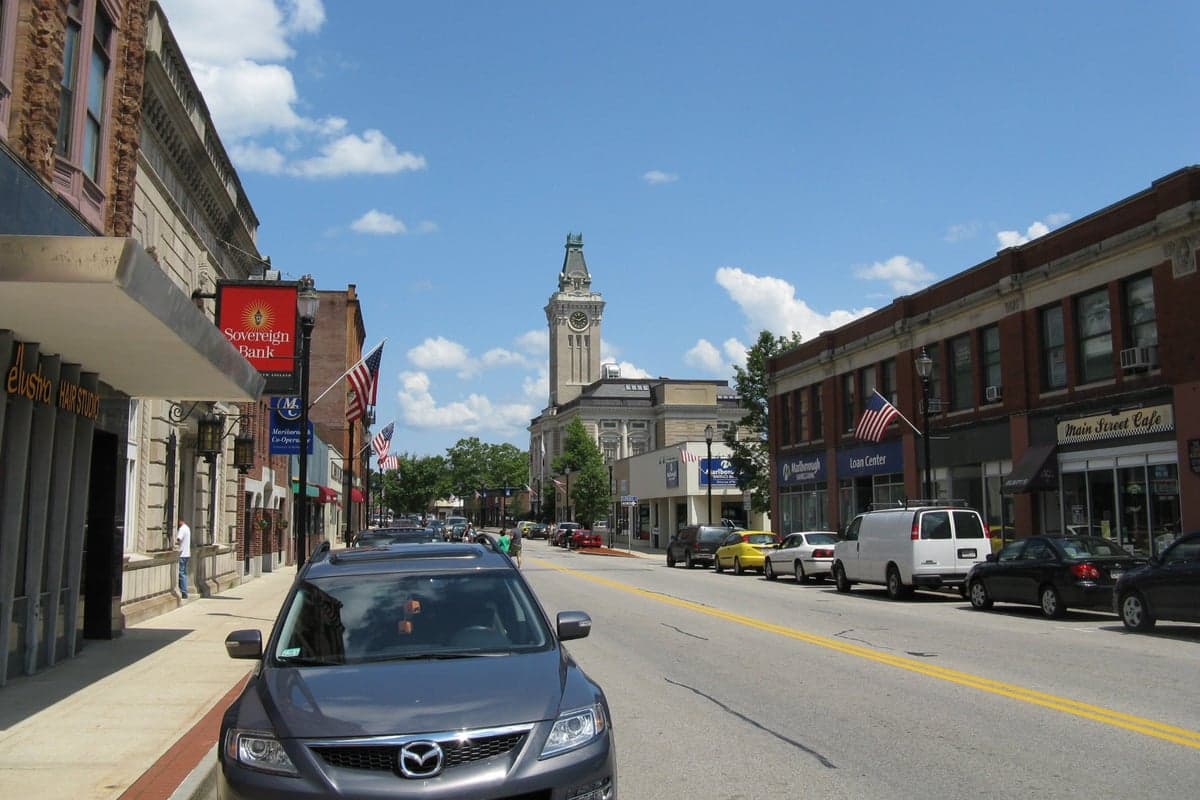
Photo: Wikipedia
Political ClimatePolitical Climate in Marlborough, MA
District shown is the primary district for this city’s centroid. Cities may span multiple districts.
Local Political AnalysisPolitical Analysis of Marlborough, MA
Marlborough, Massachusetts, has shifted noticeably to the left over the past decade, with a Cook Partisan Voting Index of D+11 that places it firmly in Democratic territory. This wasn’t always the case—I remember when this town was a lot more balanced, with local elections often decided by a few hundred votes and a healthy mix of conservative and moderate voices. But the last few election cycles have seen a steady march toward progressive policies, and that D+11 rating tells you the political winds have changed in a way that’s hard to ignore if you value personal freedoms and limited government.
How it compares
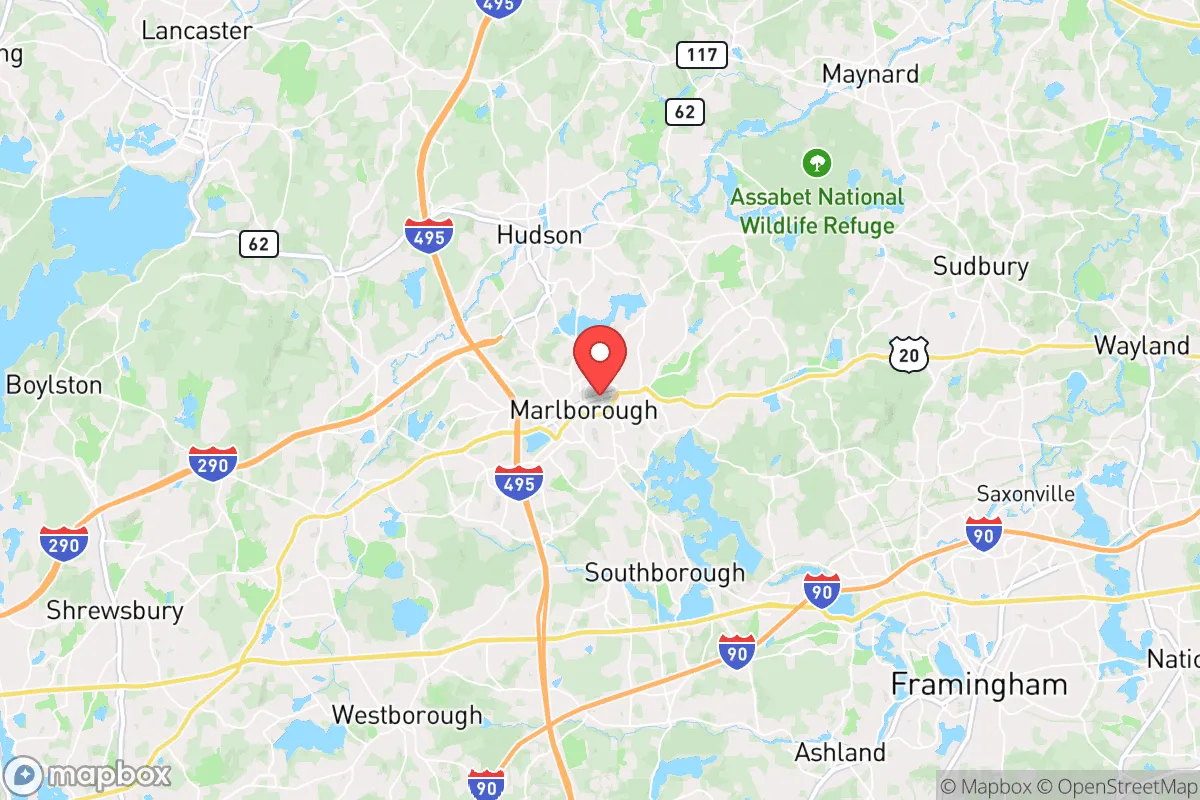
To understand Marlborough’s current lean, it helps to look at the towns around it. Hopkinton, just to the east, is even more liberal, with a similar D+12 or so PVI, and it’s become a hub for tech transplants who bring big-city voting habits. Head west to Hudson, and you’ll find a slightly more moderate vibe, but still trending blue. The real contrast is north in Bolton or south in Southborough—those towns still have a strong conservative streak, with local boards and school committees that push back on state mandates and keep taxes in check. Marlborough used to feel like that, but the influx of commuters to Boston and the growth of the biotech sector here have reshaped the electorate. You’ll hear a lot of talk about “inclusivity” and “sustainability” at city council meetings now, but less about fiscal restraint or protecting property rights.
What this means for residents
For folks who lean conservative, the practical effects are already showing up. The city council has passed zoning changes that make it easier for multi-family developments, which sounds good on paper but often means less say for homeowners about what goes up next door. There’s been a push for more public spending on bike lanes and “complete streets” projects, even as road repairs lag behind. And the school district has adopted curriculum materials that emphasize social-emotional learning and diversity initiatives, sometimes at the expense of core academics. If you’re someone who believes local government should stay out of your business and let you raise your family without constant new regulations, Marlborough is becoming a tougher place to feel heard. The town’s leadership tends to align with state-level progressive priorities, which means you can expect higher taxes and more mandates over time.
What daily life is like for families
On a day-to-day level, the political tilt doesn’t dominate everything—you’ll still find plenty of neighbors who fly the Gadsden flag or talk about Second Amendment rights at the local diner. But the cultural shift is real. The annual Fourth of July parade has gotten more corporate and less community-driven, and some longtime residents feel the town’s identity is being diluted by newcomers who don’t share the same values about self-reliance and local control. The school board has debated book bans and parental notification policies, and so far, the progressive side has won most of those fights. If you’re moving here, you’ll want to get involved early—join the local Republican town committee or the Marlborough Taxpayers Association—because staying on the sidelines means letting the D+11 trend become permanent. In the long run, I see Marlborough continuing to drift left, especially as more young professionals move in from Cambridge and Boston. But the conservative base here is still organized, and if you’re willing to show up to meetings and vote in every primary, you can still make a difference.

State Political ClimatePolitical Climate in Massachusetts
State Political AnalysisPolitical Environment in the State
Massachusetts has long been one of the most reliably Democratic states in the country, but don’t let the blue veneer fool you—there’s a deep and growing divide beneath the surface. Over the past 20 years, the state has shifted from a moderate, Kennedy-style liberalism to a far more progressive, one-party dominance, with Democrats holding every statewide office and supermajorities in the legislature. The 2024 presidential election saw Joe Biden carry the state by over 30 points, but that top-line number hides a story of accelerating polarization: the Boston metro area and its wealthy suburbs have become deeply progressive, while the western and central parts of the state—places like Worcester, Springfield, and the Berkshires—have grown more conservative or at least more skeptical of the state’s direction.
Urban vs. rural divide
The political map of Massachusetts is a tale of two worlds. Greater Boston—including Cambridge, Somerville, and Brookline—is the engine of the state’s progressive tilt, with precincts routinely voting 80-90% Democratic. These areas are dense, highly educated, and increasingly dominated by young professionals and academics who drive the state’s leftward policy agenda. In contrast, the western half of the state, from Worcester County out to the Berkshires, is far more mixed. Places like Pittsfield and North Adams have working-class roots and have seen a realignment toward the GOP in recent cycles; Trump improved his margins in Berkshire County by 5 points between 2016 and 2020. The Cape Cod and Islands region is a swing area—historically moderate Republican, now trending Democratic but with strong pockets of fiscal conservatism, especially in towns like Sandwich and Brewster. The real battleground is the Merrimack Valley (Lowell, Lawrence, Haverhill), where working-class voters of all backgrounds are increasingly breaking toward the GOP on economic and cultural issues.
Policy environment
Massachusetts is a high-tax, high-regulation state that has doubled down on government intervention in nearly every aspect of life. The state income tax is a flat 5%, but with a new surtax on incomes over $1 million (the “Millionaire’s Tax,” passed in 2022), the effective top rate is now 9%. Property taxes are moderate by national standards but vary wildly by town—expect to pay $8,000-$12,000 annually on a median home in the Boston suburbs. The regulatory environment is among the most burdensome in the nation, with strict environmental rules, rent control in some cities, and a notoriously slow permitting process for new housing. Education policy is dominated by the teachers’ unions, which have successfully blocked most charter school expansion and pushed for progressive curricula. Healthcare is heavily regulated, with the state’s own version of the Affordable Care Act (Chapter 58) that mandates near-universal coverage. Election laws are among the most liberal: no-excuse mail-in voting, same-day registration, and automatic voter registration are all law. The state also has some of the strictest gun control in the country, including a ban on “assault weapons” and a requirement for a license to purchase any firearm.
Trajectory & freedom
If you value personal liberty, Massachusetts is heading in the wrong direction. The most concerning recent trend is the erosion of parental rights. In 2023, the legislature passed a law that allows schools to withhold information about a child’s gender identity from parents, overriding the traditional role of families. On gun rights, the 2024 “Massachusetts Gun Safety Act” expanded the state’s already strict licensing system, banned so-called “ghost guns,” and created a new state police unit to enforce these rules. On medical freedom, the state maintained its COVID-19 emergency powers longer than most, and while the mandates have ended, the infrastructure for future public health overreach remains in place. Property rights are under constant pressure from the state’s aggressive affordable housing mandates (Chapter 40B), which allow developers to override local zoning in towns that don’t meet state-set housing targets. The only bright spot for conservatives is the state’s strong right-to-shelter law, which has been a flashpoint—the state’s shelter system is overwhelmed by migrants, and the governor has begun to push back, but the legislature remains committed to the policy.
Civil unrest & political movements
Massachusetts has a long history of political activism, but the energy has shifted dramatically to the left. The 2020 Black Lives Matter protests in Boston were among the largest in the country, and they led directly to police reform legislation that limited qualified immunity and created a new civilian oversight board. The state’s sanctuary status is codified in law (the “Safe Communities Act” of 2023), which prohibits state and local law enforcement from cooperating with federal immigration authorities. This has created tension in gateway cities like Lynn and Framingham, where immigrant populations have grown rapidly. On the right, the most visible movement is the “Massachusetts Fiscal Alliance,” which has successfully pushed for transparency in state spending and opposed tax hikes. There have been scattered “Second Amendment Sanctuary” resolutions passed in towns like Palmer and Sturbridge, but they are symbolic—the state preempts local gun laws. Election integrity concerns have been raised by conservative groups, particularly around the state’s widespread use of mail-in ballots and the lack of voter ID requirements, but no major scandals have emerged. The most visible flashpoint for a new resident would be the constant presence of political protests on Boston Common and the State House steps, often centered on abortion rights, climate change, or immigration.
Projection
Over the next 5-10 years, Massachusetts is likely to become even more progressive, but with growing friction. The demographic trends are clear: the state is losing native-born residents to lower-tax states like Florida and Texas, while gaining international immigrants and out-of-state college graduates who lean left. This will reinforce the Democratic supermajority in the legislature and make it even harder for conservatives to win statewide office. However, the state’s high cost of living and regulatory burden are beginning to bite—businesses are leaving, and the housing crisis is pushing young families out. This could create a backlash in the 2028-2030 cycle, particularly in the suburbs, where voters are increasingly frustrated with property taxes and school policies. The wild card is the migrant crisis: if the state’s shelter system collapses under the weight of new arrivals, you could see a realignment similar to what happened in New York. For now, expect more of the same: higher taxes, more regulation, and a continued erosion of personal freedoms, especially around parental rights and gun ownership.
For a conservative-leaning individual or family considering a move to Massachusetts, the bottom line is this: you will be living in a state where your values are in the minority, and where the government is actively working against many of them. The trade-offs are real—world-class schools, top-tier healthcare, and a vibrant economy—but they come at the cost of high taxes, heavy regulation, and a political culture that is increasingly hostile to traditional views. If you can afford the financial and cultural price, there are still pockets of sanity in the western part of the state and in some of the more rural towns, but you’ll need to be strategic about where you settle. The state is not going to change course anytime soon, so come with your eyes open and a plan to protect your family’s rights.
* Values derived from national, state, county, city and local statistics and may differ in a specific area. Last updated: 2026-04-24T04:55:14.000Z
Narrative content on this page is AI-generated and may contain mistakes. Verify any details that matter before acting on them.
ReloMaps may earn a commission from affiliate links at no extra cost to you.

