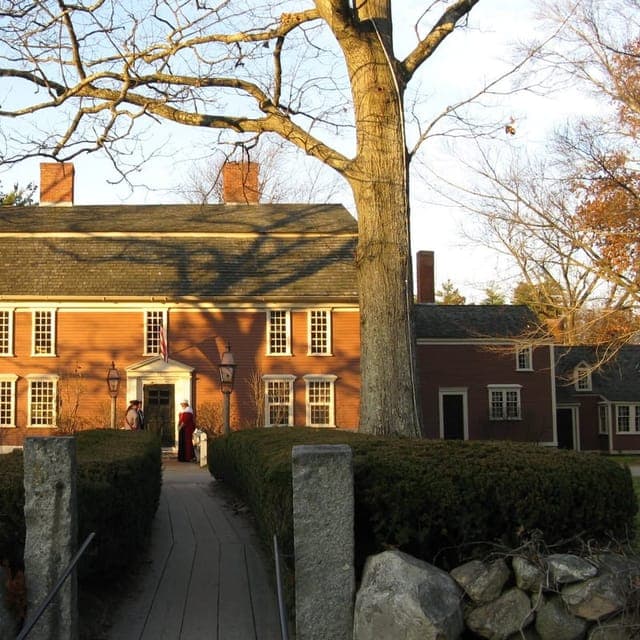
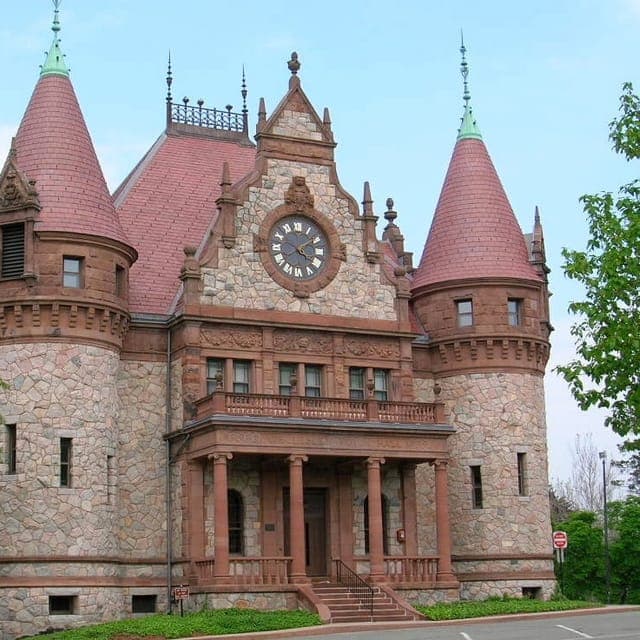
Photo: Wikipedia
Political ClimatePolitical Climate in Massachusetts
Political Environment in the State
Massachusetts is one of the most reliably Democratic states in the country, with a Cook Partisan Voting Index of D+15, meaning it votes about 15 points more Democratic than the national average in presidential elections. Over the last 20 years, the state has shifted steadily leftward, driven by the Boston metro area’s explosive growth and the exodus of moderate Republicans from the suburbs. While the state once had a tradition of electing moderate Republicans like Governors William Weld and Mitt Romney, that era is long gone — today, every statewide office is held by a Democrat, and the legislature has a supermajority that can override any veto. For a conservative considering relocation, the political climate here is best described as a one-party state with a progressive agenda that touches nearly every aspect of daily life.
Urban vs. rural divide
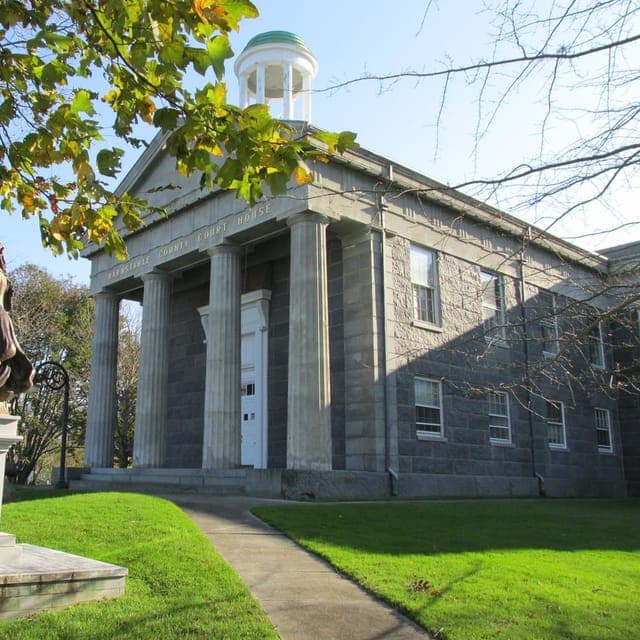
The political map of Massachusetts is a tale of two worlds. The eastern third of the state, anchored by Boston, Cambridge, and Somerville, is the engine of Democratic dominance — these cities routinely deliver 80-90% of the vote for Democratic candidates. The western and central parts of the state, including cities like Springfield, Worcester, and Pittsfield, are more mixed but still lean Democratic, though rural towns in the Berkshires and the Connecticut River Valley have pockets of conservative sentiment. The most Republican-leaning areas are the small towns of the South Shore (like Plymouth and Marshfield) and the Cape Cod region, but even these are trending blue. In 2020, Donald Trump won only 32% of the vote statewide, and the only county he carried was Barnstable County (Cape Cod) — and even there, it was by a razor-thin margin. The urban-rural divide is stark: Boston’s Suffolk County votes D+40, while rural Franklin County in the west votes D+10. There are no true red counties left; the state’s political center of gravity is firmly in the liberal Boston suburbs.
Policy environment
The policy environment in Massachusetts is aggressively progressive, with a tax structure that is among the highest in the nation. The state has a flat income tax rate of 5%, but in 2022 voters approved a “millionaire’s tax” (Question 1) that adds a 4% surcharge on income over $1 million, making the top marginal rate 9%. Property taxes are moderate by national standards but vary wildly by town — a home in Boston might carry a rate of 0.6%, while a comparable home in a rural town like Adams could be 1.5%. The regulatory posture is heavy: Massachusetts has some of the strictest environmental regulations in the country, a near-ban on new fossil fuel infrastructure, and a statewide building code that mandates net-zero emissions for new construction by 2025. Education policy is dominated by the state’s powerful teachers’ unions, and the state has some of the most restrictive charter school caps in the nation. Healthcare is heavily regulated, with a state-level individual mandate and a robust Medicaid expansion. Election laws are among the most liberal: no-excuse mail-in voting, same-day voter registration, and automatic voter registration are all in place. For a conservative, the policy environment feels like a top-down experiment in progressive governance, with little room for local autonomy.
Trajectory & freedom
Massachusetts is becoming less free by nearly any measure of personal liberty, especially for conservatives. The state has some of the strictest gun laws in the country, including a ban on “assault weapons” (defined broadly), a 10-round magazine limit, and a requirement for a license to purchase any firearm. In 2024, the legislature passed a major gun control bill (H.4885) that expanded the definition of “assault weapons,” banned the possession of certain semiautomatic rifles, and created a state-level firearm roster system. Parental rights have been eroded: the state’s 2022 “Parentage Act” (Chapter 260) allows for legal parentage to be established without a biological or marital connection, effectively enabling the state to override parental consent in adoption and surrogacy cases. Medical autonomy has been curtailed by the state’s strict COVID-19 vaccine mandates for healthcare workers and school employees, which remain in place as of 2025. On speech, the state has a “hate crimes” law that is broadly enforced, and there have been efforts to regulate “misinformation” online, though these have not yet passed. Property rights are weak: the state has a strong “eminent domain” power and a rent control framework that is being debated in Boston and Cambridge. The trajectory is clearly toward more government control over personal decisions, from what you can own to how you raise your children.
Civil unrest & political movements
Massachusetts has a long history of political activism, but in recent years it has been dominated by left-wing movements. The 2020 Black Lives Matter protests in Boston were large and occasionally violent, with property damage in the Downtown Crossing area. The state’s “sanctuary state” law (the 2017 “Safe Communities Act”) prohibits state and local law enforcement from cooperating with federal immigration authorities, and this has been a flashpoint for conservative activists. There have been small but persistent protests against COVID-19 mandates, particularly in rural towns like Athol and Orange, where “freedom rallies” drew hundreds. The state’s Republican Party is weak and fractured, with no major statewide figure since Charlie Baker left office in 2023. There is a small but vocal secessionist movement in the western part of the state, where some residents have proposed forming a separate state called “New Massachusetts” to escape Boston’s dominance, but this has no real political traction. Election integrity is a concern for conservatives: the state’s mail-in voting system has been criticized for lacking voter ID requirements, and there have been isolated reports of ballot harvesting in Boston precincts. For a new resident, the most visible flashpoint is likely the tension between the progressive urban core and the more moderate rural areas, which plays out in local zoning battles and school board meetings.
Projection
Over the next 5-10 years, Massachusetts will likely become even more Democratic and more progressive. The demographic trends are clear: the state’s population is aging and declining in rural areas, while the Boston metro area is growing younger and more diverse, driven by immigration and the influx of students and tech workers. The state’s in-migration is overwhelmingly from other blue states (New York, California), and the out-migration is to red states (Florida, Texas, New Hampshire). This self-selection means the political center will continue to shift left. The legislature’s supermajority is unlikely to be broken, and the state’s tax and regulatory burden will likely increase. A new resident moving in now should expect to find a state where the government is deeply involved in daily life, from the cars you can drive (electric vehicle mandates) to the energy you can use (natural gas bans) to the education your children receive (comprehensive sex education and critical race theory-influenced curricula). The only countervailing force is the state’s high cost of living, which may eventually slow in-migration, but for the foreseeable future, Massachusetts is on a one-way track toward a European-style social democracy.
For a conservative considering a move to Massachusetts, the bottom line is this: you will be living in a state where your political views are in the minority, and where the government actively works against many of your values. If you value low taxes, gun rights, parental control over education, and limited government, this is likely not the state for you. However, if you have a high-income job in tech or biotech and can afford the cost of living, you may find the state’s excellent schools and infrastructure worth the trade-off — just know that you will be paying for it with your tax dollars and your personal freedoms. The best advice is to look at the more conservative towns in the western part of the state or on the South Shore, but even there, the political winds are blowing in one direction.

Most Conservative Cities in Massachusetts

Most Liberal Cities in Massachusetts
* Values derived from national, state, county, city and local statistics and may differ in a specific area. Last updated: 2026-04-18T22:53:10.000Z
Narrative content on this page is AI-generated and may contain mistakes. Verify any details that matter before acting on them.
ReloMaps may earn a commission from affiliate links at no extra cost to you.

