
Photo by Pete Alexopoulos on Unsplash
Political ClimatePolitical Climate in McGregor, TX
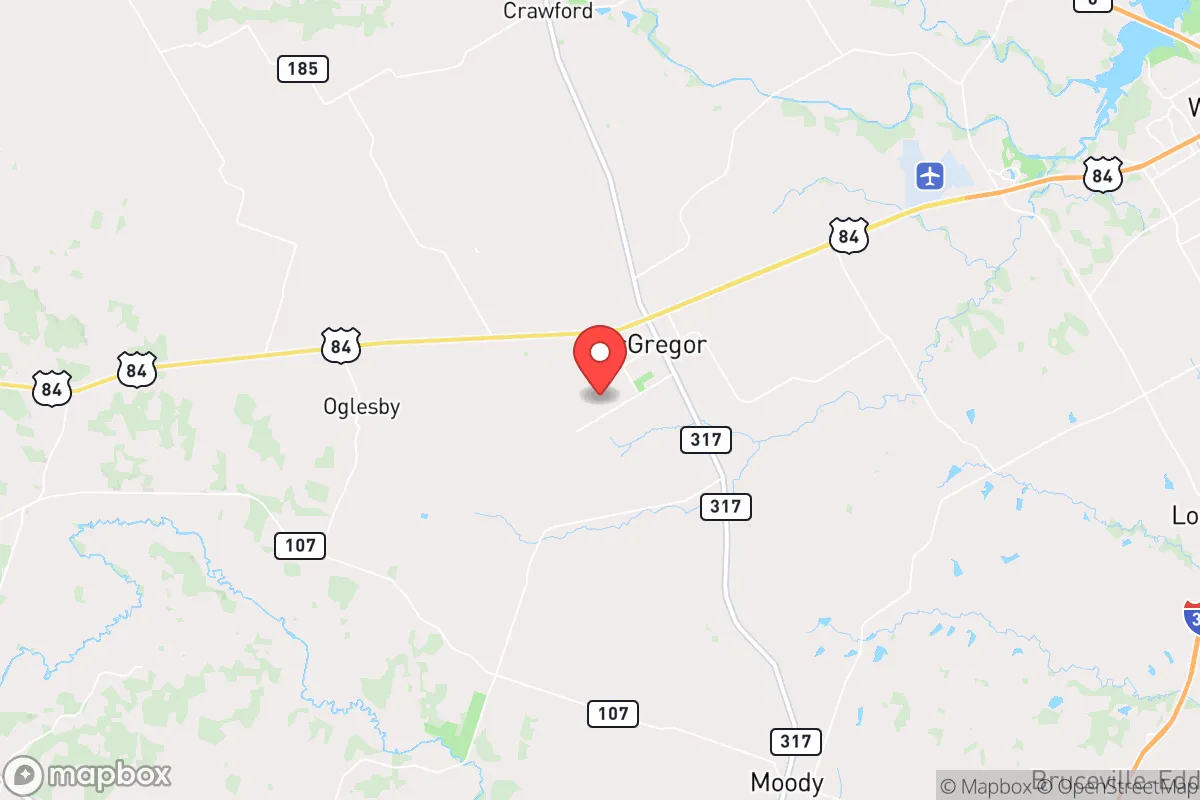
District shown is the primary district for this city’s centroid. Cities may span multiple districts.
Local Political AnalysisPolitical Analysis of McGregor, TX
McGregor, Texas, sits in a deeply conservative pocket of Central Texas, and it’s been that way for as long as anyone around here can remember. The Cook PVI for the area clocks in at R+14, which is a full ten points more Republican than the state of Texas as a whole, which sits at R+4. That gap isn’t just a number on a map—it reflects a community that has consistently pushed back against the kind of progressive overreach you see creeping into places like Austin or even Waco. The trajectory here is steady: McGregor has stayed reliably red through the last few election cycles, and if anything, the local sentiment has hardened against the leftward drift we’re seeing in bigger cities. People here value their Second Amendment rights, local control over schools, and the freedom to run their lives without a bunch of government mandates telling them how to do it.
How it compares
When you stack McGregor up against the rest of Texas, the contrast is stark. The state’s R+4 rating already makes it a Republican stronghold nationally, but McGregor’s R+14 puts it in a different league entirely. Drive thirty miles east to Waco, and you’ll find a more mixed political scene—McLennan County still leans red, but it’s softened by the influence of Baylor University and a growing professional class that’s more open to progressive ideas. Head south to Temple or Belton, and you get a similar story: conservative, but with a noticeable libertarian streak that sometimes clashes with the old-school values here. In McGregor, it’s simpler. The surrounding rural areas—Crawford, Moody, and the unincorporated parts of McLennan and Coryell counties—vote even more conservatively. The local school board and city council elections rarely see serious challenges from the left, and when they do, those candidates get trounced. The real worry for folks here isn’t about losing an election; it’s about the state or federal government imposing policies that override local will, like the recent pushes for more restrictive gun laws or mandates on energy production that hurt the agricultural economy.
What this means for residents
For someone living in McGregor, the political climate means a lot of day-to-day freedoms that are getting harder to find elsewhere. You can still buy a firearm without a waiting period that feels like a punishment. Your property taxes are high—that’s Texas for you—but you’re not dealing with the kind of zoning overreach you see in Austin, where the city tells you what you can plant in your front yard or how many cars you can park on your driveway. The local sheriff’s office takes a “don’t tread on me” approach to enforcement, focusing on real crime rather than turning traffic stops into revenue generators. That said, there’s a growing unease. The influx of people from blue states—California, Illinois, New York—has started to change the tone in nearby Waco and even in some of the smaller towns. You see it in the way some newcomers talk about “equity” in schools or push for more bike lanes and public transit, which sounds harmless until you realize it’s a foot in the door for bigger government. The long-term concern is that McGregor could get swallowed up by the sprawl from Waco or even Temple, bringing with it the same progressive policies that have hollowed out communities in other parts of the country.
Culturally, McGregor still holds onto a few distinctions that set it apart. The annual Cotton Festival is a big deal, and it’s not just nostalgia—it’s a reminder that this is still an agricultural town where people work with their hands. The local churches are full on Sundays, and the public schools still start with a moment of silence rather than a forced lesson on gender ideology. There’s no city-wide ban on plastic bags or a push for sanctuary city status here. The biggest policy fights in recent years have been over water rights and property taxes, not social issues, because the social issues are mostly settled in favor of traditional values. If you’re looking for a place where the government stays out of your business and your neighbors share your common sense, McGregor is about as good as it gets in Texas right now. Just keep an eye on the growth coming from the east—because once that progressive tide starts rolling in, it’s hard to stop.

State Political ClimatePolitical Climate in Texas
State Political AnalysisPolitical Environment in the State
Texas is a solidly Republican state with a Cook PVI of R+4, but that number barely hints at the deep political currents running through it. For the last two decades, the GOP has held every statewide office and both legislative chambers, but the margin of control has been slowly eroding as blue metros like Austin, Dallas, and Houston swell with newcomers. The real story isn't just the partisan lean—it's the internal tension between a conservative rural and suburban base and a rapidly growing progressive urban coalition that's reshaping what "Texas politics" actually means.
Urban vs. rural divide
The political map of Texas is a study in stark contrasts. The vast rural expanse—places like Lubbock, Amarillo, and the Panhandle—votes Republican by margins of 70-80% or more. Meanwhile, the state's major metros are increasingly Democratic strongholds. Harris County (Houston) flipped blue in 2018 and has stayed there, while Dallas County, Travis County (Austin), and El Paso County are now reliably Democratic. The suburbs are the real battleground: Collin County (north of Dallas) and Tarrant County (Fort Worth) were once GOP lockboxes but have shifted purple. In 2020, Tarrant County went for Biden by less than 2,000 votes—a stunning reversal from 2016 when Trump won it by 9 points. The fast-growing exurbs like Kyle, Buda, and Celina are still red but trending lighter as Californians and Northeasterners bring different voting habits.
Policy environment
Texas remains a low-tax, low-regulation state by design. There is no state income tax, and property taxes are high but capped by a 2023 law that limits appraisal increases to 10% annually. The regulatory posture is business-friendly: no state-level minimum wage above the federal $7.25, no state OSHA plan, and a right-to-work law that bans union security agreements. Education policy has been a flashpoint: the 2023 school voucher bill (SB 1) failed in the House but is expected to return, while the 2021 "critical race theory" law (HB 3979) restricts how race and history are taught. Healthcare is a mixed bag: Texas has the highest uninsured rate in the nation (about 17%), and the state has refused Medicaid expansion under the ACA. Election laws tightened in 2021 with SB 1, which banned 24-hour and drive-through voting, added ID requirements for mail ballots, and gave poll watchers more access. For a conservative, the policy environment is largely favorable—low taxes, light regulation, and a government that stays out of business and family decisions—but the cracks are showing as the population diversifies.
Trajectory & freedom
On the freedom front, Texas has been a mixed bag. The good news: constitutional carry (HB 1927) passed in 2021, allowing permitless carry of handguns for anyone 21 or older who can legally possess a firearm. The 2023 "Save Women's Sports Act" (SB 15) bans transgender athletes from female school sports, and the 2023 "Parental Bill of Rights" (HB 900) requires school libraries to get parental consent for certain materials. Property rights got a boost with the 2023 "Texas Property Tax Relief" package, which cut school property taxes by $12.7 billion. But there are concerning trends: the 2023 "Death Star" law (SB 2223) preempted local ordinances on everything from tree preservation to paid leave, which some see as a power grab by the state. The 2021 "abortion trigger law" (HB 1280) banned abortion after a heartbeat is detected, with no exceptions for rape or incest—a move that thrilled social conservatives but has created legal uncertainty for doctors. The trajectory is toward more state-level control over local decisions, which cuts both ways: it protects conservative values in blue cities but also limits local autonomy.
Civil unrest & political movements
Texas has seen its share of political flashpoints. The 2020 protests in Austin and Dallas over George Floyd's death turned violent in some areas, with property damage and clashes between protesters and police. The "Defund the Police" movement gained traction in Austin briefly, but the city council reversed course in 2021 after a spike in homicides. Immigration politics are a constant: Governor Abbott's Operation Lone Star has bused over 100,000 migrants to sanctuary cities like New York and Chicago, while the state's border with Mexico remains a hotspot for cartel activity and migrant crossings. The "Texas Nationalist Movement" (Texit) has gained some traction, with a 2022 poll showing 31% of Texans supporting secession, though it remains fringe. Election integrity remains a live issue: the 2020 election saw lawsuits over Harris County's drive-through voting, and the 2022 primaries had scattered reports of voting machine glitches. A new resident would notice the heavy police presence in border towns like El Paso and the constant political ads on TV about immigration and crime.
Projection
Over the next 5-10 years, Texas is likely to become more competitive at the statewide level. The in-migration of 1,000+ people per day—many from California, New York, and Illinois—is slowly shifting the electorate. The 2024 presidential race saw Trump win Texas by about 5 points, down from 9 in 2020 and 16 in 2016. If current trends hold, Texas could be a swing state by 2032. The suburbs are the key: places like Frisco, McKinney, and Round Rock are growing fast and trending purple. The GOP will likely hold the legislature through redistricting, but the governor's race and Senate races will tighten. What a new resident should expect: a state that remains conservative on taxes and guns but becomes more divided on social issues, with blue cities pushing progressive policies and the state government pushing back. The freedom landscape will be a constant tug-of-war between local control and state preemption.
For a conservative moving to Texas, the bottom line is this: you'll find a state that still respects property rights, low taxes, and the Second Amendment, but you'll need to pick your county carefully. The rural areas and exurbs are safe bets, while the inner suburbs are becoming political battlegrounds. The state government is your ally on most issues, but the cultural shift is real—especially in the metros. If you want the Texas of 2010, head to the Panhandle or East Texas. If you want the Texas of 2030, you'll be living in a purple state where every election matters. The freedom you're looking for is still here, but you'll have to work to keep it.
* Values derived from national, state, county, city and local statistics and may differ in a specific area. Last updated: 2026-05-31T21:02:02.000Z
Narrative content on this page is AI-generated and may contain mistakes. Verify any details that matter before acting on them.
ReloMaps may earn a commission from affiliate links at no extra cost to you.

