
Photo: Wikipedia
Political ClimatePolitical Climate in Mesquite, TX
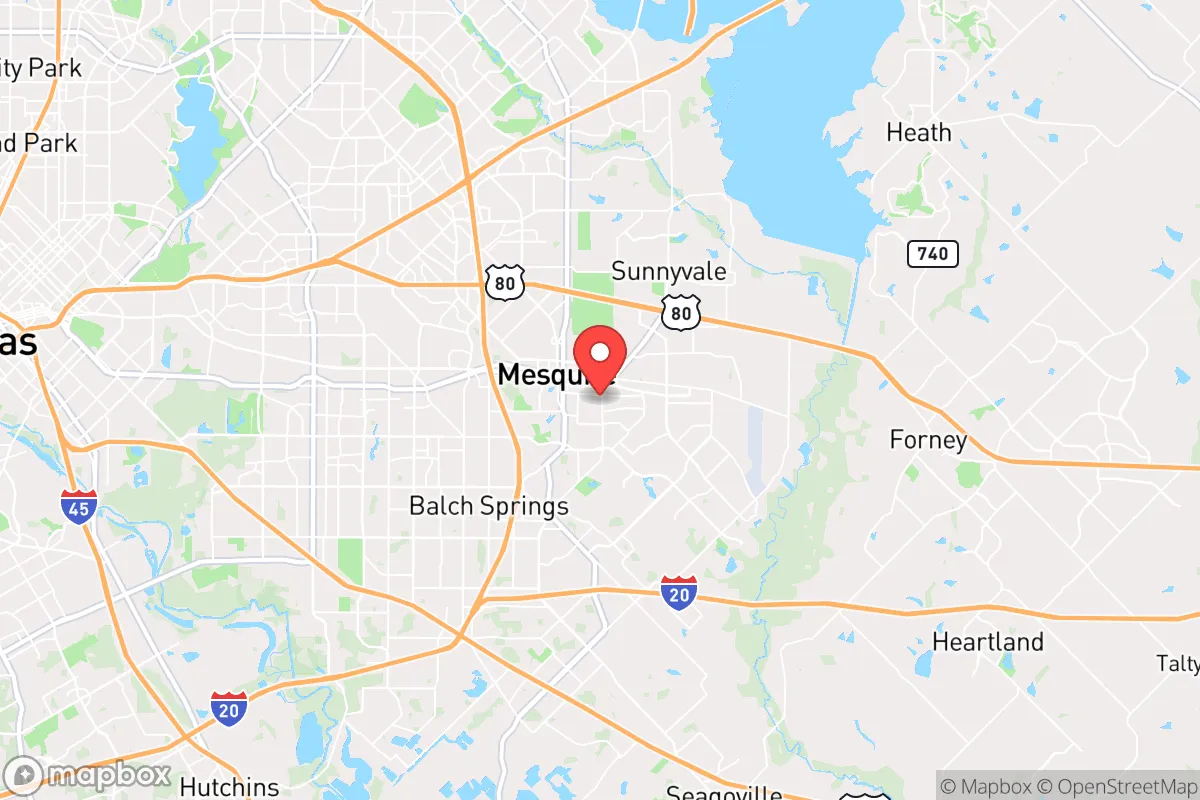
District shown is the primary district for this city’s centroid. Cities may span multiple districts.
Local Political AnalysisPolitical Analysis of Mesquite, TX
Mesquite has long been a solidly conservative community, and that hasn’t changed much even as the Dallas metroplex has grown around it. With a Cook PVI of R+13, the city leans reliably Republican in most elections, and that’s been the case for as long as I can remember. You’ll see that reflected in local races too—most city council and school board seats go to folks who aren’t shy about keeping taxes low and government out of your business. That said, you can feel the pressure from the west, where Dallas proper has been shifting left for years, and some of that progressive energy is starting to creep into the eastern suburbs. It’s not a sea change yet, but you’d have to be blind not to notice the occasional push for things like diversity equity initiatives or zoning changes that sound a little too much like the city’s overreach we moved out here to avoid.
How it compares
If you drive ten miles west into Dallas, you’re in a completely different world—politically and culturally. Dallas County as a whole went blue by double digits in 2024, and you can feel it in everything from property tax debates to school curriculum fights. Head east to Rockwall or Forney, and you’re back in deep red territory, where R+13 would actually be considered moderate. Mesquite sits right in that buffer zone, which means we get a mix of old-school conservative values and some of the more progressive spillover from the city. It’s not as stark as the contrast between, say, Garland (which has been trending purple) and Sunnyvale (still very red), but the difference is real. You’ll see more Trump signs in yards east of I-30 than west of it, and the local GOP club is still the dominant political force in town.
What this means for residents
For the most part, living in Mesquite means you can still expect a government that keeps its nose out of your personal life. Property taxes are high—that’s Texas—but the city hasn’t gone wild with new regulations or woke mandates. The school board has held the line on things like critical race theory and gender ideology in classrooms, which is a relief if you’re raising kids here. But I’d keep an eye on the city council elections coming up in 2026. There’s been a quiet push from some newer residents—many from California and Illinois—to bring in more progressive policies, like affordable housing mandates and police oversight boards. So far, those efforts have been voted down, but the margin is getting tighter every cycle. If you value your Second Amendment rights and don’t want the city telling you what you can do with your property, it’s worth staying engaged.
One thing that sets Mesquite apart from some of its neighbors is the strong sense of local identity. We’ve got the Rodeo, the Championship Bull Riding events, and a downtown that still feels like small-town Texas even though we’re part of the metroplex. You won’t find the kind of boutique socialism you see in Austin or the hyper-regulatory environment of Dallas proper. The city has resisted things like plastic bag bans and strict short-term rental ordinances that have popped up elsewhere. That said, the long-term trajectory depends on who shows up to vote. If the conservative base stays active, Mesquite will likely remain a safe haven for folks who want good schools, low crime, and a government that remembers its job is to serve, not to manage your life. If complacency sets in, well, we’ve seen what happens to other once-conservative suburbs that drifted left. It’s not a pretty picture.

State Political ClimatePolitical Climate in Texas
State Political AnalysisPolitical Environment in the State
Texas remains a solidly Republican state at the statewide level, but the coalition that keeps it red is shifting. The GOP has held every statewide office for over three decades, and the state hasn't voted for a Democratic presidential candidate since Jimmy Carter in 1976. However, the margin of victory has tightened from 16 points in 2012 to 9 points in 2016 and just under 6 points in 2020. The dominant coalition is still a mix of rural conservatives, suburban moderates, and evangelical voters, but explosive growth in the urban crescent—from Dallas-Fort Worth down through Austin to San Antonio and Houston—is slowly reshaping the map. The 10-20 year trajectory shows a state that is still reliably red but with a growing blue undercurrent in its major metros.
Urban vs. rural divide
The political map of Texas is a study in stark contrasts. The vast rural and exurban counties—places like Lubbock, Amarillo, and the sprawling ranchlands of West Texas—vote Republican by margins of 70-80% or more. These areas anchor the GOP's base. Meanwhile, the major urban centers are increasingly Democratic strongholds. Harris County (Houston), Dallas County, Travis County (Austin), and Bexar County (San Antonio) all voted for Joe Biden in 2020, with Travis County giving him over 71% of the vote. The real battleground is the fast-growing suburban ring around these cities. Counties like Collin County (north of Dallas), once a GOP fortress, saw its Republican margin shrink from 30 points in 2012 to just 12 points in 2020. Fort Bend County (southwest of Houston) flipped to Biden in 2020 after years of trending blue. The divide isn't just about geography—it's about density, education levels, and the influx of out-of-state transplants, particularly into the Austin and Dallas suburbs.
Policy environment
Texas's policy environment is defined by a low-tax, low-regulation posture that has been a cornerstone of its economic appeal for decades. There is no state income tax, which is a major draw for individuals and businesses alike. Property taxes are high to compensate—averaging around 1.6-1.8% of assessed value—but the state offers no homestead exemption cap on appraisals, meaning tax bills can rise sharply with home values. The regulatory climate is business-friendly, with minimal red tape for new construction and occupational licensing. On education, the state has leaned into school choice, expanding charter schools and passing a school voucher-like program in 2023 (HB 3) that allows parents to use state funds for private or homeschool expenses. Healthcare policy remains a flashpoint: Texas is one of the 10 states that has refused to expand Medicaid under the ACA, leaving roughly 18% of the population uninsured. Election laws were tightened in 2021 with SB 1, which restricted drive-through and 24-hour voting, added ID requirements for mail ballots, and empowered partisan poll watchers. For a conservative-leaning resident, the policy environment is largely favorable, though the property tax burden and lack of healthcare access for the uninsured are persistent concerns.
Trajectory & freedom
The trajectory of personal freedom in Texas is a mixed bag, and it's worth watching closely. On the positive side for conservatives, the state has aggressively expanded gun rights. In 2021, Texas passed permitless carry (HB 1927), allowing most adults to carry a handgun without a license or training. The same year, the "Heartbeat Act" (SB 8) effectively banned abortion after six weeks, and in 2023, a near-total abortion ban (HB 1280) took effect. Parental rights were strengthened with the 2023 "Parental Bill of Rights" (HB 900), which requires schools to get parental consent for health services and restricts library content deemed "sexually explicit." On the concerning side, the state has shown a willingness to use government power to enforce social policy. The 2022 directive from Governor Abbott ordering the Department of Family and Protective Services to investigate parents of transgender children for child abuse was a heavy-handed move that many saw as government overreach into family medical decisions. Similarly, the state's aggressive prosecution of election fraud—while popular with the base—has led to a few high-profile cases that critics say chilled lawful voting. The overall trend is toward more government intervention in social and medical matters, even as economic and gun freedoms expand.
Civil unrest & political movements
Texas has seen its share of political flashpoints in recent years. The 2020 Black Lives Matter protests in Austin and Houston were large and occasionally violent, leading to property damage and a lasting rift between city leaders and state officials. The "Defund the Police" movement gained traction in Austin, where the city council cut the police budget by $150 million in 2020, only to restore most of it after a spike in violent crime and public backlash. Immigration politics are a constant source of tension. The state has bused over 100,000 migrants to Democratic-led cities like New York and Chicago since 2022, a move that galvanized the GOP base but drew accusations of political theater. The "sanctuary city" ban (SB 4) remains in effect, allowing law enforcement to inquire about immigration status during routine stops. Secession rhetoric has flared on the far right, with the Texas Nationalist Movement gaining some attention, but it remains a fringe position. Election integrity remains a hot-button issue: the 2020 election saw lawsuits over drive-through voting in Harris County, and the 2022 primary was marked by a controversial purge of voter rolls. A new resident will notice that political signs and bumper stickers are common, and conversations about politics can get heated, especially in the suburbs and rural areas.
Projection
Over the next 5-10 years, Texas is likely to become more competitive at the statewide level, but it won't flip blue overnight. The demographic trends are clear: the state is growing younger, more diverse, and more urban. The Hispanic population, which leans Democratic but is not monolithic, is a key swing group. The suburbs of Dallas, Houston, and San Antonio will continue to trend purple, while rural areas will remain deep red. The GOP's path to staying competitive will depend on holding the line in the suburbs and turning out the rural vote. The state's political leadership will likely continue to push conservative social policies, but the economic pressures of growth—rising housing costs, strained infrastructure, and water scarcity—may force more pragmatic governance. For someone moving in now, expect a state that remains broadly conservative but with a growing progressive minority that will make elections closer and more contentious. The culture wars will persist, but the economic engine will keep humming.
For a new resident, the bottom line is this: Texas offers a low-tax, business-friendly environment with strong protections for gun rights and parental authority. But it's not a libertarian paradise. The state government is willing to use its power to enforce social and medical policies, and the property tax burden is real. If you value economic freedom and a conservative social framework, Texas is a solid bet. Just be prepared for the political temperature to rise as the state's demographics continue to shift. The key is to find a community that matches your values—whether that's a deep-red rural county like Gillespie (Fredericksburg) or a more moderate suburban enclave like Keller (north of Fort Worth). Do your homework on the local school board and city council races; that's where the real action is.
* Values derived from national, state, county, city and local statistics and may differ in a specific area. Last updated: 2026-04-21T12:08:11.000Z
Narrative content on this page is AI-generated and may contain mistakes. Verify any details that matter before acting on them.
ReloMaps may earn a commission from affiliate links at no extra cost to you.

