Political ClimatePolitical Climate in Midland, TX
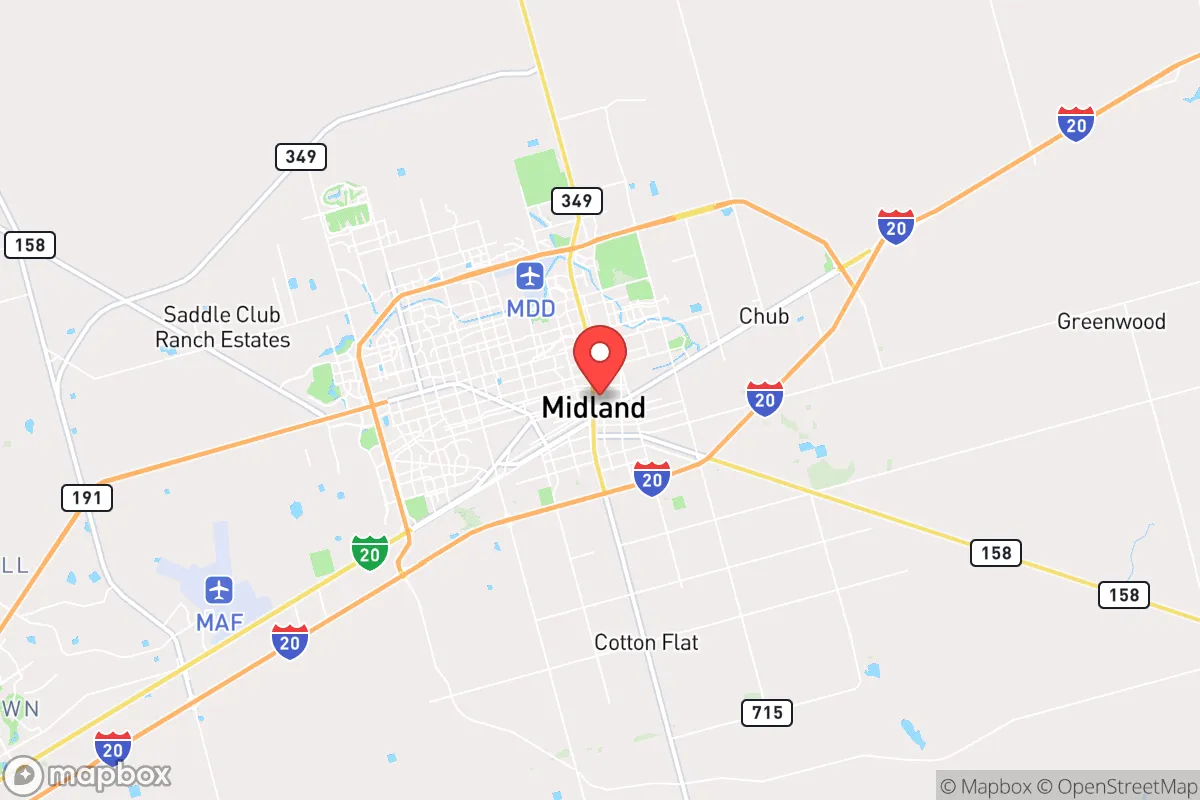
District shown is the primary district for this city’s centroid. Cities may span multiple districts.
Local Political AnalysisPolitical Analysis of Midland, TX
Midland, Texas, is about as solidly conservative as a place gets, and it’s been that way for generations. The Cook PVI rating of R+22 tells you the math—this isn’t a swing area; it’s a bedrock Republican stronghold where local elections are often decided in the primary. The political lean here isn’t just about voting patterns; it’s woven into the fabric of daily life, from the way people talk about energy policy to the general skepticism of government meddling. That said, there’s been a quiet undercurrent of concern among longtime residents that the national progressive wave, even if it hasn’t hit Midland hard yet, could start lapping at the edges if folks aren’t paying attention.
How it compares
Drive 20 miles east to Odessa, and you’ll find a similar conservative tilt, though Odessa’s politics have historically been a bit more populist and rough around the edges. The real contrast comes when you head south to places like Austin or even Dallas—those are worlds away politically. Midland’s politics are rooted in the oil patch and a deep-seated belief in personal responsibility, not government handouts. The surrounding Permian Basin counties—like Martin, Andrews, and Ector—all vote similarly red, but Midland tends to be the more polished, business-oriented version of that conservatism. It’s the kind of place where a candidate who talks about cutting regulations and protecting property rights gets a standing ovation, while one pushing climate mandates or gun control would be laughed out of the room.
What this means for residents
For the people who live here, the political climate translates into a pretty straightforward deal: lower taxes, fewer headaches from state or local bureaucracy, and a general sense that your personal choices—whether it’s how you run your business, what you teach your kids, or how you carry a firearm—are your own business. The local government tends to stay out of the way, which is exactly how most folks want it. That said, there’s a growing wariness about federal overreach, especially on energy and environmental rules that could hit the oil and gas industry hard. If you’re someone who values freedom from government intrusion, Midland feels like a refuge. But if you’re hoping for progressive social policies or a more activist local government, you’d be swimming against a very strong current.
One cultural distinction that stands out is the area’s deep connection to the oil industry—it’s not just an economic driver, it’s a way of life that shapes political views. You’ll hear people talk about the “boom and bust” cycles, and there’s a resilience that comes from that, but also a wariness of outsiders who don’t understand the trade-offs. In recent years, there’s been a slight uptick in younger families moving in from more liberal areas, and some locals worry that could shift the tone over the long haul. For now, though, Midland remains a place where conservative values aren’t just tolerated—they’re assumed. The near-term outlook is stable, but the long-term concern is that national trends, like the push for green energy or expanded federal control, could slowly erode the local way of life if not pushed back hard.

State Political ClimatePolitical Climate in Texas
State Political AnalysisPolitical Environment in the State
Texas remains a solidly Republican state, but the margin has tightened noticeably over the past two decades. In 2004, George W. Bush carried the state by 23 points; by 2020, Donald Trump’s margin had shrunk to just 5.5 points. The dominant coalition is still conservative — built on rural voters, suburban families, and the oil-and-gas economy — but explosive growth in the urban cores of Dallas-Fort Worth, Houston, San Antonio, and especially Austin has injected a steady stream of left-leaning transplants. The 2024 presidential race saw Trump win Texas again, but the state’s 40 electoral votes are no longer a foregone conclusion for Republicans, and the fight for the Texas House has become genuinely competitive.
Urban vs. rural divide
The political map of Texas is a study in extremes. The vast rural expanse — from the Panhandle down through West Texas and into the Hill Country — votes overwhelmingly Republican. Counties like Lubbock (home to Texas Tech) and Amarillo in the Panhandle routinely deliver 75-80% of their votes to GOP candidates. Meanwhile, the state’s four biggest metro areas are split. Houston and Dallas-Fort Worth are purple battlegrounds: Harris County (Houston) went for Biden in 2020 by 13 points, while Tarrant County (Fort Worth) flipped from red to blue in 2020 before swinging back to Trump in 2024. Austin (Travis County) is the bluest major city in the state, voting for Biden by a staggering 51 points. El Paso, on the border, is also reliably Democratic. The suburbs that once anchored GOP dominance — places like Collin County (north of Dallas) and Williamson County (north of Austin) — are trending purple as educated professionals move in. The rural-urban chasm is wider here than in almost any other state, and it’s the central fault line of Texas politics.
Policy environment
Texas has no state income tax, which remains the single biggest policy draw for conservatives and businesses alike. Property taxes are high — among the top ten in the nation — but the state legislature has passed multiple rounds of compression and appraisal caps to slow the bleeding. The regulatory posture is famously light: no state-level OSHA, minimal zoning in most cities, and a right-to-work law that keeps unions weak. On education, the state funds public schools through a complex Robin Hood system that redistributes property tax revenue from wealthy districts to poor ones, but school choice (vouchers) has been a perennial battle — Governor Greg Abbott made it his top priority in 2023 and 2025, only to see it blocked by rural Republicans in the House. Healthcare policy is largely hands-off: Texas did not expand Medicaid under the ACA, leaving roughly 1.5 million uninsured adults in a coverage gap. Election laws have tightened since 2021’s Senate Bill 1, which banned 24-hour and drive-through voting, added ID requirements for mail ballots, and empowered partisan poll watchers. The state also enacted a near-total abortion ban (trigger law) in 2021, with no exceptions for rape or incest, and a six-week ban (SB 8) enforced by private lawsuits before that.
Trajectory & freedom
On the freedom front, Texas has moved in two directions at once. On the positive side for conservatives, the state expanded gun rights significantly: permitless carry (HB 1927) became law in 2021, allowing any law-abiding adult to carry a handgun without a license. Parental rights were strengthened with the 2023 passage of the “Parental Bill of Rights” (HB 900), which requires schools to notify parents of any medical or mental health screenings and restricts sexually explicit content in school libraries. Medical freedom took a hit with the abortion bans, but the state also passed a law (SB 29) in 2023 prohibiting COVID-19 vaccine mandates by private employers. Property rights were bolstered by the 2023 passage of a law limiting the ability of homeowners’ associations to restrict solar panels and rainwater harvesting. On the concerning side, the state has aggressively used its power to override local ordinances — the “bathroom bill” fight of 2017, the preemption of local tree ordinances, and the 2023 law banning local governments from contracting with companies that “boycott” fossil fuels. The state also created a new “election integrity” unit in the Attorney General’s office with broad investigative powers. The net trajectory is toward more individual liberty on guns, education, and medical choice, but with a heavy hand on local control and corporate regulation.
Civil unrest & political movements
Texas has seen its share of flashpoints. The 2020 Black Lives Matter protests in Austin and Houston were large and occasionally violent, leading to property damage and a lasting police-reform debate. The 2021 winter storm blackouts sparked protests at the state capitol over grid reliability and price gouging. Immigration politics are a constant: Governor Abbott’s Operation Lone Star has deployed thousands of National Guard troops and state troopers to the border, bused migrants to Democratic-led cities, and installed razor wire and buoys in the Rio Grande — all of which have drawn lawsuits from the Biden administration and legal challenges from civil liberties groups. The “sanctuary city” debate flared in 2017 with SB 4, which banned local governments from adopting policies that limit cooperation with federal immigration enforcement. Secession rhetoric has been more fringe than real, though the Texas Nationalist Movement has a small but vocal presence. Election integrity remains a hot-button issue: the 2020 and 2022 cycles saw widespread claims of fraud (largely unsubstantiated) from Republican activists, leading to the creation of the aforementioned election unit. A new resident would notice the heavy police presence in border towns like El Paso and Brownsville, and the omnipresent political signage — both for candidates and for issues like school choice and property tax relief — along every major highway.
Projection
Over the next five to ten years, Texas will continue to trend purple, but not necessarily blue. The in-migration from California and the Northeast is slowing as housing costs rise in the desirable metros. The fastest-growing parts of the state are actually the exurbs and smaller cities — places like Buda (south of Austin), Celina (north of Dallas), and New Braunfels (between San Antonio and Austin) — which tend to be more conservative than the urban cores. The Hispanic vote, long assumed to be a Democratic lock, is shifting rightward, especially among working-class men in the Rio Grande Valley. The state’s Republican Party is likely to remain in control of the legislature and the governorship through at least 2030, but the margin in the Texas House could narrow to a handful of seats. The biggest wildcard is the courts: the Texas Supreme Court and the Court of Criminal Appeals are both all-Republican, but judicial elections are becoming more partisan and expensive. A new resident moving in now should expect a state that remains broadly conservative on taxes, guns, and regulation, but with a growing, vocal progressive minority in the cities that will keep the culture wars hot. The practical takeaway: if you value low taxes, limited government, and individual liberty, Texas is still one of the best bets in the country — but the political landscape is shifting under your feet, and the fights over schools, property rights, and local control are only going to intensify.
For a conservative-leaning individual or family, Texas offers a policy environment that largely aligns with your values: no income tax, strong gun rights, parental control over education, and a business-friendly regulatory climate. The trade-offs are high property taxes, a strained healthcare system for the uninsured, and a political climate that is increasingly polarized between the rural/conservative and urban/progressive blocs. If you’re moving here, pick your county carefully — the difference between living in Collin County and Travis County is the difference between a reliably conservative community and a progressive enclave. The state’s trajectory is toward more freedom on some fronts (guns, school choice, medical mandates) and more government overreach on others (local preemption, election administration). Overall, Texas remains a place where your personal liberty is broadly respected, but you’ll need to stay engaged to keep it that way.
* Values derived from national, state, county, city and local statistics and may differ in a specific area. Last updated: 2026-04-18T19:25:16.000Z
Narrative content on this page is AI-generated and may contain mistakes. Verify any details that matter before acting on them.
ReloMaps may earn a commission from affiliate links at no extra cost to you.

