Photo: Wikipedia
Political ClimatePolitical Climate in Monument, CO
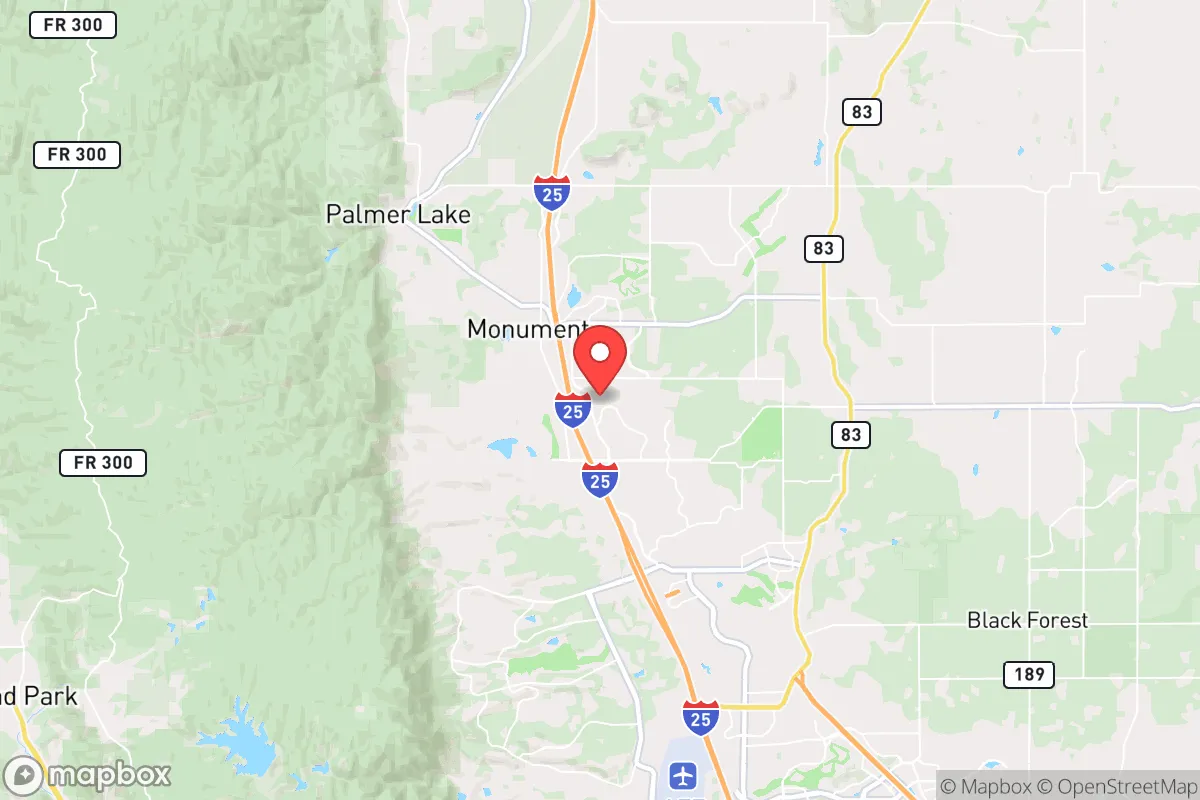
District shown is the primary district for this city’s centroid. Cities may span multiple districts.
Local Political AnalysisPolitical Analysis of Monument, CO
Monument, Colorado, has long been a reliably conservative stronghold, and that hasn't changed much even as the rest of the state has shifted left. The area sits in El Paso County, which consistently votes Republican by wide margins, and the Cook PVI of R+5 reflects a district that leans right but isn't a deep-red fortress. What you'll notice on the ground is a community that values personal responsibility, limited government, and the Second Amendment—values that feel increasingly under siege from state-level policies coming out of Denver. The political trajectory here is one of holding the line, not flipping, but there's a growing unease as progressive ideas creep into school boards and county planning meetings.
How it compares
Drive 15 minutes south into Colorado Springs proper, and you'll find a more mixed bag—still conservative overall, but with a noticeable progressive presence around downtown and the universities. Head north toward Castle Rock or Parker, and you're in Douglas County, which is even more reliably Republican than Monument, with a PVI closer to R+9. The real contrast is west, toward Woodland Park and Teller County, where the libertarian streak runs deeper and the distrust of government overreach is palpable. Monument sits in a sweet spot: conservative enough to feel safe, but close enough to the Springs that you can't ignore the political battles brewing over property taxes, land-use regulations, and school curriculum. The surrounding towns like Palmer Lake and Larkspur lean even more rural and independent, often voting against any ballot measure that smells like a new tax or mandate.
What this means for residents
For the average family in Monument, the political climate means you can generally expect your local government to stay out of your business. The town council and county commissioners have historically resisted zoning overhauls and density increases that would bring more apartments and transit-oriented development—things that often come with higher crime and more government oversight. Property taxes remain relatively low compared to the Front Range average, and there's no city income tax. The school board has been a battleground lately, with parents pushing back hard against critical race theory and gender ideology in classrooms. If you value local control and don't want Denver telling your kids what to think, Monument is one of the last places in Colorado where that fight is still winnable. The downside? You'll see fewer amenities and slower infrastructure improvements than in more progressive areas, because the community prioritizes keeping taxes low over expanding government services.
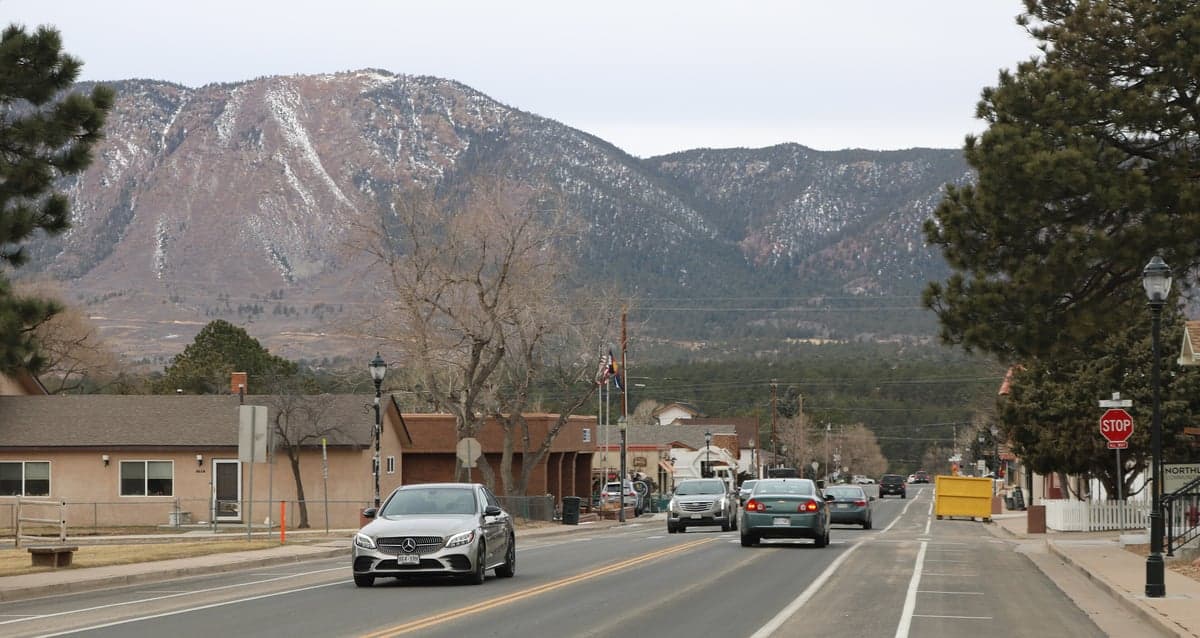
Culturally, Monument is a place where people wave from their trucks and actually know their neighbors. The annual Monument Hill Kiwanis parade and the Fourth of July celebration at Limbach Park are big deals, and you won't see rainbow flags or BLM banners on Main Street. The biggest policy distinction is the strong support for gun rights—open carry is common, and there's a palpable anger toward the state's magazine capacity ban and red flag law. If you're moving here from a blue state, expect to hear a lot of talk about "constitutional sheriffs" and Second Amendment sanctuary resolutions. The long-term concern among locals is that as Colorado Springs grows and pushes north, Monument could get absorbed into a more urban, progressive voting bloc. For now, though, it's a pocket of sanity where you can still raise a family without feeling like the government is watching your every move.

State Political ClimatePolitical Climate in Colorado
State Political AnalysisPolitical Environment in the State
Colorado has shifted from a classic purple swing state to a solidly blue-leaning state over the past two decades, with Democrats now controlling the governorship, both U.S. Senate seats, and both chambers of the state legislature. The state voted for Hillary Clinton by 5 points in 2016, Joe Biden by 13 points in 2020, and Kamala Harris by roughly 11 points in 2024, reflecting a durable leftward tilt driven by explosive growth in the Denver-Boulder corridor and the I-25 Front Range. For a conservative considering relocation, the state’s political trajectory is a cautionary tale of how rapid in-migration from blue states, combined with a well-funded progressive infrastructure, has transformed a once-independent Western state into a laboratory for left-wing policy.
Urban vs. rural divide
The political map of Colorado is a stark story of two states. The urban core—Denver, Boulder, and the surrounding suburbs of Aurora, Lakewood, and Westminster—votes overwhelmingly Democratic, often by margins of 30 to 50 points. Boulder County is the bluest in the state, routinely delivering 75-80% of its vote to Democratic presidential candidates. The Denver metro area alone accounts for over half the state’s population, making it the engine of Democratic dominance. Meanwhile, the rural and exurban counties—El Paso County (Colorado Springs), Weld County (Greeley), Mesa County (Grand Junction), and Douglas County (south of Denver)—remain reliably Republican. El Paso County, home to Colorado Springs and military installations like Fort Carson, voted for Trump by 8 points in 2024, while Weld County, a hub of oil and gas and agriculture, went for Trump by 18 points. The suburban battlegrounds of Arapahoe and Jefferson Counties have trended blue over the last decade, flipping from swing to safe Democratic. The key takeaway: if you live along the Front Range north of Colorado Springs, you are likely in a blue bubble; if you head east to the plains or west to the mountains, you’ll find red territory, but those areas lack the population to counterbalance the metro vote.
Policy environment
Colorado’s policy environment has become increasingly hostile to conservative values. The state income tax rate is a flat 4.4%, which is moderate, but the overall tax burden is rising due to property tax increases and new fees. In 2024, voters rejected a measure to cut the income tax rate to 4.0%, signaling a reluctance to reduce government revenue. The regulatory posture is aggressively green: Colorado has adopted California-style emissions standards for vehicles, mandated a 100% renewable energy grid by 2040, and imposed strict oil and gas setbacks that have effectively banned new drilling in large parts of the Front Range. Education policy is dominated by teachers’ unions, with school choice limited compared to states like Arizona or Florida—charter schools exist but face bureaucratic hurdles. Healthcare is heavily regulated, with a state-run reinsurance program that has stabilized premiums but done little to lower costs. Election laws have been loosened: Colorado was one of the first states to implement universal mail-in voting and automatic voter registration, which critics argue erodes ballot security. The state also has a “red flag” gun law (HB 19-1177) that allows courts to temporarily seize firearms from individuals deemed a risk, and in 2024, the legislature passed a ban on the sale of certain semi-automatic firearms (SB 24-131), a move that is currently being challenged in court. For a conservative, the policy environment feels like a slow but steady march toward a California-style regulatory state.
Trajectory & freedom
Colorado is becoming less free by nearly any measure of personal liberty. The most glaring example is the erosion of Second Amendment rights: the 2024 semi-auto ban and the existing red flag law have made Colorado a national leader in gun control, despite the state’s strong hunting and outdoor culture. Parental rights have taken a hit with the passage of a 2023 law (SB 23-195) that allows minors to access reproductive healthcare, including abortion and gender-affirming care, without parental consent—a direct challenge to family authority. Medical freedom has been curtailed by strict vaccine mandates for healthcare workers and schoolchildren, with no religious exemption for the COVID-19 vaccine in many settings. Property rights are under pressure from the aforementioned oil and gas setbacks, which have devalued mineral rights and land in rural areas. On the tax front, the Taxpayer’s Bill of Rights (TABOR) still provides a constitutional check on revenue growth, but lawmakers have increasingly found ways to circumvent it through fees and enterprise funds. The trajectory is clear: each legislative session brings new restrictions on firearms, new mandates on energy and healthcare, and new expansions of government power. A conservative moving here should expect this trend to continue, as the Democratic supermajority in the legislature shows no signs of moderating.
Civil unrest & political movements
Colorado has seen its share of political flashpoints. The 2020 George Floyd protests in Denver turned violent, with property damage and clashes between protesters and police, leading to a lasting distrust of law enforcement in the city. The state has a robust network of progressive activist groups, including Colorado Rising and 350 Colorado, which have successfully pushed the anti-fossil fuel agenda. On the right, the Colorado Republican Party has fractured into moderate and MAGA factions, weakening its electoral effectiveness. Immigration politics are a hot-button issue: Denver has declared itself a “sanctuary city,” and the state has a 2019 law (HB 19-1124) that limits cooperation between local law enforcement and federal immigration authorities. This has led to tensions in suburban communities like Aurora, where a surge of migrant arrivals in 2023-2024 strained city services and sparked local backlash. Election integrity remains a concern for many conservatives, given the state’s universal mail-in system and the lack of voter ID requirements at the ballot drop box. The 2022 gubernatorial race saw a Republican candidate, Heidi Ganahl, lose by 20 points, highlighting the party’s inability to compete statewide. A new resident will notice that political conversations are polarized: in Denver, progressive views are the default; in Colorado Springs, conservative values are openly embraced. The divide is not just electoral but cultural, with rural residents feeling increasingly alienated from the state government in Denver.
Projection
Over the next 5-10 years, Colorado is likely to continue its leftward drift. Demographic trends favor Democrats: the state is attracting young, college-educated professionals from California and the Northeast, who tend to vote blue. The Hispanic population, which leans Democratic, is growing, particularly in the Denver metro and the San Luis Valley. The Republican base is aging and concentrated in shrinking rural counties. The 2024 election results showed that even traditionally red Douglas County is becoming competitive, with Trump winning it by only 4 points after winning by 12 in 2020. The state’s housing crisis, driven by restrictive zoning in Denver and Boulder, is pushing some families to exurbs like Castle Rock and Parker, but those areas are also trending purple. The most likely scenario is that Colorado becomes a safe Democratic state by 2030, with Republicans only competitive in the 3rd Congressional District (western slope) and the 5th (Colorado Springs). For a conservative moving in now, expect to live in a state where your vote for president or Senate will be irrelevant, but local elections in red counties can still make a difference. The policy environment will continue to tighten, with more gun restrictions, higher taxes, and less parental control over education and healthcare.
For a conservative considering relocation, Colorado offers stunning natural beauty and a strong economy, but the political climate is increasingly hostile to traditional values. If you value gun rights, parental authority, and limited government, you will find yourself fighting an uphill battle against a well-funded progressive machine. The best bet is to settle in a red county like El Paso or Weld, where local governance can provide some buffer, but state-level policies will still affect your daily life. Colorado is no longer the libertarian-leaning Western state it was 20 years ago—it has become a blue state in all but scenery. Move here for the mountains, but be prepared to defend your freedoms at the ballot box and in the courtroom.
* Values derived from national, state, county, city and local statistics and may differ in a specific area. Last updated: 2026-04-29T00:40:10.000Z
Narrative content on this page is AI-generated and may contain mistakes. Verify any details that matter before acting on them.
ReloMaps may earn a commission from affiliate links at no extra cost to you.

