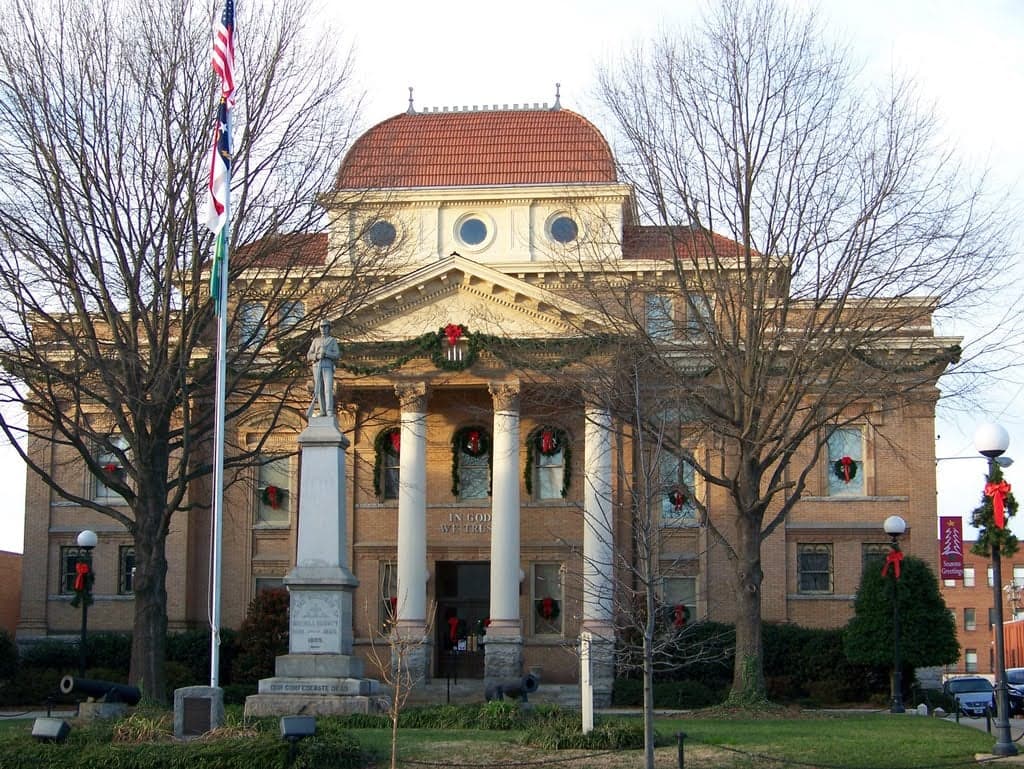
Photo: Wikipedia
Political ClimatePolitical Climate in Iredell County
Showing district-level results — no local-only data available.
Local Political AnalysisPolitical Analysis of Iredell County
Iredell County has long been a reliably conservative stronghold, with a Cook Partisan Voting Index of R+9 — a full eight points more Republican than the state of North Carolina’s R+1 rating. That spread isn’t just a number; it reflects a deep-rooted preference for limited government and traditional values that you can feel driving through the county. The overall trajectory in recent years has been a slow but noticeable blending of old-school conservatism with the newer, more libertarian-leaning folks moving up from the Charlotte metro. While the county as a whole hasn’t flipped, the edges — especially around Mooresville — have gotten a little less rock-ribbed red.
How it compares
North Carolina as a state is a true purple battleground, shifting narrowly between parties every election cycle. Iredell County, by contrast, votes Republican by comfortable double-digit margins in nearly every statewide race. The political center of gravity here is Statesville, the county seat, where local and national conservative candidates routinely win 60–65% of the vote. Mooresville, the lake-area growth hub, is a bit more mixed — still majority Republican, but with pockets of blue, especially around newer subdivisions filled with Charlotte commuters. Troutman and the rural townships like Turnersburg and Olin lean heavily red. The real swing precincts aren’t really swing in the purple sense; they’re just less red. For example, the Shearers Township precinct near Mooresville Lake can dip into the high-40s for Democrats in presidential years, while the rest of the county stays firmly in the 60s. That’s the big difference: statewide, you have actual toss-up counties like Wake and Mecklenburg. In Iredell, the question is never if Republicans will win, but by how much.
What this means for residents
For people who moved here to escape the overcrowding, higher taxes, and progressive policies of Mecklenburg County, Iredell’s political climate is a breath of fresh air. Local government stays focused on keeping property taxes reasonable and pushing back against state-level mandates they see as overreach, particularly when it comes to school board decisions and land-use regulations. The influx of new residents from blue states has sparked some anxiety — people worry the same progressive drift that overtook Charlotte will creep up I-77. So far, though, the county commission and school board elections have held the line. There’s a strong grassroots network that monitors zoning changes and voted overwhelmingly to keep Iredell a Second Amendment Sanctuary county. For anyone concerned about government overreach into personal freedoms — whether that’s vaccine mandates, curriculum control, or business closures — Iredell feels like a place where local leaders actually listen.
Culturally, the county retains a rural independence that sets it apart from the suburban conformity of Huntersville or Cornelius. You’ll find more churches per capita, more gravel roads, and more folks who know their neighbors. The biggest policy distinction from the rest of North Carolina is the county’s consistent resistance to light-rail expansion and high-density zoning — concepts that are popular in the urban crescent but seen here as threats to the way of life. Longtime residents, myself included, see the next decade as a test: can Iredell absorb growth without losing the conservative character that makes it worth living in? So far, the answer has been yes, but we’re watching every election a little closer than we used to.

State Political ClimatePolitical Climate in North Carolina
State Political AnalysisPolitical Environment in the State
North Carolina sits at R+1 on the Cook PVI, making it one of the most closely divided states in the country, but don't let that narrow number fool you. The dominant coalition here is a mix of rural and exurban conservatives who reliably turn out reliably, balanced against fast-growing urban and suburban progressive strongholds. Over the last 20 years, the state has shifted from a solidly red southern state to a true battleground, with Republicans holding the legislature and most statewide offices, but Democrats winning the governorship and occasionally the Council of State. The trajectory is a slow squeeze: in-migration from blue states is watering down the rural advantage, but the legislature has been aggressive in locking in conservative policies on taxes, education, and election integrity.
Urban vs. rural divide
The political map is a tale of two Carolinas. The urban crescent—Charlotte (Mecklenburg County), Raleigh and Durham (Wake and Durham Counties), and Asheville (Buncombe County)—votes overwhelmingly Democratic, often by 20–40 points. These metros drive the state's blue vote, fueled by transplants from the Northeast and California, plus large university and tech sectors. Meanwhile, the rural east (counties like Columbus, Robeson, and Pitt) and the rural west (like Rutherford, McDowell, and Watauga) are deeply red, often delivering 60–70% for Republican candidates. The suburbs are the real battleground: Cary and Apex outside Raleigh have trended purple-to-blue, while exurbs like Hickory and Gastonia remain reliably conservative. Wilmington (New Hanover County) is a microcosm—the city itself leans left, but the surrounding county is competitive, flipping redder as retirees and military families move in. The divide isn't just about geography; it's about culture and economics, with rural areas feeling left behind by the booming urban centers.
Policy environment
North Carolina's policy environment is a mixed bag that leans conservative on most economic and cultural fronts, but with a Democratic governor who can veto. The state has a flat income tax that's been steadily cut—currently at 4.5% and scheduled to drop to 3.99% by 2027—and no state estate tax, making it attractive for wealth preservation. It's a right-to-work state with weak unions, and the regulatory climate is business-friendly, especially outside the big cities. On education, the legislature has aggressively expanded school choice through the Opportunity Scholarship Program (vouchers for private school) and charter schools, and in 2023 passed the Parents' Bill of Rights (SB 20), which gives parents control over curriculum, library materials, and medical decisions for their kids. Healthcare saw a late Medicaid expansion in 2023 under a compromise between Governor Roy Cooper and the GOP legislature, but the state still has some of the highest health insurance premiums in the South. Election laws include a voter ID requirement (passed in 2018, implemented in 2023 after court battles), early voting, and absentee ballot reforms. The legislature also passed a law (HB 318) requiring local law enforcement to cooperate with ICE, effectively banning sanctuary city policies. Overall, the state offers a relatively free environment on taxes and education, but the governor's veto pen has blocked some conservative priorities like a full abortion ban (currently 12 weeks with exceptions).
Trajectory & freedom
Is North Carolina becoming more or less free? It depends on where you look. On the plus side, the legislature has been expanding personal liberty in several key areas. Gun rights saw a major win in 2023 with the elimination of the pistol purchase permit requirement (HB 189), though the state still requires a concealed carry permit. The legislature also passed strong preemption laws, preventing cities like Charlotte and Raleigh from enacting their own gun restrictions. Parental rights were strengthened with SB 20, which requires schools to notify parents about medical and mental health services and prohibits instruction on gender identity and sexuality in K-4. On the medical autonomy front is mixed: COVID-era mandates were largely resisted by the legislature, which banned vaccine passports and limited emergency powers, but the governor's emergency orders during the pandemic were a flashpoint. Property rights are generally strong, with no statewide rent control and limited eminent domain abuse. On the concerning side, the state has seen a slow creep of local government overreach in blue cities—Asheville and Durham have passed ordinances that effectively limit housing supply and impose green energy mandates. The biggest threat to freedom is the demographic shift: as more people move from high-tax, high-regulation states, they bring voting habits that could flip the legislature in a decade. The 2024 election saw Trump win the state by about 1.5 points, but down-ballot Republicans held the legislature and won the Council of State races, suggesting the conservative base is still motivated.
Civil unrest & political movements
North Carolina has had its share of political flashpoints. The 2016 HB 2 ("bathroom bill") controversy put
* Values derived from national, state, county, city and local statistics and may differ in a specific area. Last updated: 2026-05-18T18:50:57.000Z
Narrative content on this page is AI-generated and may contain mistakes. Verify any details that matter before acting on them.
ReloMaps may earn a commission from affiliate links at no extra cost to you.

