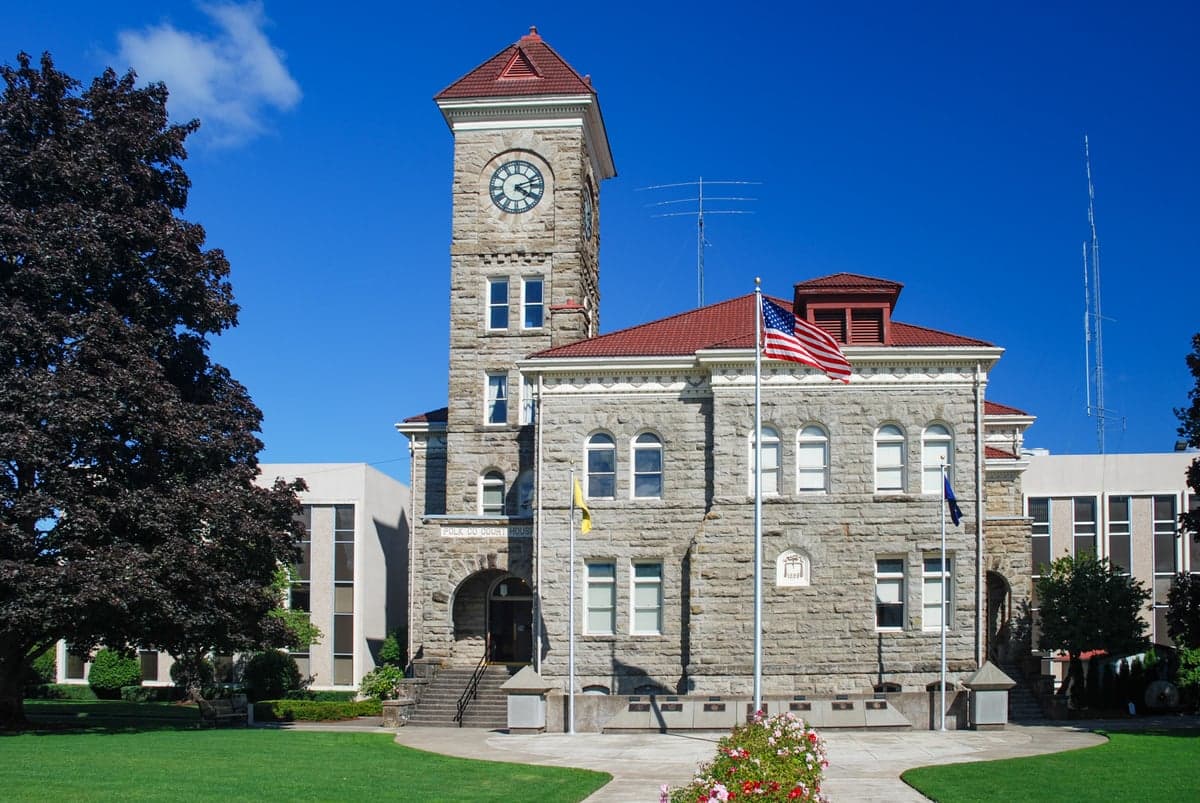
Photo: Wikipedia
Political ClimatePolitical Climate in Polk County
Showing district-level results — no local-only data available.
Local Political AnalysisPolitical Analysis of Polk County
Polk County, Oregon, sits in a bit of a political tug-of-war, leaning Democratic overall with a Cook PVI of D+6, but that number hides a lot of tension beneath the surface. Compared to the state as a whole, which is D+8, Polk County is noticeably more conservative, and that gap has been a source of real friction for locals who remember when things felt a lot more balanced. The county's vote has shifted leftward over the last decade, but it's not a smooth, uniform trend—there are clear pockets where traditional values still hold strong, and the progressive wave hasn't washed everyone away.
How it compares
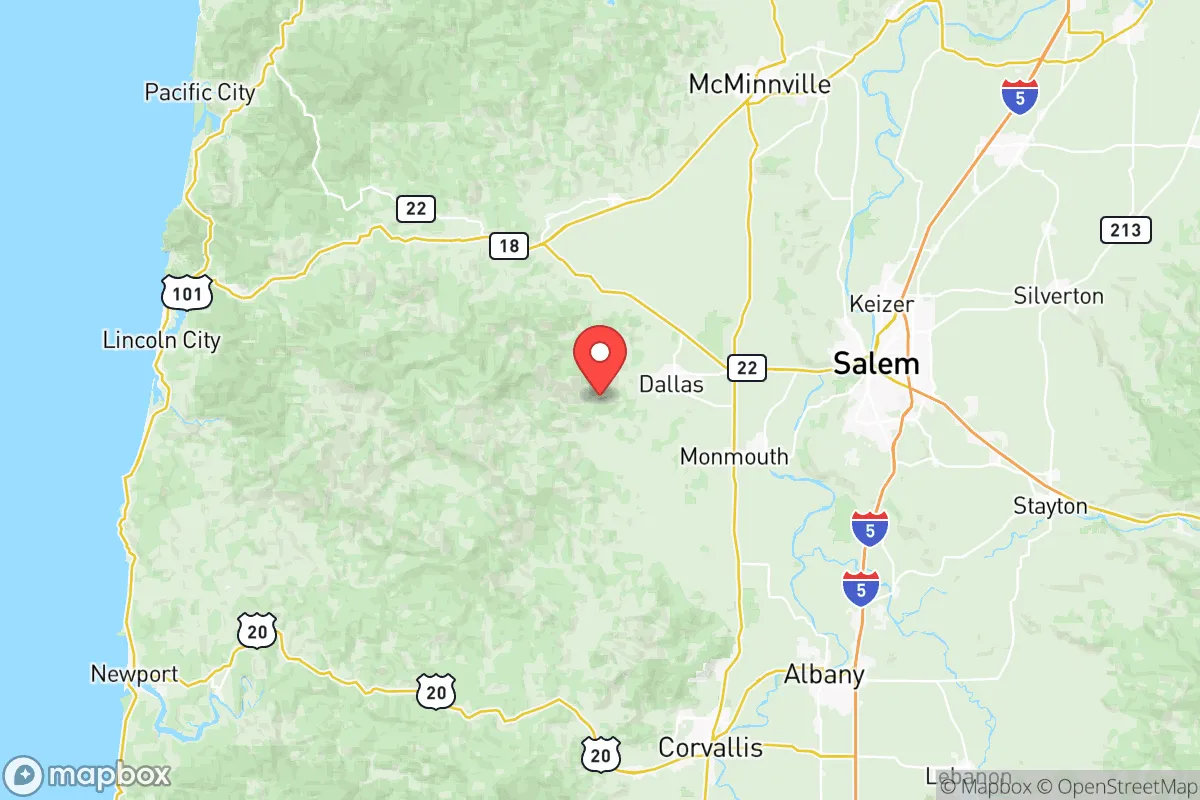
Oregon as a state is D+8, so Polk County's D+6 might not seem like a huge difference, but in practice, it's a world apart. The state's urban centers—Portland, Eugene, Salem—drive that deep-blue rating with aggressive progressive policies on everything from land use to drug decriminalization. Polk County, by contrast, has a strong rural and small-town backbone that pushes back against that. The real story is inside the county itself: Dallas and Monmouth are the blue-leaning hubs, thanks to Western Oregon University in Monmouth and a growing number of commuters to Salem. But head south or east, and you'll find Falls City and Willamina—smaller towns where the vote swings reliably red, often by double digits. The swing precincts are in the unincorporated areas around IndependenceRickreall and strong>Independence, where independent voters decide elections. Those areas used to lean conservative, but they've been trending purple as new residents move in from the valley, bringing Portland-area sensibilities with them.
What this means for residents
For folks who value personal freedoms and limited government, the trend is concerning. The county commission and local school boards have fought hard to keep progressive mandates at bay—things like mask mandates, vaccine passports, and DEI training in schools—but the pressure is mounting. Property taxes have crept up as the county tries to fund services demanded by the growing blue-lefter population, and there's a real fear that the "Oregon Way" of live-and-let-live is being replaced by a top-down, one-size-fits-all approach from Salem. Longtime residents will tell you that 20 years ago, you could disagree with your neighbor politically and still share a beer. Now, the divide feels sharper, especially in Monmouth, where university politics spill into city council meetings.
Culturally, Polk County still has a strong agricultural and timber heritage, with the Willamette Valley's farmlands and the Coast Range foothills shaping daily life. But the policy battles are real: land-use regulations that favor urban growth boundaries over rural property rights, and a state-level push for carbon cap-and-trade that hits farmers and loggers hardest. If you're looking for a place where you can still raise a family without the government breathing down your neck, the rural edges of Polk County—places like Grand Ronde or Pedee—offer that. But keep an eye on the ballot box. The next few elections will decide whether this county stays a conservative-leaning outlier or gets absorbed into the state's progressive machine.

State Political ClimatePolitical Climate in Oregon
State Political AnalysisPolitical Environment in the State
Oregon has a Cook PVI of D+8, meaning it leans about eight points more Democratic than the national average, but that single number hides a deeply fractured political landscape. The state’s dominant coalition is a mix of Portland metro progressives, Willamette Valley liberals, and a growing number of coastal and suburban independents, while the eastern and southern parts of the state are reliably conservative. Over the last 20 years, Oregon has shifted from a purple state that voted for George W. Bush in 2000 to a solidly blue state in presidential races, but the margin has narrowed in recent cycles—Trump improved his performance in 2020 and 2024 relative to 2016, especially in rural counties, while Democratic gains in the Portland suburbs have kept the state blue.
Urban vs. rural divide
The political map of Oregon is essentially two states. The Portland metro area—Multnomah, Washington, and Clackamas counties—generates about half the state’s population and votes overwhelmingly Democratic. In 2024, Multnomah County gave Biden 78% of the vote, while rural Lake County in the south gave Trump 82%. The Willamette Valley cities of Eugene, Salem, and Corvallis are also solidly blue, driven by the University of Oregon and Oregon State University populations. Meanwhile, the rest of the state—eastern Oregon (Bend, Redmond, Pendleton), southern Oregon (Medford, Grants Pass, Klamath Falls), and the coast (Coos Bay, Brookings)—is reliably red. A notable shift: Deschutes County (Bend) flipped from red to blue in 2020 and stayed there in 2024, driven by an influx of remote workers from California and Portland. Conversely, Yamhill County (McMinnville) and Marion County (Salem) have trended redder as rural voters consolidate against Portland’s policies. The divide isn’t just geographic—it’s cultural. Portland’s urban core is a progressive stronghold where bike lanes, homeless camps, and rent control are the norm, while a two-hour drive east to Prineville feels like a different country, with gun shops, pickup trucks, and “Don’t California My Oregon” bumper stickers.
Policy environment
Oregon’s policy environment is a mixed bag that leans heavily toward government intervention. The state has no sales tax, which sounds great, but it has the second-highest combined state and local income tax rate in the nation (top marginal rate of 9.9%) and high property taxes in many counties. The regulatory posture is aggressive: Oregon has some of the strictest land-use laws in the country (Senate Bill 100 from 1973), which limits development and drives up housing costs. In 2023, the legislature passed a statewide rent control law (SB 608) capping annual rent increases at 7% plus inflation, which landlords argue discourages new construction. Education policy is dominated by teachers’ unions; Oregon ranks near the bottom nationally in 4th-grade reading and math proficiency despite above-average per-pupil spending. Healthcare is heavily regulated, with a state-run insurance exchange and strict certificate-of-need laws that limit hospital competition. Election laws are among the most progressive: Oregon was the first state to vote entirely by mail (1998), and in 2021 it became the first to automatically register voters when they get a driver’s license. Voter turnout is consistently among the highest in the nation, but critics note that mail-in ballots raise security concerns—ballots can be dropped off at any location, and signature verification is the only check.
Trajectory & freedom
On personal freedom, Oregon is moving in opposite directions depending on the issue. On the positive side for conservatives, Measure 114, a 2022 ballot initiative that would have required permits and background checks for all gun purchases and banned magazines over 10 rounds, was blocked by a Harney County judge and remains tied up in court as of 2026—a rare win for gun rights in a blue state. On the negative side, the state has aggressively expanded government control over personal choices. In 2023, the legislature passed HB 2002, which protects abortion and gender-affirming care access and shields providers from out-of-state lawsuits, effectively making Oregon a sanctuary for those procedures. Parental rights took a hit with HB 2840 (2023), which allows minors 15 and older to access gender-affirming care without parental consent. Medical autonomy was further restricted when the state recriminalized drug possession in 2024 (HB 4002), reversing Measure 110 after overdose deaths spiked—a rare admission that progressive drug policy failed. Property rights are under pressure from the Land Use Board of Appeals (LUBA), which can block development based on environmental challenges, and from Portland’s homeless camping policies that have led to widespread encampments on public and private land. Taxation freedom is eroding: in 2024, voters rejected a measure to cap property tax increases, and the state’s corporate activity tax (CAT) continues to fund a $1.5 billion annual education budget that shows poor results.
Civil unrest & political movements
Oregon has a long history of civil unrest, and it’s not fading. The 2020 Portland protests over George Floyd’s death lasted for months, with nightly clashes between demonstrators and federal officers, resulting in over $2 million in property damage and a lasting reputation as a city where lawlessness was tolerated. The Pacific Northwest Youth Liberation Front and other far-left groups remain active, though less visible. On the right, the Oregon Citizens Alliance (a conservative activist group) and the III% Security Force (a militia) have a presence in rural areas. The sanctuary state law (1987) prohibits state and local law enforcement from using resources to enforce federal immigration law, making Oregon a magnet for illegal immigration—a flashpoint for conservatives. In 2024, a secession movement called “Greater Idaho” gained traction, with 13 eastern Oregon counties voting to consider joining Idaho; the Idaho legislature has held hearings on the proposal, though it’s unlikely to pass. Election integrity is a hot-button issue: Oregon’s mail-in system has been challenged by conservatives after the 2020 election, though no widespread fraud has been proven. A 2024 audit found that 1,500 non-citizens were accidentally registered to vote due to DMV errors, fueling distrust. New residents will notice the political tension in everyday life—Portland has “defund the police” graffiti, while rural towns fly Trump flags year-round.
Projection
Over the next 5-10 years, Oregon is likely to become more polarized, not less. Demographic trends favor Democrats: the Portland metro area continues to grow, while rural counties lose population. In-migration from California and Washington brings more progressive voters, though some conservatives are moving to Idaho or Texas. The Greater Idaho movement could gain steam if rural frustration boils over, but it’s a long shot. On policy, expect more of the same: higher taxes to fund social programs, stricter environmental regulations (including a potential carbon tax), and continued erosion of gun rights if Measure 114 is upheld. The housing crisis will worsen unless land-use laws are reformed, which is unlikely given the environmental lobby’s power. A new resident moving in now should expect to live in a state where government intervention in daily life is high and increasing, especially in urban areas. If you’re a conservative, you’ll find like-minded communities in places like Redmond, Grants Pass, or Pendleton, but you’ll be fighting an uphill battle at the state level.
Bottom line for a new resident: Oregon offers stunning natural beauty and a laid-back lifestyle, but it comes with a heavy price tag in taxes, regulations, and political friction. If you value personal freedom in the traditional sense—low taxes, property rights, gun rights, parental control, and limited government—this state will frustrate you. If you can tolerate or even embrace progressive governance, the Willamette Valley is a comfortable fit. Either way, the divide is real, and it’s not going away. Choose your county carefully.
* Values derived from national, state, county, city and local statistics and may differ in a specific area. Last updated: 2026-05-18T02:41:34.000Z
Narrative content on this page is AI-generated and may contain mistakes. Verify any details that matter before acting on them.
ReloMaps may earn a commission from affiliate links at no extra cost to you.

