 Popular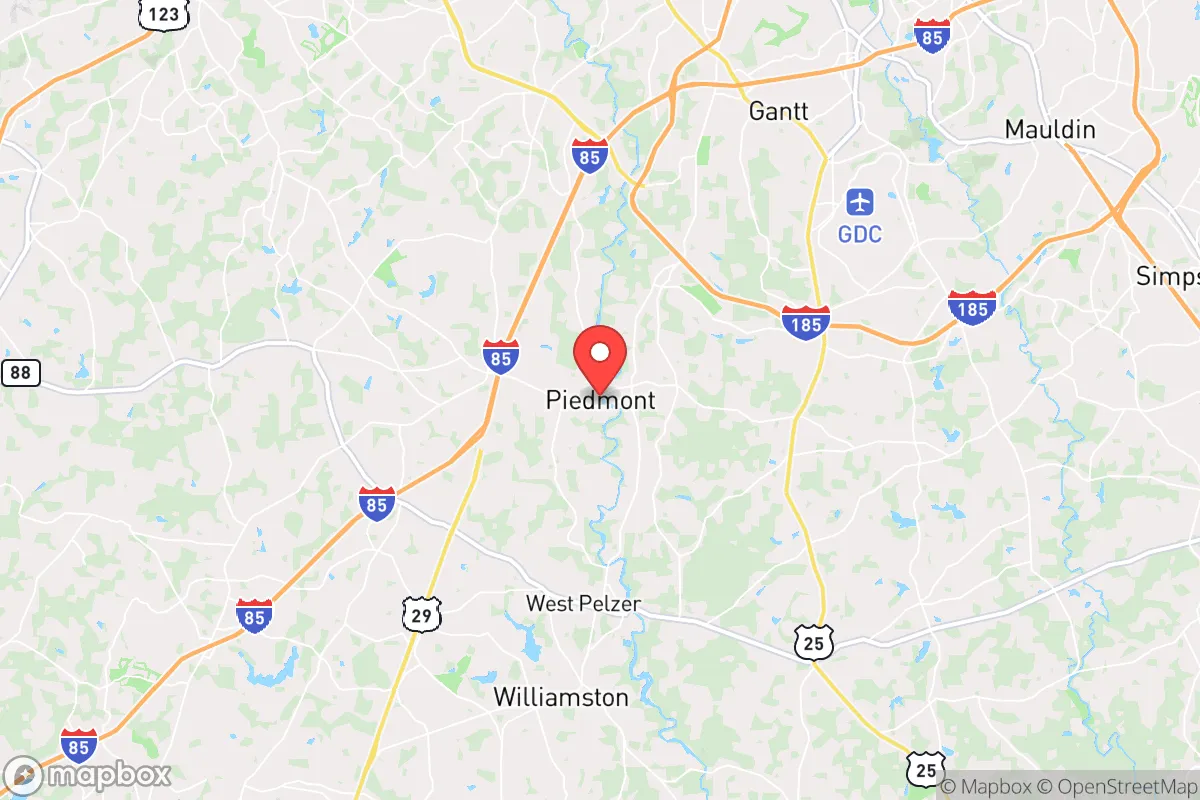

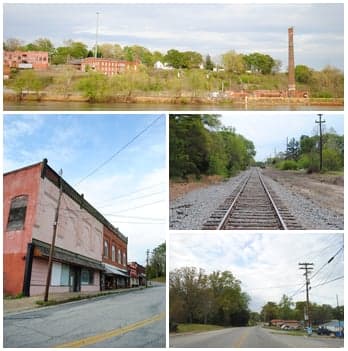
Photo: Wikipedia
Political ClimatePolitical Climate in Piedmont, SC
District shown is the primary district for this city’s centroid. Cities may span multiple districts.
Local Political AnalysisPolitical Analysis of Piedmont, SC
Piedmont, South Carolina, is a deeply conservative community, and it’s been that way for as long as anyone can remember. The Cook Partisan Voting Index (PVI) for the area sits at R+21, meaning it votes about 21 points more Republican than the national average. That’s a solid red stronghold, and it’s not a recent shift—this has been the baseline for decades. If you look at the broader Greenville County, which includes Piedmont, it’s been reliably Republican since the 1980s, and the trend has only hardened in the last two election cycles. The 2024 presidential race saw Donald Trump win Greenville County by roughly 18 points, and Piedmont’s precincts often ran 5-10 points redder than the county average. The trajectory here is steady: no signs of flipping, but also no dramatic lurches further right—it’s already about as conservative as a suburban-rural mix gets in the Upstate.
How it compares to South Carolina as a whole
Statewide, South Carolina has a Cook PVI of R+8, which is solidly Republican but not as extreme as Piedmont’s R+21. The difference is stark when you look at the political geography. Piedmont sits in the northwestern corner of the state, part of the “Upstate” region that’s historically the most conservative part of South Carolina. Compare that to the coastal areas like Charleston County (which voted for Biden in 2020 by 12 points) or the Midlands around Richland County (a Democratic stronghold since the 1990s). Even within Greenville County, there’s a split: the city of Greenville itself has trended purple over the last decade, with its downtown precincts voting Democratic in recent elections. But Piedmont, about 15 miles south of downtown Greenville, is a different world. It’s more like the neighboring towns of Williamston or Pelzer—small, rural, and overwhelmingly Republican. The contrast with the state’s Democratic pockets (like Columbia or Beaufort’s Hilton Head) is night and day, but even compared to the state’s average Republican, Piedmont is a notch more conservative.
What this means for residents
For conservative residents, Piedmont is a comfortable fit. Local elections are dominated by Republicans, and the county council and school board in Greenville County are reliably conservative. You’ll find that issues like gun rights, low taxes, and limited regulation are mainstream here—there’s no real political friction in daily life. For liberal residents, the reality is different. While you won’t face hostility, you’ll be in a clear minority. There’s no active Democratic Party presence in Piedmont itself; the nearest organizing hubs are in Greenville or Anderson. Socially, it means you might not find many like-minded neighbors, and local policy debates (like zoning or school funding) tend to lean right. That said, the area is not politically charged in a confrontational way—most people just get on with their lives, and politics rarely comes up in casual conversation. The biggest practical impact is on local services: taxes are low, but so is public transit, and social services are limited compared to more liberal parts of the state.
Culturally, Piedmont feels distinct from the rest of South Carolina in a few ways. The Upstate has a strong evangelical Christian influence, which shapes local norms—churches are community hubs, and Sunday mornings are quiet. There’s also a noticeable libertarian streak: people here value self-reliance and are skeptical of government overreach, whether from Columbia or Washington. Policy-wise, the area has been a testing ground for school choice initiatives, with Greenville County being one of the first to expand charter schools and voucher programs. Gun laws are permissive, and you’ll see open carry in rural areas. Compared to the Lowcountry’s coastal tourism economy or the Midlands’ government-centric culture, Piedmont’s identity is rooted in manufacturing, agriculture, and a no-nonsense independence. It’s a place where the political climate matches the landscape—steady, traditional, and unlikely to change much in the next decade.

State Political ClimatePolitical Climate in South Carolina
State Political AnalysisPolitical Environment in the State
South Carolina is a solidly Republican state with a Cook PVI of R+8, meaning it votes about eight points more Republican than the national average in presidential elections. The dominant coalition is a blend of traditional conservatives in the Upstate and Lowcountry, evangelical Christians, and a growing number of conservative-leaning transplants from the Northeast and Midwest. Over the last 20 years, the state has shifted rightward, driven by rapid suburban growth around Greenville and Charleston, while the rural Black Belt counties have become more reliably Democratic. The result is a state where Republicans hold supermajorities in both legislative chambers and control every statewide office, but where the margin in fast-growing metro areas like Charleston and Columbia has narrowed in recent cycles.
Urban vs. rural divide
The political map of South Carolina is a classic story of metro islands in a red sea. The Upstate, anchored by Greenville and Spartanburg, is the most reliably Republican region in the state, with Greenville County voting +18 R in 2024. The Lowcountry around Charleston is more competitive: Charleston County itself has trended blue, voting Democratic in the last two presidential elections, driven by the city's growth among young professionals and out-of-state transplants. The rural Pee Dee region, including counties like Florence and Darlington, remains heavily Democratic due to large African American populations, but turnout there is lower than in the booming suburbs. The real battlegrounds are the exurban counties like York (Rock Hill) and Lexington (outside Columbia), where conservative-leaning families from the Northeast have settled and pushed the state's overall tilt rightward. Myrtle Beach in Horry County is a wild card: a mix of retirees and tourism workers that leans Republican but can swing on local issues like development and property taxes.
Policy environment
South Carolina's policy environment is defined by low taxes and limited government. The state has a flat income tax rate of 6.4%, which is being phased down to 6.0% by 2026, and no tax on Social Security benefits. Property taxes are among the lowest in the country, with a 4% assessment ratio for owner-occupied homes and a $50,000 exemption on the first $50,000 of value. The regulatory posture is business-friendly, with a right-to-work law and no state-level minimum wage above the federal $7.25. Education policy is a flashpoint: the state has a robust school choice program, including the Education Scholarship Trust Fund (vouchers for low-income students), but public school funding per pupil remains below the national average. Healthcare is a mixed bag: the state did not expand Medicaid under the ACA, leaving roughly 200,000 residents in the coverage gap, but it has a strong network of rural hospitals and a growing telemedicine sector. Election laws are among the strictest in the South: voter ID is required, early voting was expanded to two weeks in 2022, but absentee voting requires an excuse. The state also has a "fetal heartbeat" abortion ban (six weeks) with no exceptions for rape or incest, passed in 2023.
Recent policy direction
Over the last five years, South Carolina has moved decisively to the right on a broad set of issues. On gun and self-defense law, the state enacted permitless carry (constitutional carry) in 2024, allowing any adult who can legally possess a firearm to carry it openly or concealed without a permit. On parental and education rights, the 2023 "Parents' Bill of Rights" (H. 3728) requires schools to notify parents of any changes to a child's mental or physical health, and bans instruction on sexual orientation or gender identity in K-5 classrooms. On speech and privacy, the state has no broad privacy law, but a 2023 law restricts social media platforms from censoring political speech (a response to perceived Big Tech bias). On medical and bodily autonomy, the six-week abortion ban is the most restrictive in the Southeast, with no exceptions for rape or incest; a 2024 law also bans gender-affirming care for minors. On property rights, the state has strong eminent domain protections, requiring "just compensation" and limiting takings for private economic development. On taxation, the income tax rate is being cut from 7% to 6% by 2026, and the state eliminated the corporate income tax surcharge in 2023. On voting and ballot access, the 2021 "Election Integrity Act" tightened absentee ballot rules, banned ballot drop boxes, and required a photo ID for all in-person voting.
Civil unrest & political movements
South Carolina has a history of civil rights activism, but recent political movements are more focused on cultural and election integrity issues. The state saw significant protests in 2020 after the murder of George Floyd, particularly in Columbia and Charleston, where the Confederate flag was finally removed from the Statehouse grounds in 2015 after the Mother Emanuel church shooting. On the right, the "Moms for Liberty" movement has been active in school board races, particularly in Lexington and Greenville counties, pushing for book bans and curriculum restrictions. Immigration politics are less heated than in border states, but a 2024 law (S. 576) requires law enforcement to check immigration status during traffic stops and penalizes "sanctuary city" policies; no South Carolina city has declared itself a sanctuary. Election integrity remains a live issue: the 2020 election was certified without major controversy, but the state GOP has pushed for further restrictions, including a ban on early voting on Sundays (which failed in 2023). Secession or nullification rhetoric is rare, though a 2023 resolution affirming "state sovereignty" under the Tenth Amendment passed the legislature. A new resident would notice the Confederate monument debates in smaller towns like Orangeburg and Sumter, where local councils have voted to keep or remove them.
Projection
Over the next 5-10 years, South Carolina is likely to remain solidly Republican, but the margin may narrow slightly as the Charleston and Columbia metro areas continue to attract younger, more diverse transplants. The Upstate will remain the GOP stronghold, but the growth of Greenville's tech and manufacturing sectors could bring in more moderate voters. The state's in-migration is heavily from the Northeast and Midwest, and these newcomers tend to be fiscally conservative but socially moderate, which could push the state toward a more "libertarian-leaning" Republicanism rather than a culturally conservative one. The biggest wild card is the African American vote: if turnout in the rural Black Belt increases, it could make statewide races more competitive, but gerrymandering and voter ID laws will continue to suppress that potential. The state's tax cuts and business-friendly policies will likely continue, but the Medicaid expansion debate will resurface as rural hospitals struggle. A new resident moving in now should expect a state that is reliably red but with growing pockets of purple, where the culture wars are fought in school boards and county councils, and where the practical reality is low taxes, limited services, and a strong sense of local control.
For a new resident, the bottom line is this: South Carolina offers a low-tax, business-friendly environment with a strong conservative tilt, but the experience varies dramatically by location. If you're a conservative looking for a like-minded community, the Upstate or the exurbs around Columbia are a natural fit. If you're a liberal, you'll find your people in downtown Charleston or Columbia's university neighborhoods, but you'll be living in a state where your vote has limited impact on statewide races. The state's trajectory is toward more tax cuts, more school choice, and more cultural conservatism, but the growing diversity of the metro areas means the political conversation is slowly shifting. Just don't expect the state to turn blue anytime soon — the R+8 lean is baked into the demographics and the culture.
* Values derived from national, state, county, city and local statistics and may differ in a specific area. Last updated: 2026-10-10T16:28:41.000Z
Narrative content on this page is AI-generated and may contain mistakes. Verify any details that matter before acting on them.
ReloMaps may earn a commission from affiliate links at no extra cost to you.

