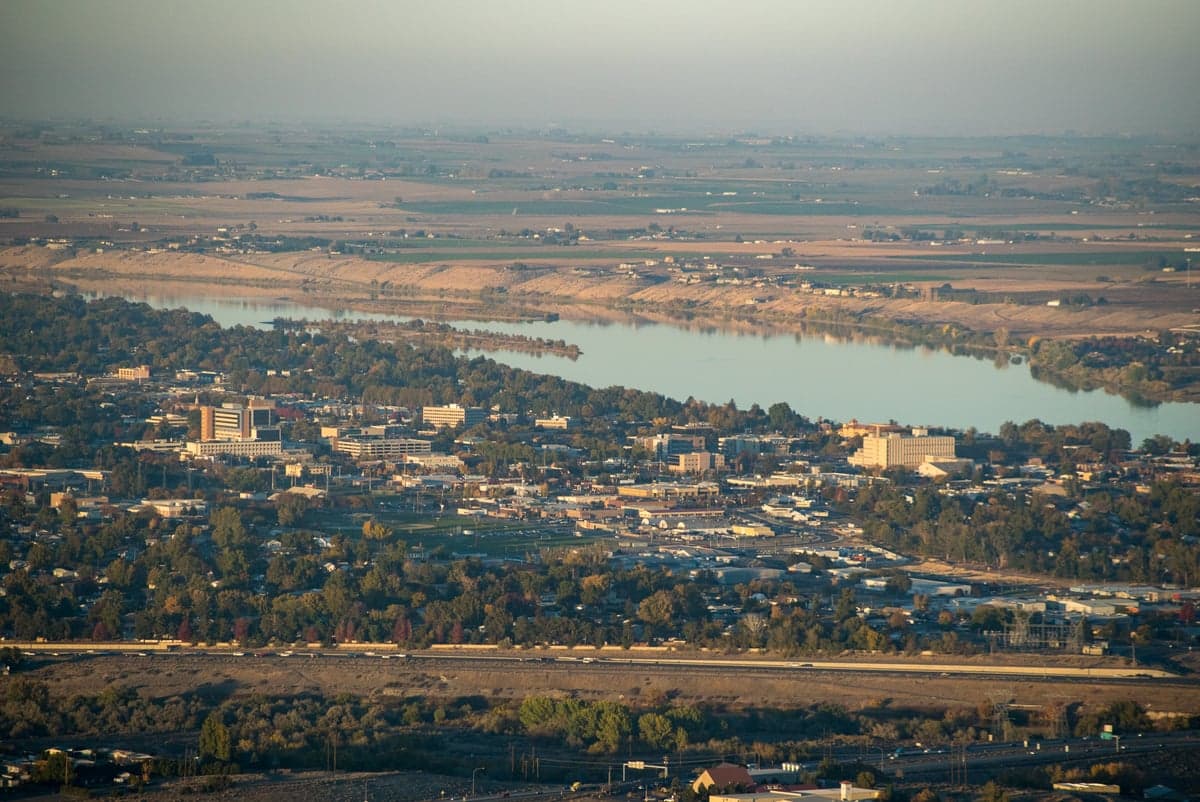
Photo: Wikipedia
Political ClimatePolitical Climate in Richland, WA
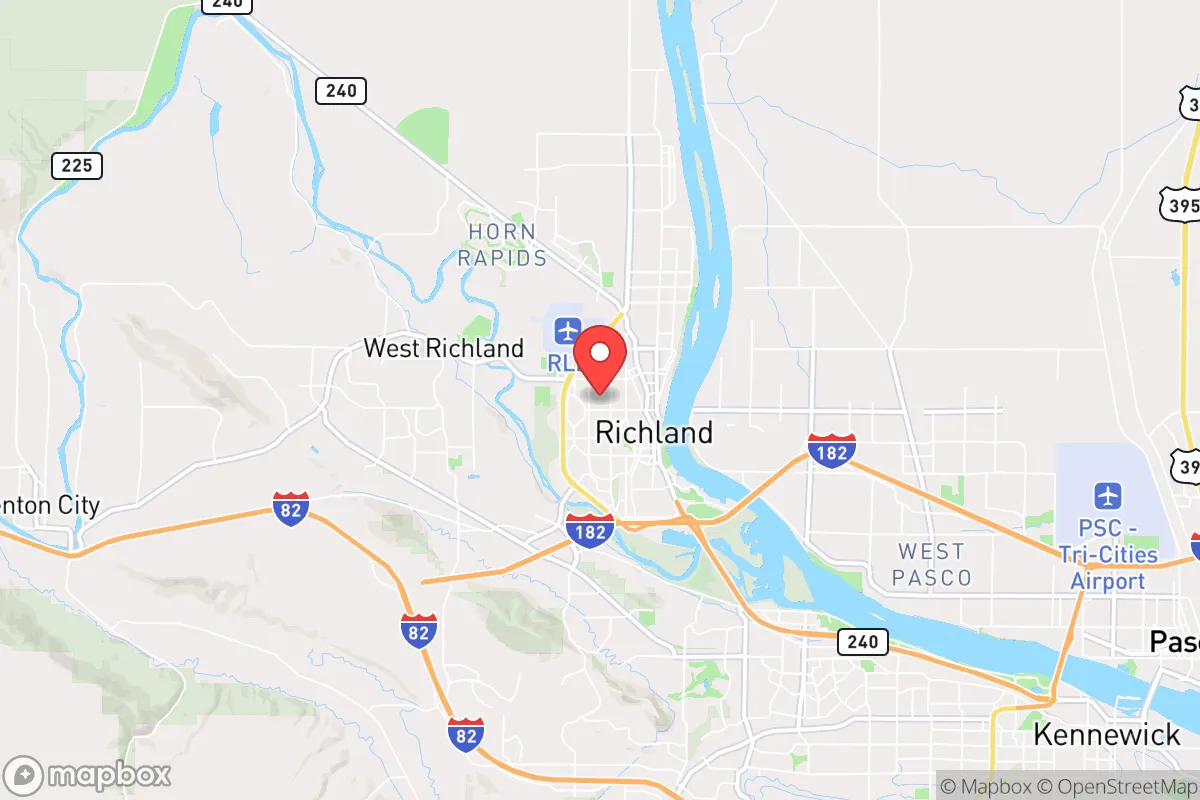
District shown is the primary district for this city’s centroid. Cities may span multiple districts.
Local Political AnalysisPolitical Analysis of Richland, WA
Richland, Washington, has long been a solidly conservative community, and that hasn't changed much despite the region's rapid growth. The Cook PVI of R+10 tells you the baseline: this is a place where Republican candidates reliably win, and the local culture reflects that. But if you've lived here as long as I have, you've noticed the political winds shifting, especially as more folks move in from the coast and other states. The core of Richland still leans right, but the trajectory is toward a more divided, less reliably conservative landscape than what we saw even a decade ago.
How it compares
To understand Richland's politics, you have to look at the Tri-Cities as a whole. Kennewick and Pasco are even more conservative than Richland, with Pasco being a working-class, heavily agricultural area that votes deep red. Richland, being the "brainier" of the three with all the Hanford and Pacific Northwest National Lab workers, has historically been a bit more moderate—think country-club Republican rather than populist. But the real contrast is with cities like Seattle or even Spokane. Out west, you see aggressive progressive policies on taxes, land use, and public safety. Here, we still value personal freedom and limited government. The recent influx of remote workers and tech transplants from California and Washington's west side is slowly nudging things left, but for now, the county commission and state legislative seats remain firmly in conservative hands. The real worry is that these newcomers don't always understand or respect the local culture of self-reliance and distrust of government overreach.
What this means for residents
For the average person living here, the political climate means you're generally left alone. Property taxes are relatively low, there's no state income tax, and zoning laws are far less restrictive than in King County. You can own a gun without a bunch of hoops, and your kids' school isn't pushing radical gender ideology without parental consent—at least not yet. But the creeping influence of progressive ideas is real. You see it in local school board meetings, where activists try to bring in critical race theory or "equity" policies that divide kids by race. You see it in city council debates over "affordable housing" mandates that amount to government telling you what you can do with your own land. The biggest red flag is the push for more density and transit-oriented development, which sounds nice but often leads to higher taxes and less local control. If you value your Second Amendment rights and want to keep the government out of your doctor's office and your child's classroom, Richland is still a good bet—but you have to stay engaged, because the fight is coming.
One thing that sets Richland apart culturally is its deep connection to the Hanford nuclear site and the federal government. That creates a weird dynamic: a lot of people here work for the government or contractors, yet they're deeply skeptical of government overreach in their personal lives. There's a strong libertarian streak here, a belief that the feds should stay in their lane—clean up the nuclear waste, sure, but stay out of our schools and homes. The local policy distinctions reflect that: you won't see mask mandates or vaccine passports being enforced here like they were in Portland or Seattle. The city council tends to focus on infrastructure and public safety, not social engineering. Long-term, the concern is that as the population grows and diversifies, the old-school conservative consensus will erode. If you're looking for a place where your rights are still respected and the government isn't trying to micromanage your life, Richland is still one of the better options in Washington state—but keep an eye on those city council elections.

State Political ClimatePolitical Climate in Washington
State Political AnalysisPolitical Environment in the State
Washington state has shifted from a purple swing state to a solidly blue stronghold over the past two decades, with Democrats controlling every statewide office and both legislative chambers since 2012. The state’s overall partisan lean is now roughly D+8 to D+10 in presidential elections, driven overwhelmingly by the Seattle metropolitan area, while vast rural regions vote Republican by margins of 30-40 points. For a conservative considering relocation, the key takeaway is that your vote will be reliably canceled out at the state level, but local governance and community life can still be very different depending on where you land.
Urban vs. rural divide
The political map of Washington is a study in extremes. King County (Seattle) alone casts about 30% of the state’s votes and delivers a Democratic margin of roughly 500,000 votes—enough to swamp the rest of the state combined. Pierce County (Tacoma) and Snohomish County (Everett) have also trended blue, though less overwhelmingly. Meanwhile, the eastern half of the state—places like Spokane, Yakima, and the Tri-Cities (Kennewick, Pasco, Richland)—votes reliably Republican, with Spokane County flipping from blue to red in recent cycles. The most conservative strongholds are in the central and northeastern counties: Grant, Douglas, Okanogan, and Ferry counties routinely vote 65-75% Republican. The Olympic Peninsula is a mixed bag—Clallam and Jefferson counties lean left, while Grays Harbor and Pacific counties are more purple. If you want a conservative community, look east of the Cascades or to the more rural parts of southwest Washington like Lewis County.
Policy environment
Washington’s policy environment is aggressively progressive, and it’s been that way for a while. There is no state income tax, which sounds great, but the state makes up for it with high sales taxes (9-10.5% in many areas), high property taxes, and a business gross receipts tax (B&O) that hits small businesses hard. The state has a cap-and-trade program (Climate Commitment Act) that drives up gas prices—currently among the highest in the nation. Education policy is dominated by the teachers’ unions; there’s no school choice program, and charter schools are heavily restricted. Healthcare is heavily regulated, with a state-run insurance exchange and strict mandates. On election law, Washington has all-mail voting with same-day registration, which critics argue makes fraud easier, though the state has not seen major scandals. The state also has a sanctuary state law (2019’s Keep Washington Working Act) that limits local cooperation with federal immigration enforcement. For conservatives, the policy environment is a clear red flag—high costs, limited choice, and a government that actively resists federal immigration enforcement.
Trajectory & freedom
Washington is becoming less free by any objective measure, especially for conservatives. The state has enacted some of the nation’s strictest gun control laws: a ban on “assault weapons” (2023), a ban on high-capacity magazines, a 10-day waiting period, and a requirement for a permit to purchase a handgun. Parental rights have been eroded by a 2023 law that allows minors 13 and older to receive gender-affirming care without parental consent, and the state has a “shield law” protecting providers from out-of-state lawsuits. Medical autonomy took a hit during COVID with some of the longest-lasting mask and vaccine mandates in the country. Property rights are constrained by the Growth Management Act, which limits development and drives up housing costs. On the plus side, the state has no income tax and no right-to-work law, but the overall trajectory is toward more regulation, higher taxes, and less personal liberty. The 2024 election saw Democrats expand their legislative majorities, so don’t expect a reversal anytime soon.
Civil unrest & political movements
Washington has a long history of political activism, and it’s not always peaceful. The 2020 CHAZ/CHOP occupation in Seattle was a national flashpoint, with six blocks of the city taken over by protesters for weeks, resulting in multiple deaths and widespread property damage. The state also saw massive protests during the 2020 election, with some cities like Port Angeles and Olympia experiencing vandalism and clashes. On the right, there are active Second Amendment sanctuary movements in many rural counties—Yakima, Stevens, and Ferry counties have passed resolutions opposing state gun laws. The Washington State Patriot Network and local Republican groups hold regular rallies, but they’re dwarfed by left-wing organizing. Immigration politics are tense: the sanctuary state law has led to friction between state and federal authorities, and some rural sheriffs have publicly refused to comply. Election integrity is a hot topic—the all-mail system has been criticized for ballot harvesting and signature verification issues, though no major fraud has been proven. A new resident will notice the political divide is stark: drive 30 minutes east of Seattle and you’re in Trump country.
Projection
Over the next 5-10 years, Washington will likely become more blue, not less. The Seattle metro area continues to grow, drawing in tech workers and young professionals who lean left. The eastern part of the state is growing too, but not fast enough to offset King County’s dominance. The state’s cap-and-trade program will continue to drive up energy costs, and new taxes are likely as the state grapples with budget shortfalls. Gun control will likely tighten further—a ban on open carry is already being discussed. Parental rights will continue to erode, and school choice will remain a non-starter. The one wild card is a potential economic downturn—if the tech sector crashes, the state’s tax base could take a hit, leading to service cuts or tax hikes. For a conservative moving in now, expect to be a permanent minority in state politics, but you can still find like-minded communities in the eastern and rural parts of the state.
Bottom line: If you’re a conservative looking to move to Washington, do it with your eyes open. The state government will be hostile to your values on guns, education, taxes, and parental rights. But if you choose your location carefully—say, Spokane, the Tri-Cities, or a small town like Colville or Ellensburg—you can find a strong conservative community, lower cost of living, and beautiful natural surroundings. Just don’t expect your vote to matter much at the state level. The trade-off is stunning scenery and no income tax, but the price is a government that’s increasingly comfortable telling you how to live.
* Values derived from national, state, county, city and local statistics and may differ in a specific area. Last updated: 2026-04-21T10:57:46.000Z
Narrative content on this page is AI-generated and may contain mistakes. Verify any details that matter before acting on them.
ReloMaps may earn a commission from affiliate links at no extra cost to you.

