 Popular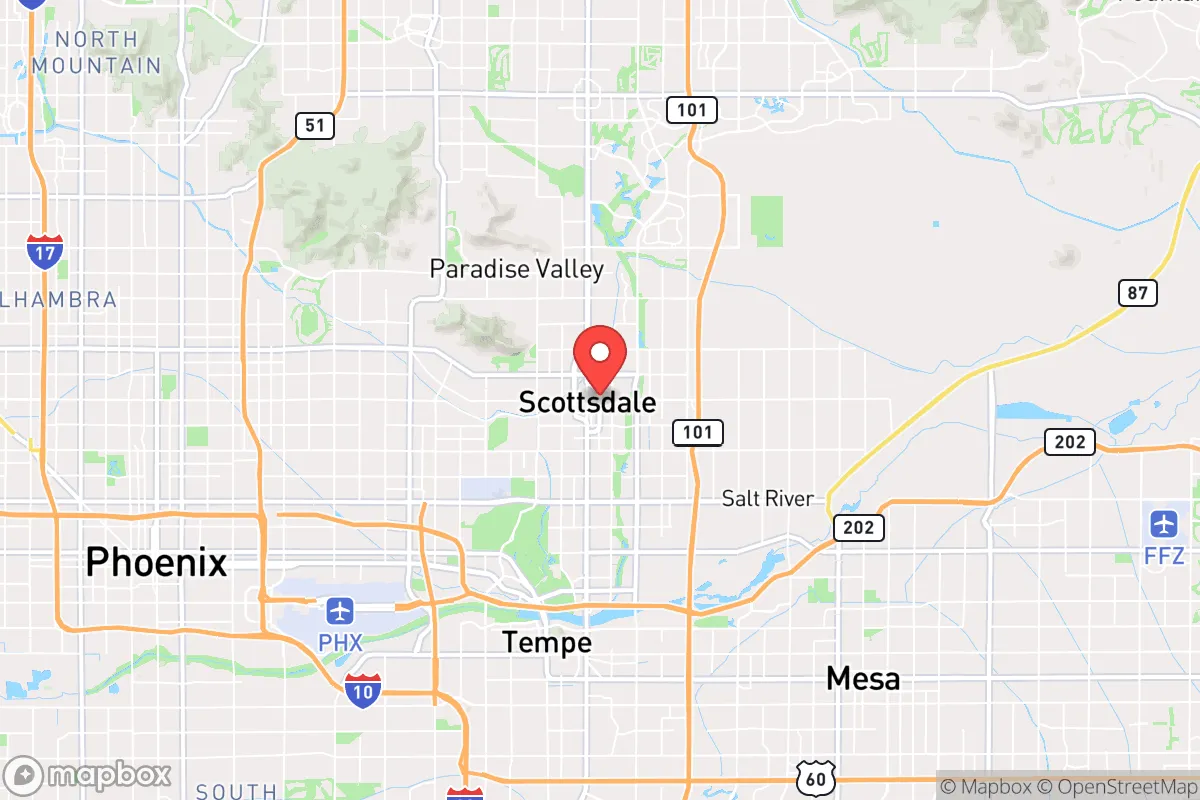
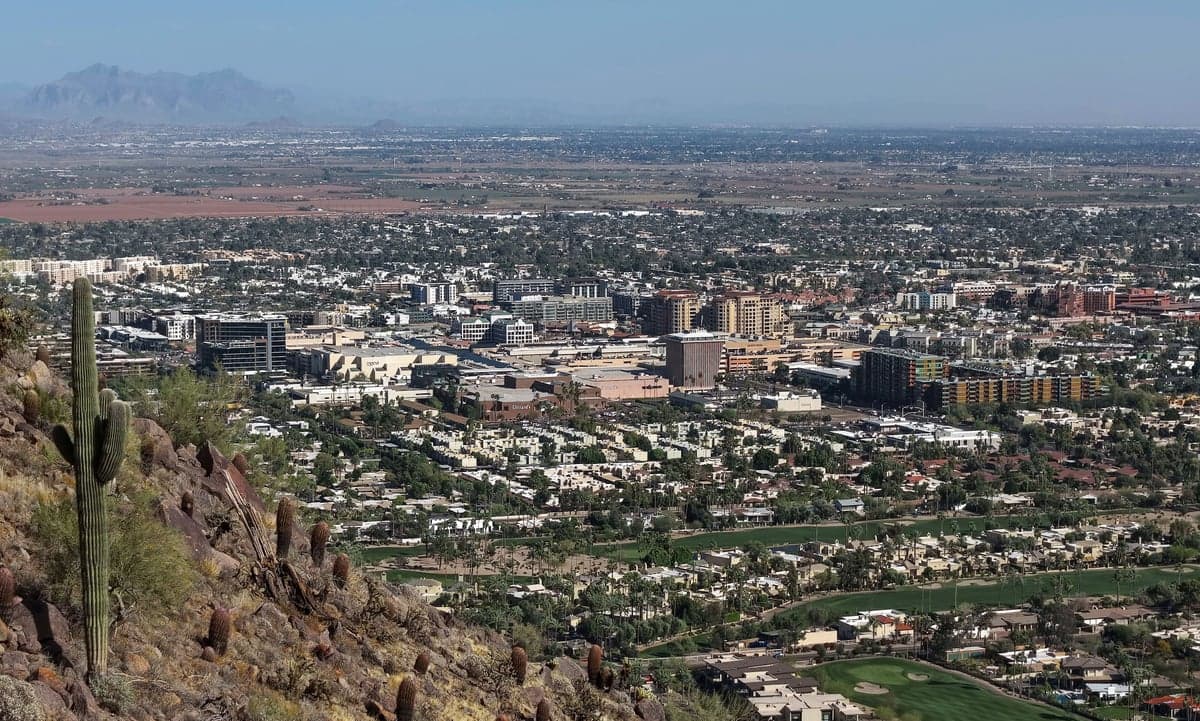
Photo: Wikipedia
Political ClimatePolitical Climate in Scottsdale, AZ
District shown is the primary district for this city’s centroid. Cities may span multiple districts.
Local Political AnalysisPolitical Analysis of Scottsdale, AZ
Scottsdale has long been a conservative stronghold in the Valley, but if you’ve lived here as long as I have, you’ve seen the political winds shift in ways that make you stop and think. The Cook PVI rating of R+1 tells you the story: this place is still leaning Republican, but it’s no longer the rock-solid red suburb it was twenty years ago. The 2024 election results showed Maricopa County as a whole trending purple, and Scottsdale’s own precincts—especially south of the 101—are now a battleground between traditional conservative values and a growing progressive push that worries a lot of us who value personal freedom and limited government.
How it compares
Drive ten minutes north to Cave Creek or Carefree, and you’ll find a political climate that feels like Scottsdale in the 1990s: reliably conservative, with a strong libertarian streak and a deep suspicion of government overreach. Head south into Tempe or west into Phoenix proper, and you’re in a different world entirely—places where city councils are openly pushing rent control, zoning mandates, and even sanctuary city policies. Scottsdale sits right in the middle, and that’s what makes it so interesting. We’ve got the old guard—retirees and business owners who remember when the city was mostly orange groves and cowboy boots—clashing with a younger, more transient crowd that moved here for the nightlife and the tech jobs and seems to think more government is the answer to everything. The contrast is stark, and it’s playing out in every city council election and school board race.
What this means for residents
For those of us who moved here to escape the kind of overregulation you see in places like California or Illinois, the trend is concerning. Scottsdale’s city government has historically been hands-off—low property taxes, minimal business licensing, and a general attitude of “leave people alone.” But in the last few years, you’ve seen creeping proposals: stricter short-term rental rules that hurt homeowners, noise ordinances that target private gatherings, and even talk of “equity” programs that sound an awful lot like government picking winners and losers. The 2024 election saw a few city council candidates running on a “slow the growth of government” platform, but they lost to candidates backed by out-of-state dark money groups pushing a progressive agenda. If you value your Second Amendment rights, your property rights, or just the ability to run your life without a city permit, you need to pay attention to who’s running for local office—because that’s where the real battles are happening.
One thing that still sets Scottsdale apart from its neighbors is the cultural commitment to personal responsibility. You won’t find the kind of nanny-state policies here that you see in, say, Portland or Seattle. Our city still has a strong homeowners’ association culture, but it’s voluntary—you choose to live in a community with rules, not have them imposed from City Hall. The biggest fight right now is over water policy: the state is pushing conservation mandates that could limit how you use your own property, and Scottsdale’s leadership is caught between federal pressure and local resistance. If you’re thinking about moving here, just know that the political climate is still better than most of the country, but it’s not the same place it was a decade ago. Keep your eyes on the city council meetings, and vote in every local election—because that’s where your freedom is really decided.

State Political ClimatePolitical Climate in Arizona
State Political AnalysisPolitical Environment in the State
Arizona has transformed from a reliably red stronghold into a competitive battleground state over the past two decades, with a partisan lean that now sits roughly even—though the state’s conservative base remains deeply entrenched in its rural and suburban areas. The dominant coalition is a mix of longtime Western libertarians, Mormon conservatives, and a growing influx of retirees and remote workers from California and the Midwest, while Maricopa County’s explosive growth has shifted the center of gravity toward a more moderate, business-friendly conservatism. Over the last 10-20 years, the state has gone from voting Republican by double digits in presidential races to flipping blue for Biden in 2020 by just 10,457 votes, then swinging back to Trump in 2024 by a narrow margin—a volatility that reflects deep demographic churn and a realignment of suburban voters.
Urban vs. rural divide
The political map of Arizona is a classic tale of two Arizonas. Maricopa County, home to Phoenix and its sprawling suburbs like Mesa, Chandler, and Gilbert, is the decisive battleground—it casts about 60% of the state’s votes. Gilbert and Chandler have trended more moderate in recent cycles, with educated suburbanites shifting left on social issues while still favoring low taxes. Meanwhile, Tucson in Pima County is the state’s reliably blue urban anchor, driven by the University of Arizona and a younger, more progressive population. The rural expanse tells a different story: Yavapai County (Prescott), Mohave County (Kingman, Lake Havasu City), and Cochise County (Sierra Vista) vote Republican by 30-40 point margins, fueled by ranching, mining, and a fierce independent streak. The White Mountains region around Show Low and Pinetop-Lakeside is also deeply red, while Flagstaff in Coconino County stands as a blue island surrounded by conservative forest country. The urban-rural split is stark: the five largest counties (Maricopa, Pima, Pinal, Yavapai, Mohave) account for 85% of the vote, but the rural counties outside the metro areas are where the GOP’s base is most energized.
Policy environment
Arizona’s policy environment is a mixed bag that leans conservative on economics but has seen progressive encroachments in recent years. The state has a flat income tax rate of 2.5% (down from 4.5% in 2020), thanks to a 2021 tax reform package signed by Governor Doug Ducey—a clear win for fiscal freedom. Property taxes are low, with an effective rate around 0.62% of home value, and there’s no estate tax. However, the sales tax is relatively high at 5.6% state rate plus local add-ons, and cities like Phoenix have added their own levies. On education, Arizona was a pioneer in school choice with its Empowerment Scholarship Accounts (ESA) program, expanded in 2022 to cover all students—a huge win for parental rights. But the state has also seen a push for “critical race theory” bans in schools (HB 2494, passed in 2021) and a 2022 law restricting transgender athletes in girls’ sports (HB 2706). Healthcare policy is a flashpoint: Arizona expanded Medicaid under the Affordable Care Act in 2013, a move that still rankles many conservatives, but there’s no state-level individual mandate. Election laws have been a rollercoaster—the 2021 audit of Maricopa County ballots (the “Cyber Ninjas” audit) was a national spectacle, and the legislature passed SB 1260 in 2022 to tighten voter ID requirements and ban ballot harvesting. The state also has a “right to work” law and is a constitutional carry state for firearms, with no permit needed to carry concealed.
Trajectory & freedom
On the freedom front, Arizona is a tale of two trends: it has expanded personal liberty in some areas while contracting it in others. The good news: constitutional carry has been law since 2010, and the state has a strong castle doctrine and stand-your-ground statute. The 2022 ESA expansion was a massive win for educational freedom, letting parents use tax dollars for private school, homeschooling, or microschools. Property rights are generally strong, with no statewide rent control and a 2022 law (HB 2483) limiting local governments’ ability to impose short-term rental restrictions. But there are red flags. The state’s medical autonomy took a hit in 2022 when voters passed Proposition 208 (the “Invest in Ed” tax hike on high earners), though the Arizona Supreme Court later struck it down. More concerning is the 2024 abortion law fight: after the state Supreme Court upheld an 1864 near-total ban, the legislature repealed it in a bipartisan vote, leaving a 15-week ban in place—a messy compromise that satisfied no one. On parental rights, the 2021 “critical race theory” ban was a win, but the state has also seen school boards in Scottsdale and Paradise Valley push back against transparency measures. The biggest freedom concern is the influx of California-style housing policies: Phoenix and Tucson have adopted “missing middle” zoning reforms that could erode property values and neighborhood character. Overall, Arizona is still freer than most states, but the trajectory is toward more government intervention in housing and healthcare.
Civil unrest & political movements
Arizona has been a hotbed of political activism on both sides, with immigration politics at the center. The 2010 SB 1070 “show me your papers” law made Arizona the national face of immigration enforcement, and the issue remains raw—especially in border communities like Nogales and Douglas. In 2024, the state saw a surge in migrant crossings, leading to Governor Katie Hobbs’ controversial decision to dismantle the border wall shipping container barrier built under Ducey—a move that sparked protests from conservative groups. The “Stop the Steal” movement was particularly active in Maricopa County, with the 2021 audit drawing national attention and leading to ongoing election integrity debates. On the left, the #RedForEd teacher walkouts in 2018 were the largest in state history, shutting down schools for six days and leading to a 20% teacher pay raise—a clear example of progressive activism winning. More recently, pro-Palestinian protests at Arizona State University in Tempe and the University of Arizona in Tucson have been a flashpoint, with counter-protests from conservative groups like Turning Point USA, which is headquartered in Phoenix. The Yavapai County and Mohave County sheriff’s offices have been vocal about refusing to enforce federal gun laws they deem unconstitutional, reflecting a strong Second Amendment sanctuary movement. A new resident would notice the political polarization in everyday life—yard signs, bumper stickers, and heated local Facebook groups are common, especially in swing suburbs like Buckeye and Queen Creek.
Projection
Over the next 5-10 years, Arizona is likely to become more competitive and more purple, with the conservative base holding firm in rural areas but losing ground in the suburbs. The biggest demographic shift is the continued influx of Californians—about 75,000 net migrants per year—who tend to be more moderate or left-leaning on social issues but still value low taxes. This will push Maricopa County’s suburbs like Surprise and Goodyear toward the center, while the urban cores of Phoenix and Tucson become more progressive. The Latino vote is the wild card: Arizona’s Latino population (about 32% of the state) is growing fast, and while it leans Democratic, it’s not monolithic—many are socially conservative and pro-business, especially in border towns. If the GOP can hold the line on economic freedom and parental rights while avoiding culture war overreach, they could keep the state competitive. But if the progressive wing continues to push on housing mandates, abortion access, and election changes, the state could flip blue permanently by 2032. The water crisis in the Colorado River basin will also shape politics—rural areas will fight urban water grabs, and the state’s growth may slow if water restrictions tighten. For a conservative moving in now, expect a decade of close elections, more state-level fights over education and immigration, and a slow but steady shift toward a more moderate, suburban-driven politics.
Bottom line for a new resident: Arizona is still a good bet for conservatives who value low taxes, school choice, and gun rights, but you’ll need to pick your county carefully. Stick to Yavapai, Mohave, or the outer suburbs of Maricopa like Buckeye and Queen Creek if you want a reliably red environment. Avoid Tucson and central Phoenix unless you’re comfortable with progressive urban policies. The state’s political future is uncertain, but for now, it offers a rare mix of Western freedom and competitive elections—just be ready for the fight.
* Values derived from national, state, county, city and local statistics and may differ in a specific area. Last updated: 2026-04-15T23:28:41.000Z
Narrative content on this page is AI-generated and may contain mistakes. Verify any details that matter before acting on them.
ReloMaps may earn a commission from affiliate links at no extra cost to you.

