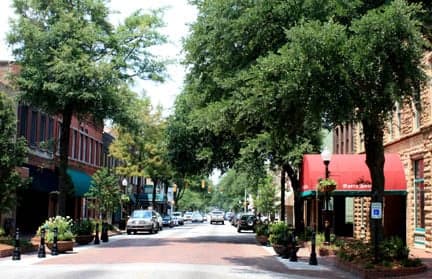

Photo: Wikipedia
Political ClimatePolitical Climate in Sumter, SC
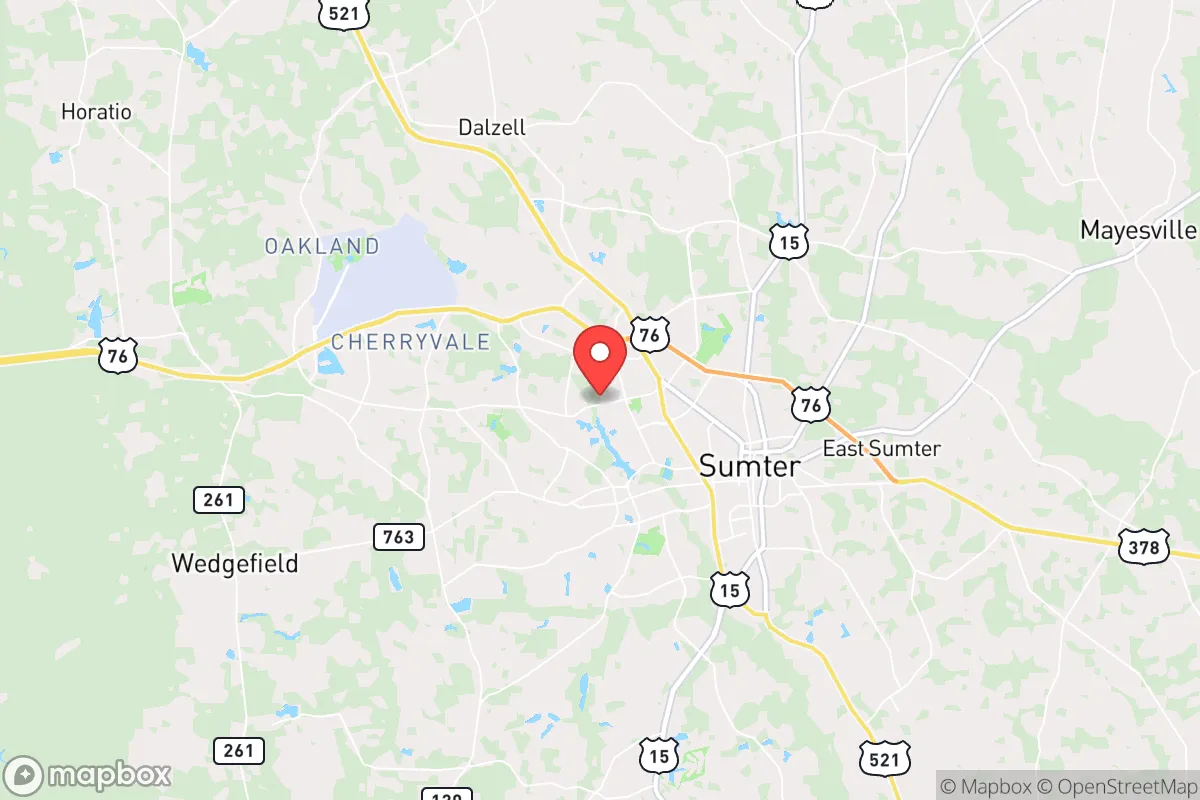
District shown is the primary district for this city’s centroid. Cities may span multiple districts.
Local Political AnalysisPolitical Analysis of Sumter, SC
Sumter, South Carolina, has long been a reliably conservative community, and that hasn't changed much. The area sits at a Cook PVI of R+11, meaning it votes about 11 points more Republican than the national average. In practical terms, that means you can expect most local elections to lean red, and the general sentiment around here is pretty skeptical of big government solutions. If you're looking for a place where folks still believe in personal responsibility and limited interference from the state, Sumter fits the bill.
How it compares
Sumter's political lean is actually a bit more moderate than some of the surrounding rural counties. Drive out to Clarendon or Williamsburg counties, and you'll find even deeper red territory, places where the idea of progressive policy is almost a non-starter. On the other hand, head about 45 minutes southwest to Columbia, and you're in a different world entirely—a blue dot in a red state, with all the government expansion and social experimentation that comes with it. Sumter sits comfortably in the middle: conservative enough to feel safe, but not so isolated that you lose access to city amenities. The contrast with Columbia is stark, and most locals prefer it that way. We've seen what happens when progressive ideas take hold in bigger cities—higher taxes, more regulations, and a general erosion of the freedoms we used to take for granted. Sumter has largely avoided that drift.
What this means for residents
For the people who live here, the political climate translates into a few concrete realities. First, you're not going to see a lot of government overreach into your daily life. The local council and county commission tend to take a hands-off approach, especially on things like property rights, business licensing, and school curriculum. Second, taxes stay relatively low compared to what you'd pay in more progressive areas. The trade-off is that public services—like road maintenance or public transit—aren't as robust, but most folks here see that as a fair exchange for keeping the government out of their pockets. Third, the culture is still pretty traditional. You won't find the same push for radical social changes that you see in places like Charleston or Greenville. It's a place where the Second Amendment is respected, where parents have a real say in their kids' education, and where the idea of "live and let live" still means something—as long as it doesn't come with a mandate from the state capital.
One thing that sets Sumter apart is its strong military presence, thanks to Shaw Air Force Base. That brings in a transient population from all over the country, which can sometimes introduce more liberal viewpoints. But the base itself is a conservative institution, and the local economy depends on it, so there's a built-in respect for order, discipline, and national security. Over the long term, the concern here is that as Columbia expands and the state's population shifts, there could be pressure to adopt more progressive policies. But for now, Sumter remains a place where a conservative worldview isn't just tolerated—it's the baseline. If you're looking for a community that values personal freedom and pushes back against government overreach, you'll find a lot of like-minded neighbors here.

State Political ClimatePolitical Climate in South Carolina
State Political AnalysisPolitical Environment in the State
South Carolina has long been a reliably red state, but the political climate here isn't quite as simple as the "solid Republican" label suggests. Over the past 10-20 years, the state has shifted from a sleepy, Old South Democratic holdover to a firmly conservative stronghold, driven largely by explosive growth in the coastal Lowcountry and the Upstate. The dominant coalition is a mix of traditional fiscal conservatives, evangelical Christians, and a growing wave of transplants from the Northeast and Midwest who are fleeing high taxes and progressive policies in their home states. While the GOP holds supermajorities in both legislative chambers and the governor's mansion, the real story is the internal tension between the establishment wing and a more populist, liberty-minded faction that's been gaining ground.
Urban vs. rural divide
The political map of South Carolina is a textbook case of the urban-rural split, but with a few twists. The state's two major metros—Charleston and Greenville—are both growing fast, but they lean in opposite directions. Charleston County, with its booming tourism economy, historic port, and influx of out-of-state professionals, has become a purple-to-blue island. In 2020, Joe Biden won Charleston County by about 14 points, a stark contrast to the rest of the state. Meanwhile, Greenville County, the anchor of the Upstate, remains reliably red, though the city of Greenville itself is trending more moderate as young professionals and tech workers move in. The rural counties—places like Oconee, Abbeville, and Chesterfield—are deeply conservative, often voting 70-80% Republican. The real battleground is the fast-growing suburbs of Lexington and York counties, where transplants from blue states are settling but often bringing their conservative values with them. The Myrtle Beach area (Horry County) is a wild card—retirees and tourism workers make it reliably red, but the rapid development is slowly diversifying the electorate.
Policy environment
South Carolina's policy environment is broadly conservative, but with some notable wrinkles. The state has a flat income tax of 6.2% (set to drop to 6.0% in 2026), and no estate or inheritance tax, making it attractive for wealth preservation. Property taxes are among the lowest in the nation, thanks to a 2006 law that capped annual increases. The regulatory posture is business-friendly, with a right-to-work law and a strong tort reform environment. On education, the state has embraced school choice, with a robust charter school sector and a new Education Scholarship Account program that lets parents use state funds for private school tuition. However, the state's healthcare landscape is a mixed bag—Medicaid expansion was rejected, but the state has a high uninsured rate (around 11%). Election laws are strict: voter ID is required, and the state has a 30-day residency requirement. The legislature recently passed a ban on ballot drop boxes and tightened absentee voting rules, which has drawn criticism from the left but is popular with conservatives who prioritize election integrity.
Trajectory & freedom
South Carolina is on a trajectory of expanding personal freedom, particularly in the areas of gun rights, parental rights, and tax relief. In 2023, the state passed a constitutional carry law, allowing law-abiding citizens to carry a concealed firearm without a permit—a major win for Second Amendment advocates. The same year, the legislature passed the "Parents' Bill of Rights," which requires schools to notify parents about curriculum changes and gives them the right to opt their children out of certain materials. On the medical autonomy front, the state has a strong conscience clause for healthcare providers, and a 2021 law prohibits employers from mandating COVID-19 vaccines. However, there are areas where freedom is being constrained. The state's medical marijuana bill has stalled repeatedly, and the recreational use of cannabis remains illegal. Property rights are generally strong, but the state's rapid growth has led to some controversial eminent domain cases, particularly around the Port of Charleston expansion. The biggest concern for liberty-minded residents is the growing influence of the state's education bureaucracy, which has pushed back against school choice and parental oversight.
Civil unrest & political movements
South Carolina has seen its share of political flashpoints, but the state has largely avoided the large-scale civil unrest seen in other parts of the country. The most notable protest movements have been around the Confederate flag, which was removed from the Statehouse grounds in 2015 after the Charleston church shooting. That decision was deeply divisive, and the issue still simmers in rural areas. More recently, the state has seen organized opposition to critical race theory and LGBTQ+ curriculum in schools, with groups like Moms for Liberty gaining a strong foothold in Lexington and Greenville counties. Immigration politics are relatively muted compared to border states, but there is a growing concern about the influx of migrants through the state's ports. The state has no sanctuary cities, and local law enforcement cooperates with ICE. Election integrity remains a hot-button issue, with the state's new voting restrictions drawing lawsuits from the left. The most visible flashpoint for a new resident would be the ongoing debate over development and growth—particularly in Charleston and Greenville, where locals are pushing back against high-density housing and traffic congestion.
Projection
Over the next 5-10 years, South Carolina is likely to become more conservative, but in a different flavor. The influx of transplants from blue states will continue to reshape the electorate, but these newcomers are often fleeing progressive policies and will reinforce the state's red lean. The real shift will be internal: the old-guard establishment Republicans will face increasing pressure from a more populist, liberty-minded wing that prioritizes school choice, gun rights, and tax cuts over corporate incentives and infrastructure spending. The urban-rural divide will widen, with Charleston and Columbia becoming more Democratic while the suburbs and exurbs harden their Republican identity. The biggest wild card is the state's growing Hispanic population, which is still small but could become a swing vote in a decade. For someone moving in now, expect a state that is firmly conservative on social and fiscal issues, but with a growing libertarian streak that values personal autonomy over government intervention.
Bottom line for a new resident: If you're looking for a state that respects your right to live your life without government overreach, South Carolina is a solid bet. The taxes are low, the gun laws are friendly, and the schools are increasingly choice-friendly. But don't expect a libertarian paradise—the state still has a strong regulatory hand in areas like alcohol sales and land use, and the education bureaucracy is a persistent headache. The best bet for a conservative-leaning family or individual is to target the suburbs of Greenville or Lexington, where the political climate is most aligned with traditional values and the growth is manageable. Avoid the coastal cities if you're sensitive to traffic and high housing costs, but know that even there, the politics are still a far cry from what you'd find in the Northeast or West Coast.
* Values derived from national, state, county, city and local statistics and may differ in a specific area. Last updated: 2026-04-30T00:41:48.000Z
Narrative content on this page is AI-generated and may contain mistakes. Verify any details that matter before acting on them.
ReloMaps may earn a commission from affiliate links at no extra cost to you.

