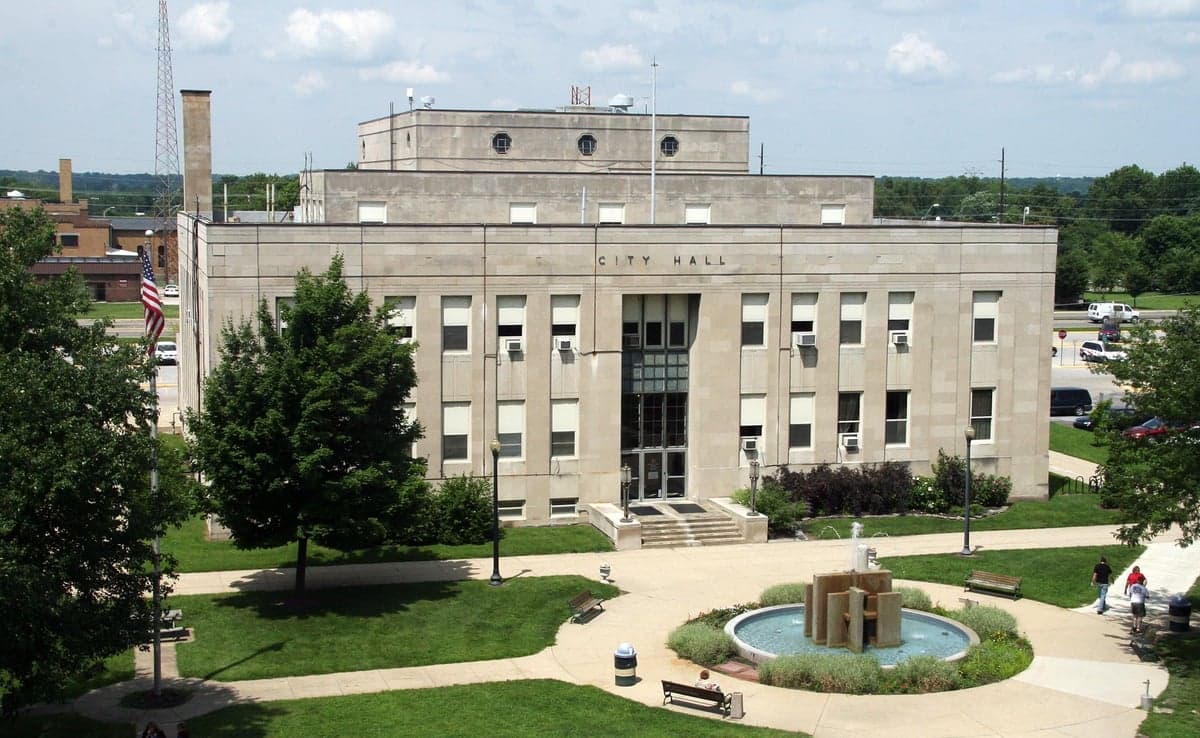
Photo: Wikipedia
Political ClimatePolitical Climate in Terre Haute, IN
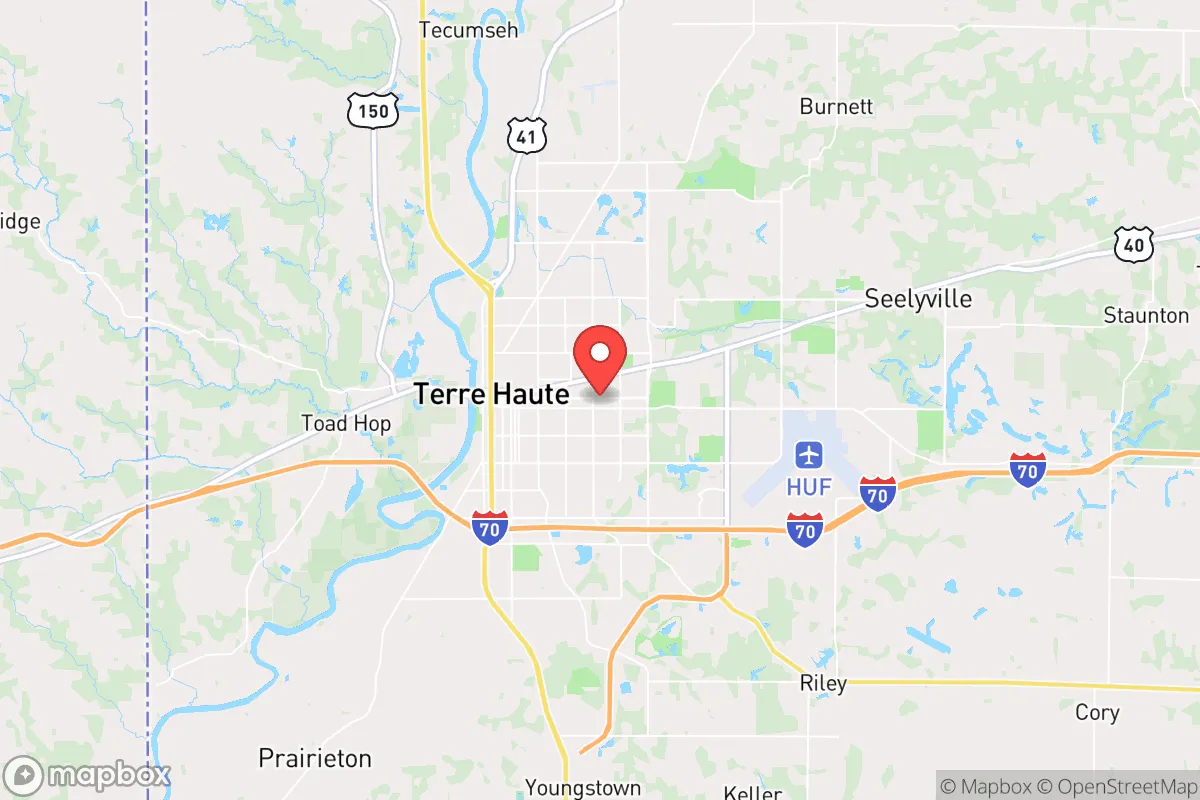
District shown is the primary district for this city’s centroid. Cities may span multiple districts.
Local Political AnalysisPolitical Analysis of Terre Haute, IN
Terre Haute has long been a reliably conservative stronghold, and the numbers back that up with a Cook PVI of R+18. But if you've lived here as long as I have, you know the political climate isn't just about party registration—it's about a deep-seated belief in personal responsibility and limited government. The city itself has a working-class, blue-collar backbone that leans right, though you'll find a few more progressive pockets near Indiana State University. The surrounding Vigo County and rural areas like Brazil or Sullivan are even more solidly red, and that's where the real pulse of the area's values beats strongest.
How it compares
Compared to Bloomington, which is a liberal bubble about an hour east, Terre Haute feels like a different world. Bloomington's city council has pushed zoning changes and mask mandates that would never fly here. Even Indianapolis, with its growing progressive tilt, is a stark contrast. Terre Haute's political trajectory has actually shifted rightward over the past decade, as more folks from the coasts have moved in and then left after realizing they can't change the local culture. The surrounding towns—like West Terre Haute and Riley—vote even more conservatively, often by 20-30 points in local races. That's because people here remember when government overreach meant losing control of their own property or businesses, and they're not eager to repeat that history.
What this means for residents
For residents, this political climate translates into fewer regulations and more personal freedom. You won't see the kind of heavy-handed zoning or business licensing that chokes small towns in blue states. Property taxes are low, and there's a strong resistance to any new taxes for "community programs" that often come with strings attached. The local school board has fought off attempts to introduce critical race theory or gender ideology curricula, which is a relief for parents who want to raise their kids without government indoctrination. But there's a growing concern: as the state legislature pushes more conservative laws, some local officials have tried to sneak in progressive policies through the back door—like bike lane mandates or "equity" initiatives that sound harmless but often lead to more bureaucracy. The key is staying vigilant, because once those policies take root, they're hard to uproot.
Culturally, Terre Haute is a place where the Second Amendment is still a given, not a debate. You'll see "Come and Take It" flags on trucks and gun shops on every other corner. The local economy is driven by manufacturing and logistics—think FedEx, Duke Energy, and small machine shops—so there's a natural skepticism of environmental regulations that could kill jobs. The biggest policy distinction is the city's approach to homelessness: instead of the "housing first" models you see in liberal cities, Terre Haute focuses on strict enforcement of public camping bans and connecting people with faith-based shelters. It's not perfect, but it keeps the streets safe and the parks usable. Looking ahead, the biggest threat is the slow creep of federal mandates—like EPA water rules or HUD housing requirements—that could force Terre Haute to adopt policies its residents never voted for. If you value your freedom and your wallet, this is still one of the best places in Indiana to live. Just keep an eye on the city council meetings.

State Political ClimatePolitical Climate in Indiana
State Political AnalysisPolitical Environment in the State
Indiana has long been a reliably red state in presidential elections, voting Republican by double digits in every cycle since 2008, but its political landscape is more nuanced than a simple partisan label suggests. The state’s dominant coalition is a mix of socially conservative rural voters, fiscally conservative suburbanites, and a shrinking but still influential blue-collar Democratic base in the industrial northwest. Over the last 10-20 years, the GOP has solidified control at the state level, winning supermajorities in both chambers of the legislature and holding the governor’s office since 2005, but the margins have tightened in suburban counties like Hamilton and Hendricks as national polarization seeps in.
Urban vs. rural divide
The political map of Indiana is a classic tale of three distinct regions. The Indianapolis metro area, anchored by Marion County, is the state’s only reliably blue stronghold, delivering 60% of its vote to Joe Biden in 2020. But the real story is the suburban ring around Indy: Hamilton County (Carmel, Fishers, Noblesville) was once a GOP fortress but has shifted from +30 points for Trump in 2016 to +15 in 2020, driven by educated professionals moving in from other states. Meanwhile, Lake County in the northwest (Gary, Hammond) remains a Democratic bastion due to unionized manufacturing and a large Black population, but its population is declining. The rest of the state—from the Ohio River towns like Evansville and Jeffersonville to the agricultural heartland around Fort Wayne and Terre Haute—votes overwhelmingly Republican, often by 30-40 point margins. The rural-urban divide is stark: a drive from downtown Indianapolis to the farm country of Kokomo or Muncie feels like crossing into a different political universe.
Policy environment
Indiana’s policy environment is a mixed bag for conservatives. On the plus side, the state has a flat income tax rate of 3.15% (down from 3.23% in 2023) and no inheritance or estate tax, making it attractive for wealth preservation. The regulatory climate is business-friendly, with right-to-work laws on the books since 2012 and a tort reform system that caps noneconomic damages in medical malpractice cases. However, the state’s education policy has been a flashpoint: Governor Eric Holcomb signed a bill in 2022 banning critical race theory in K-12 classrooms, but the Department of Education under Superintendent Jennifer McCormick (a Democrat elected in 2016) pushed back, creating confusion. School choice is robust, with the nation’s second-largest voucher program, but property taxes have crept up in fast-growing suburbs like Zionsville and Westfield to fund new schools. On healthcare, Indiana expanded Medicaid under the Affordable Care Act in 2015 (the Healthy Indiana Plan), which remains a sore spot for fiscal conservatives. Election laws are moderately restrictive: voter ID is required, early voting is limited to 28 days, and absentee voting requires an excuse—though the legislature tightened these rules in 2021 after the pandemic-era expansion.
Trajectory & freedom
Indiana’s trajectory on personal freedom is a study in contradictions. On gun rights, the state is a clear winner: in 2022, Indiana became a constitutional carry state, allowing permitless carry of handguns for anyone 18 or older who can legally possess a firearm. This was a major victory for Second Amendment advocates. On parental rights, the state passed a law in 2023 requiring schools to notify parents of any changes to a student’s health or well-being, including gender identity, and banning instruction on human sexuality before grade 3. This aligns with conservative values. But there are red flags. In 2023, the legislature passed a near-total abortion ban (Senate Enrolled Act 1) with exceptions only for rape, incest, and life of the mother, which was a win for pro-life advocates but has created legal uncertainty as the state Supreme Court reviews it. On medical freedom, Indiana was one of the first states to ban COVID-19 vaccine mandates for state employees and contractors in 2021, but it also imposed a statewide mask mandate in 2020 that many conservatives saw as overreach. Property rights are generally strong, with no statewide zoning laws, but local governments in Bloomington and Lafayette have imposed rent control and inclusionary zoning measures that worry free-market advocates.
Civil unrest & political movements
Indiana has seen its share of political flashpoints. The 2020 protests in Indianapolis over George Floyd’s death turned violent, with property damage downtown and a state of emergency declared. The Black Lives Matter movement remains active in Indianapolis and South Bend, but it’s largely faded from the headlines. On the right, the “Parents’ Rights” movement exploded in 2021-2022, with school board meetings in Hamilton County and Johnson County drawing hundreds of activists protesting mask mandates and critical race theory. The Indiana Republican Party has seen internal strife between establishment figures like Senator Todd Young and the more populist wing aligned with former Governor Mike Pence. Immigration politics are relatively quiet, as Indiana has no sanctuary cities and the state passed a law in 2011 requiring local law enforcement to check immigration status of those arrested. Election integrity remains a hot topic: the 2020 election saw no major fraud cases, but the legislature passed a bill in 2021 requiring signature verification for absentee ballots and banning ballot drop boxes, which Democrats decried as voter suppression. A new resident would notice the absence of the kind of street-level political conflict seen in states like Oregon or Texas—most activism happens in school board meetings and legislative hearings.
Projection
Over the next 5-10 years, Indiana is likely to remain a red state, but the margins will continue to tighten in the suburbs. The Indianapolis metro area is growing fast, with Hamilton County adding 50,000 residents between 2010 and 2020, many of them from blue states like California and Illinois. These newcomers tend to be fiscally conservative but socially moderate, which could push the state toward a more libertarian-leaning GOP rather than a socially conservative one. The rural areas are losing population, which will erode the GOP’s base. The abortion ban could become a political liability if it drives suburban women to the polls for Democrats, as seen in Kansas and Ohio. On the plus side, the state’s low taxes and business-friendly climate will continue to attract manufacturing and logistics jobs, especially in the I-69 corridor from Indianapolis to Evansville. The biggest wildcard is the state’s education system: if the voucher program leads to a hollowing out of public schools, it could create a backlash among middle-class families who rely on them. Expect the legislature to continue pushing conservative priorities on guns, parental rights, and tax cuts, but with more internal friction as the suburban-urban divide deepens.
For a new resident, the bottom line is this: Indiana offers a solidly conservative policy environment with low taxes, strong gun rights, and a business-friendly climate, but it’s not a libertarian paradise. You’ll find government overreach in areas like education mandates and healthcare regulation, and the political climate is increasingly polarized along geographic lines. If you’re moving to Carmel or Fishers, expect a politically engaged, educated population that leans right but is open to moderation. If you’re heading to Kokomo or Vincennes, you’ll find a more traditional, socially conservative culture. The state is trending in the right direction on most conservative priorities, but keep an eye on the suburbs—that’s where the future of Indiana politics will be decided.
* Values derived from national, state, county, city and local statistics and may differ in a specific area. Last updated: 2026-04-22T07:55:25.000Z
Narrative content on this page is AI-generated and may contain mistakes. Verify any details that matter before acting on them.
ReloMaps may earn a commission from affiliate links at no extra cost to you.

