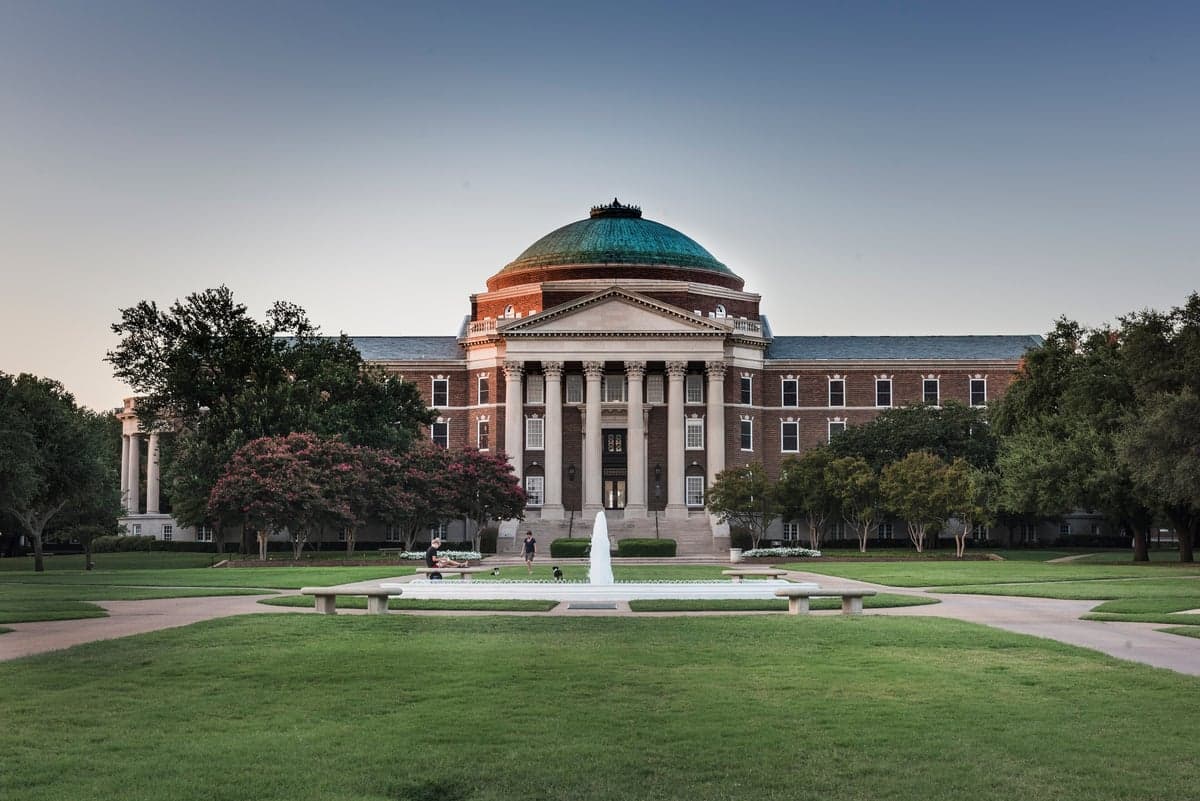
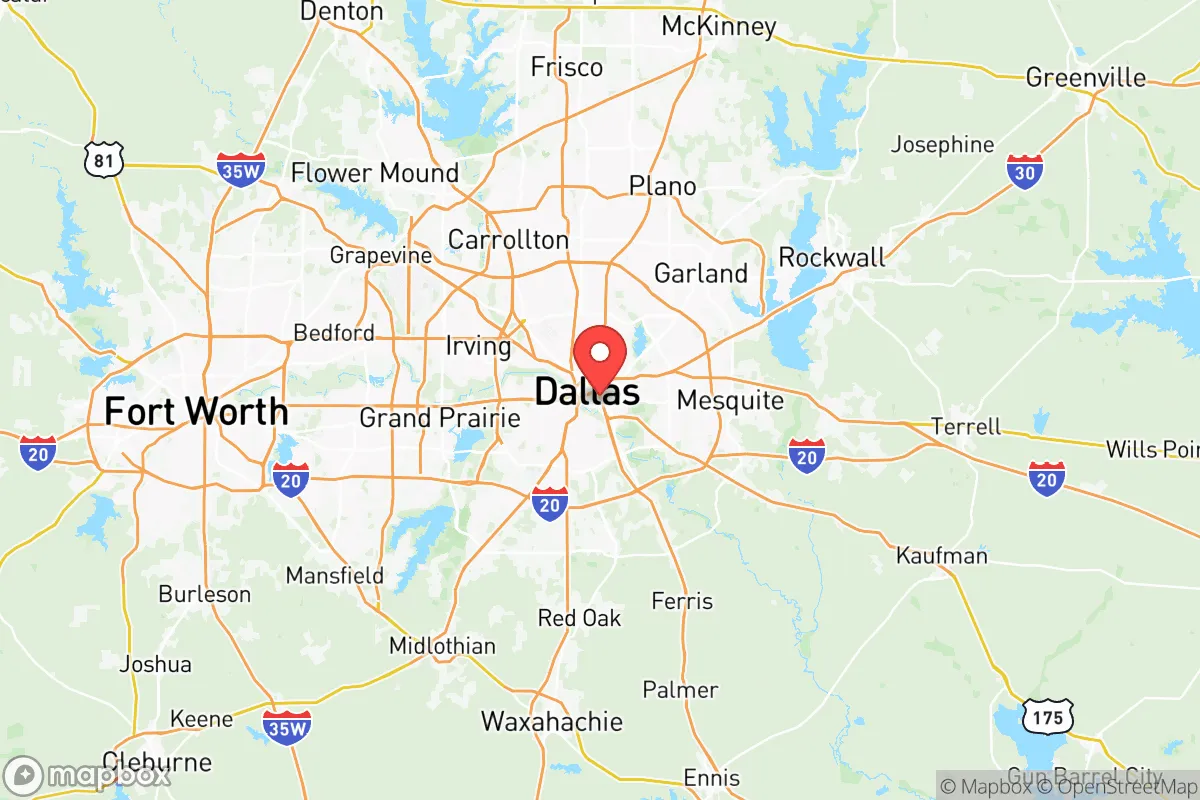
Photo: Wikipedia
Political ClimatePolitical Climate in Dallas County
Showing district-level results — no local-only data available.
Local Political AnalysisPolitical Analysis of Dallas County
Dallas County has shifted hard to the left over the past decade, and the numbers back it up. The Cook Partisan Voting Index (PVI) now sits at D+25, meaning the county votes 25 points more Democratic than the national average. That wasn't always the case—I remember when places like Mesquite and parts of Garland used to be reliable battlegrounds, but those days are long gone. The 2024 presidential election saw Kamala Harris carry the county by a massive margin, and down-ballot races have followed suit, with progressive candidates sweeping most countywide offices. If you're looking for a place where conservative values still hold sway, you'll need to look to the outer edges or the exurbs.
How it compares
The political divide within Dallas County isn't just between cities—it's block by block in some places. Highland Park and University Park (the Park Cities) remain the most reliable Republican strongholds, often voting 60-70% for GOP candidates, though even those numbers have slipped in recent cycles. Coppell and parts of far north Dallas near Addison still lean slightly red, but they're trending purple fast. On the flip side, Oak Cliff, Pleasant Grove, and most of southern Dallas are overwhelmingly blue, often hitting 80-90% Democratic. The real story is in the suburbs: Garland and Mesquite used to be swing towns, but they've moved decisively left since 2016. Irving is a mixed bag—its Las Colinas area is increasingly progressive, while the older neighborhoods near the airport still hold some conservative ground. Rowlett and Sachse on the eastern edge are probably the closest you'll find to true swing precincts today, but even they're trending blue.
What this means for residents
For conservatives living here, it's getting harder to feel like your voice matters. The county commissioners, district attorney, and school boards are all controlled by progressive Democrats now. Property taxes keep climbing—Dallas County's effective rate is among the highest in Texas—and a lot of that money goes to programs and policies you might not agree with, like diversity initiatives in schools or expanded social services. Gun rights are under constant pressure at the county level, with the DA's office pushing for stricter enforcement of red-flag laws and tougher sentencing for gun-related offenses. If you value limited government and personal freedom, you'll notice the creep: more regulations on businesses, higher fees for permits, and a general attitude that the county knows better than you do. School choice is a hot-button issue—Dallas ISD and most suburban districts have resisted voucher programs, so if you want alternatives, you're paying private tuition or moving to Collin County.
Culturally, Dallas County has embraced a "big city" mindset that can feel alienating if you're not on board. The county government has been aggressive on mask mandates, vaccine requirements, and other public health measures that many conservatives see as overreach. The local media and civic institutions lean heavily progressive, so you won't find much pushback in the news. Long-term, I see the county getting bluer as more people move in from California and other blue states, drawn by jobs but bringing their politics with them. If you're considering a move here, know that your vote will likely be a drop in a very blue bucket—and that the county's policies will reflect that reality, whether you like it or not.

State Political ClimatePolitical Climate in Texas
State Political AnalysisPolitical Environment in the State
Texas remains a solidly Republican state at the statewide level, but the coalition that keeps it red has shifted dramatically over the past 20 years. The GOP still dominates rural and exurban counties, while Democrats have consolidated power in the state’s biggest metros—Houston, Dallas, San Antonio, and especially Austin. The 2024 presidential election saw Donald Trump win Texas by roughly 9 points, down from 11 points in 2020 and 16 points in 2016. The long-term trajectory is a slow but steady erosion of the Republican margin, driven by massive in-migration from blue states and the natural growth of the Hispanic electorate, though the state’s conservative lean remains deeply entrenched outside of a few urban islands.
Urban vs. rural divide
The political map of Texas is a study in extremes. The state’s four largest counties—Harris (Houston), Dallas, Tarrant (Fort Worth), and Bexar (San Antonio)—account for nearly half the state’s population and have all trended blue over the last decade. Harris County, once a swing county, now reliably votes Democratic by double digits. Tarrant County, which voted for George W. Bush by 17 points in 2004, flipped to Biden in 2020 and stayed blue in 2024. Meanwhile, the rural and exurban counties that ring these metros—like Collin, Denton, and Montgomery—have become the GOP’s firewall. Collin County, north of Dallas, voted for Trump by 15 points in 2024, up from 12 points in 2020, as conservative families fled Dallas proper. The Rio Grande Valley, once a Democratic stronghold, has shifted sharply right; Starr County, which voted for Hillary Clinton by 60 points in 2016, went for Trump by 5 points in 2024. The political geography is simple: the bigger the city, the bluer it gets; the smaller the town, the redder it stays.
Policy environment
Texas has no state income tax, a fact that remains the single biggest policy draw for relocating conservatives. Property taxes are high—averaging around 1.7% of assessed value—but the state’s homestead exemption and a 2023 law capping appraisal growth at 10% per year for non-homestead properties have provided some relief. The regulatory posture is famously light: no state-level occupational licensing for dozens of trades, minimal zoning in most cities, and a right-to-work law that keeps union power weak. On education, the state passed a universal school voucher program in 2025 (HB 3), allowing families to use state funds for private or homeschool expenses—a major win for parental rights advocates. Healthcare policy remains a mixed bag: Texas did not expand Medicaid under the ACA, keeping the uninsured rate high (around 17%), but the state has aggressively expanded telemedicine and direct-primary care access. Election laws tightened after 2020 with SB 1, which banned drive-through voting, added ID requirements for mail ballots, and restricted early voting hours—changes that have held up in court and are broadly popular with conservatives who worry about election integrity.
Trajectory & freedom
On balance, Texas has moved more free over the past five years in several key areas, but the trend is not uniform. The 2021 permitless carry law (HB 1927) allows any law-abiding adult to carry a handgun without a license—a clear expansion of Second Amendment rights. The 2023 ban on taxpayer-funded lobbying (SB 10) and the 2024 law prohibiting local governments from contracting with companies that boycott Israel (HB 793) both reflect a state government willing to push back against progressive corporate activism. Parental rights were strengthened with the 2023 law requiring school districts to notify parents of any changes to a child’s mental or physical health (HB 567), and the 2024 ban on gender transition procedures for minors (SB 14) remains in effect despite ongoing litigation. However, the state has also expanded government power in ways that worry some conservatives: the 2023 law allowing the state to arrest and deport undocumented immigrants (SB 4) is popular with the base but has created a massive new enforcement apparatus. Property rights took a hit with the 2023 law allowing the state to seize land for the border wall (HB 20), though compensation is required. The overall trajectory is toward more personal liberty on guns, education, and medical choice, but with a growing state police presence that cuts both ways.
Civil unrest & political movements
Texas has seen its share of political flashpoints. The 2020 Black Lives Matter protests in Austin, Houston, and Dallas were among the largest in the country, with Austin alone seeing over 100 consecutive nights of demonstrations. The response from state leadership was swift: Governor Abbott declared Austin a “defunded police” city and pushed through the 2021 law (HB 1900) that allows the state to take over local police departments in cities that cut budgets. Immigration politics remain the hottest button: the 2024 border standoff in Eagle Pass, where the state National Guard blocked federal Border Patrol from accessing a park, became a national symbol of Texas’s defiance of federal authority. The “Texas Secession” movement, while fringe, has gained visibility through the Texas Nationalist Movement, which claims over 500,000 supporters online. Election integrity remains a live issue: the 2022 Harris County ballot paper shortage and the 2024 investigation into alleged non-citizen voter registrations have kept the issue in the headlines. A new resident will notice the omnipresence of border politics in local news, the occasional protest in downtown Austin, and the general sense that Texas is a state willing to fight the federal government on multiple fronts.
Projection
Over the next 5-10 years, Texas will likely remain Republican at the statewide level, but the margin will continue to shrink. The key demographic driver is the influx of roughly 1,000 new residents per day, many from California, New York, and Illinois. These newcomers tend to be more moderate than the native population, but they are also drawn by the state’s low taxes and light regulation—meaning they are not uniformly liberal. The Hispanic vote will be the decisive factor: if the GOP can maintain its gains in the Rio Grande Valley and among working-class Hispanic men, the state could stay red for another generation. If those voters revert to the Democratic lean of the 2000s, Texas will become a true swing state by 2032. The policy environment will likely see further expansion of school choice, continued resistance to Medicaid expansion, and a growing state role in border enforcement. A new resident moving in now should expect a state that is still deeply conservative in its bones, but with a growing urban-liberal counterweight that will make statewide elections increasingly competitive. The practical takeaway: if you value low taxes, gun rights, and school choice, Texas is still the best bet in the country—but don’t expect it to stay this red forever.
For a conservative family or individual looking to relocate, Texas offers a policy environment that is broadly aligned with traditional values: no income tax, strong Second Amendment protections, school choice, and a state government willing to push back against federal overreach. The trade-offs are real—high property taxes, a hot housing market in the desirable suburbs of Dallas-Fort Worth and Houston, and a political climate that is slowly shifting leftward in the major metros. If you pick a red-leaning suburb like Frisco, Keller, or Southlake, you’ll find a community that matches your values. If you land in Austin or central Houston, you’ll be in a blue bubble that feels increasingly like California. Choose your county carefully, and you’ll find Texas still delivers on the promise of freedom.
* Values derived from national, state, county, city and local statistics and may differ in a specific area. Last updated: 2026-04-10T22:23:48.000Z
Narrative content on this page is AI-generated and may contain mistakes. Verify any details that matter before acting on them.
ReloMaps may earn a commission from affiliate links at no extra cost to you.

