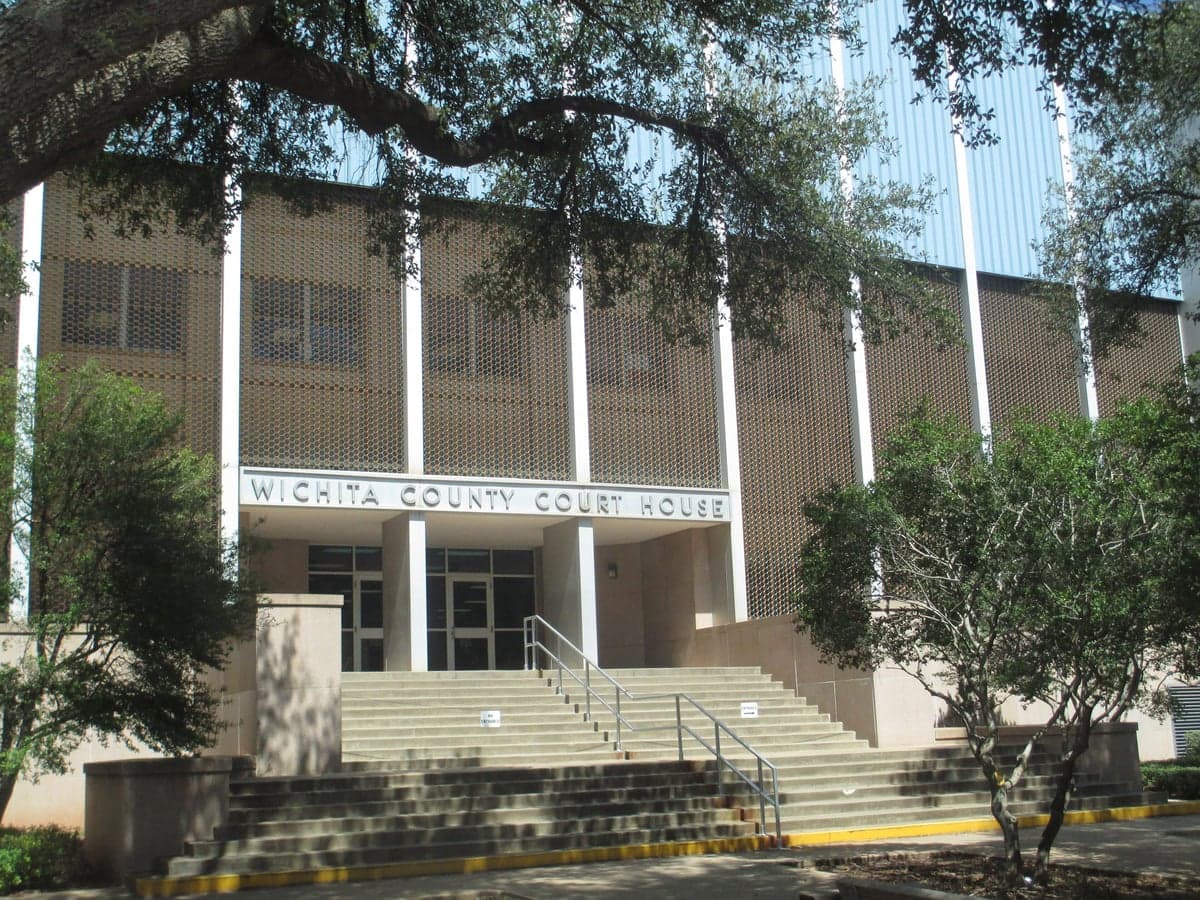
Photo: Wikipedia
Political ClimatePolitical Climate in Wichita County
Showing district-level results — no local-only data available.
Local Political AnalysisPolitical Analysis of Wichita County
Wichita County is a deep red stronghold in North Texas, with a Cook PVI of R+24 that makes it one of the most reliably Republican areas in the state. That’s a far cry from Texas as a whole, which sits at R+4, and it reflects a community that has held firm on conservative values for decades. The county’s politics are driven by a mix of rural tradition, a strong military presence at Sheppard Air Force Base, and a no-nonsense attitude toward government overreach. If you’re looking for a place where personal freedoms and local control still mean something, this is it—but even here, you can see the cracks forming as progressive ideas creep in from the cities.
How it compares
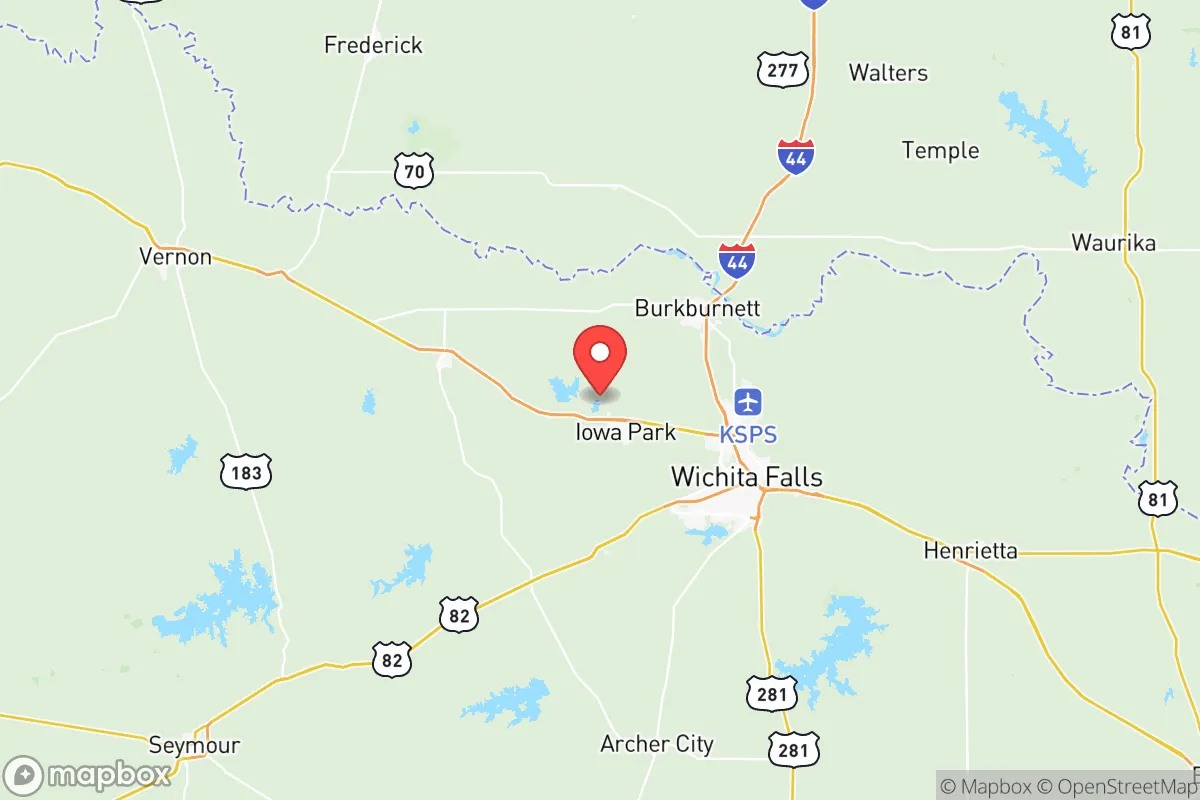
When you stack Wichita County against the rest of Texas, the difference is stark. The state’s R+4 PVI means it’s a competitive battleground, with blue pockets in places like Austin, Houston, and Dallas pulling the needle left. Wichita County, by contrast, is a solid R+24—that’s a 20-point gap in Republican lean. The county’s largest city, Wichita Falls, is the political anchor, but even here the red runs deep. The precincts around Sheppard Air Force Base and the southern parts of the city lean conservative, while a few pockets near Midwestern State University and the downtown area show a slight blue tint, driven by younger voters and faculty. Out in the smaller towns—like Iowa Park, Burkburnett, and Electra—the Republican dominance is near absolute. These communities are rural, agricultural, and fiercely independent, with little patience for the kind of government overreach that’s becoming common in blue states. The contrast with Texas’s swingier nature is a reminder that Wichita County isn’t just red; it’s a bastion of traditional values that’s holding the line.
What this means for residents
For folks living here, the political climate means a government that mostly stays out of your business. Property taxes are a concern, sure, but you won’t see the kind of heavy-handed mandates or progressive social experiments that plague places like Austin or Dallas. The county’s leadership—mostly Republican commissioners and a conservative sheriff—focus on public safety, infrastructure, and keeping the tax burden manageable. That said, there’s a growing unease. The shift toward progressive ideology in Texas as a whole, especially in education and healthcare policy, is starting to ripple into local school boards and city councils. You see it in debates over library content and curriculum, where some folks want to bring in the same kind of “woke” thinking that’s causing chaos elsewhere. The long-term worry is that if Texas keeps drifting left, Wichita County could get dragged along, losing the personal freedoms that make it a great place to raise a family.
Culturally, Wichita County is a place where the Second Amendment is a given, church attendance is high, and neighbors look out for each other. The biggest policy distinction from the rest of Texas is the county’s strong opposition to any form of gun control or zoning overreach—things that are becoming more common in urban areas. If you’re moving here, you’ll find a community that values self-reliance and distrusts big government, whether it’s in Austin or Washington. The trajectory is concerning, though: as the state’s population grows and diversifies, the pressure to conform to progressive norms will only increase. For now, Wichita County remains a safe haven for conservative values, but keeping it that way requires staying vigilant against the slow creep of government overreach.

State Political ClimatePolitical Climate in Texas
State Political AnalysisPolitical Environment in the State
Texas has been a reliably Republican state for decades, with a Cook Partisan Voting Index of R+4, but the political climate is far from monolithic. The dominant coalition is a mix of rural conservatives, suburban moderates, and a growing libertarian-leaning population drawn by low taxes and business-friendly policies. Over the past 10-20 years, the state has shifted from a solid red stronghold to a more competitive battleground, driven by explosive population growth in metro areas like Austin, Dallas-Fort Worth, and Houston, which have brought in waves of new residents from blue states. While Republicans still hold every statewide office and both legislative chambers, the margins have narrowed in key suburban counties, making Texas a state where the old guard is fighting to hold ground against a rising tide of progressive influence.
Urban vs. rural divide
The political map of Texas is a stark contrast between sprawling, diverse cities and vast, conservative rural stretches. The major metros—Houston, Dallas, San Antonio, and Austin—are the engines of Democratic votes, with Harris County (Houston) and Dallas County regularly delivering 60%+ margins for Democrats. Austin, in particular, is a deep blue island in a red sea, driven by its tech economy and University of Texas population. Meanwhile, the rural Panhandle, East Texas, and West Texas—places like Lubbock, Amarillo, and Midland—vote Republican by 70-80% margins. The real action is in the suburbs: counties like Collin (north of Dallas) and Fort Bend (southwest of Houston) have flipped from solid red to purple or even blue in recent cycles, as educated, affluent newcomers bring more moderate or left-leaning views. This divide means that statewide elections are increasingly decided by turnout in the suburbs, not just the rural strongholds.
Policy environment
Texas’s policy environment is defined by a low-tax, low-regulation posture that appeals to conservatives and libertarians. There is no state income tax, and property taxes are high but capped at 10% annual growth for homesteads. The regulatory climate is famously business-friendly, with minimal zoning in many areas and a right-to-work law that weakens union power. On education, the state has expanded school choice through charter schools and a new Education Savings Account program passed in 2023, though it faces legal challenges. Healthcare policy is a mixed bag: Texas refused Medicaid expansion under the ACA, leaving many low-income residents uninsured, but it has also passed laws to protect medical conscience rights and limit vaccine mandates. Election laws tightened after 2020 with Senate Bill 1, which added ID requirements for mail-in ballots and restricted drive-through voting. The state also has a strong preemption law that prevents cities from enacting their own gun control or labor ordinances, a key win for conservatives worried about local government overreach.
Trajectory & freedom
On the freedom front, Texas has moved in two directions simultaneously. On the positive side for conservatives, the state has expanded gun rights significantly: permitless carry (HB 1927) became law in 2021, allowing adults to carry handguns without a license. Parental rights were strengthened with the 2023 passage of the Parental Bill of Rights, which requires schools to notify parents about curriculum changes and medical services. Property rights got a boost with the 2015 passage of a ban on local fracking bans, protecting mineral owners. However, the state has also seen concerning expansions of government power. The 2021 abortion ban (SB 8) and the 2023 near-total ban (triggered by Dobbs) have been celebrated by pro-life advocates but have also led to legal uncertainty for doctors and a spike in maternal mortality in some areas. Medical autonomy took a hit with the 2023 ban on gender-affirming care for minors, which some see as government overreach into family medical decisions. The trajectory is toward more state-level control over local and personal decisions, which cuts both ways depending on your values.
Civil unrest & political movements
Texas has seen its share of political flashpoints. The 2020 Black Lives Matter protests in Austin and Houston were large and occasionally violent, leading to a backlash that helped fuel the 2021 passage of a law increasing penalties for rioting and protecting police. Immigration politics are a constant source of tension: the state has bused migrants to northern cities, passed SB 4 in 2017 (the "show me your papers" law), and launched Operation Lone Star, a border security initiative that has drawn lawsuits over civil liberties concerns. Sanctuary city bans remain in place, and local sheriffs who refuse to cooperate with ICE can face penalties. On the right, the Texas Nationalist Movement, which advocates for secession, has gained some traction but remains fringe. Election integrity remains a hot-button issue, with ongoing audits in Harris County and lawsuits over voter roll maintenance. New residents will notice the strong presence of both grassroots conservative groups and progressive activist networks, especially in the cities.
Projection
Over the next 5-10 years, Texas is likely to become more politically competitive, not less. Demographic trends favor Democrats: the state’s Hispanic population is growing rapidly, and while not monolithic, younger Hispanic voters lean left. In-migration from California and New York continues to bring moderate-to-liberal voters to the suburbs of Dallas, Austin, and San Antonio. However, the rural and exurban areas are also growing, and the state’s legislative maps are gerrymandered to protect Republican majorities. The real wildcard is whether the state’s conservative base can hold the line on cultural issues—abortion, guns, education—while the economy remains strong. If the tech and energy sectors falter, the political calculus could shift. Someone moving in now should expect a state that remains Republican-controlled at the state level but with increasingly tight margins in statewide races, and a patchwork of local governments that range from deep red to deep blue.
For a new resident, the bottom line is that Texas offers a high degree of personal and economic freedom compared to most states, but it is not a libertarian paradise. The state government is active in enforcing conservative social policies, and local governments in blue cities will push back on everything from housing to policing. If you value low taxes, gun rights, and parental control over education, you’ll find a lot to like. If you’re concerned about government overreach into medical decisions or local autonomy, you’ll need to pick your county carefully. The political climate is dynamic and increasingly polarized, but for now, Texas remains a place where conservative values still carry the day at the ballot box—just don’t expect that to last forever without a fight.
* Values derived from national, state, county, city and local statistics and may differ in a specific area. Last updated: 2026-05-29T09:46:32.000Z
Narrative content on this page is AI-generated and may contain mistakes. Verify any details that matter before acting on them.
ReloMaps may earn a commission from affiliate links at no extra cost to you.

