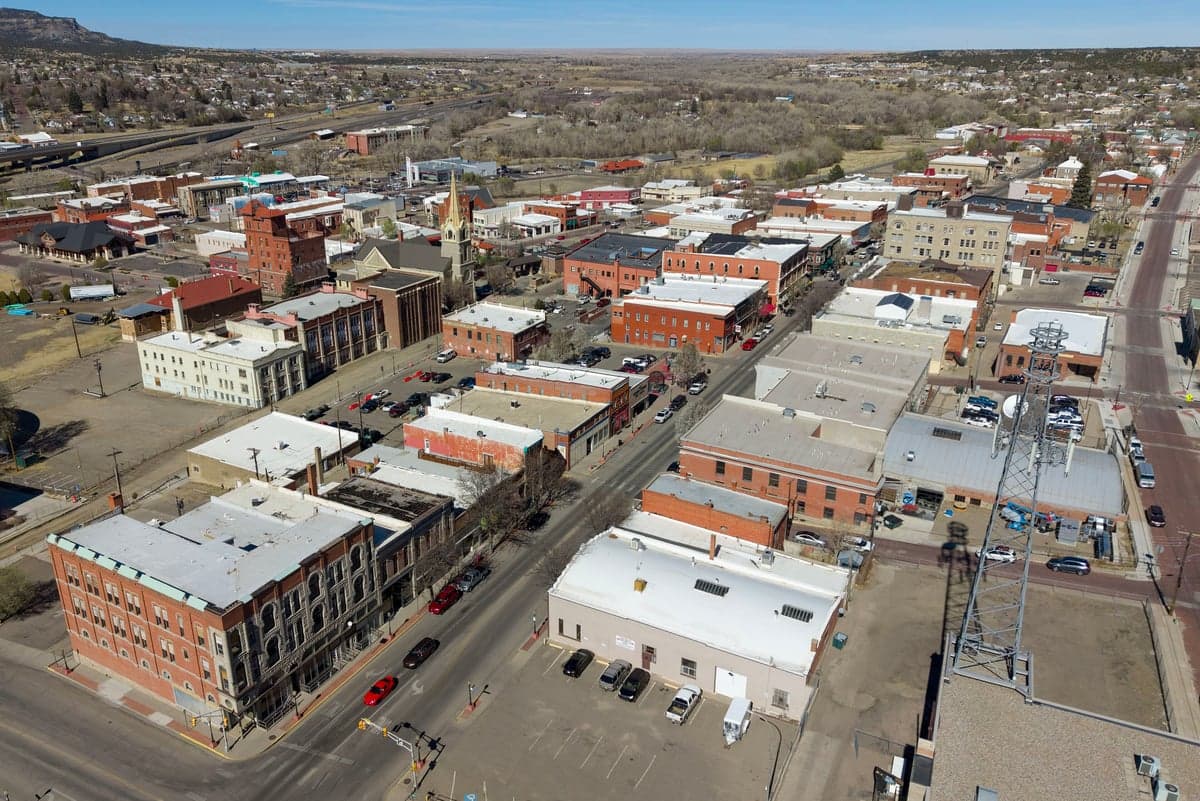
Photo: Wikipedia
Political ClimatePolitical Climate in Trinidad, CO
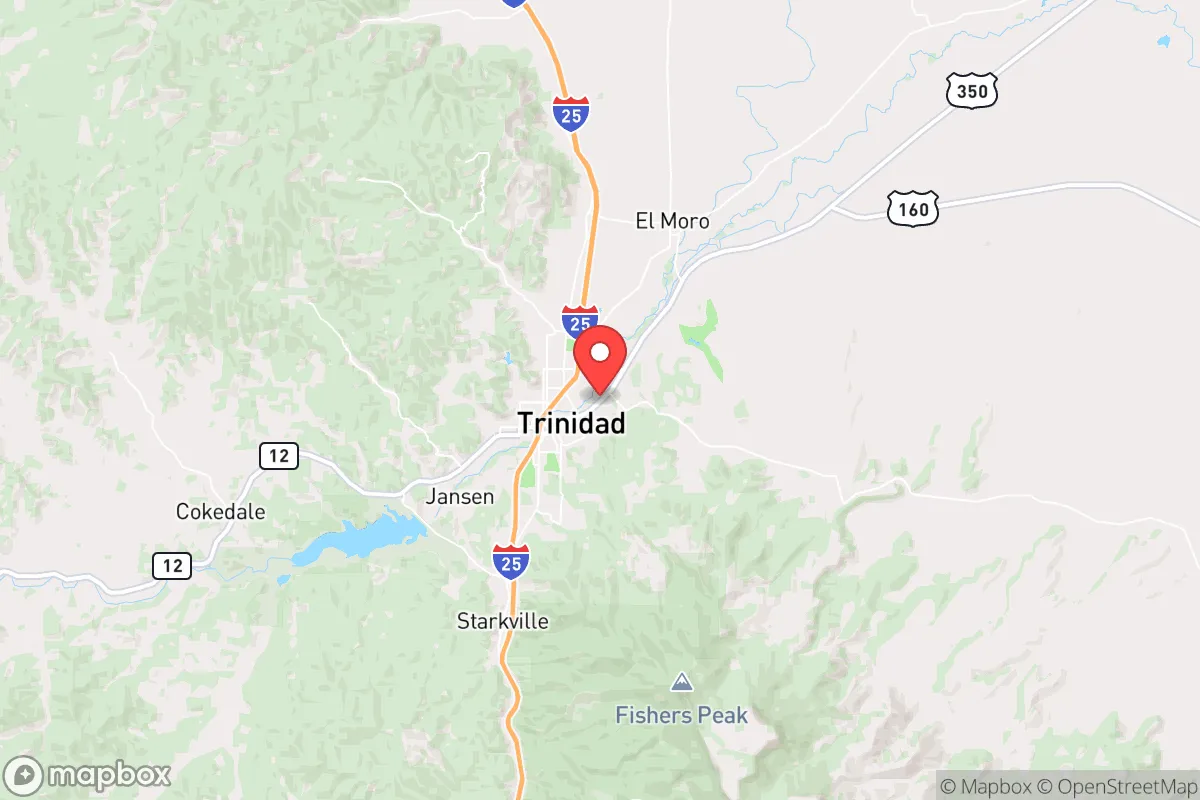
District shown is the primary district for this city’s centroid. Cities may span multiple districts.
Local Political AnalysisPolitical Analysis of Trinidad, CO
Trinidad, Colorado, has long been a place where folks value their independence and don't take kindly to being told how to live their lives. The area's Cook PVI of R+5 reflects a solid, if not overwhelming, conservative lean, but that number doesn't tell the whole story. For decades, this was a reliably red town, built on coal mining and ranching, where the local culture was as straightforward as the high plains landscape. Lately, though, you can feel a subtle shift, especially as some newcomers from places like Denver or Santa Fe bring more progressive ideas with them. It's not a full-blown takeover, but it's a noticeable change from the way things used to be, and it has a lot of us watching closely.
How it compares
Drive just 20 miles north to Walsenburg, and you'll find a place that feels even more politically isolated and traditionally conservative, a real throwback. But head south toward Raton, New Mexico, and you cross a state line into a much bluer political environment. The real contrast, though, is with the Front Range cities like Denver and Boulder. Those places are a world away in terms of politics, with their heavy regulations and progressive social policies. Trinidad sits in a kind of buffer zone, a conservative pocket in a state that's been trending blue for years. We're surrounded by wide-open spaces and a "live and let live" attitude that's getting harder to find in Colorado. The local county commission and city council still lean conservative, but you can see the pressure building from outside groups pushing for more government control over things like land use and local business operations.
What this means for residents
For those of us who've been here a while, the biggest concern is government overreach creeping into our daily lives. We've seen it in other parts of the state—stricter building codes, more fees, and a general attitude that the government knows better than the people. So far, Trinidad has mostly resisted that, but the fight is constant. The local economy is still tied to traditional industries like energy and agriculture, which means most folks here understand that too much regulation kills jobs and personal freedom. You don't see a lot of support for things like heavy-handed mask mandates or overreaching zoning laws. The general feeling is that people should be free to run their own businesses and live their own lives without a bunch of bureaucrats sticking their noses in. That's the core of the conservative perspective here: a deep-seated belief that personal responsibility and local control are the best ways to keep a community strong.
One of the biggest cultural distinctions in Trinidad is the lingering tension between the old-timers and the newer arrivals drawn by the area's historic architecture and lower cost of living. Some of these newcomers are genuinely looking for a simpler life, but others bring a "we know better" attitude that rubs a lot of us the wrong way. You'll see it in local meetings, where debates over things like short-term rentals or historic preservation can get heated. The real worry is that as more people move in from blue states, they'll try to turn Trinidad into a smaller version of the places they left behind. For now, the conservative backbone holds, but it's a constant battle to keep the government out of our personal freedoms and rights. If you're looking for a place where you can still live by your own rules, Trinidad is a good bet—for now. But keep an eye on those local elections, because that's where the future of this town will really be decided.

State Political ClimatePolitical Climate in Colorado
State Political AnalysisPolitical Environment in the State
Colorado has shifted from a classic purple swing state to a solidly blue-leaning state over the past two decades, with Democrats now controlling the governorship, both chambers of the legislature, and all statewide elected offices. The state voted for Hillary Clinton by 5 points in 2016, Joe Biden by 13 points in 2020, and Kamala Harris by roughly 11 points in 2024, reflecting a durable leftward tilt driven primarily by explosive growth in the Denver metro and Front Range corridor. For a conservative considering relocation, the state’s political trajectory is a cautionary tale of how rapid in-migration and demographic change can transform a once-balanced state into a one-party progressive stronghold.
Urban vs. rural divide
The political map of Colorado is a stark story of two Colorados. The urban core—Denver, Boulder, and the surrounding suburbs of Aurora, Lakewood, and Westminster—votes overwhelmingly Democratic, often by margins of 30 to 50 points. The Denver metro area alone accounts for roughly 60% of the state’s population, making it the engine of the state’s blue shift. Boulder County is the most liberal in the state, routinely delivering 75-80% of its vote to Democratic presidential candidates. Meanwhile, the rural eastern plains, the Western Slope, and the San Luis Valley lean heavily Republican. El Paso County (Colorado Springs) remains a conservative stronghold, voting +14 for Trump in 2024, but its influence is diluted by the sheer population weight of the Front Range. The suburban counties that once were swing areas—Jefferson, Arapahoe, and Larimer—have trended blue over the last decade, with Jefferson County flipping from red to blue in 2016 and staying there. The only real bright spot for conservatives is Weld County (Greeley), which remains deeply red, and the more remote mountain counties like Mesa (Grand Junction) and Montrose, which vote Republican but are losing population relative to the Front Range.
Policy environment
Colorado’s policy environment is increasingly progressive, with a tax and regulatory posture that reflects its blue governance. The state income tax rate is a flat 4.4%, which is moderate by national standards, but property taxes are relatively low thanks to the Gallagher Amendment (repealed in 2020) and recent legislative caps. However, the state has aggressively expanded government programs: it passed a paid family and medical leave program in 2020, a strict oil and gas regulatory overhaul (SB 19-181) that effectively hamstrung the energy industry, and a 2021 law that created a public option for health insurance. Education policy is dominated by the teachers’ unions, with school choice limited compared to states like Florida or Arizona—Colorado has a weak charter school law and no universal school voucher program. Election laws have been made more accessible, with automatic voter registration, mail-in ballots for all registered voters, and same-day registration, which critics argue erodes ballot security. The state also has a strict red flag law (HB 19-1177) that allows courts to temporarily seize firearms from individuals deemed a risk, and a 2023 law raising the minimum age to purchase any firearm to 21. For a conservative, the policy environment feels like a slow but steady march toward a California-style regulatory state.
Trajectory & freedom
Colorado is becoming less free by any objective measure, particularly in the realms of gun rights, parental rights, and economic liberty. The 2023 legislative session saw the passage of a ban on so-called “assault weapons” (HB 23-1291), which was signed into law by Governor Jared Polis despite his earlier moderate reputation. In 2024, the state passed a law requiring gun dealers to be licensed by the state and mandating liability insurance for gun owners. On parental rights, Colorado has moved in the opposite direction of states like Florida: a 2023 law (HB 23-1220) expanded access to abortion and gender-affirming care for minors without parental consent, and the state has a strong “safe haven” law that protects providers from out-of-state lawsuits. Property rights have been eroded by aggressive land-use regulations, particularly in the Front Range, where local governments have imposed growth boundaries and affordable housing mandates. The state’s energy sector has been hammered by SB 19-181, which gave local governments veto power over oil and gas drilling, leading to a de facto ban in many areas. The only area where Colorado has maintained some freedom is in its relatively low income tax rate, but that is under constant pressure from progressive groups pushing for a graduated income tax.
Civil unrest & political movements
Colorado has seen its share of political flashpoints. The 2020 protests in Denver were among the largest in the country, with the city declaring a curfew and deploying the National Guard after several nights of property destruction and clashes with police. The state has a strong sanctuary policy—the 2019 “Colorado Immigrant Rights Act” (SB 19-211) limits local law enforcement cooperation with federal immigration authorities, making it a magnet for illegal immigration. In 2023, the state saw a surge in migrant arrivals from the southern border, straining Denver’s social services and sparking backlash from residents. On the right, the “Colorado Project” and local county-level secession movements (like the 2013 attempt to form the 51st state of “North Colorado”) have fizzled, but there is a growing “Second Amendment sanctuary” movement in rural counties, with over 30 counties passing resolutions opposing state gun laws. Election integrity remains a hot-button issue: Colorado’s all-mail voting system has been criticized by conservatives for lacking voter ID requirements at the ballot drop-off stage, though the state does have signature verification. The 2022 gubernatorial race saw a Republican candidate, Heidi Ganahl, win only 42% of the vote, signaling the depth of the Democratic advantage.
Projection
Over the next 5-10 years, Colorado will likely continue its leftward drift. The state is projected to add another 1 million residents by 2035, with the vast majority settling in the Denver metro and along the I-25 corridor. These new arrivals tend to be younger, more educated, and more liberal, drawn by the tech and outdoor recreation economy. The rural counties will continue to lose population and political influence, making it nearly impossible for Republicans to win statewide office. The state legislature will likely pass a wealth tax, a statewide rent control measure, and further gun restrictions. The only wildcard is a potential backlash against the cost of living—Denver’s housing prices have skyrocketed, and the state’s regulatory environment is driving out energy jobs—but so far, the electorate has not punished Democrats for these trends. A conservative moving to Colorado now should expect to live in a state where their vote is increasingly irrelevant at the state level, and where local control is the only remaining lever for conservative governance.
For a new resident, the bottom line is that Colorado offers stunning natural beauty and a strong economy, but at the cost of living under a progressive policy regime that is actively expanding government control over your life. If you value gun rights, parental authority, and economic freedom, you will find yourself swimming against a strong tide. The best strategy is to settle in a conservative-leaning county like El Paso or Weld, where local governments can still push back against some of the worst state overreach, but even there, you will be subject to state laws that are increasingly hostile to traditional values. Colorado is a beautiful place to visit, but for a conservative looking to put down roots, it is a state in decline from a freedom perspective.
* Values derived from national, state, county, city and local statistics and may differ in a specific area. Last updated: 2026-05-02T04:13:00.000Z
Narrative content on this page is AI-generated and may contain mistakes. Verify any details that matter before acting on them.
ReloMaps may earn a commission from affiliate links at no extra cost to you.

