
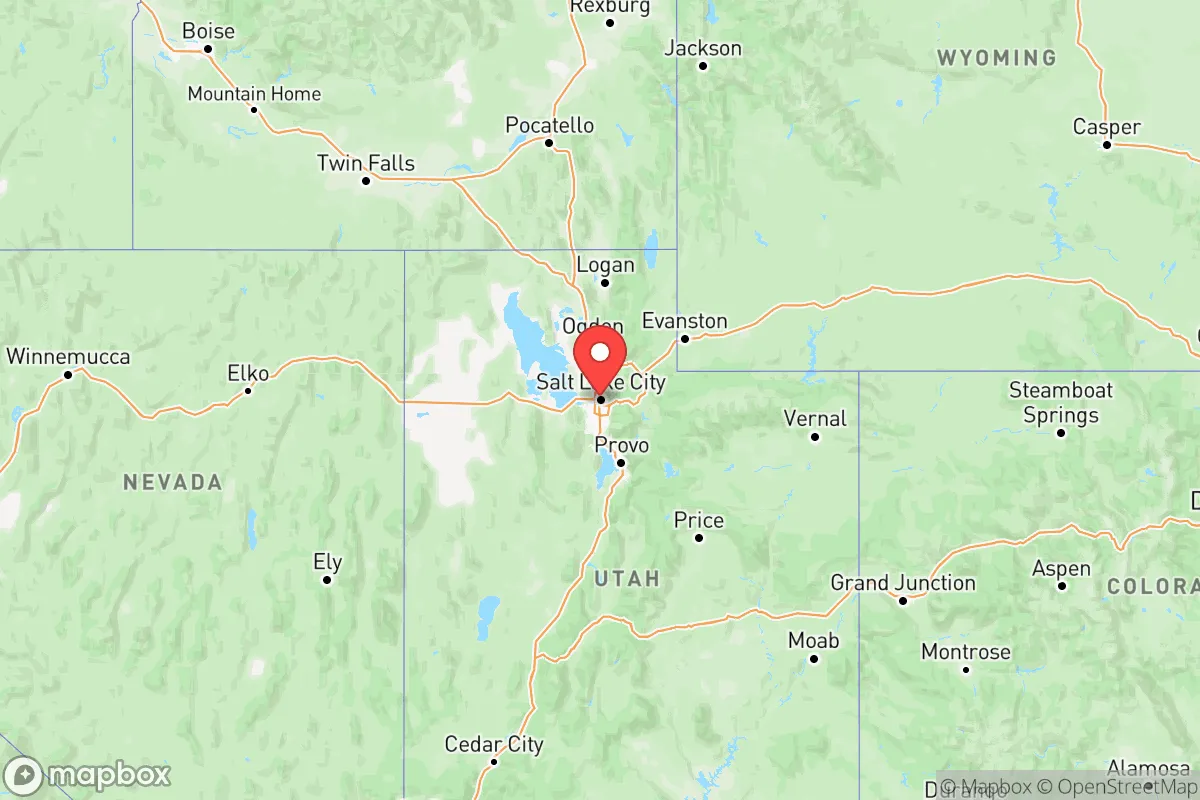
Photo: Wikipedia
Demographics of Utah
Affluence Level in Utah
A wealthy area with high-earning, well-educated households. Incomes, home values, and educational attainment meaningfully outpace national averages.
People of Utah
Utah’s population of 3.3 million is the youngest in the nation, with a median age of 31.2, and is overwhelmingly concentrated along the Wasatch Front, a 100-mile corridor from Ogden through Salt Lake City to Provo. The state is defined by a distinctive dual identity: a historically dominant Mormon (LDS) culture that shaped settlement patterns and family structures, and a rapidly diversifying population driven by Hispanic immigration and domestic in-migration from California and the Pacific Northwest. With a foreign-born share of just 4.9% (half the national average), Utah remains one of the most native-born states, but its white share has dropped from 89% in 2000 to 75.7% today, signaling a demographic transition that is reshaping its communities.
Settlement & growth (pre-1960)
Long before European arrival, the region was home to several Native American nations. The Ute people occupied the central and eastern mountains and valleys, giving the state its name. The Shoshone ranged across the north, the Goshute in the west, and the Paiute and Navajo in the south. These groups lived in small, mobile bands, with the Navajo (Diné) establishing more permanent settlements in the Four Corners area. Spanish explorers and traders passed through as early as 1776, but no permanent Spanish settlements were established—Utah remained a remote frontier of New Spain and later Mexico.
The defining event in Utah’s human history began on July 24, 1847, when the first Mormon pioneers—members of the Church of Jesus Christ of Latter-day Saints fleeing persecution in the eastern United States—entered the Salt Lake Valley. Led by Brigham Young, roughly 70,000 Mormons made the overland journey between 1847 and 1869, settling not just Salt Lake City but also Ogden, Provo, Logan, and St. George. These settlers practiced a planned, communal colonization: Young dispatched groups to found hundreds of towns across the Intermountain West, from Manti and Nephi in central Utah to Cedar City in the south. The Mormon population was overwhelmingly of British Isles ancestry—English, Scottish, and Welsh—with smaller numbers of Scandinavian converts (Danes, Swedes, Norwegians) who settled in towns like Ephraim and Mount Pleasant in Sanpete County, where Danish was spoken into the early 20th century.
The completion of the transcontinental railroad at Promontory Summit in 1869 brought a second wave: non-Mormon Gentiles, including Irish and Chinese laborers who built the tracks. Many Chinese workers remained in Utah, forming small communities in Salt Lake City and Ogden. The railroad also spurred mining booms in the late 19th century, drawing Greek, Italian, and Slavic immigrants to work in the copper mines of Bingham Canyon and the coal mines of Price and Helper in Carbon County. By 1900, Carbon County had the state’s most ethnically diverse population, with Greek, Italian, Croatian, and Japanese enclaves. Japanese immigrants, originally brought as railroad laborers, also established farming communities in the Utah Valley and around Delta.
Through the early 20th century, Utah’s population remained predominantly Mormon and rural, with high birth rates and low in-migration. The Great Depression and Dust Bowl drove some Okies and Arkies to Utah, but in smaller numbers than to California. World War II brought defense industries and military bases—Hill Air Force Base near Ogden and Dugway Proving Ground—which attracted domestic migrants from across the country. The post-war baby boom was especially pronounced in Utah: the state’s fertility rate has consistently been the highest in the nation, driven by LDS cultural norms encouraging large families.
Modern era (post-1965)
The 1965 Hart-Cellar Act had a modest immediate effect on Utah compared to coastal states, but its long-term impact has been significant. The state’s foreign-born population grew from roughly 2% in 1970 to 4.9% today, with the largest share coming from Latin America. Hispanic residents now make up 15.4% of the population, up from 4% in 1980. This growth is driven by immigration from Mexico and Central America, as well as higher birth rates among Hispanic families. The Hispanic community is concentrated in Salt Lake City’s west side (particularly the Rose Park and Glendale neighborhoods), Ogden, and increasingly in suburban West Valley City and South Salt Lake. Smaller but growing Hispanic populations exist in rural agricultural areas like San Juan County and Cache Valley, where they work in farming and food processing.
Domestic migration has reshaped Utah more dramatically than immigration. Since the 1990s, Utah has been one of the fastest-growing states in the nation, with much of the growth coming from domestic in-migration—especially from California, Oregon, and Washington. These newcomers, often referred to as “converts to the lifestyle” or simply “economic migrants,” are drawn by Utah’s strong job market (tech, finance, construction), lower housing costs (though rising fast), and family-friendly reputation. The tech boom in the “Silicon Slopes” region—spanning Lehi, American Fork, and Pleasant Grove—has attracted a highly educated, largely white and Asian workforce from coastal tech hubs. East and Southeast Asian communities (Chinese, Korean, Vietnamese, Filipino) now make up 1.8% of the state, concentrated in the tech corridor and around the University of Utah in Salt Lake City. The Indian subcontinent population (0.5%) is smaller but growing, also clustered in tech and healthcare professions in the Silicon Slopes and Salt Lake City.
Suburbanization has been the dominant geographic trend. The population has spread from Salt Lake City into sprawling suburbs: Draper, Sandy, South Jordan, and Herriman have seen explosive growth. Utah County, anchored by Provo, has become the state’s second-largest population center, driven by Brigham Young University and the tech sector. The state’s Black population remains very small at 1.0%, concentrated in Salt Lake City and Ogden, with roots in the post-World War II migration of defense workers and a smaller wave of African immigrants (Somali, Sudanese) in the 2000s.
The future
Utah’s population is projected to reach 4.5 million by 2050, driven by natural increase (high birth rates) and continued domestic in-migration. The state is not homogenizing; rather, it is developing distinct enclaves. The Wasatch Front is becoming more diverse, with Hispanic and Asian communities growing in the suburbs, while rural Utah (Carbon County, San Juan County, the Uinta Basin) remains overwhelmingly white and LDS. The Hispanic share is expected to reach 20-25% by 2040, making Utah a “majority-minority” state for the under-18 population within a decade. However, assimilation patterns are strong: English proficiency among second-generation Hispanics is high, and intermarriage with the LDS population is increasing.
The tech-driven in-migration is changing the cultural identity of the Wasatch Front. Newcomers are less likely to be LDS, more likely to be politically moderate or liberal, and more secular. This has created a cultural tension between the traditional Mormon establishment and the growing “gentile” population, particularly in Salt Lake County, which voted for Joe Biden in 2020 while the rest of the state remained deeply Republican. The next 10-20 years will likely see continued suburban expansion, with the population spreading into Tooele County and northern Utah County, while the urban core of Salt Lake City becomes more diverse and politically distinct from the rest of the state.
Utah is becoming a place of two populations: a fast-growing, diversifying, tech-oriented Wasatch Front that is absorbing newcomers and gradually secularizing, and a slower-growing, more homogeneous rural and small-town Utah that remains culturally LDS and politically conservative. For someone moving in now, the experience will depend heavily on location—the Silicon Slopes offer a cosmopolitan, high-opportunity environment with growing diversity, while smaller towns like Nephi or Manti offer a stable, traditional community with little demographic change. The state’s overall character remains family-centric, religiously influenced, and economically dynamic, but the cultural monopoly of the LDS Church is eroding, replaced by a more pluralistic—if still predominantly white and native-born—society.

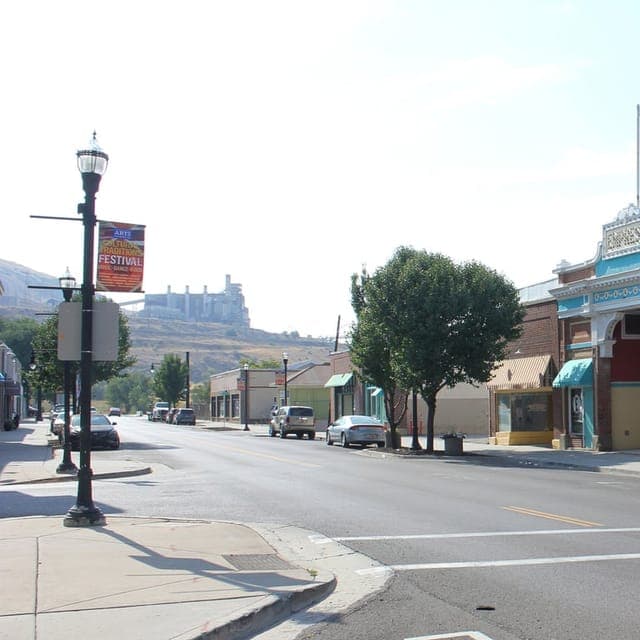
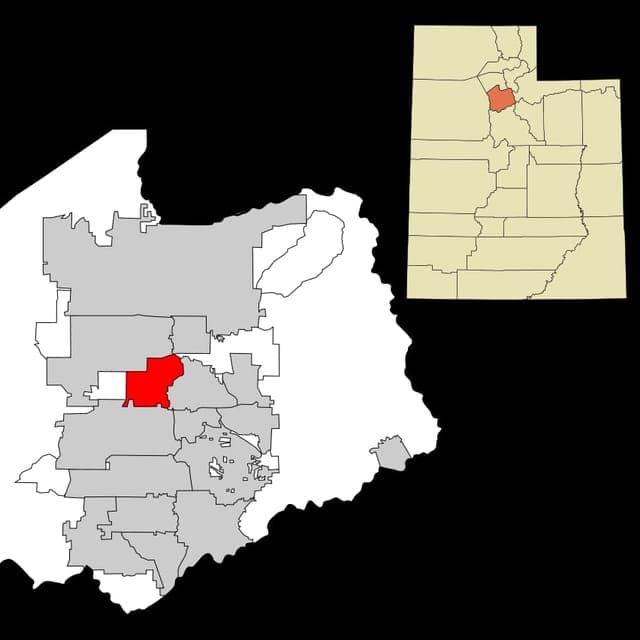
Most Diverse Cities in Utah
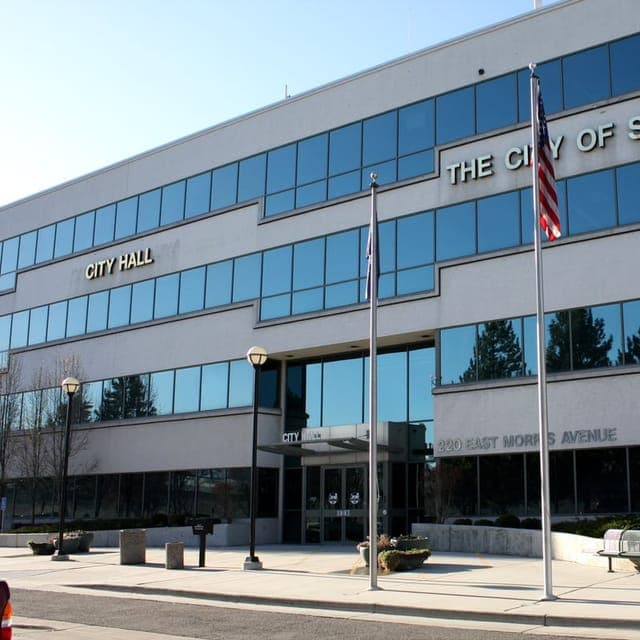

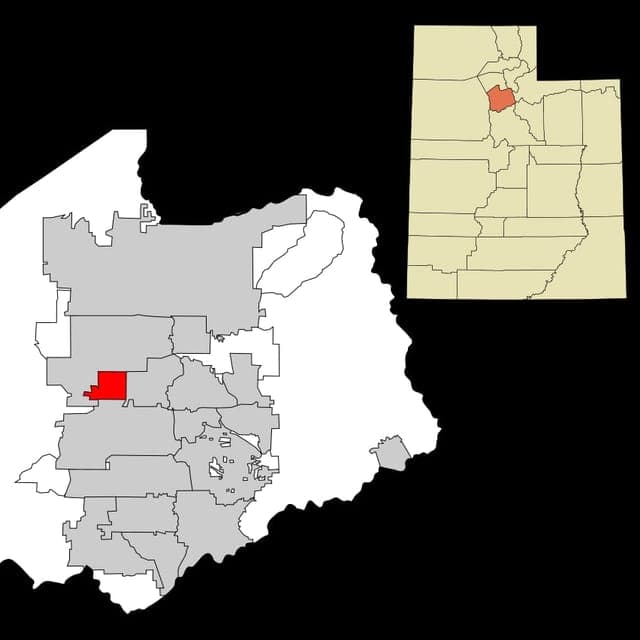
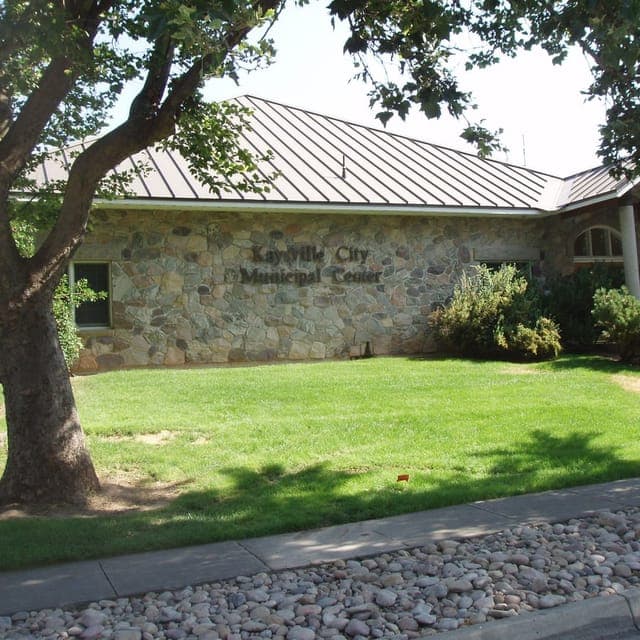
Most Homogenous Cities in Utah
* Values derived from national, state, county, city and local statistics and may differ in a specific area. Last updated: 2026-04-14T06:21:26.000Z
Narrative content on this page is AI-generated and may contain mistakes. Verify any details that matter before acting on them.
ReloMaps may earn a commission from affiliate links at no extra cost to you.

