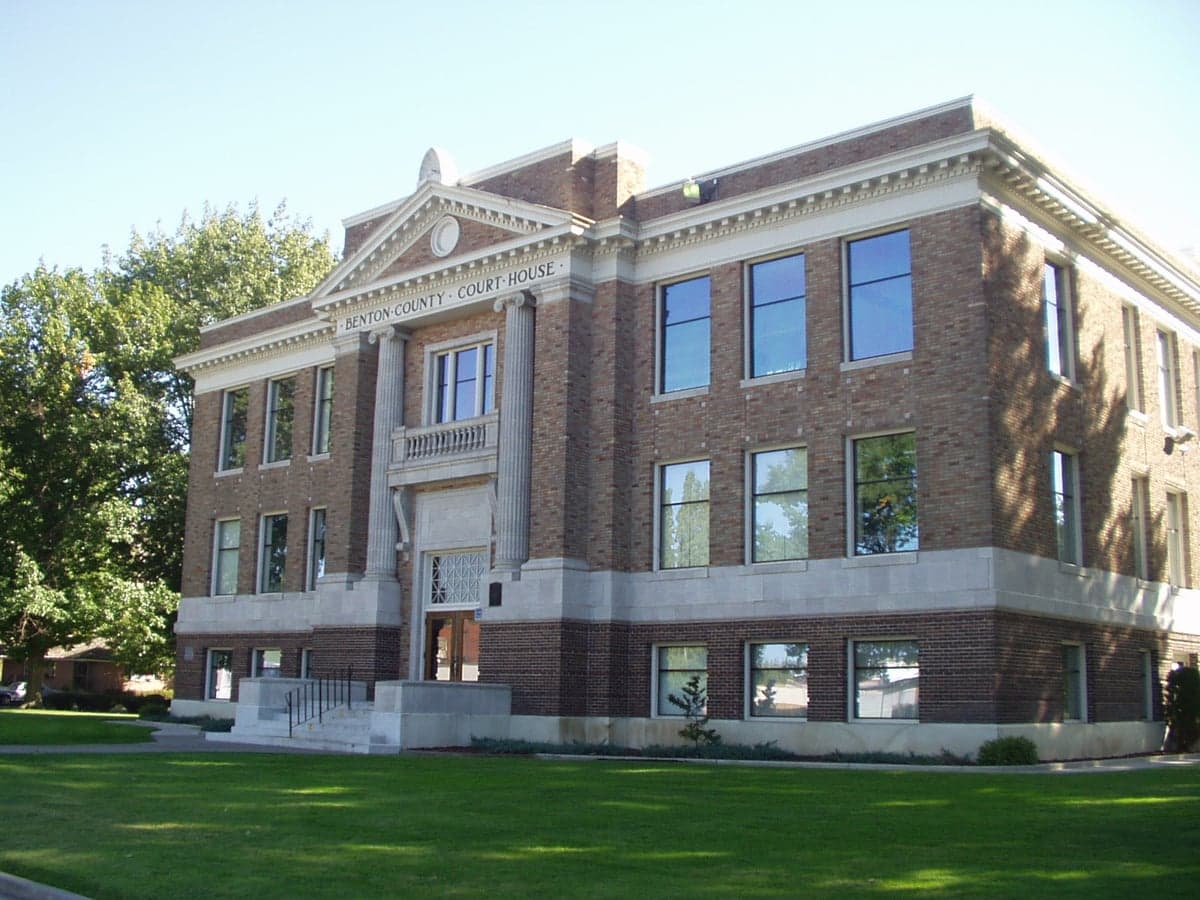
Photo: Wikipedia
Political ClimatePolitical Climate in Benton County
Showing district-level results — no local-only data available.
Local Political AnalysisPolitical Analysis of Benton County
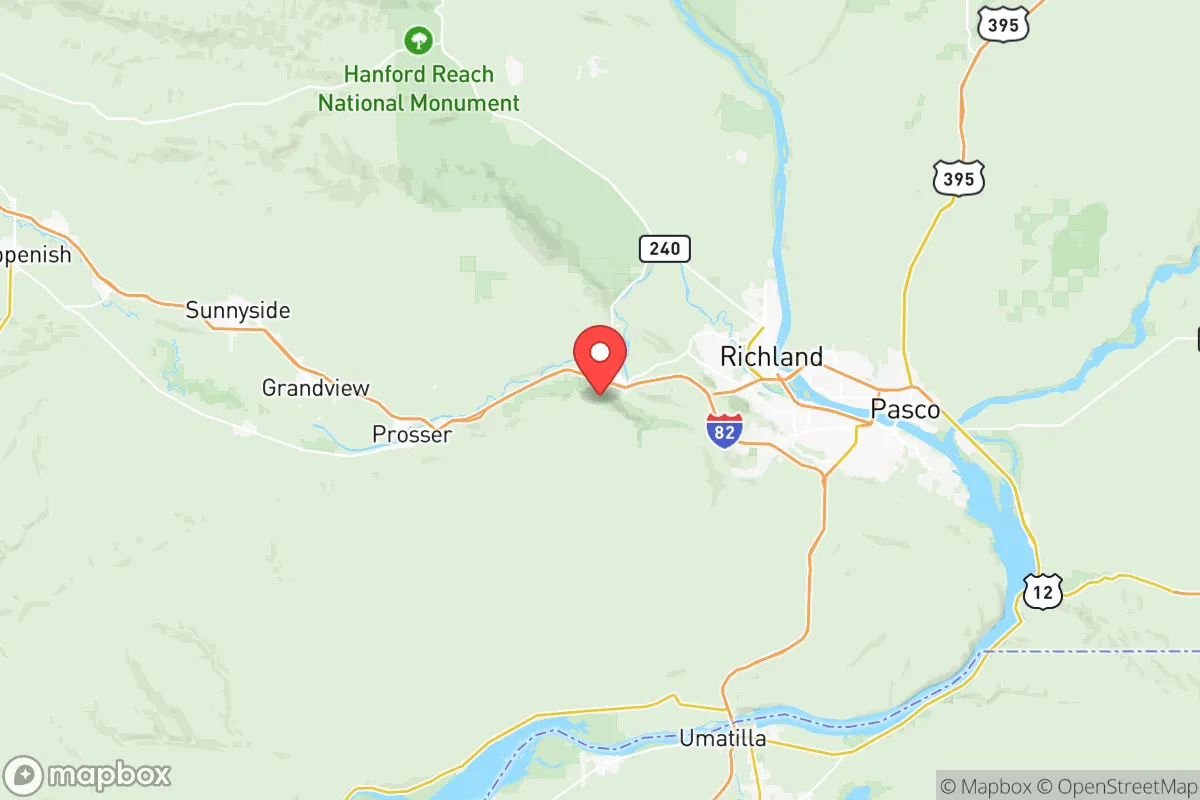
Benton County, Washington, is a reliably conservative stronghold in an otherwise blue state, with a Cook Partisan Voting Index of R+10 that has held steady for the past decade. The county's political center of gravity is the Tri-Cities area—Kennewick, Richland, and Pasco—but the real action is in the suburbs and rural fringe. Richland, home to the Hanford nuclear site and a heavy concentration of engineers and scientists, has historically been the most moderate part of the county, with precincts around the WSU Tri-Cities campus and the historic Uptown shopping district occasionally voting blue in local races. Kennewick, by contrast, is the conservative engine: its Southridge and Canyon Lakes neighborhoods are reliably red, while the older downtown and east-side precincts near the Columbia River show more Democratic leanings, especially in lower-turnout municipal elections. West Richland and the rural areas around Benton City and Prosser are deeply red, with Republican margins often exceeding 30 points in state legislative races. The county's trajectory is stable—there's no sign of the suburban shift toward Democrats seen in King or Snohomish counties—though the growing Hispanic population in east Kennewick and Pasco (which straddles Franklin County) is slowly diversifying the electorate, making a few precincts more competitive in down-ballot races.
How it compares
Compared to Washington state as a whole, Benton County is an outlier. The state's Cook PVI is not officially calculated, but statewide Democrats typically win by 10–15 points in presidential elections, making Benton County's R+10 roughly a 20-point gap from the state average. In practice, this means that while Washington votes for Democratic governors and senators by comfortable margins, Benton County's voters routinely elect Republicans to the state legislature and county commission. For example, in the 2022 gubernatorial race, Democrat Jay Inslee won the state by 13 points but lost Benton County by 12 points. The county's congressional district, WA-04, has been held by Republican Dan Newhouse since 2015, and he consistently wins by double digits. The contrast is sharpest in policy: the county's commissioners have pushed back on state-level climate mandates and land-use regulations, and local school boards have become battlegrounds over curriculum and library books, mirroring national culture-war dynamics more than the state's urban centers. The nearest blue-leaning area is Walla Walla County to the east, which is more purple due to Whitman College's influence, but that's a 45-minute drive away.
What this means for residents
For conservative residents, Benton County offers a rare sense of political alignment with local government. The county commission, sheriff's office, and most city councils are Republican-controlled, meaning property tax levies, zoning decisions, and law enforcement priorities generally reflect conservative values. For liberal residents, the reality is more mixed: they can find community in Richland's more moderate precincts or through local Democratic clubs, but they face an uphill battle in countywide elections. The practical effect is that progressive policy initiatives—like affordable housing mandates, sanctuary city ordinances, or climate action plans—rarely gain traction at the county level, though the cities of Richland and Kennewick have occasionally adopted modest sustainability programs. The political climate also shapes daily life: yard signs during election season are overwhelmingly red, and political discussions in workplaces or at school events tend to default to conservative viewpoints. That said, the county's economy is dominated by Hanford and the Pacific Northwest National Laboratory, which attract a diverse, educated workforce that includes many out-of-state transplants, so the political culture is less insular than in rural Eastern Washington counties like Adams or Garfield.
A key cultural distinction is the county's relationship with the state government in Olympia. Benton County residents frequently express frustration with state-level policies on water rights, land use, and energy regulation, which they see as favoring Western Washington's urban interests. This tension has fueled periodic secession talk in Eastern Washington, though it remains fringe. For newcomers, the most noticeable difference from Seattle or Portland is the absence of visible homelessness and the prevalence of church-sponsored community events. The county's political identity is deeply tied to its agricultural and nuclear heritage, and while the Hanford cleanup continues to be a bipartisan concern, the broader cultural divide with the rest of the state shows no signs of narrowing. If you're moving here, expect a place where local politics feel like a red island in a blue sea—stable, predictable, and largely content with its own trajectory.

State Political ClimatePolitical Climate in Washington
State Political AnalysisPolitical Environment in the State
Washington State has been a reliably Democratic stronghold for over a decade, but its politics are far more complex than a simple blue label. The state’s overall lean is driven by the massive, fast-growing Seattle metropolitan area, which has shifted the balance of power decisively leftward since the 1990s. However, this dominance masks a deep and growing urban-rural split, with large swaths of Eastern Washington and even parts of the Puget Sound region voting just as reliably Republican. For a conservative relocator, the reality is that you’ll be living under a state government that is among the most progressive in the nation, but you can find communities where your values are the local majority—if you know where to look.
Urban vs. rural divide
The political map of Washington is a textbook case of the “two states” phenomenon. The entire western side of the Cascade Range, especially King County (Seattle), is the engine of Democratic power. King County alone casts roughly one-third of the state’s total votes, and it routinely delivers margins of 70-80% for Democratic candidates. This is where the tech industry, major universities, and dense urban centers concentrate. In contrast, the eastern half of the state—cities like Spokane, Yakima, and the Tri-Cities (Kennewick, Pasco, Richland)—votes solidly Republican. Spokane County, for example, has been reliably red in presidential elections, though it’s slowly trending purple as Spokane city itself becomes more liberal. The real flashpoints are the suburban and exurban counties that have flipped in recent cycles. Clark County (Vancouver), just across the Columbia River from Portland, Oregon, was once a Republican stronghold but has voted Democratic in the last three presidential elections, driven by an influx of Portland-area refugees and younger families. Similarly, Thurston County (Olympia) and Whatcom County (Bellingham) have moved from swing to solidly blue. The most reliably red counties are in the far east and central regions: Garfield, Columbia, Asotin, and Lincoln counties routinely give Republicans 70-80% of the vote. For a conservative, living in a place like Spokane Valley or Wenatchee means your vote will count in local races, but you’ll be outmatched in statewide elections.
Policy environment
Washington’s state-level policies are among the most progressive in the country, and they have a direct impact on daily life. The state has no personal income tax, which is a major draw for many, but it relies heavily on a high sales tax (state rate of 6.5%, with local add-ons pushing it over 10% in some cities) and high property taxes. This creates a regressive tax structure that hits lower-income families harder. The regulatory environment is business-friendly in some sectors (tech, aerospace) but very strict in others (environmental, labor). Washington has a strong public education system, but it’s also home to one of the most contentious school funding battles in the nation, with the state Supreme Court repeatedly ordering the legislature to fully fund basic education. Healthcare is heavily regulated, and the state runs its own health insurance exchange. On election law, Washington is a vote-by-mail state, which is widely popular and has high turnout, but it also means no in-person voting on Election Day. The state has a “top-two” primary system, meaning the top two vote-getters advance regardless of party, which can sometimes shut out third-party candidates.
Recent policy direction
The last five years have seen a dramatic acceleration of progressive policy. On gun rights, Washington passed a ban on “assault weapons” (defined by features) and high-capacity magazines in 2023, along with a requirement for a 10-day waiting period and a permit-to-purchase system. This makes it one of the strictest states in the nation for gun owners. On education, the state has expanded LGBTQ+ inclusive curriculum mandates and passed a law requiring schools to notify parents if a student changes their name or pronouns—a move that sparked fierce debate between parental rights advocates and LGBTQ+ activists. On speech and privacy, Washington has some of the strongest data privacy laws in the country (the Washington Privacy Act), but it also has a broad “malicious harassment” law that some critics say chills protected speech. On medical and bodily autonomy, the state has codified abortion rights into law and passed a shield law protecting providers who serve patients from states with bans. Property rights are a flashpoint: the state’s Growth Management Act heavily restricts development in rural areas, and recent laws have limited single-family zoning in cities, allowing duplexes and triplexes in most residential areas. On voting, the state has expanded automatic voter registration and same-day registration, making it very easy to vote. For a conservative relocator, the bottom line is that the state government is actively moving in a direction that is likely to feel restrictive on guns, taxes, and local control.
Civil unrest & political movements
Washington has a long history of political activism, from the WTO protests in Seattle in 1999 to the 2020 Black Lives Matter protests that saw the Seattle Police Department abandon the Capitol Hill neighborhood, leading to the short-lived “CHOP” zone. This event remains a major political flashpoint, with conservatives pointing to it as a symbol of lawlessness and liberals defending it as a community response to police violence. The state is also home to a significant far-right presence, particularly in Eastern Washington, where groups like the “Three Percenters” and “Oath Keepers” have a visible footprint. The 2021 occupation of the Spokane County Courthouse by armed protesters was a local example of this tension. Immigration politics are also hot: Washington is a “sanctuary state,” meaning local law enforcement is prohibited from cooperating with federal immigration authorities in most cases. This has led to clashes between the state and the federal government, particularly under the Trump administration. Election integrity has been a recurring issue, with the state’s vote-by-mail system being praised for its security by some but criticized by others for potential fraud, though no widespread fraud has been found. A new resident will notice that political signs and bumper stickers are common, and that people are generally willing to discuss politics, but the divide between the urban west and rural east is palpable.
Projection
Over the next 5-10 years, Washington is likely to become even more Democratic at the state level, driven by continued in-migration from other states and the growth of the tech sector. The Seattle metro area will continue to dominate, and suburban counties like Clark and Pierce will likely trend further left. However, the rural-urban divide will deepen, with Eastern Washington becoming more politically isolated and potentially more radicalized. The state’s tax structure is a ticking time bomb: the reliance on sales and property taxes is regressive and volatile, and there is growing pressure for a wealth tax or a capital gains tax (which was passed in 2021 but is being challenged in court). If that passes, it could be a major factor for high-income relocators. The gun laws are unlikely to be rolled back, and further restrictions on self-defense are possible. The biggest wildcard is housing: if the state’s efforts to increase density in cities succeed, it could slow the exodus of conservatives to the suburbs and exurbs, but if they fail, the political map could shift further as people flee to redder counties. For someone moving in now, expect the state government to continue its progressive trajectory, but also expect that your local community—if you choose wisely—can still reflect your values.
For a conservative relocator, the practical takeaway is this: Washington offers a beautiful environment, a strong economy, and no income tax, but you will be living under a state government that is actively pursuing policies you likely oppose. Your best bet is to choose a community in Eastern Washington (like Spokane Valley, Wenatchee, or the Tri-Cities) or a more rural exurb of a blue city (like Yelm or Battle Ground) where local government is more aligned with your values. You’ll have to accept that your vote won’t matter much in statewide races, but you can have a real impact on your city council, school board, and county commission. The key is to go in with your eyes open: this is not a purple state, and it’s not trending that way.
* Values derived from national, state, county, city and local statistics and may differ in a specific area. Last updated: 2026-08-08T13:41:12.000Z
Narrative content on this page is AI-generated and may contain mistakes. Verify any details that matter before acting on them.
ReloMaps may earn a commission from affiliate links at no extra cost to you.

