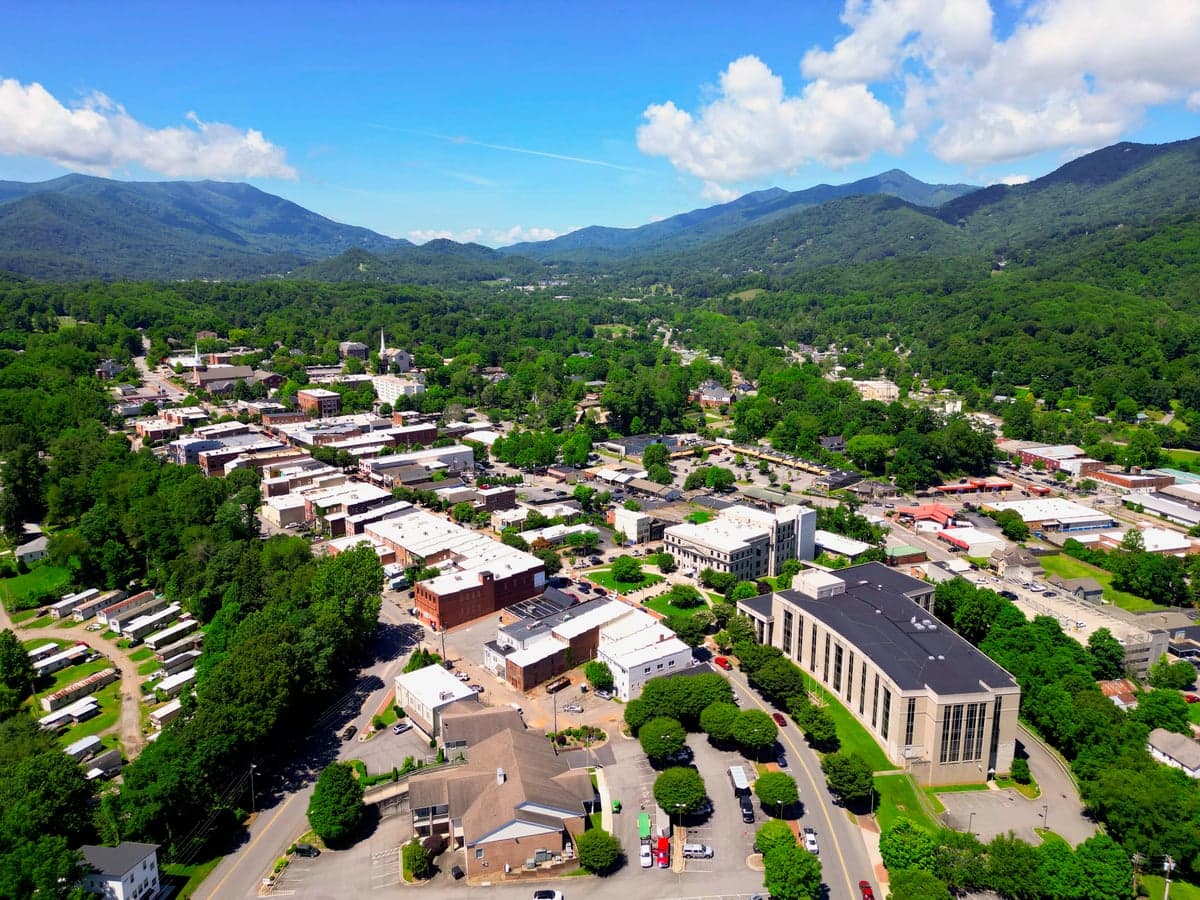
Photo: Wikipedia
Political ClimatePolitical Climate in Waynesville, NC
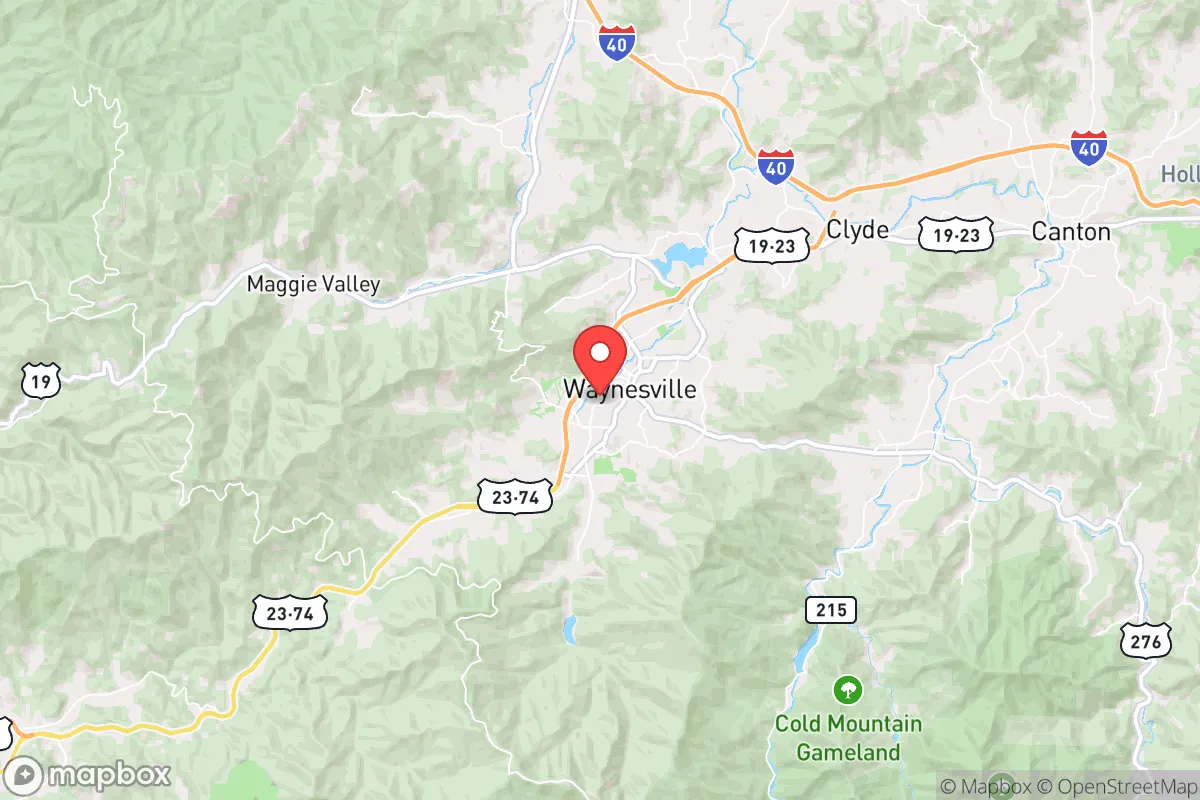
District shown is the primary district for this city’s centroid. Cities may span multiple districts.
Local Political AnalysisPolitical Analysis of Waynesville, NC
Waynesville has long been a reliably conservative pocket in Western North Carolina, and that hasn't changed much. The town sits in Haywood County, which carries a Cook Partisan Voting Index of R+5, meaning it votes about five points more Republican than the national average. That's a noticeably redder shade than the state of North Carolina as a whole, which sits at R+1. If you look at the last few presidential cycles, Haywood County went for Trump by roughly 20 points in 2020 and a similar margin in 2024. But don't let that number fool you into thinking it's a monolith—the political reality here is more layered than the raw vote totals suggest.
How it compares
Compared to the rest of North Carolina, Waynesville is a solidly conservative outlier in a state that's become a genuine battleground. The R+1 statewide rating reflects the fierce competition between the fast-growing, diversifying suburbs of Charlotte and Raleigh and the rural, traditionally Republican areas. Waynesville, by contrast, sits in the mountain region where the old-line Democratic tradition (think blue-dog, union-friendly) has largely given way to a more standard Republican alignment. Drive 30 minutes east to Asheville, and you'll hit a completely different political planet—Buncombe County is reliably blue, voting for Biden by 20 points in 2020. That contrast is stark: Asheville's progressive energy, with its craft breweries and activist scene, feels a world away from Waynesville's quieter, more church-and-hunting-club culture. Head south toward Hendersonville, and you'll find a more moderate, retiree-heavy mix that leans Republican but with a softer edge. So Waynesville isn't the most conservative town in the region—that might be Franklin or Murphy further west—but it's definitely not a purple area.
What this means for residents
For conservative residents, the political climate here is comfortable. Local elections tend to be decided in Republican primaries, and the county commission and school board lean right. You'll see Trump signs in yards and hear conservative talk radio in the diners. But for liberal residents, it's not the hostile environment you might imagine from the numbers. Waynesville has a visible arts community, a growing number of remote workers from blue states, and a downtown that's become more inclusive over the past decade. The local Democratic party is active, and while they rarely win countywide races, they have a presence. The real friction isn't usually about national politics—it's about growth, zoning, and how to balance tourism with local character. Both sides tend to agree on protecting the mountains and opposing overdevelopment, even if they disagree on how to get there.
One thing that sets Waynesville apart from many small Southern towns is its cultural tolerance. The town has a small but established LGBTQ-friendly scene, and the annual Folkmoot festival celebrates international cultures. That's not typical for a R+5 county, and it reflects the influence of retirees and second-home owners from more liberal areas. Still, don't expect a progressive policy agenda anytime soon. The county's trajectory is likely to stay conservative, but with a growing independent streak as new residents arrive. If you're moving here, the political climate is best described as "polite red"—you'll find your tribe regardless of your leanings, but the dominant tone is unmistakably center-right. Just don't expect to see many "In This House We Believe" signs in the front yards of the older neighborhoods.

State Political ClimatePolitical Climate in North Carolina
State Political AnalysisPolitical Environment in the State
North Carolina is a classic purple state that has been trending rightward in presidential elections over the past decade, with a Cook PVI of R+1 that masks a deeply competitive and often contradictory political landscape. The state voted for Donald Trump in both 2016 and 2020 by margins under 1.5 points, and in 2024 Trump carried it by roughly 3 points, reflecting a slow but steady Republican consolidation among rural and exurban voters. The dominant coalition is a GOP trifecta in the legislature and governorship (as of 2025), but Democrats remain highly competitive in statewide races for Council of State positions and have held the governor’s mansion for most of the last 30 years. Over the last 15 years, the state has shifted from a reliably red-leaning swing state to a true battleground where the margins are razor-thin, driven by explosive growth in the Charlotte and Raleigh-Durham metros that has offset GOP gains in smaller cities and rural areas.
Urban vs. rural divide
The political map of North Carolina is a textbook case of the urban-rural split that defines modern American politics. The three major metros—Charlotte (Mecklenburg County), Raleigh-Durham (Wake and Durham Counties), and the Triad (Greensboro, Winston-Salem, High Point)—anchor the Democratic vote. Mecklenburg County alone delivered a 30-point margin for Biden in 2020, while Wake County gave a 25-point margin. These two counties together produce roughly a quarter of the state’s total votes, and their growth is accelerating. Meanwhile, the rural east and the mountain west are deeply Republican. Counties like Columbus (southeast), Wilkes (northwest), and Yadkin (Piedmont) routinely vote 70-80% Republican. The real battleground is the exurban ring around the metros—places like Union County (southeast of Charlotte), Johnston County (southeast of Raleigh), and Cabarrus County (northeast of Charlotte). These areas were reliably Republican a decade ago but are now seeing in-migration of moderate and left-leaning voters from the cities, making them the key swing territory. The 2024 election saw Trump improve his margins in rural counties while losing ground in the suburbs, a pattern that suggests the state is not simply moving in one direction but is instead becoming more polarized along geographic lines.
Policy environment
North Carolina’s policy environment is a mix of conservative fiscal and social governance with pragmatic moderation on certain economic issues. The state has a flat income tax rate of 4.5% (as of 2025), down from 7% in 2013, with a scheduled phase-down to 3.99% by 2027. Corporate income tax is 2.5% and falling. There is no state property tax, though local rates vary widely. The regulatory posture is business-friendly, with right-to-work laws and a strong anti-union climate—North Carolina has the lowest unionization rate in the country at roughly 3%. Education policy is a flashpoint: the state has a robust charter school and school choice system, with vouchers (Opportunity Scholarships) available to all income levels as of 2024, but public school funding per pupil remains below the national average. Healthcare is a mixed bag—the state expanded Medicaid in 2023 under a bipartisan deal, adding 600,000 people, but the state still has some of the highest health insurance premiums in the South. Election laws are moderately restrictive: voter ID is required (enacted in 2018, fully implemented in 2023), early voting is generous (17 days), and same-day registration is available during early voting. The state has a Republican-controlled legislature that has drawn congressional and legislative maps that favor the GOP, though court challenges have forced adjustments in the past.
Recent policy direction
The last five years have seen a clear rightward shift on cultural and social issues, even as economic policy remains centrist. In 2023, the legislature passed a 12-week abortion ban (with exceptions for rape, incest, and life of the mother), overriding Governor Roy Cooper’s veto. This was a major departure from the state’s previous 20-week limit and has become a central issue in elections. On gun rights, North Carolina is a shall-issue state for concealed carry, with no permit required for open carry, and in 2023 the legislature passed a law allowing permitless concealed carry (effective 2024). Parental rights in education have been strengthened: the 2023 Parents’ Bill of Rights requires schools to notify parents of any changes in a child’s health or well-being and restricts instruction on gender identity and sexual orientation in K-4 classrooms. On privacy and surveillance, the state has no comprehensive data privacy law, though a bill is pending. Property rights are strong—the state has a robust eminent domain standard and no statewide rent control. On voting, the 2023 election law overhaul tightened absentee ballot rules and banned private funding of election administration, but early voting hours were expanded. The overall direction is toward a more conservative social framework paired with a low-tax, low-regulation economic model that appeals to both corporate relocations and conservative families.
Civil unrest & political movements
North Carolina has a history of visible political activism on both sides. The 2020 protests in Charlotte and Raleigh over George Floyd’s death were large but largely peaceful, though there were isolated incidents of property damage. The state has a strong and organized progressive movement centered in Durham and Chapel Hill, with groups like the NC NAACP and Democracy NC pushing for voting rights and criminal justice reform. On the right, the state has a robust gun rights movement (Grass Roots North Carolina is a major force) and a growing parental rights movement that has been particularly active in school board meetings in Wake and Mecklenburg counties. Immigration politics are less heated than in border states—North Carolina has no sanctuary cities, and the legislature passed a law in 2015 requiring local law enforcement to cooperate with ICE, but enforcement varies by county. There is no serious secession or nullification rhetoric. Election integrity has been a flashpoint since 2020, with the state GOP pushing for tighter rules and Democrats alleging voter suppression. The 2024 election saw no major controversies, but the state’s close margins mean every election cycle brings legal battles over maps and voting rules. A new resident would notice that political yard signs and bumper stickers are common, and local news covers state politics heavily—this is not a state where politics is a background noise; it’s a constant topic of conversation.
Projection
Over the next 5-10 years, North Carolina is likely to remain a competitive swing state, but the trajectory favors a slow shift toward the center-right on cultural issues while the economic center holds. The key demographic driver is in-migration: the state is adding roughly 100,000 new residents per year, many from blue states like New York, California, and New Jersey. These newcomers tend to be moderate to liberal on social issues but are often attracted by the low taxes and business climate, creating a tension that could push the state toward a more libertarian-leaning Republicanism or a more moderate Democratic Party. The Charlotte and Raleigh metros will continue to grow, making the exurban counties more competitive and potentially flipping some state legislative seats. However, the rural vote is not shrinking fast enough to tip the state solidly blue—the 2024 results suggest the GOP is holding its rural base while losing ground in the suburbs, a pattern that could lead to a decade of very close elections. A new resident moving in now should expect to live in a state where the political climate is polarized but functional, with a Republican legislature that will continue to push conservative social policies and a Democratic governor (if one is elected in 2028) who will veto them, leading to a cycle of legislative action and court challenges. The practical takeaway: if you are conservative, you will find a state that largely aligns with your values on taxes, guns, and education; if you are liberal, you will find strong urban communities and a political system where your vote genuinely matters in every election.
For someone choosing North Carolina as a relocation destination, the bottom line is that you are moving to a state where your political views will be contested but not suppressed. The state’s R+1 lean means that neither party has a permanent majority, and the outcome of every election is genuinely uncertain. This creates a dynamic where policy can shift significantly with each election cycle—the 2023 abortion ban could be loosened or tightened depending on who wins the governorship in 2028. The practical implication is that you should pay close attention to state and local elections, not just presidential races. If you are a conservative family, you will find a welcoming environment in the exurbs and rural areas, with strong school choice options and a low-tax regime. If you are a liberal individual, you will find vibrant, progressive communities in the cities and a political system where your vote can make a difference. Either way, North Carolina offers a high quality of life, a growing economy, and a political climate that is engaged, competitive, and unlikely to become one-party dominant anytime soon.
* Values derived from national, state, county, city and local statistics and may differ in a specific area. Last updated: 2026-10-20T17:11:34.000Z
Narrative content on this page is AI-generated and may contain mistakes. Verify any details that matter before acting on them.
ReloMaps may earn a commission from affiliate links at no extra cost to you.

