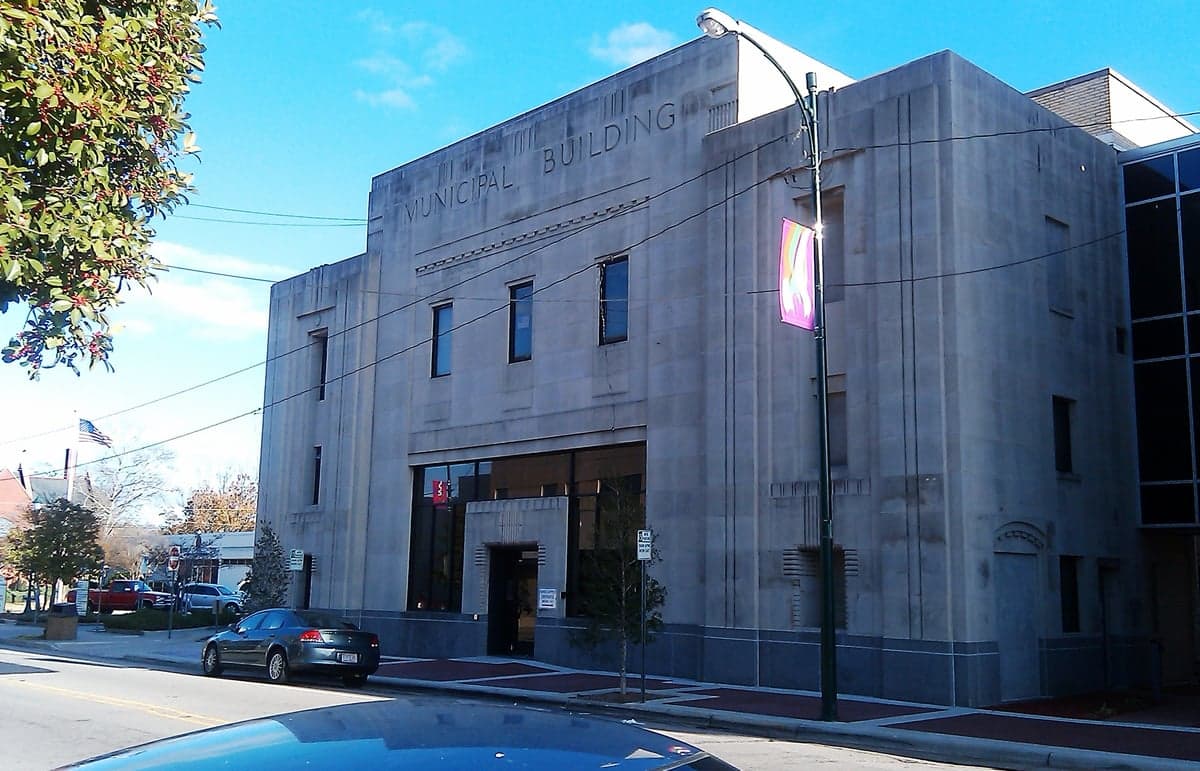
Photo: Wikipedia
Quality of Life in Wilson, NC
A high quality of life with strong walkability, manageable living costs, healthy neighborhood signals, and solid amenity access.
What does Quality of Life tell us?
Quality of Life blends cost of living, nearby amenities, socioeconomic signals, and neighborhood character. City-level scores represent the whole municipality; individual neighborhoods can differ.
What does this tell us?
Quality of Life blends cost of living, nearby amenities, socioeconomic signals, and neighborhood character. City-level scores represent the whole municipality; individual neighborhoods can differ.
Cost of Living
25% below national average
The Real Cost of Living in Wilson, NC for 2026
| Tier | Individual | Family (4) |
|---|---|---|
| Survival | $15k | $28k |
| Comfortable | $37k | $55k |
| Luxury | $85k+ | $132k+ |
| Elite (Top 5%) | $125k+ | $194k+ |
86%
The Area Signal
A metric tracking the socioeconomic signals of the area.
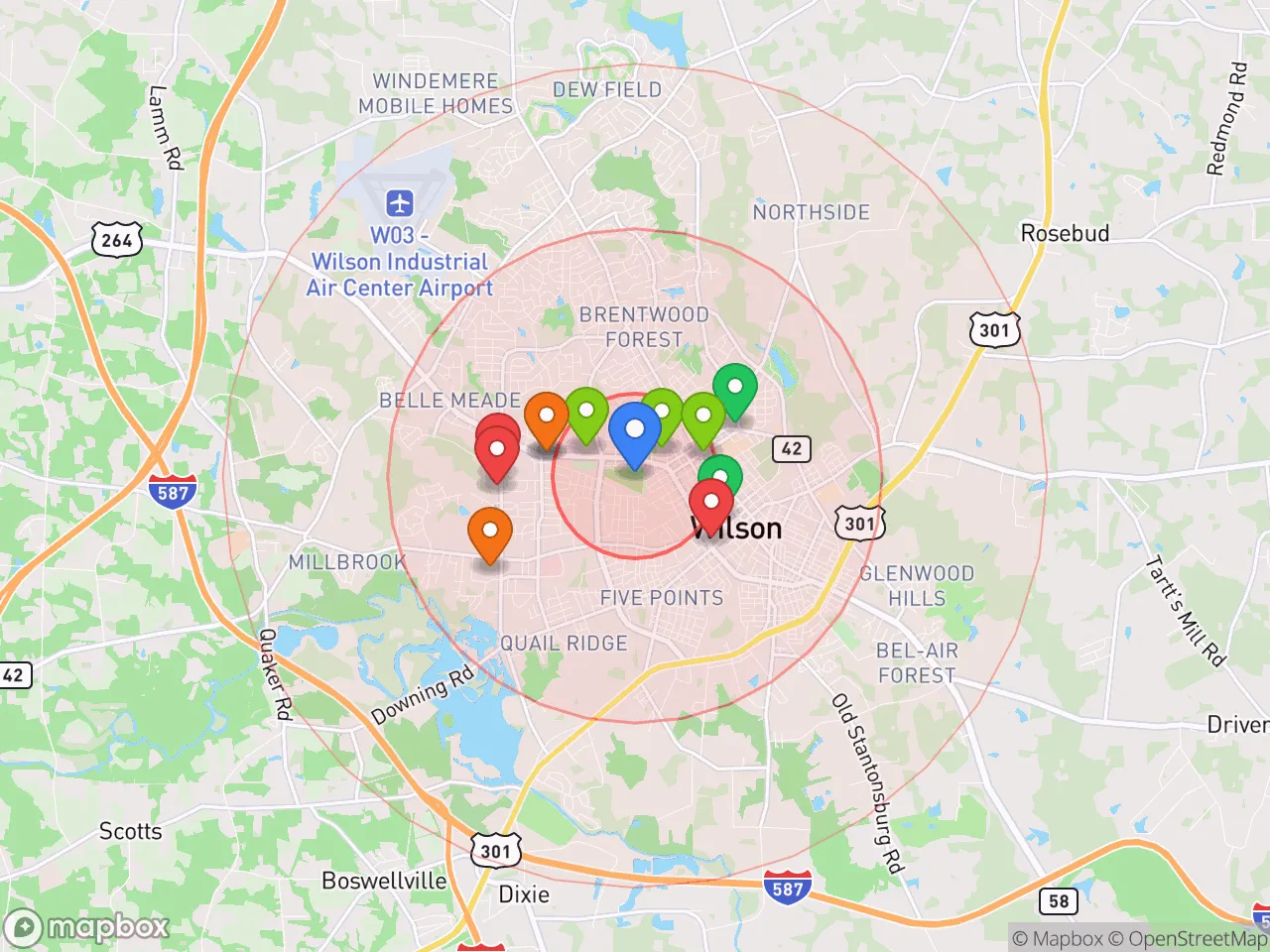
Hobbies
Explore the areaGroceries
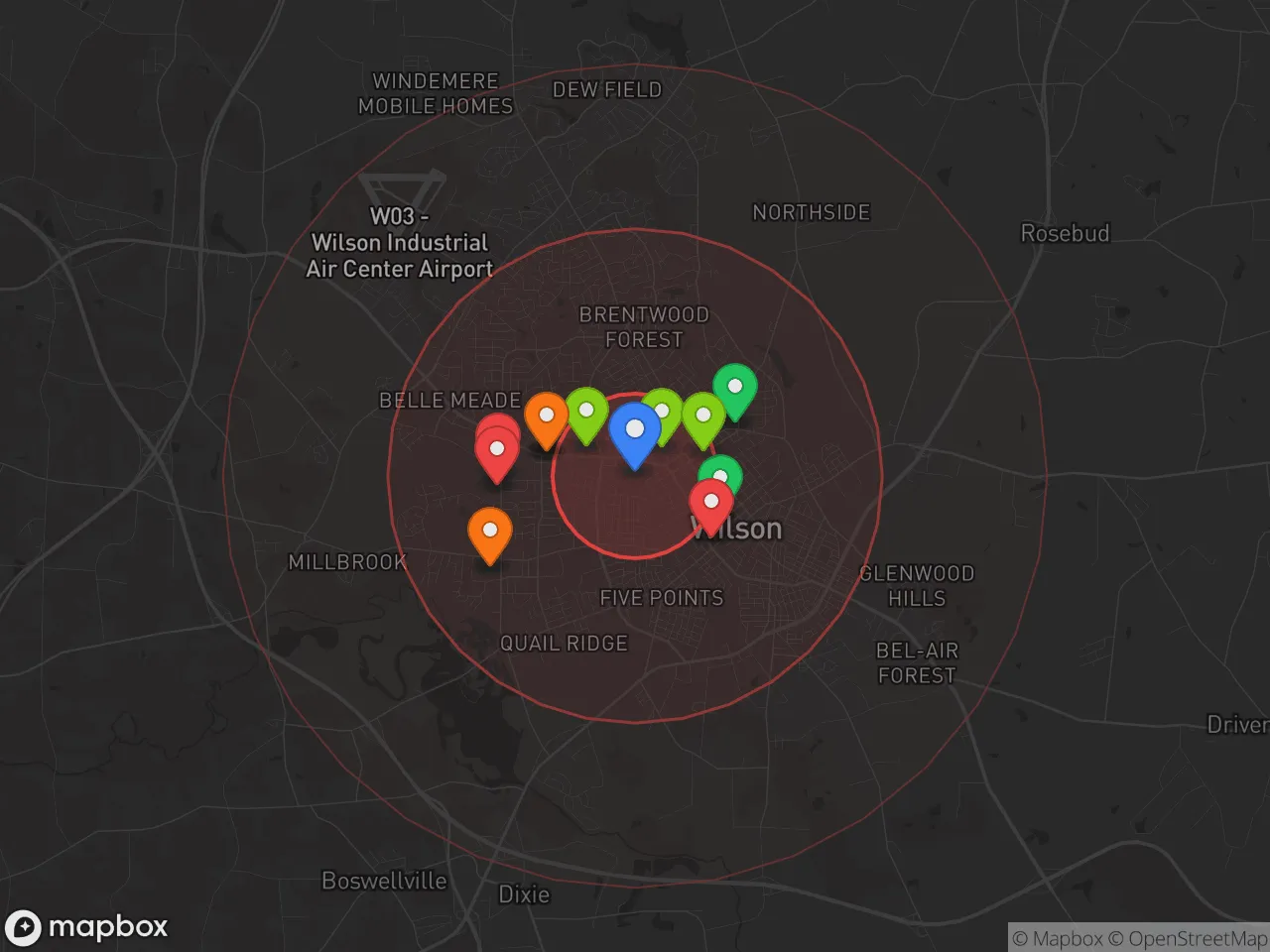
7 within 10 miles
Gas
19 within 10 miles
Hospital
3 within 20 miles
Airport
RDU — Raleigh–Durham International
Post Office
USPS — Wilson, NC
Critical Amenities
Quality-of-Life Analysis
Wilson, North Carolina, offers a notably affordable quality of life with a cost of living index of 75—25% below the national average—attracting a mix of young families, retirees, and professionals seeking a slower pace without sacrificing urban access. The city’s median household income of roughly $45,000 reflects a working- and middle-class population, with a significant presence of healthcare and manufacturing employees tied to major employers like Wilson Medical Center and Bridgestone. While not affluent by national standards, Wilson provides a stable, family-oriented environment where homeownership is attainable for many, contrasting sharply with the higher costs of nearby Raleigh (40 minutes west) and the Research Triangle.
Cost of living, housing affordability, and how Wilson compares to Raleigh and Greenville
Wilson’s housing market is a primary draw: the median home value sits at $192,000, roughly half the median in Raleigh ($385,000) and well below the national median of $350,000. Median rent is $925, making it one of the most affordable rental markets in eastern North Carolina—comparable to Greenville (home to East Carolina University) but significantly cheaper than the Triangle suburbs. The average commute of 21.3 minutes is shorter than the national average of 26 minutes, a practical advantage for workers employed locally at Wilson Medical Center, the city’s largest employer, or at distribution centers along I-95. Property taxes are low, with a rate of approximately $0.63 per $100 of assessed value, keeping monthly housing costs manageable even for households earning below the area median. For renters, a one-bedroom apartment typically runs $750–$850, while a three-bedroom averages $1,100–$1,300, still far below Raleigh’s $1,600+ equivalents.
Schools, amenities, and the daily rhythm of life in Wilson
Wilson County Schools serve the city with 19 elementary, middle, and high schools, including the well-regarded Wilson Early College Academy (a partnership with Wilson Community College) and Hunt High School, which offers a strong STEM program. The daily rhythm is unhurried: residents frequent the historic downtown’s independent coffee shops, the Wilson Botanical Gardens, and the Vollis Simpson Whirligig Park—a unique public art installation that hosts seasonal concerts and farmers’ markets. Grocery and retail options are concentrated along Ward Boulevard and Raleigh Road Parkway, with a Walmart Supercenter, Lowe’s Foods, and a growing number of chain restaurants. For healthcare, Wilson Medical Center (a Duke LifePoint affiliate) provides emergency and specialty care, reducing the need to commute to Raleigh for routine needs. Outdoor recreation centers around the 1,200-acre Lake Wilson, offering fishing, kayaking, and walking trails, while the nearby 5-mile Wilson Rails-to-Trails path connects neighborhoods to downtown. The city lacks a major university or a vibrant nightlife scene, but its proximity to I-95 and U.S. 264 means residents can reach Raleigh-Durham International Airport in under an hour for broader cultural and employment opportunities.
Wilson is best suited for those who prioritize affordability and space over urban density—especially first-time homebuyers, remote workers, and retirees on fixed incomes who want a quiet, walkable downtown with basic amenities. Families will find solid public schools and low crime rates relative to similarly sized cities, while professionals commuting to Raleigh or Rocky Mount will appreciate the short drive and low housing costs. However, those seeking high-end dining, a robust job market outside healthcare and manufacturing, or a fast-paced social scene may find Wilson too limited. For anyone willing to trade the Triangle’s premium prices for a slower, more affordable lifestyle, Wilson delivers a stable, community-focused base with room to grow.

Crime in Wilson, NC
Higher crime rates than 65% of comparable U.S. locations.
Violent CrimeViolent Crime Analysis
Property CrimeProperty Crime Analysis
Crime Analysis
Wilson, North Carolina, reports a violent crime rate of 477.3 incidents per 100,000 residents and a property crime rate of 2,168.3 per 100,000, placing it above both state and national averages for overall crime risk. While not the most dangerous city in the state, these figures indicate that crime is a tangible concern for residents and prospective movers. The city's location within a larger metro orbit means local crime patterns are influenced by regional trends, including the policies of the judicial system in surrounding counties.
Crime in context
Wilson's violent crime rate of 477.3 per 100,000 is roughly 35% higher than the national average of approximately 380 per 100,000 and significantly exceeds North Carolina's statewide rate of about 400 per 100,000. Property crime in Wilson, at 2,168.3 per 100,000, also runs above the national benchmark of roughly 1,950 per 100,000. These numbers place Wilson in a tier of mid-sized Eastern North Carolina cities where crime rates have not declined as sharply as in some suburban or rural areas. The presence of progressive district attorneys in nearby larger jurisdictions, such as Wake County (Raleigh), has been linked to more lenient charging and sentencing practices, which can result in repeat offenders cycling back into communities like Wilson more quickly. This judicial philosophy, while focused on rehabilitation, often reduces deterrence and increases the likelihood of property and violent crimes committed by individuals with prior records.
What residents experience
For those living in Wilson, the most common crime experience is property-related: theft, burglary, and motor vehicle theft make up the bulk of reported incidents. Violent crime, while less frequent, is concentrated in specific areas and often involves disputes among acquaintances rather than random attacks on strangers. Residents report that neighborhood watch participation and home security systems are common, reflecting a community that takes proactive steps. The city's police department has implemented data-driven patrol strategies, but the overall effectiveness is constrained when the court system does not consistently hold offenders accountable. In a metro area context, Wilson's crime numbers are a direct reflection of broader regional challenges: lenient prosecution policies in nearby urban centers create a revolving door for criminals who then target smaller, less policed cities.
Neighborhood-level variation is significant in Wilson. Areas east of the railroad tracks and near the downtown core tend to see higher concentrations of both violent and property crime, while newer subdivisions on the west side and near the US-301 bypass report lower incident rates. Prospective residents should examine block-level crime maps and consider that a home just a few streets away can mean a drastically different safety profile. The safest pockets are typically found in the Forest Hills and Rock Ridge neighborhoods, where community policing and homeowner associations are more active. Overall, Wilson demands a cautious, informed approach to choosing a specific street or subdivision, as the city's aggregate numbers mask a wide range of local realities.
* Values derived from national, state, county, city and local statistics and may differ in a specific area. Last updated: 2026-04-21T16:55:12.000Z
Narrative content on this page is AI-generated and may contain mistakes. Verify any details that matter before acting on them.
ReloMaps may earn a commission from affiliate links at no extra cost to you.

