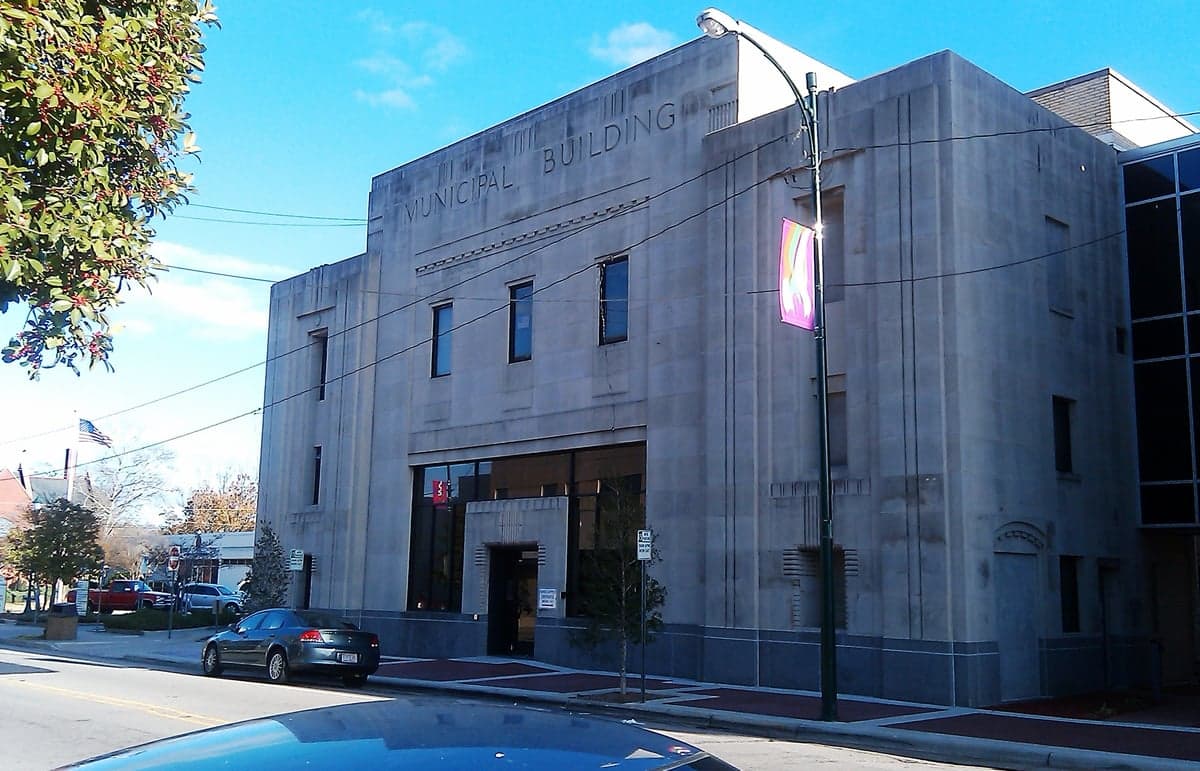
Photo: Wikipedia
Political ClimatePolitical Climate in Wilson, NC
District shown is the primary district for this city’s centroid. Cities may span multiple districts.
Local Political AnalysisPolitical Analysis of Wilson, NC
Wilson, North Carolina, sits in a politically interesting spot. Its Cook PVI of R+1 tells you it leans slightly Republican, but honestly, that number feels like it’s hanging on by a thread. For a long time, this was a reliably conservative area—folks here valued their Second Amendment rights, didn’t want the government meddling in their small businesses, and generally believed in personal responsibility over federal handouts. But over the last decade or so, you’ve seen a slow creep of progressive influence, especially as younger people move in from Raleigh or Greenville. The county commission and city council still have a conservative majority, but the margins are getting tighter every election cycle, and that’s something to keep an eye on if you’re thinking about putting down roots here.
How it compares
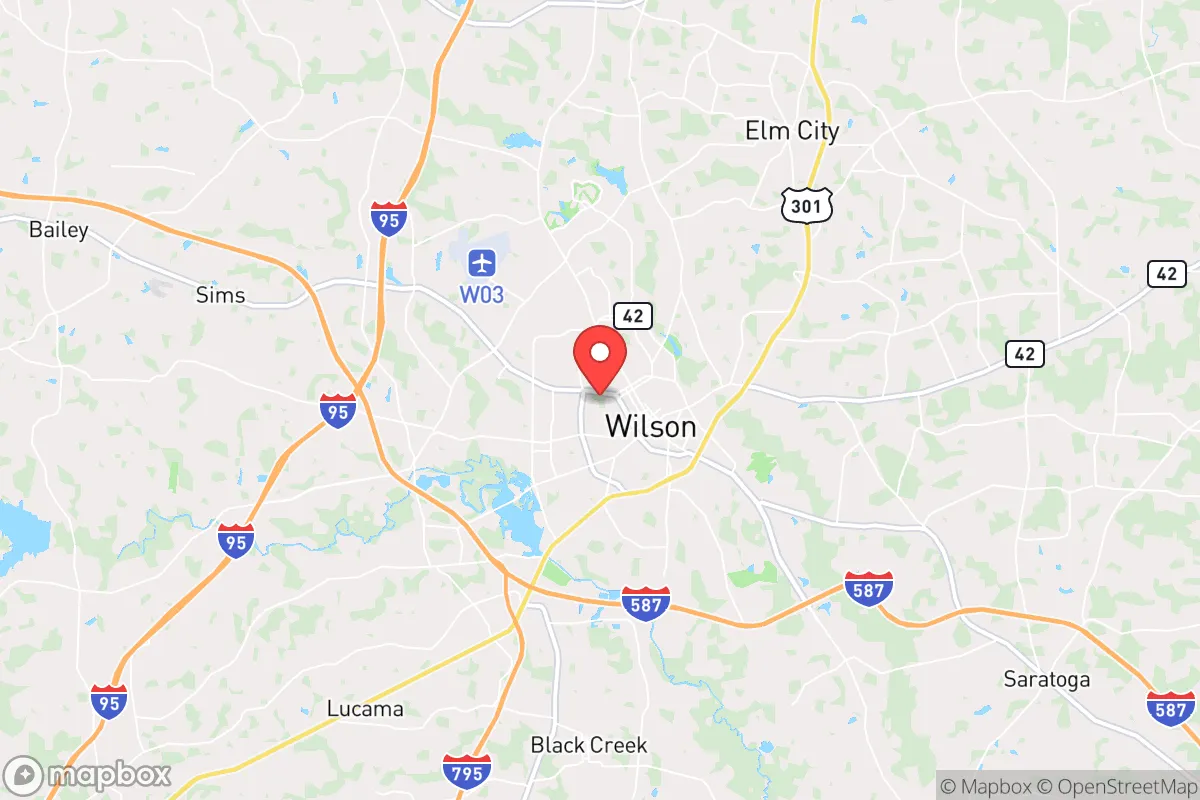
Drive 45 minutes west to Raleigh, and you’re in a completely different world—solidly blue, with all the big-city politics that come with it. Head east to Greenville, and it’s a similar story, thanks to East Carolina University’s liberal tilt. Wilson is the buffer zone, the place where rural common sense still holds some sway. But even here, you can feel the pressure. The surrounding towns like Elm City and Black Creek are still deeply red, with folks who’ll tell you straight up that they don’t want any part of the “woke” agenda. Wilson itself, though, has seen a push for more bike lanes, “equity” initiatives in the school system, and zoning changes that some worry will invite overreach from state-level bureaucrats. Compared to Nash County next door, which is more reliably conservative, Wilson feels like it’s at a crossroads. If you value limited government and local control, you’ll want to pay attention to how the next few city council races shake out.
What this means for residents
For the average person living here, the political climate translates into a few real-world concerns. First, taxes. Wilson’s property tax rate is already higher than some surrounding areas, and with progressive council members pushing for more spending on social programs, there’s a real risk of that going up. Second, personal freedoms. The city has flirted with mask mandates and business restrictions in the past, and while those have faded, the precedent is there. If you’re a gun owner, you’ll be relieved to know Wilson County is still a “shall issue” area for concealed carry permits, but you can bet there’s chatter about changing that. Third, schools. The local school board has become a battleground over curriculum transparency and parental rights. Some parents I know have already pulled their kids out for private or homeschool options because they don’t trust the direction things are heading. It’s not a crisis yet, but the warning signs are there.
One thing that still sets Wilson apart is its strong sense of community and a certain stubbornness against being told what to do. The annual Whirligig Festival and the downtown revitalization are points of pride, but they’re also reminders that this town was built by people who worked hard and didn’t ask for permission. The biggest cultural distinction is that Wilson still has a lot of old-school Southern hospitality mixed with a “mind your own business” attitude. That’s fading in bigger cities, but it’s still alive here—for now. If the progressive wave keeps washing in from the Triangle, you might see more government overreach into things like housing regulations or even how you run your own small business. My honest take? Wilson is still a good place to live if you’re conservative, but it’s not the slam dunk it was 20 years ago. Keep your ear to the ground, and vote in every local election you can.

State Political ClimatePolitical Climate in North Carolina
State Political AnalysisPolitical Environment in the State
North Carolina has long been considered a quintessential swing state, but over the past decade, it has settled into a reliably Republican-leaning posture at the state level, while remaining fiercely competitive in presidential races. The state voted for Donald Trump in both 2016 and 2024 (by margins of 3.6% and 1.3% respectively), while electing a Democratic governor in every cycle since 1992. This split-ticket reality masks a deeper truth: the state’s legislative and judicial branches are firmly under conservative control, with a Republican supermajority in the General Assembly that has been able to override gubernatorial vetoes since 2023. The 10-20 year arc shows a state that was purple trending blue in the early 2010s, but has since hardened its conservative bones thanks to massive in-migration from the Midwest and Northeast—people who came for lower taxes and stayed for the culture.
Urban vs. rural divide
The political geography of North Carolina is a textbook case of the urban-rural chasm that defines American politics today. The state’s three major metros—Charlotte, Raleigh-Durham, and Greensboro-Winston-Salem—are the engines of Democratic votes. Mecklenburg County (Charlotte) gave Biden 65% in 2020, and Wake County (Raleigh) gave him 62%. But these blue islands are surrounded by a sea of red. The rural eastern counties—like Robeson, Columbus, and Duplin—vote Republican by 20-30 point margins, while the western mountain counties (Watauga, Ashe, and Avery) are deeply conservative outside of Boone. The real story is the suburban shift: counties like Union (southeast of Charlotte) and Johnston (southeast of Raleigh) have flipped from purple to deep red over the past decade, driven by families fleeing the high taxes and crime of blue metros. Cabarrus County, home to Concord, voted for Trump by 18 points in 2024, up from 12 points in 2016. This suburban realignment is the single most important political trend in the state.
Policy environment
North Carolina’s policy environment is a conservative’s dream, especially compared to its neighbors. The state has a flat income tax rate of 4.5% that is scheduled to drop to 3.99% by 2027, and no state tax on Social Security benefits. The regulatory climate is business-friendly, with a right-to-work law and a tort reform system that caps non-economic damages in medical malpractice cases. On education, the state has a robust school choice program: the Opportunity Scholarship Program now provides vouchers of up to $7,468 per student for private school tuition, with no income cap as of 2024. Parents can also homeschool with minimal regulation—just a notice of intent and annual standardized testing. Healthcare policy is a mixed bag: the state expanded Medicaid in 2023 under a bipartisan deal, but the program includes work requirements for able-bodied adults. Election integrity is strong: North Carolina requires photo ID to vote (upheld by the state Supreme Court in 2024), has no same-day registration, and conducts post-election audits. The state also banned sanctuary cities in 2015, requiring all law enforcement to cooperate with federal immigration authorities.
Trajectory & freedom
North Carolina is becoming more free in several key areas, but the trajectory is not uniform. On gun rights, the state passed permitless carry (constitutional carry) in 2023, allowing any law-abiding adult to carry a concealed handgun without a permit. This was a major victory for Second Amendment advocates. On parental rights, the 2023 Parents’ Bill of Rights requires schools to notify parents of any changes to a child’s health or well-being, and prohibits instruction on gender identity and sexual orientation in K-4 classrooms. The state also passed a law in 2024 banning transgender athletes from female sports in K-12 and college. However, there are concerning trends. The state’s medical autonomy was dealt a blow when the Republican supermajority passed a 12-week abortion ban in 2023 (with exceptions for rape, incest, and life of the mother), which some conservatives view as insufficiently protective of life. Property rights remain strong, with no state-level rent control and a streamlined permitting process for new construction. The biggest freedom concern is the state’s eminent domain record—the Mountain Valley Pipeline and other energy projects have used state authority to seize private land, though this is a national issue.
Civil unrest & political movements
North Carolina has seen its share of political flashpoints, but the level of civil unrest is lower than in many blue states. The 2020 George Floyd protests in Charlotte and Raleigh turned violent, with looting and fires in the Uptown and downtown areas, but the state’s Republican legislature quickly passed a law in 2021 increasing penalties for rioting and blocking public highways. The most visible political movement on the left is the Moral Monday movement, a coalition of progressive activists that has staged regular protests at the General Assembly since 2013. On the right, the NC Freedom Caucus has become a powerful force within the state legislature, pushing for further tax cuts, school choice expansion, and election integrity measures. Immigration politics are relatively quiet compared to border states, but there have been flashpoints in Siler City and Monroe, where meatpacking plants have drawn large immigrant populations. The state has no sanctuary policies, and sheriffs in rural counties like Stokes and Surry have publicly declared they will not cooperate with federal immigration enforcement—though this is rare. Election integrity controversies have been minimal since the 2020 audit, which found no evidence of widespread fraud.
Projection
Over the next 5-10 years, North Carolina is likely to become more conservative at the state level, even as the presidential race remains competitive. The key demographic driver is in-migration: the state is adding 300,000 new residents per year, and the majority are coming from high-tax, high-crime states like New York, California, and Illinois. These transplants are not moving to Durham or Asheville—they are settling in the exurbs of Wake Forest, Holly Springs, and Cornelius, where they vote Republican. The state’s congressional map, drawn by the GOP, will likely remain gerrymandered in favor of Republicans through 2030. The biggest wild card is the Charlotte metro, which is growing so fast that it could eventually turn Mecklenburg County into a Democratic stronghold that offsets rural gains. But for now, the state legislature is solidly red, and the governorship will flip to Republican in 2028 if the current trend holds. A new resident moving in now should expect a state that is culturally conservative, fiscally disciplined, and increasingly resistant to federal overreach.
For a conservative-leaning individual or family, North Carolina offers a rare combination of low taxes, strong parental rights, and a growing economy that shows no signs of slowing down. The political climate is stable and predictable—you won’t see the chaos of a California or New York. The key is to choose your county wisely: stick with the red suburbs and exurbs like Union, Johnston, or Cabarrus, and you’ll find a community that shares your values. Avoid the blue metros of Durham and Orange County unless you’re prepared for progressive policies and higher taxes. Bottom line: North Carolina is one of the last great red states that still has room to grow, and the political winds are blowing in your favor.
* Values derived from national, state, county, city and local statistics and may differ in a specific area. Last updated: 2026-04-21T16:55:12.000Z
Narrative content on this page is AI-generated and may contain mistakes. Verify any details that matter before acting on them.
ReloMaps may earn a commission from affiliate links at no extra cost to you.

