Photo: Wikipedia
Political ClimatePolitical Climate in Maricopa County
Showing district-level results — no local-only data available.
Local Political AnalysisPolitical Analysis of Maricopa County
Maricopa County, Arizona, has long been the conservative heart of the state, but its political lean is shifting in ways that should give any freedom-minded resident pause. The Cook PVI still sits at R+15, meaning the county is reliably Republican by a 15-point margin compared to the national average, but that number masks a growing urban-rural divide. In the 2024 presidential election, the county went for Trump by about 8 points—down from 11 points in 2020—as the Phoenix metro area’s explosive growth brought in waves of transplants from blue states. The old guard in places like Sun City and Fountain Hills still votes solidly red, but the suburbs are getting dicey.
How it compares
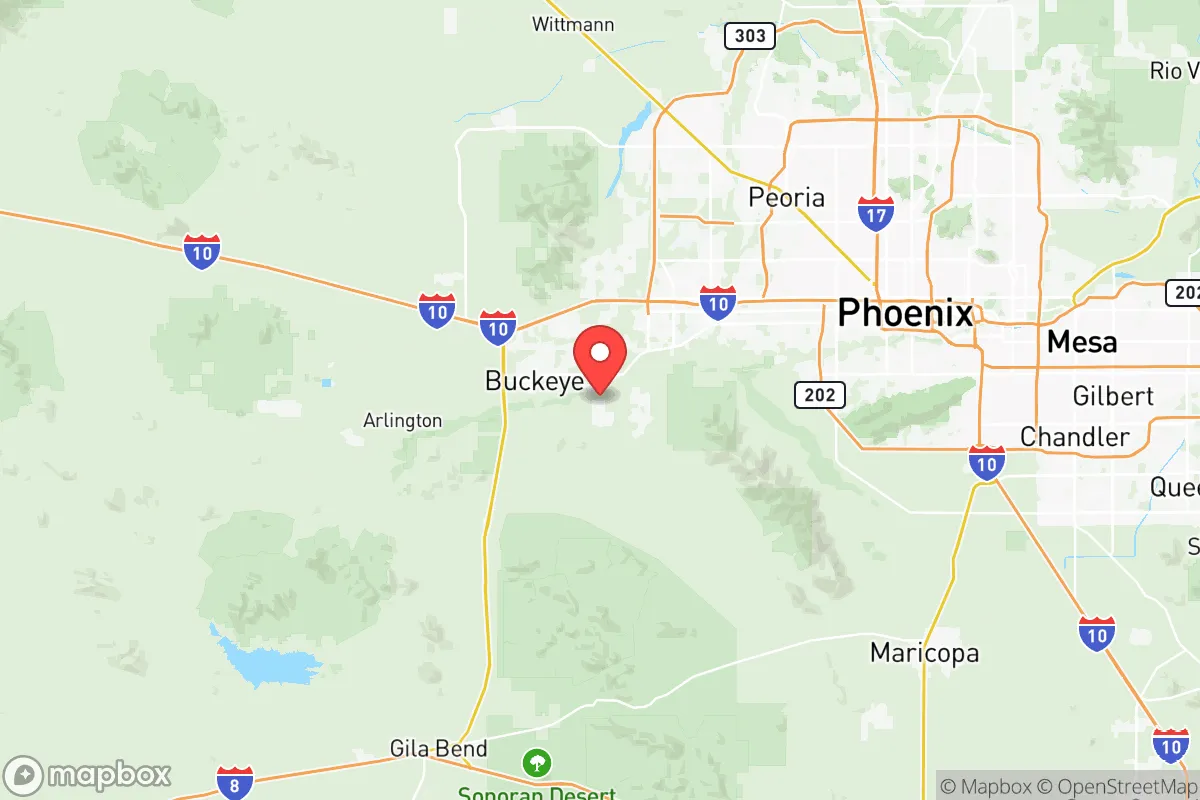
If you drive from the east valley to the west, you’ll see the political spectrum in real time. Mesa and Gilbert are still reliably conservative, with Gilbert’s town council and school board fights over parental rights and critical race theory drawing national attention. Scottsdale is a mixed bag—the northern parts lean red, but the southern, more affluent areas near Old Town have drifted purple, with some precincts flipping blue in 2020. Tempe and Phoenix proper are the blue strongholds, especially around Arizona State University and the urban core, where progressive policies on housing and policing are the norm. The real battlegrounds are the swing precincts in Chandler and Peoria, where new housing developments have brought in families from California and Illinois who often vote for "moderate" Democrats. Compared to neighboring Pinal County (R+20), Maricopa is the moderate cousin, but it’s still far more conservative than Pima County (D+10) to the south.
What this means for residents
For those of us who value limited government and personal freedom, the trend is concerning. The Maricopa County Board of Supervisors, which oversees elections and county policy, has been a flashpoint. In 2022, the board voted 4-1 to approve a new election procedures manual that restricted ballot drop box monitoring—a move many saw as a direct attack on election integrity efforts. Meanwhile, the Phoenix City Council has pushed mandatory paid sick leave and rent control studies, policies that feel like a slow creep of government overreach into private business and property rights. The county’s health department, under Democratic leadership, has also been aggressive with mask mandates and vaccine requirements in the past, though those have faded. For residents, this means staying vigilant: local school board meetings in places like Paradise Valley and Queen Creek are where the real fights over curriculum and parental rights are happening, and they’re getting louder every year.
Culturally, Maricopa County is still a place where you can own a home with a yard, drive a truck, and keep your business hours without a city council telling you otherwise—but that’s changing faster than most locals like. The influx of out-of-state money has driven up housing costs, and with it, the political pressure to adopt California-style zoning and tax policies. The county’s Second Amendment sanctuary status, passed in 2021, is a bright spot, but it’s under constant legal challenge from Phoenix-based activist groups. If you’re looking for a place where your vote still counts and your freedoms are respected, the rural edges of the county—places like Wickenburg, Cave Creek, and the far reaches of Buckeye—are where the old Arizona spirit still holds. But keep an eye on the next census; the lines are shifting, and not in a good way.

State Political ClimatePolitical Climate in Arizona
State Political AnalysisPolitical Environment in the State
Arizona has transformed from a reliably Republican stronghold into a genuine battleground state over the past two decades, now leaning narrowly right-of-center but with a volatile mix of libertarian-leaning conservatives, moderate suburbanites, and a rapidly growing progressive base. The state voted for Joe Biden in 2020 by just 10,457 votes—the first time it backed a Democrat since Bill Clinton in 1996—then swung back to Donald Trump in 2024 by roughly 5 points, reflecting deep internal fractures. The dominant coalition remains a coalition of rural conservatives, Mormon retirees, and defense-industry workers, but Maricopa County’s explosive growth has diluted that power, while Pima County and the Phoenix suburbs have become the primary battlegrounds. Over the last 10-20 years, the state has shifted from a solid +8-10 Republican lean to a toss-up, driven largely by in-migration from California and the Midwest, and by younger voters moving into Maricopa’s urban core.
Urban vs. rural divide
The political map of Arizona is a story of three distinct regions. Maricopa County, home to Phoenix, Mesa, Chandler, and Scottsdale, casts about 60% of the state’s votes and is the epicenter of the swing—it went for Biden in 2020 by 2 points, then flipped back to Trump in 2024 by about 3 points, driven by suburban women and Hispanic voters in places like Gilbert and Chandler who are increasingly skeptical of progressive education and crime policies. Pima County (Tucson) is reliably Democratic, voting +15 points for Biden, but its influence is checked by the conservative stronghold of Pinal County (Casa Grande, Maricopa city), which went +18 for Trump. The rural north and east—Yavapai County (Prescott), Mohave County (Kingman, Lake Havasu City), and Cochise County (Sierra Vista)—are deep red, often voting +30 to +40 points Republican, fueled by ranching, mining, and a strong Second Amendment culture. The wildcard is Yuma County, a border region with a large Hispanic population that has trended rightward in recent cycles, voting +8 for Trump in 2024 after backing Biden by 10 in 2020—a shift driven by frustration with border policy and inflation.
Policy environment
Arizona’s policy environment is a mixed bag that reflects its swing-state status. On the positive side for conservatives, the state has a flat income tax rate of 2.5% (passed in 2021 as part of a tax-cut package), no estate tax, and a right-to-work law that keeps unions weak. Property taxes are relatively low, with an average effective rate of 0.62%—well below the national average. However, the regulatory posture is increasingly interventionist in some areas: the state has a renewable energy mandate (15% by 2025, rising to 50% by 2035) that has driven up electricity costs, and Phoenix has imposed strict water-use restrictions on new developments. On education, Arizona has one of the strongest school choice programs in the nation—the Empowerment Scholarship Account (ESA) program, expanded in 2022 to allow nearly all students to use public funds for private or homeschool expenses—but the public school system remains underfunded, ranking 48th in per-pupil spending. Healthcare policy is a flashpoint: the state expanded Medicaid under the Affordable Care Act in 2014, and efforts to repeal or roll it back have failed, leaving a large government healthcare footprint. Election laws have been a rollercoaster: the 2021 voter ID law (SB 1260) tightened ballot security, but a 2024 court ruling struck down a ban on ballot harvesting, leaving the system in flux. Overall, the policy environment is moderately conservative on fiscal and education issues, but increasingly progressive on environmental and healthcare regulation.
Trajectory & freedom
The trajectory of personal freedom in Arizona is concerning for conservatives, with notable expansions in some areas and troubling contractions in others. On the positive side, gun rights remain strong: Arizona is a constitutional carry state (no permit needed for concealed carry), and in 2023, the legislature passed a law prohibiting local governments from enforcing federal gun bans (HB 2609). Parental rights saw a win with the 2022 passage of a law requiring schools to notify parents of any changes to a student’s health or well-being (SB 1456), though it was watered down in court. Property rights are generally respected, with no statewide rent control and a strong homestead exemption. However, medical autonomy took a hit in 2024 when the state Supreme Court upheld a near-total abortion ban from 1864, only for the legislature to repeal it in a bipartisan deal—leaving a 15-week ban in place, which is a middle ground but still a government restriction. More troubling for liberty-minded residents: the state has aggressively enforced COVID-era mandates, including a 2021 law banning vaccine passports (SB 1824) that was later partially overturned, and Phoenix and Tucson have imposed mask and vaccine mandates on city employees. The biggest freedom concern is water rights: the 2023 Colorado River drought plan forced Arizona to take a 21% cut in its allocation, and the state has imposed strict groundwater management rules on new developments in the Phoenix area, effectively limiting property rights for landowners. Overall, Arizona is becoming less free on economic and environmental regulation, but holding steady on gun and school choice.
Civil unrest & political movements
Arizona has been a hotbed of political activism and civil unrest, particularly around immigration and election integrity. The border crisis has been the dominant flashpoint: Cochise County and Santa Cruz County (Nogales) have seen massive migrant crossings, with over 500,000 encounters in the Tucson sector in 2023 alone. This has fueled a strong grassroots movement on the right, including the “Arizona Border Strike Force” launched by Governor Ducey in 2022, and regular protests at the border wall construction sites near Douglas. On the left, the “Shut It Down” protests in Phoenix in 2020 drew thousands, and the “Stop the Steal” movement was particularly intense here—the 2020 election audit in Maricopa County (the “Cyber Ninjas” audit) became a national spectacle, with months of protests and counter-protests at the state capitol. Election integrity remains a live issue: in 2024, the state legislature passed a law requiring hand-counting of ballots in all counties (HB 2780), though it was blocked by the courts. Sanctuary city policies are a point of contention: Tucson and Phoenix have declared themselves “sanctuary cities,” refusing to cooperate with ICE, while the state has passed laws banning such policies (SB 1070-style, though the key provisions were struck down). A new resident would notice the ubiquitous political signage—yard signs for border security, school choice, and local candidates are everywhere—and the frequent protests at the capitol building in Phoenix, which can draw hundreds on any given weekend.
Projection
Over the next 5-10 years, Arizona is likely to become more competitive and more purple, with a slight rightward tilt on cultural issues but a leftward drift on economic and environmental regulation. The key demographic driver is in-migration: roughly 100,000 people move to Arizona each year, with the largest share coming from California (about 30%) and the Midwest (25%). These newcomers tend to be moderate-to-conservative on taxes and crime but more liberal on social issues like abortion and marijuana (recreational use was legalized in 2020). The Hispanic vote is the wildcard: it’s growing as a share of the electorate (now about 25%) and trending rightward, particularly among working-class men in border communities like Yuma and Nogales. The Phoenix suburbs—Buckeye, Goodyear, and Surprise—are exploding in population and are likely to remain swing areas, while rural counties will stay deep red but lose relative influence. The biggest risk for conservatives is that the state’s water crisis could drive up housing costs and push out working-class families, while progressive city governments in Phoenix and Tucson continue to impose green-energy mandates and density zoning. Expect the state to remain a presidential battleground, with the legislature staying narrowly Republican but the governorship flipping between parties. A new resident moving in now should expect a state that is politically volatile, with frequent policy swings and a growing divide between the urban core and the rural periphery.
For a conservative-leaning individual or family considering relocation, Arizona offers a mixed but still attractive package: low taxes, strong school choice, and robust gun rights, but with growing government overreach on water, energy, and local mandates. The practical takeaway is to choose your location carefully—stick to the outer suburbs like Prescott Valley or Maricopa city for a more conservative environment, and avoid Phoenix and Tucson if you want to minimize exposure to progressive city policies. The state is still freer than California or New York, but the trend lines are concerning, and you’ll need to stay engaged politically to protect the freedoms that remain.
* Values derived from national, state, county, city and local statistics and may differ in a specific area. Last updated: 2026-04-21T19:05:27.000Z
Narrative content on this page is AI-generated and may contain mistakes. Verify any details that matter before acting on them.
ReloMaps may earn a commission from affiliate links at no extra cost to you.

